





POWER PLANTS Virtual power plants: When distributed energy resources choose the cloud
Related Vendors


Virtual power plants (VPPs) can replace traditional power plants by offering similar functionalities in the cloud. VPPs help renewable-heavy grid operations bypass coordination constraints. On a wider note, virtual power plants support electrification and decarbonization initiatives.
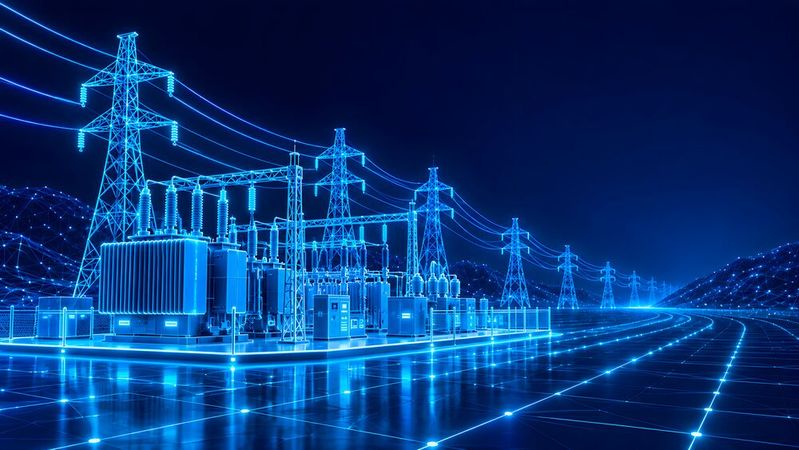
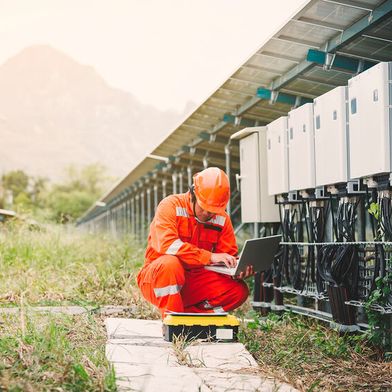
Distributed energy resources (DERs) are customer-owned installations, including rooftop solar panels, battery energy storage systems, wind turbines, fuel cells, EV chargers, smart home appliances, and many more, that need effective aggregation, coordination, and management. This is something a power plant does.
Ever since coal, gas, and nuclear plants were decommissioned, renewables were built fast and deployed in huge numbers. But they are variable: Bright sun is a lucky day, but a few hours of rain spoils it. That’s the real gap virtual power plants fill.
Virtual power plants coordinate these DERs to store surplus energy on good days and use it when generation is low. The grid doesn’t need the same amount of electricity all the time, every day. Electricity demand increases only during peak hours.
Besides base power plants, utility and power-producing companies would build peaking power plants to meet the increased demand. Peaking power plants, or peaker power plants, don’t run like traditional power plants. They supply power only occasionally during high demand.
Peaking power plants are constructed similarly to base power plants. Building a peaking power plant requires a significant CapEx and even more OpEx. This is because peaking power plants sit idle for most of the time, during non-peak hours. They become operational only when the demand is high, making power costlier than base plants.
To save on CapEx, OpEx, and power bills, companies have chosen virtual power plants at negligible cost. Virtual power plants are not physically constructed like base and peaking power plants; they’re cloud-based. Virtual power plants use and manage already-existing renewable DERs, such as batteries, solar panels, wind power systems, and flexible loads.
Virtual power plants don’t need companies to build and deploy new systems. The fuel cost in running virtual power plants is only the compute cost. Simply put, virtual power plants are run through software. Similar to software-defined power electronics.
Virtual power plants store excess power generated during sunny days, afternoons, or windy days. So when the generation stops- let the reason be a non-cloudy day or a non-windy stretch- virtual power plants supply stored energy back to the grid. As a result, the renewable-heavy grid remains stable.
Power electronics behind virtual power plants
Virtual power plants rely on the cloud, but software-based control on the renewable grid can only survive if hardware is reliable enough. This is where inverter-based resources (IBRs) come into play: grid-following vs. grid-forming inverters.
A grid-following inverter (GFL) synchronizes its output with the grid’s frequency and voltage through a phase-locked loop (PLL) circuit. During rate-of-change-of-frequency (RoCoF) events, GFLs in virtual power plants inject synchronized current to stabilize the grid.
PLL circuit takes the reference signal from the grid to generate the output, forming a feedback loop. As a result, the response of grid-following inverters is slow. RoCoF events would’ve already occurred by then.
Grid-forming inverters (GFM) are replacing grid-following inverters. This is because grid-forming inverters generate their own reference voltage and currents to stabilize the grid during a fault.
Functions of virtual power plants
Virtual power plants perform the following functions:
Aggregate DERs
Virtual power plants connect, coordinate, and control thousands of DERs and flexible loads across various locations, including homes, offices, stores, industries, and even cars, to function as an interconnected system.
Monitor assets
Virtual power plants can monitor power status and critical voltage/current values of each asset in real time.
Supply power
Virtual power plants are capable of connecting and disconnecting DERs to supply power to the grid or loads.
Optimize power control
Virtual power plants can decide when to charge or dispatch DERs. They can increase or decrease generation and consumption as required.
Bidirectional data exchange
Virtual power plants can exchange commands with transmission system operators (TSOs) and other stakeholders over an encrypted (secure) channel.
Energy storage systems
Virtual power plants can connect energy storage systems, including batteries and thermal storage, to store surplus energy for the future.
Grid balancing
Virtual power plants ensure grid stability due to grid-forming inverter technology.
Scale power generation
Virtual power plants can facilitate medium-scale power generation and distribution, especially in microgrids or island operations. The coordinated network of DERs can deliver the same reliability and backup as a real power plant.
Forecast trends
Virtual power plants can store data to forecast peak hours, generation capabilities, and prices.
References
- https://ieee-pes.org/trending-tech/virtual-power-plants/
- https://www.next-kraftwerke.com/vpp/virtual-power-plant
- https://rmi.org/resources/clean-energy-101-virtual-power-plants/
- https://seia.org/research-resources/virtual-power-plant-best-practices/
(ID:50983100)