









Sep 10, 2026
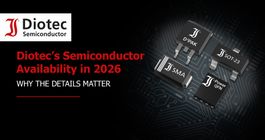
Diotec’s Semiconductor Availability in 2026: Why the Details Matter
The semiconductor supply situation in 2026 is increasingly difficult to describe simply as a “shortage.” For engineers and technical buyers, the reality is more nuanced: availability varies significantly between technologies, applications and individual components. Many basic passive components and mature analog semiconductors have returned to more conventional lead times. Other semiconductor categories, however, remain under pressure. Automotive microcontrollers manufactured on 28 to 40 nm process nodes, for example, can still have lead times of around 22 to 45 weeks, depending on the manufacturer and device.
SiC Supply Is Becoming More Differentiated
Silicon carbide (SiC) illustrates this changing market particularly well. Supply for established automotive SiC devices has eased in some areas as EV demand has softened and additional wafer capacity has come online.
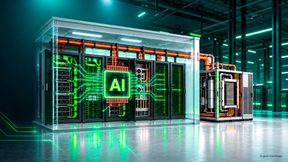
At the same time, demand for higher-voltage SiC devices is increasing in applications such as AI infrastructure, high-power power supplies and energy systems. This is creating new pressure on available manufacturing capacity.
As a result, there is no longer one simple answer to the question of “SiC availability.” Supply depends on factors such as voltage class, device technology, qualification requirements, application and manufacturing capacity.
For engineers, this makes a component-level approach increasingly important. Rather than asking whether the semiconductor shortage is over, the more useful questions are: Which components on the BOM remain constrained? Which are readily available? And what is driving the difference?
These considerations can influence not only purchasing decisions, but also component selection, second sourcing and long-term production planning.
Reliable Supply of Discrete Semiconductors
As a producer of discrete semiconductors, Diotec focuses on technologies that are essential to power management, switching and circuit protection.
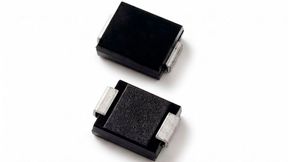
Our portfolio includes not only SiC MOSFETs and MOSFETs, but also TVS and ESD diodes, BJTs and digital transistors, supporting a wide range of industrial, automotive and power electronics applications.
In a market where semiconductor availability increasingly depends on the individual device rather than the broader component category, reliable production and predictable lead times are becoming important factors alongside electrical performance and cost.
For technical buyers and design engineers, understanding these differences is key to managing supply-chain risk - and ensuring that today's component choices remain viable throughout the production lifecycle.