


:quality(80)/p7i.vogel.de/wcms/10/fc/10fcb98e44d61826e641bc8d3f20f616/0133193677v2.jpeg "The new AEVA and AEVB Series aluminum electrolytic capacitors are engineered for harsh industrial environments, delivering high-CV, long-lifetime performance in compact, surface-mount packages that reliably withstand up to 30g acceleration and operating temperatures extending from -55° to +125°C. (Source: Kyocera)")
:quality(80)/p7i.vogel.de/wcms/f7/42/f74208db9f5f87dca384b38b71c4782e/0133196365v2.jpeg "YAGEO’s EC Flat‑Series temperature sensors combine fast, accurate measurement with resistance to vibration, shock, moisture and dust for demanding automotive and industrial applications. (Source: Yageo)")
:quality(80)/p7i.vogel.de/wcms/b2/82/b28212428745dd8a4634ad4f4912012f/0132902689v2.jpeg "New 15 V, 25 V and 40 V eGaN FETs deliver ultra-low on-resistance, high current capability, and exceptional radiation immunity for high-density space power conversion (Source: EPC Space)")
:quality(80)/p7i.vogel.de/wcms/7b/4f/7b4f433302c490cac22eee9c12499e65/0132780211v2.jpeg "Littelfuse introduces the TPSMD‑FL series of high‑power surface‑mount TVS diodes, designed to simplify ISO 7637 load‑dump protection and safeguard automotive electronics against severe voltage transients. (Source: Littlefuse)")
:quality(80)/p7i.vogel.de/wcms/78/38/783841efab284c1b4453777e7ebea26d/0133190419v2.jpeg "Diodes has completed its acquisition of Elevate Semiconductor, expanding its analog and mixed-signal portfolio and strengthening its presence in the high-growth automated test equipment market. (Source: © peopleimages.com - stock.adobe.com)")
:quality(80)/p7i.vogel.de/wcms/1f/79/1f79d69530465de26a832c742fc60319/0133117717v2.jpeg "With 30,000 sqm of exhibition space, 20,157 trade visitors, 271 exhibitors, and 131 expert presentations as part of the conference program, the event sent a strong message about the industry's innovative strength and dynamism. (Source: Mesago Messe Frankfurt GmbH)")
:quality(80)/p7i.vogel.de/wcms/43/4d/434db2291567e847e54332004942a225/0132958267v2.jpeg "GlobalWafers has joined the SEMI Taiwan Materials Alliance, with CEO Doris Hsu serving as co‑chair, to advance critical materials technologies, accelerate collaborative innovation and strengthen global semiconductor supply chain resilience. (Source: © jiwon - stock.adobe.com)")
:quality(80)/p7i.vogel.de/wcms/6f/72/6f72f93d1e4c5a248a97dd3b8f32a336/0132997898v2.jpeg "Infineon plans to acquire C2i Semiconductors to combine software‑defined multiphase control and smart power stages with its broad power‑semiconductor portfolio for intelligent, scalable AI data‑center power delivery. (Source: © Grispb - stock.adobe.com)")
:quality(80)/p7i.vogel.de/wcms/87/97/879728679e7010f81e53a86923cde74c/0133218625v2.jpeg "Conceptual illustration of polar wurtzite niobium aluminum nitride (NbAlN), a transition-metal-containing nitride semiconductor that preserves the crystal structure and polarity of GaN. (Source: Associate Professor Atsushi Kobayashi from Tokyo University of Science, Japan)")
:quality(80)/p7i.vogel.de/wcms/ac/31/ac31c9478d80894d725d02883ae7ed5d/0133176534v2.jpeg "Average models allow power designers to simulate DC‑DC converters and three‑phase PFC circuits quickly, analyse small‑signal behaviour and evaluate loop stability without modelling every switching event. (Source: © AI - stock.adobe.com)")
:quality(80)/p7i.vogel.de/wcms/96/80/9680b468d7f682c8b6c15b07300afbb0/0133177854v2.jpeg "Grid-forming inverters are also known as grid-forming resources and grid-forming IBR. This article explains grid-forming inverters in detail. (Bild: © only_kim - stock.adobe.com)")
:quality(80)/p7i.vogel.de/wcms/57/c6/57c6fa81922a9849a917bdfed82eddf7/0133052494v2.jpeg "Rising demand for high-end materials shifts production toward higher-margin products, reducing output of standard loss materials. (Source: NCAB)")
:quality(80)/p7i.vogel.de/wcms/7b/76/7b76005554b556df2a7a3794bdf69d44/0132365246v2.jpeg "Hioki’s ST5680A DC Hipot Tester combines CE/UKCA/CSA compliance, an integrated capacitance‑based contact check and time‑series waveform recording (voltage, leakage current, insulation resistance) to standardize hipot and insulation testing across EV cell, module and pack production lines. (Source: Hioki)")
:quality(80)/p7i.vogel.de/wcms/af/7f/af7f7b0fb7f29219fc991b1130f65477/0132241333v2.jpeg "Comprehensive laboratory testing regimens—combining thermal cycling, high‑current stress, EMC, and accelerated lifetime tests—are essential to validate advanced power designs and ensure reliability in real‑world applications. (Source: PRBX)")
:quality(80)/p7i.vogel.de/wcms/16/3d/163df69363f8125315a9826e13ea4b05/0131927425v2.jpeg "Solution will maximize data center and AI factory profitability while delivering engineering-grade insights to design and operations for more efficient, sustainable, and resilient infrastructure. (Source: Cadence)")
:quality(80)/p7i.vogel.de/wcms/85/b7/85b7e90733a2bd8f21515d8f7137f2fc/0131917677v2.jpeg "Renesas acquires Pictorus to integrate its embedded application software platform with Renesas’ MCU and MPU portfolio, helping developers shorten time‑to‑market and simplify system integration. (Source: © lucadp - stock.adobe.com)")
SPACE COMPONENTS QUALITY Spacecraft design: Redefining quality for the new frontier
Related Vendors
:fill(fff,0)/p7i.vogel.de/companies/6a/20/6a202a4f89a62/mrs-white-on-blue-bg.png "mrs-white-on-blue-bg ()")
:fill(fff,0)/p7i.vogel.de/companies/5f/71/5f71d5f92a5f6/2000px-rogers-corporation-logo-svg.png "2000px-Rogers_Corporation_Logo.svg.png (rogers germany)")
:fill(fff,0)/p7i.vogel.de/companies/68/08/6808a2b3b6595/het-logo.jpeg "het-logo (Heraeus Electronics)")
Traditional space missions use the highest quality, best-qualified components that money can buy. However, some new space applications like LEO satellites are balancing quality against cost.This article looks at the factors affecting these design decisions.
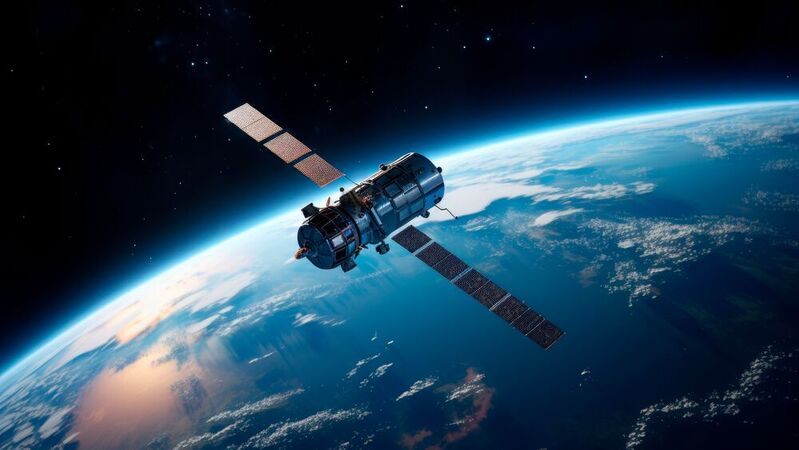
We’re all aware that space is a brutally hostile environment to men and machines alike. So, you might assume that all spacecraft are designed with the highest quality, most qualified components available – but while this is often true, it isn’t always so. Technology advances are creating a proliferation of many types of spacecraft for widely diverse applications, and some are designed with commercial restraints very much in mind.
A simplified view of the situation is that there are two basic camps: “Traditional”, and “New Space”. Traditional players comprise military and government organizations responsible for the International and (Chinese) Tiagong space stations, deep space exploration, and lunar and planetary landings. Such organizations take a conservative approach to maintaining stringent mission assurance models and rigorous recipes for device qualification, and this approach has served them well for many years.
In any case, their uncompromising approach to reliability is inevitable, considering that their spacecraft often carry humans, and that a failure in space is difficult or impossible to recover from. Accordingly, they have low tolerance for failure and pay top dollar for radiation-hardened (rad-hard), built-for-purpose semiconductors that are typically considered to be far from state of the art.
:quality(80):fill(efefef,0)/p7i.vogel.de/wcms/5f/fe/5ffedb2e0ffa6/listing.jpg "listing")
However, these large, State organizations are no longer the only game in town. As reusable rockets have become available and launch costs continue to drop, traditional and new private operators of satellites are demanding lower-cost access to space to provide space-based solutions for navigation and timing services, and for the transport, agriculture, fishing, civil engineering, and banking industries for a multitude of applications. To address these opportunities, over the last decade, several thousand commercial space companies have been founded around the world .
This “new space” community of developers has a higher tolerance for risk but expects significantly lower component costs. The growing popularity of small satellites (called SmallSats, and typically weighing below 300 kg and often much lighter) has further encouraged this approach as the cost of failure is lower and constellations of small satellites can be used to provide system-level redundancy to mask a single SmallSat unit failure.
These “new space” developers have a more relaxed approach to mission assurance and are willing to deploy lower-cost COTS devices that use the latest technologies. Given that the vast majority of new space satellites are used in Low Earth Orbit (LEO), where the radiation environment is less extreme, the risk of catastrophic radiation-induced failure is lower (LEO is regarded as being between approximately 300 km to 1,000 km from Earth and residing below the inner Van Allen radiation belt) .
Space and its environmental challenges to electronics
Analog Devices is one company that has been supporting the aerospace and defense markets for over 40 years with high reliability electronic devices. This section of the article is based on – and adds to - their views on how the space environment challenges electronic devices, and some solutions available.
The first hurdle for space electronics to overcome is the vibration imposed by the launch vehicle. The demands placed on a rocket and its payload during launch are severe. Rocket launchers generate extreme noise and vibration. Pyroshock is a similar issue; it’s the response of the rocket structure to high frequency, high magnitude stress waves that propagate through it as a result of an explosive charge, like those used in a satellite ejection or the separation of two stages of a multistage rocket. Pyroshock exposure can damage circuit boards, short electrical components, or cause many other issues. Once in space, there is zero pressure, which can significantly impact the behavior of components manufactured under atmospheric pressure. Materials may behave differently, and components designed for Earth conditions may fail in the vacuum of space.
:quality(80):fill(efefef,0)/p7i.vogel.de/wcms/61/93/6193d618661fb/web-vorschaubild-webkon-analogdevices-wolfspeed-stmicroelectronics-pb-2021-12-14.jpeg "WEB-Vorschaubild_Webkon_AnalogDevices_Wolfspeed_STMicroelectronics_PB_2021-12-14 (Pexels)")
WEB CONFERENCE: WIDE BANDGAP DEVICES
WBG-Devices - the gamechangers in high efficiency solutions
Outgassing is another major concern. Plastics, glues, and adhesives can outgas and vapor released by plastic devices can deposit material on optical devices and degrade their performance. Outgassing of volatile silicones in low Earth orbit (LEO) causes a cloud of contaminants around the spacecraft. Contamination from outgassing, venting, leaks, and thruster firing can degrade and modify the external surfaces of the spacecraft. Manufacturing electronic components using ceramic rather than plastic eliminates this problem. High levels of contamination on surfaces can contribute to electrostatic discharge. Satellites are vulnerable to charging and discharging; satellite charging is a variation in the electrostatic potential of a satellite, with respect to its surrounding low density plasma.
The two primary mechanisms responsible for charging are plasma bombardment and photoelectric effects. Discharges as high as 20,000V have been known to occur on satellites in geosynchronous orbits. If protective design measures are not taken, electrostatic discharge, a build-up of energy from the space environment, can damage the devices.
A design solution used in geosynchronous earth orbit (GEO) is to coat all the external surfaces of the satellite with a conducting material. The atmosphere in low earth orbit (LEO) comprises about 96% atomic (one atom) oxygen. Atomic oxygen can react with organic materials on spacecraft exteriors and gradually damage them. NASA has addressed this problem by developing a thin film coating that is immune to the reaction with atomic oxygen.
Another obstacle is the very high temperature fluctuations encountered by a spacecraft. In the sunlit phase of its orbit, a satellite is heated by the sun, but as it moves around to the shadow side of the Earth, the temperature can drop by as much as 300°C. Similarly, the moon’s surface temperature can reach +200°C by day and drop to -200°C at night. The wide variation of temperatures mechanically stresses components, and may shorten their lifetime and significantly limit their operational functionality. Commercial off-the-shelf components subjected to temperatures above or below the allowable range can fail.
These challenges reinforce the value of ceramic components in this environment. Ceramic packages can withstand repeated temperature fluctuations, provide a greater level of hermeticity, and remain functional at higher power levels and temperatures. They provide higher reliability in harsh environments.
The vacuum of space is a favorable environment for tin whiskers, so prohibited materials are a concern. Pure tin, zinc, and cadmium plating are prohibited on EEE (Electrical, Electronic, and Electromechanical) parts and associated hardware in space. These materials are subject to spontaneous whisker growth that can cause electrical shorts. Using lead-based solder eliminates the risk of shorts occurring when devices are used in high stress applications.
Finally, the space radiation environment can have damaging effects on spacecraft electronics. There are large variations in the levels of and types of radiation a spacecraft may encounter. Missions flying at low Earth orbits, highly elliptical orbits, geostationary orbits, and interplanetary missions have vastly different environments. Additionally, those environments change, as radiation sources are affected by solar activity. UV radiation causes molecular degradation of helium, oxygen, nitrogen, and other gases. The atomic versions of these elements initiate corrosion and erosion of materials. The ions and free electrons in space can cause arcing, which may affect sensitive electronic components. UV degradation changes the composition of materials and can even remove oxygen from them, which affects component performance.
:quality(80)/p7i.vogel.de/wcms/0b/ab/0bab17d89b907f36540b899f3d881d73/0105356625.jpeg "As well as photovoltaic, this article covers thermal energy technologies including solar farm power plants, solar Stirling systems, and thermal (or updraft) power plants. (Source: Günter Albers - stock.adobe.com)")
BASIC KNOWLEDGE – SOLAR ENERGY
What is solar energy? Definition, types and more
The requirements for a launch vehicle are very different to that of a geostationary satellite or a Mars rover. Each space program has to be evaluated in terms of reliability, radiation tolerance, environmental stresses, the launch date, and the expected life cycle of the mission.
Power management and system level challenges
Components in spacecraft must be designed to reliably overcome these challenges so that they can fulfil their roles in the craft’s mission-critical systems. First among these is power management, on which every other system depends. And power systems must address the reality that solar radiation is the only available power source.
Solar panels, batteries, and power distribution units are integral components in power management. Solar panels harness readily available sunlight, to charge a spacecraft’s batteries. Batteries provide backup power whenever solar energy is insufficient or unavailable. Power distribution units regulate and distribute power to all systems within the spacecraft.
Space-grade components are engineered to address these challenges, ensuring the availability and efficient utilization of power during space missions. This means that stable and efficient power can be delivered to other onboards systems including communications, control and navigation, imaging, and spectroscopy.
How components are made fit for uncompromising traditional space applications
Components that are suitable for traditional space applications – which, as described above, are the most demanding – are defined not only by their manufacturing techniques and materials, but also by how they are tested, certified, qualified, and derated.
:quality(80)/p7i.vogel.de/wcms/b4/ac/b4ac36b6cbd5b439cf884d9e023e3f85/87522375.jpeg "The humble battery is by far one of the most crucial enabling technologies of the 21 st Century. (Source: Adobe Stock)")
BATTERY BASICS
Battery energy storage systems: Past, present, and future
Manufacturing techniques: We have already mentioned some of the approaches used in various situations above, especially packaging the devices in ceramic rather than plastic. However, many more techniques are also used. ICs are encapsulated in protective materials such as epoxy resin (potted) to shield them from environmental factors. External metal shields are added to protect against radiation and electromagnetic interference. The chips also have specialized substrates with high thermal conductivity and electrical insulation properties.
ICs are fabricated using radiation-resistant silicon processes, and gold wires are used for interconnections due to their reliability and resistance to corrosion. Sealing ICs in hermetic packages prevents contamination and ensures long-term reliability.
At board level, critical components are duplicated for redundancy, and fault tolerant architectures are designed. Watchdog timers monitor microcontroller operation, and error detection and correction codes (EDACs) are implemented in memory and data storage systems. These can detect and correct errors caused by radiation or other factors, ensuring data integrity.
Qualification: Each space-grade component undergoes individual qualification. Rigorous testing ensures their reliability and safety.
NASA typically specifies Level 1 components with space heritage, and Qualified Manufacturer List Class V (QMLV) devices are preferred. NASA may inquire about even higher quality levels.
Level 1 parts are those produced under assurance classes recognized by NASA as providing the highest possible level of quality and reliability (e.g. QML Class V & K, JANS for discrete semiconductors, QPL Class S, Failure Rate Level (FRL) S), from NASA approved manufacturing sources, and meeting NASA space level parts and packaging program assessment criteria.
Certification: Space-grade components often comply with specific certifications, including :
- MIL-STD-883: A military standard for testing and qualifying electronic components.
- MIL-PRF-38534 (Class K): A high-reliability standard for hybrid microcircuits.
- MIL-PRF-38535: A similar standard for discrete semiconductors.
- AS9100: An aerospace quality management system.
NASA maintains the NASA Parts Selection List (NPSL), which recommends EEE (Electrical, Electronic, and Electromechanical) part types based on evaluations, risk assessments, and quality levels.
Derating: Derating is essential to enhance reliability, and NASA follows preferred reliability practices, including derating of EEE parts.
Testing: Space-grade components undergo various tests, including :
- Burn-in: Detects early failures by operating components under extreme conditions.
- Non-Destructive Bond Pull: Identifies faulty wire bonds.
- Temperature Cycle (Thermal Shock): Exposes components to fluctuating temperatures.
- Mechanical Shock: Simulates sudden forces or abrupt motion.
- Constant Acceleration: Tests the effects of acceleration.
- Particle Impact Noise Detection (PIND): Detects loose particles.
- Radiographic Testing: Identifies defects using electromagnetic waves.
An evolving spectrum of cost vs quality trade-offs
An article in AspenCore Networks’ EEWeb portal, titled ‘The Convergence of Traditional and New Space Electronics Solutions’ describes the difference between traditional and new space strategies – but also shows various strands of convergence.
For example, there are indications that members of the traditional camp are starting to relax their strict semiconductor product qualification requirements to utilize the latest technologies. This is evidenced by their willingness to use plastic packages in space missions as opposed to traditional ceramic packages. There is also evidence that the new space camp has recognized that COTS products represent a well-founded risk, so they have been judiciously deploying rad-hard components in space electronics systems to improve reliability. The result of all of this is that traditional and new space engineers are gradually converging on an approach to create systems using more cost-effective but still radiation-hardened electronics.
In recent years, there has been a number of initiatives to reduce the high cost of traditional radiation-hardened components. These initiatives include innovative hardening techniques that take advantage of high-volume commercial wafer foundries, the use of commercial IP (such as the Arm processor) that can be utilized in rad-hard integrated circuits, and the steps that are currently being taken to create a plastic package specification that is suitable for use in space. All of these measures are driving down the cost of rad-hard components to facilitate the convergence of the requirements of the traditional and new space developers.
An approach that is gaining momentum, particularly in CubeSats (a type of SmallSat), is the judicious use of radiation-hardened components to implement critical system functions and to act as a safety monitor or watchdog to check that system COTS devices are operating correctly. This hybrid approach allows a design team to implement a rad-hard functional base in conjunction with the latest state-of-the-art COTS technologies. A good example would be the use of a COTS graphics processing unit (GPU) in a small satellite that requires high-speed image processing for an on-board camera. The COTS GPU cannot mitigate against radiation effects itself, but it can be managed by a radiation-hardened device to ensure that it is operating correctly and reset if its operation is disturbed by radiation effects.
:quality(80)/p7i.vogel.de/wcms/50/47/5047818bfeb5d315d1db5c5946dbdeae/0116669487.jpeg "The major development in electrification is seen through the invention and commercialization of electric vehicles. (Source: BillionPhotos.com - stock.adobe.com)")
POWERING THE FUTURE
How electrification is driving the world in 2024
The future of space electronics
Just like their terrestrial counterparts, space systems are constantly driven to become smaller, more efficient, and yet more functional – and they are achieving this by embracing Industry 4.0 and its associated trends of automation, additive manufacturing (or 3D printing), machine learning, artificial intelligence and more.
Airbus, for example, embraces the power of additive-layer–manufacturing technology to manufacture RF components in large volume for its Eurostar satellite.
Holding a promise for future electronic devices, particularly in optoelectronics, a team headed by the University of Geneva (UNIGE) in March 2023 created a quantum material that can be used to capture and transmit information within new electronic devices at a very high speed. The presence of force fields in the material generates entirely unique dynamics that are not observed in conventional materials; therefore, electrons can navigate through a curved space.
The advent of Industry 5.0 brings transforming trends like the metaverse and quantum computing that can significantly change the technology landscape. These technologies even have the potential to simulate the space environment (microgravity) on Earth.
References
Changing trends in designing space electronics - EDN
The Convergence of Traditional and New Space Electronics Solutions - EEWeb
The Engineer - Challenges for Electronic Circuits in Space Applications
The Stellar Role of Electronic Components in Space Exploration | Heisener Electronics
Understanding PCB Design Techniques for Space-Qualified Applications. - PCB Directory
NASA Parts Selection List (NPSL) - General Requirements
Understanding Space Qualification of Electronic Components - everything RF
NASA Parts Selection List (NPSL)
Spacecraft Electrical Power Systems (nasa.gov)
Understanding Space Qualification of Electronic Components - everything RF
The Convergence of Traditional and New Space Electronics Solutions - EEWeb
Evolving trends in space electronics - Electronic Products
(ID:50032107)
:quality(80)/p7i.vogel.de/wcms/27/4a/274a833093e4259e2c5b013d06903246/0128485749v2.jpeg "On-orbit AI can detect temperature anomalies such as wildfires, volcanic activity, or industrial accidents with the Spacechips AI1 processer. This helps emergency management teams make faster, better-informed decisions about which fire prone areas are the most vulnerable. (Source: Vicor)")
:quality(80)/p7i.vogel.de/wcms/a5/17/a517436470814e8017c3e580b308348e/0127681194v4.jpeg "Robust devices that meet MIL-PRF-27 and MIL-STD-981 standards offer a lower cost, smaller size, and higher density compared to traditional planar transformers. (Source: Vishay)")