


:quality(80)/p7i.vogel.de/wcms/7f/4b/7f4b97757cea82c0675209630577dc22/0133974130v2.jpeg "Vox Power’s EIRE600 delivers up to 600 W in a compact 5 × 3-inch package, with forced-air or conduction cooling options for industrial and medical equipment. (Source: Vox Power)")
:quality(80)/p7i.vogel.de/wcms/55/97/5597c3436e3bc92ee7ba23b6f9d289e9/0134032539v2.jpeg "Littelfuse’s TP7.0SMD-XC automotive TVS diode series uses foldback technology to provide low clamping voltage for protecting sensitive vehicle electronics. (Bild: Littelfuse)")
:quality(80)/p7i.vogel.de/wcms/51/f8/51f84448e666230bb11a02566abd1177/0133958187v3.jpeg "Microchip’s radiation-tolerant GaN point-of-load converter supplies up to 20 A for space-based processors, FPGAs, microcontrollers and ASICs. (Source: Microchip)")
:quality(80)/p7i.vogel.de/wcms/0a/7c/0a7c08f368ae1d91f758dd18d2a32e88/0133978423v2.jpeg "EPFL researchers have demonstrated a GaN transistor that withstands nearly 4 kV, using an intrinsic polarization superjunction design to distribute electric fields more evenly. (Source: EPFL)")
:quality(80)/p7i.vogel.de/wcms/5b/94/5b94232ca4183d6fcc2dccc7394d7544/0134041114v4.jpeg "Siemens and NVIDIA are testing AI applications at Siemens’ Erlangen electronics factory, using digital twins to support production planning and prepare inspection systems before physical prototypes are available. (Bild: Siemens)")
:quality(80)/p7i.vogel.de/wcms/b4/1f/b41f2731a07b608e60eca3663e280301/0133980549v2.jpeg "Multi-year agreement with Wolfspeed supports Infineon’s conversion from 150-millimeter to 200-millimeter silicon carbide (SiC) manufacturing (Source: © Ada - stock.adobe.com)")
:quality(80)/p7i.vogel.de/wcms/e3/0a/e30a8813bcf44b16f0dceb63a0747d29/0133984094v2.jpeg "The semiconductor is only one part of the design. Higher voltage, frequency and power density also increase the demands on electronic packaging materials such as die attach, substrates, top-side interconnects and module attach. (Source: Generated by AI)")
:quality(80)/p7i.vogel.de/wcms/5d/fb/5dfba5e5f38daf2b8597b05656af29c0/0133956337v2.jpeg "Wolfspeed has received a conditional commitment for a loan of up to $1.5 billion from the U.S. Department of War to support its domestic wide-bandgap semiconductor supply chain. (Source: © AspctStyle - stock.adobe.com)")
:quality(80)/p7i.vogel.de/wcms/bf/b6/bfb6ac295759be32d567df9849b6767e/0134094495v2.jpeg "Fraunhofer ISE reports that 25 Ah pouch cells with silicon-rich anodes retained more than 83% of their initial capacity after 1,000 cycles when tested under 1,000 kPa axial pressure. (Bild: Fraunhofer ISE)")
:quality(80)/p7i.vogel.de/wcms/16/dc/16dca55e6ef80e6b5da68bc628da2dcc/0133844782v2.jpeg "This article explains virtual power plants in modern renewable-heavy grids. (Source: © M@rketVisualsStudio - stock.adobe.com)")
:quality(80)/p7i.vogel.de/wcms/e8/33/e8330aae4bea3578b98ec2c1403d367a/0133980001v2.jpeg "IRENA’s 2026 World Energy Transition Outlook identifies faster electrification powered by renewables as central to meeting future global energy needs. (Source: Irena)")
:quality(80)/p7i.vogel.de/wcms/6c/b4/6cb405f47d25035e256ae90fe3a66ee6/0134032112v2.jpeg "Sungrow’s PowerTitan 3.0 energy storage platform uses onsemi EliteSiC hybrid power modules, with the companies reporting peak inverter efficiency above 99.3%. (Bild: onsemi)")
:quality(80)/p7i.vogel.de/wcms/7b/76/7b76005554b556df2a7a3794bdf69d44/0132365246v2.jpeg "Hioki’s ST5680A DC Hipot Tester combines CE/UKCA/CSA compliance, an integrated capacitance‑based contact check and time‑series waveform recording (voltage, leakage current, insulation resistance) to standardize hipot and insulation testing across EV cell, module and pack production lines. (Source: Hioki)")
:quality(80)/p7i.vogel.de/wcms/af/7f/af7f7b0fb7f29219fc991b1130f65477/0132241333v2.jpeg "Comprehensive laboratory testing regimens—combining thermal cycling, high‑current stress, EMC, and accelerated lifetime tests—are essential to validate advanced power designs and ensure reliability in real‑world applications. (Source: PRBX)")
:quality(80)/p7i.vogel.de/wcms/16/3d/163df69363f8125315a9826e13ea4b05/0131927425v2.jpeg "Solution will maximize data center and AI factory profitability while delivering engineering-grade insights to design and operations for more efficient, sustainable, and resilient infrastructure. (Source: Cadence)")
:quality(80)/p7i.vogel.de/wcms/85/b7/85b7e90733a2bd8f21515d8f7137f2fc/0131917677v2.jpeg "Renesas acquires Pictorus to integrate its embedded application software platform with Renesas’ MCU and MPU portfolio, helping developers shorten time‑to‑market and simplify system integration. (Source: © lucadp - stock.adobe.com)")
:quality(80)/p7i.vogel.de/wcms/f8/34/f834240d434a0c265a2ccafe614c8cd7/0134032109v4.jpeg "Hard- and soft-switching techniques shape voltage and current during device transitions, influencing switching losses, EMI and thermal performance in power converters. (Bild: © Mrthullab - stock.adobe.com)")
:quality(80)/p7i.vogel.de/wcms/27/07/2707280c807689b437baed3660257404/0133626052v2.jpeg "The quantum behavior of electrons shapes semiconductor devices—and the power converters that deliver electricity to modern computing systems. (Source: © Celt Studio - stock.adobe.com)")
BASIC KNOWLEDGE What is an inductor? Definition, explanation, and more
Related Vendors
:fill(fff,0)/p7i.vogel.de/companies/6a/20/6a202a4f89a62/mrs-white-on-blue-bg.png "mrs-white-on-blue-bg ()")
:fill(fff,0)/p7i.vogel.de/companies/5f/71/5f71d5f92a5f6/2000px-rogers-corporation-logo-svg.png "2000px-Rogers_Corporation_Logo.svg.png (rogers germany)")
:fill(fff,0)/p7i.vogel.de/companies/68/2c/682c3e2e9a195/logotype-rvb.jpeg "logotype-rvb (MERSEN France)")
An inductor is among the fundamental electronic components, alongside capacitors and resistors. The three components are highly sensitive to both the voltages and currents present in a circuit, as well as any fluctuations in their values. Capacitors oppose changing voltage, while resistors block current flow. Unlike others, inductors deal with magnetic fields to oppose changes in current flow. The same can be verified with their coil-like body.
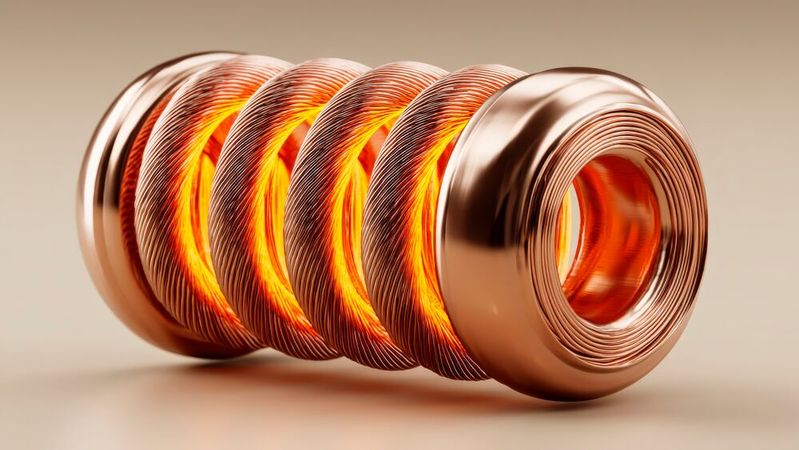
In the early 1830s, strangely, two brilliant scientists, Michael Faraday (an English Chemist and Physicist) and Joseph Henry (an American Physicist), independently discovered inductance. The SI units for capacitance (Farad) and inductance (Henry) are named after their discoverers. The inductor was invented much after inductance was discovered. The first-ever inductor coil was a transformer.
Inductor definition
An inductor is a passive electronic component that protects against current surges by temporarily storing unwanted energy in its magnetic field and then releasing it back into the circuit.
1. What is an inductor
Inductors are passive components because they do not generate energy of their own. They can only store and release incoming energy from other sources. Moreover, inductors cannot continuously store energy in their magnetic fields and deliver it back to the circuit.
2. Inductor symbol
The symbol of an inductor shows its coil-like body. Sometimes, engineers use L to represent an inductor in the circuit.
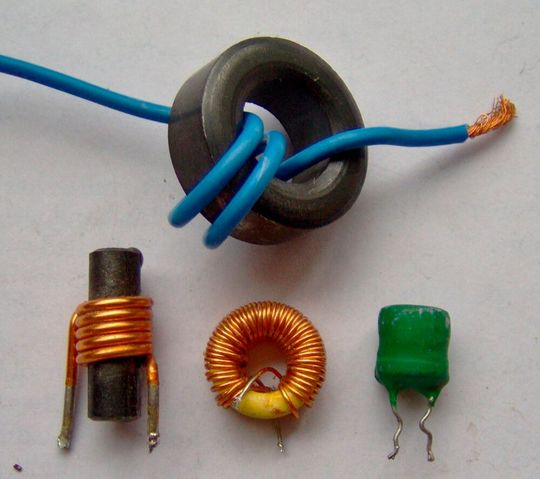
Unlike resistors and capacitors, inductors do not have a special structure. Inductors are simply coils of wire containing a magnetic core made from ferrite or iron. The inductive coil is made from a conducting material, such as copper. It is insulated for protection. Another method of construction wraps the inductor coil made from plastic or ferromagnetic material around an iron core. Inductors are also known by several other names, including coil, inductron, and reactor. Choke coil is the most widely used alternative name.
3. Inductance
Before diving deeper into the question of “what is an inductor”, let’s understand inductance. An inductor exhibits “inductance”, denoted by “L”, which allows it to oppose changes in the current. Simply put, inductance is a property of a material that opposes changes in the current flowing in a circuit. The larger the inductor’s inductance, the greater the capacity to store electrical energy in its magnetic field. The lower the inductance, the less the capacity for energy storage.
Henry: The SI unit of inductance is Henry (H). One Henry is defined as the self-inductance of a coil when a voltage of 1 volt produces a flux leakage of 1 Weber turn.
4. What does an inductor do?
Inductor operations are based on Faraday’s laws of electromagnetic induction. We have an article that explains Faraday’s laws of electromagnetic induction in detail. The section explains what an inductor does.
Inductance is of two types: Mutual inductance and self-inductance. The main function of an inductor is to oppose any changes to the current flow. If the current is increasing, the inductor will try to stop it. It will also stop decreasing current. This property of inductors is known as self-inductance.
4.1 Inductor working
An inductor with N coil turns is connected in a circuit. When the current flows through the coil, it generates a time-varying magnetic field around it. If the current remains constant throughout the operation, the inductor behaves like a short circuit or a normal wire.
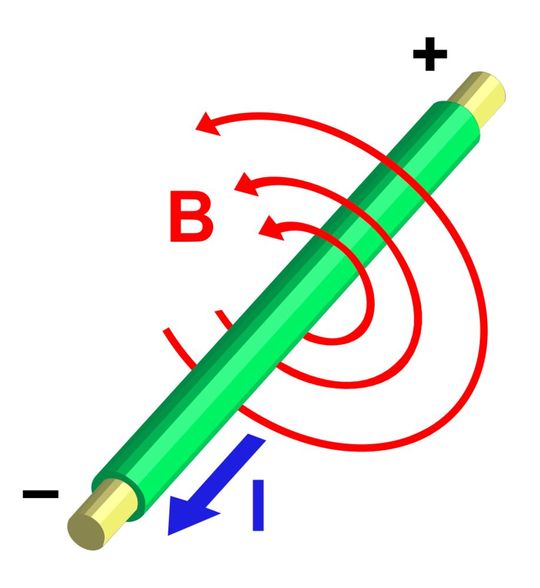
The circuit current starts to increase. According to Faraday’s laws of electromagnetic induction, an inductor must oppose changes in the current. The changing magnetic field induces a reverse voltage (emf) that opposes the rise in current. This unique property of inductors is known as self-induction. The magnetic field stores electric energy and starts to expand.
If the magnitude of the circuit current decreases, the inductor tries to oppose it by releasing the stored energy back to the circuit. As a result, the magnetic field contracts.
4.2 Self-inductance: bulb experiment
If we want to imagine what does an inductor do with a bulb, connect both in a circuit. When you turn on the switch, it remains on. When you turn off the switch, the bulb turns off. The same behavior cannot be observed in the presence of an inductor in the circuit.
Consider what is an inductor up to when connected with a battery, bulb, and switch in a circuit.

At first, the bulb lights up. The changing magnetic field around the inductor starts to store electrical energy. It induces a voltage in the opposite direction to turn off the bulb. Slowly, the bulb brightness fades.
If we turn off the switch, the inductor releases the stored energy back to the circuit. The bulb lights up for a few seconds. When the inductor releases all of its energy, the bulb goes off. That’s how an inductor uses self-inductance to combat changes in current.
4.3 Mutual inductance
What does an inductor do? - An inductor influences other inductors present in its vicinity. They need not be connected with wires. We cannot observe the same phenomenon in resistors and capacitors. The remarkable property known as mutual inductance makes inductors applicable in wireless power transmission.
Two coils, A and B, are placed near each other, typically less than 1 meter. No wired connection or physical contact exists between the two coils.
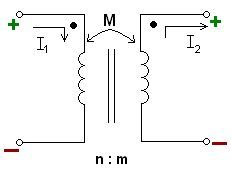
The current flows through coil A. It generates a time-varying magnetic field across it, which links with the coil B. As a result, the second coil produces an emf. This is the magic of inductors! Due to mutual inductance, the second coil produces a voltage based on the current in the first coil, without any electrical connection or even physical contact. Transformers work on such principles.
5. Inductor equation
There are two inductor equations. The most popular inductor equation is the inductor voltage equation.
The second inductor equation is for the total energy stored in the inductor.
5.1 Derivation of the inductor equation (Inductor voltage)
The inductor equation is based on Faraday’s second law of electromagnetic induction.
Where,
- The electromotive force, often denoted by , is the instantaneous induced voltage. Here we will denote this instantaneous voltage by v.
- N is the number of turns on the inductor coil.
- Φ is the value of magnetic flux through a single turn of the inductor coil. The derivative of flux represents the rate of change.
As mentioned above, the equation shows a change in magnetic flux for a single turn of the inductor coil. To calculate the rate of change in magnetic flux of all the inductor coil turns, there is another formula. Flux linkage is the total magnetic flux passing through all the turns of a coil. It is denoted by the Greek letter lambda (λ).
λ = NΦ — (eqn 2)
N is a constant. We can rewrite Equation 1 as the derivative.
Putting the value of Equation 2 in Equation 3.
For a magnetic circuit, the total flux (flux linkage) is directly proportional to the current flowing through it (denoted by i).
λ i
The proportionality constant is equal to inductance L.
λ = L i — (eqn 5)
Rearranging Equation 5.
Differentiating Equation 5 with respect to t.
L does not get differentiated as it is a constant.
Using Equation 4 in Equation 7, we obtain the inductor equation.
- v is voltage expressed in volts.
- L (inductance) is in Henry.
- i is the current expressed in amperes.
- t is time expressed in seconds.
The equation
is known as the inductor equation. It shows that the voltage across an inductor is based on the rate of change of circuit current.
5.2 Derive the energy stored in an inductor
An inductor stores energy in its magnetic field. It is possible to calculate the amount of stored energy in it.
Power = Voltage x Current
Instantaneous power
p(t) = v(t) x i(t) — (eqn 9)
Putting the value of the inductor equation (eqn 8) in Equation 9.
i(t) is a constant. It can be rewritten as i.
To calculate stored energy in an inductor, we must integrate Equation 10 from 0 to the maximum.
The total amount of power transferred over time is called energy, which is denoted by W.
We can rewrite Equation 11 as follows.
- The total energy stored in an inductor (W) is expressed in Joules.
- L (inductance) is in Henry.
- I (Total current) is in amperes.
6. Impedance of inductor
In DC circuits, an inductor exhibits an inductance. The case is different for AC circuits. In AC circuits, impedance comes into play. Impedance is the total opposition to the alternating current by resistors and reactive elements (inductors and capacitors). The impedance of inductor is the sum of resistance and reactance. Let us understand reactive elements and reactance.
6.1 Reactive elements
All three fundamental components: resistors, inductors, and capacitors oppose the circuit current in some way or another. There is a difference between them. Resistors resist the flow of current. They do not resist the change in current. Whatever the circuit current may be, less or more, the resistor is going to oppose it.
In addition, resistors do not store electrical energy. They dissipate it. On the other hand, inductors and capacitors store electrical energy and release it back to the circuit. It is something resistors do not do. Hence, inductors and capacitors are called reactive elements.
6.2 Inductive reactance
As an inductor is a reactive element, this DC-style inductance becomes inductive reactance in AC circuits.
Inductive reactance, denoted by XL, is the opposition offered by the inductor to the flow of current. There is a separate formula for inductive reactance. The SI unit of inductive reactance is Ohms because Hertz x Henry is Ohms.
Where
- f is the frequency of AC in Hertz.
- L is the inductance in Henry.
6.3 Inductor phase shift
What does an inductor do in AC circuits? Phase is important in AC circuits. Two alternating quantities, such as voltages and currents, of the same frequency, pass through their minimum (zero) and maximum (peak amplitude) at the same time. Such voltages and currents are said to be in phase with each other.
In resistors, the applied voltage and circuit current are in phase. However, the case is different for inductors and capacitors. In inductors, the applied voltage and circuit current are 90 degrees out of phase. The applied voltage leads the circuit current by 90 degrees or /2.
The reason for lagging current is its opposition to the current flow. When the applied voltage rises, the current changes. The inductor starts to resist the change in current. The delay corresponds to the applied voltage leading the circuit current by 90 degrees.
6.4 Impedance of inductor (pure)
As mentioned above, the impedance of inductor is the sum of resistance and inductive reactance. The formula for the impedance of inductor becomes:
Where,
- ZL is the impedance.
- R is the resistance.
- XL is the inductive reactance.
- j is an imaginary number because a phase shift exists between voltage and current.
As
We can rewrite the impedance formula as:
For an ideal inductor, R (resistance) is zero.
7. Inductor applications
Inductors, like capacitors, function as energy storage devices. With limited energy storage capability, they cannot charge and discharge other devices. Inductors are still applicable in our day-to-day lives and complex industries alike. The section explains inductor applications in detail.
7.1 Choke Oil
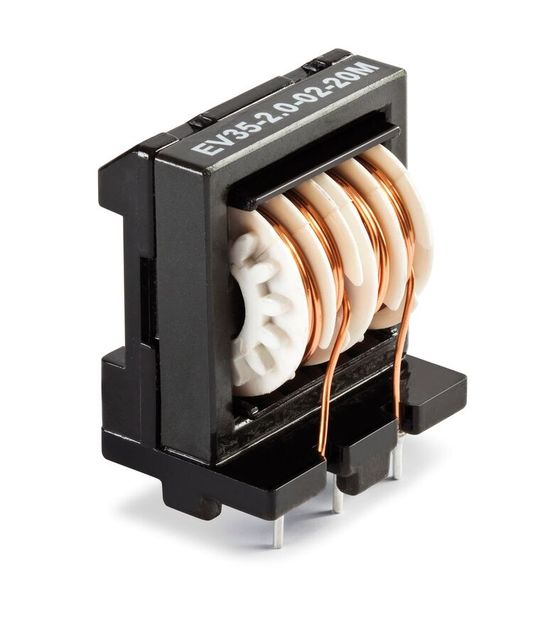
Choke coils are among the most common inductor applications, where inductors block high-frequency AC but pass low-frequency AC and DC. The word “choke” relates to blocking high-frequency components. Choke coils are of two types: audio frequency choke (AFC) and radio frequency choke (RFC). They are applicable in fluorescent lamp ballasts, power supply filtering circuits, motor control, and tuning circuits.
7.2 Transformers
Historically, inductive coils were the first ones to be used in transformers. When current flows through one primary coil, mutual inductance initiates the current flow in the secondary coil. Power transformers, audio transformers, and isolation transformers are some examples.
7.3 Motors
Inductors are used in motor windings as stator and rotor coils. They are also used in brushless DC and AC induction motors. These motors are further applicable in electric vehicles, industrial robots, large fans, pumps, and many other machines.
7.4 Power electronics
What is an inductor in power electronics - “power inductor”! Simply put, inductors used in power electronics are known as power inductors. The function of power inductors is not limited to filtering and protective gear. The question of what does an inductor do in power electronics is much more related to power handling and energy storage. The main function of power inductors is shaping outputs and reducing ripple in power switching regulators.
Power inductors involve a choke coil wrapped around a ferrite core. An air gap is present in power inductors to deal with the output from high-frequency power supplies. In simple terms, power inductors are used in DC-DC converters such as buck, boost, and cuk to maintain a smooth current for stable DC output voltage regulation. Other common power electronics applications include line conditioning, DSMPS (Digital Switch Mode Power Supply), and inverters.
7.5 PFC circuits
Power factor correction circuits (PFC) are widely used in power industries, power supplies, air conditioners, refrigerators, EV chargers, telecommunication power systems, and many other areas. The impedance of inductor comes into play because it has a leading voltage in AC circuits.
7.6 Radio frequency applications
What does an inductor do in RF? It is used mainly for signal processing, tuning, sensing, and filtering. RF inductors can also deal with RFI (Radio Frequency Interference).
An electronic filter is a component that removes unwanted frequency components from an applied signal. Inductors, in combination with other fundamental components, resistors, and capacitors, form low-pass (LPF) or high-pass filters (HPF). Inductors and capacitors form LC filters. Inductors, capacitors, and resistors form the popular LCR circuit.
RF inductors are used in tuning circuits to select specific frequencies and reject others. These tuning circuits are applicable in radios, televisions, receivers, and oscillators. Other applications of RF inductors include signal line chokers.
7.7 Electronic instrumentation
The property of mutual induction helps inductors to perform their functions without physical connection, making them reliable components for sensors and transducers. Some examples include proximity sensors, metal detectors, and relays.
7.8 Consumer electronics
Inductors are a significant part of consumer electronics, such as electrical appliances. Induction cooking is a common example in our homes. Some computer parts, charging cables, and AC DC adapters use inductors as ferrite beads to combat high radio frequencies.
7.9 Wireless power transfer
WPT (Wireless Power Transfer) is a growing technology based on Faraday’s laws of electromagnetic induction. By mutual induction, the charging coil induces a voltage in another nearby coil. The examples include smartphone wireless charging pads and some EV charging stations.
7.10 Protective gear
What does an inductor do? It functions as a protective gear that allows circuit current to change slowly, rather than abruptly. It protects the circuit from unwanted spikes. Hence, inductors are used in circuits to offer protection against transient current surges. One such example is the Flyback diode and snubber circuits.
7.11 Renewable energy
Wind turbine generators can use inductors as transformer windings to handle power conditioning. Another renewable energy application is MPPT (Maximum Power Point Tracking). Inductors ensure smooth current change and efficient power distribution in photovoltaic systems.
References
- https://www.coilcraft.com/en-us/edu/series/what-is-an-inductor/?srsltid=AfmBOorkXjmi510i8UMmQ-9nh5Oc5A_7vrCdDAto7IyvAy0dDp6BFJe3
- https://www.electronics-tutorials.ws/inductor/inductor.html
(ID:50866328)
:quality(80)/p7i.vogel.de/wcms/c3/83/c3837a0e30fea1910a63fabb02550258/0132479419v2.jpeg "Practical mathematical methods to size storage, set dynamic impedance targets and budget nanoamp quiescent losses — ensuring reliable startup and sustained operation for energy‑harvesting sensor nodes. (Source: © Jai Izzam - stock.adobe.com)")
:quality(80)/p7i.vogel.de/wcms/aa/a3/aaa3c94040c99a7aafb263e839b9ab22/0130953280v2.jpeg "The negative resistance effect can be verified in non-linear or non-ohmic devices, including many semiconductor devices, which are applicable in the power and RF industries. (Source: © ruangrit19 - stock.adobe.com)")