


:quality(80)/p7i.vogel.de/wcms/e9/5b/e95bc9c43c57018499c83a2c91ff9764/0132237640v2.jpeg "Yageo’s KH‑AT series automotive‑grade MOVs deliver robust surge absorption and stable electrical performance for demanding vehicle environments, protecting ECUs and power rails from transients. (Source: Yageo)")
:quality(80)/p7i.vogel.de/wcms/f4/61/f461d1f6bf3a6030877d90efced438f2/0132110372v2.jpeg "Taiyo Yuden’s new HVX and HTX hybrid conductive‑polymer capacitors offer AEC‑Q200 qualification, 80 V rating and high ripple capability at 135°C for noise suppression and power smoothing in automotive systems such as ADAS and power steering. (Source: Taiyo Yuden)")
:quality(80)/p7i.vogel.de/wcms/a4/b6/a4b6256bef45368325659f926c268ebe/0132104622v2.jpeg "Toshiba’s new 80 V N‑channel power MOSFET, built on the company’s latest process, improves conduction and switching efficiency for AI server power supplies and high‑frequency data‑center converters. (Source: Toshiba)")
:quality(80)/p7i.vogel.de/wcms/c0/c5/c0c5bdbaf6df6fdd0fecc97c419ea9b4/0132022612v2.jpeg "Magnachip’s 6th‑generation 600 V super‑junction MOSFETs deliver improved efficiency and thermal performance for AI server power supplies and EV fast‑charging systems. (Source: © AntonKhrupinArt - stock.adobe.com)")
:quality(80)/p7i.vogel.de/wcms/51/72/51726a890dc35d74f494908b29681028/0132478976v2.jpeg "Bosch intends to start U.S. based commercial manufacturing in 2026 – just three years after acquiring the Roseville site. (Source: Bosch)")
:quality(80)/p7i.vogel.de/wcms/cc/f5/ccf52ac525f49330b780868db8f9565c/0132364990v2.jpeg "Infineon and LS ELECTRIC sign a memorandum to co‑develop high‑efficiency DC power infrastructure for AI data centers and next‑generation grids, targeting power conversion, energy storage integration, solid‑state transformers and semiconductor circuit breakers. (Source: © Yuliia - stock.adobe.com)")
:quality(80)/p7i.vogel.de/wcms/c6/16/c616f00139ce1575d3292524579868ed/0132241890v2.jpeg "GlobalWafers and Micron announce a strategic collaboration—including proposed financing support and a long‑term wafer supply agreement—to strengthen U.S. wafer manufacturing capacity and shore up the semiconductor supply chain for AI and data‑center demand. (Source: © Fervix Neon - stock.adobe.com)")
:quality(80)/p7i.vogel.de/wcms/ef/6d/ef6da8753871e0ea5c7b7203d31b2c9c/0132144857v2.jpeg "Keysight and WIN Semiconductor partner to reduce design risk for high‑frequency RF components by combining advanced measurement and modeling workflows with foundry‑level device validation for mmWave and high‑frequency applications. (symbolic image) (Source: © Mahmuda - stock.adobe.com)")
:quality(80)/p7i.vogel.de/wcms/83/ae/83ae0b00e573da9977ce19195d28c6b0/0132366058v2.jpeg "Researchers from EPC, The University of Hong Kong and Virginia Tech demonstrated a fully integrated GaN boost converter operating entirely at 4 K, achieving 91.6% efficiency at 7.6 W by combining monolithic GaN power ICs, on‑chip gate drivers and cryo‑qualified passive components. (Source: © Maurizio Di Paolo Emilio)")
:quality(80)/p7i.vogel.de/wcms/3c/a1/3ca1e2527a00068eb37f1db220c5463a/0132042920v2.jpeg "Energy harvesting removes the need for periodic battery swaps in hard‑to‑reach sensors — economically and regulatorily attractive as EU battery rules raise compliance and lifecycle costs. (Source: © Plaifah - stock.adobe.com)")
:quality(80)/p7i.vogel.de/wcms/81/04/8104b7c9a2ce5645d844ca4a1b9a736f/0132261940v2.jpeg "At The Smarter E 2026 Huawei launched LUTERRA, its next‑generation grid‑forming ESS platform, and showcased the award‑winning SUN2000‑506KTL 506 kW smart string inverter — technologies aimed at 1000 Vac architectures and plant‑level grid‑forming functionality. (Source: © Thares2020 - stock.adobe.com)")
:quality(80)/p7i.vogel.de/wcms/76/27/7627729494f2cddf62d276e5d6cd0aa1/0132245568v2.jpeg "Aluminum nitride crystal with a diameter of 2 inches – grown in the Joint Lab of Fraunhofer IISB and PVA TePla. (Source: Jennifer Reißig / Fraunhofer IISB)")
:quality(80)/p7i.vogel.de/wcms/7b/76/7b76005554b556df2a7a3794bdf69d44/0132365246v2.jpeg "Hioki’s ST5680A DC Hipot Tester combines CE/UKCA/CSA compliance, an integrated capacitance‑based contact check and time‑series waveform recording (voltage, leakage current, insulation resistance) to standardize hipot and insulation testing across EV cell, module and pack production lines. (Source: Hioki)")
:quality(80)/p7i.vogel.de/wcms/af/7f/af7f7b0fb7f29219fc991b1130f65477/0132241333v2.jpeg "Comprehensive laboratory testing regimens—combining thermal cycling, high‑current stress, EMC, and accelerated lifetime tests—are essential to validate advanced power designs and ensure reliability in real‑world applications. (Source: PRBX)")
:quality(80)/p7i.vogel.de/wcms/16/3d/163df69363f8125315a9826e13ea4b05/0131927425v2.jpeg "Solution will maximize data center and AI factory profitability while delivering engineering-grade insights to design and operations for more efficient, sustainable, and resilient infrastructure. (Source: Cadence)")
:quality(80)/p7i.vogel.de/wcms/85/b7/85b7e90733a2bd8f21515d8f7137f2fc/0131917677v2.jpeg "Renesas acquires Pictorus to integrate its embedded application software platform with Renesas’ MCU and MPU portfolio, helping developers shorten time‑to‑market and simplify system integration. (Source: © lucadp - stock.adobe.com)")
SPACE TECHNOLOGY James Webb Telescope: An “unexplored thanks” to electronics
Related Vendors
:fill(fff,0)/p7i.vogel.de/companies/6a/20/6a202a4f89a62/mrs-white-on-blue-bg.png "mrs-white-on-blue-bg ()")
:fill(fff,0)/p7i.vogel.de/companies/63/c7/63c7da97be945/diotec.png "diotec (Diotec Semiconductor AG)")
:fill(fff,0)/p7i.vogel.de/companies/66/8b/668becd1c07eb/dowa-logo-word--1-.jpeg "dowa-logo-word--1- (DOWA)")
The James Webb Telescope is in deep space, currently miles apart from the Earth, about 4-5 times the distance between the Earth and the moon. But did you know, the James Webb Telescope relies on semiconductors and power electronics for operation? The article explains how the James Webb telescope relies on semiconductors and power electronics — something the world does not acknowledge much!
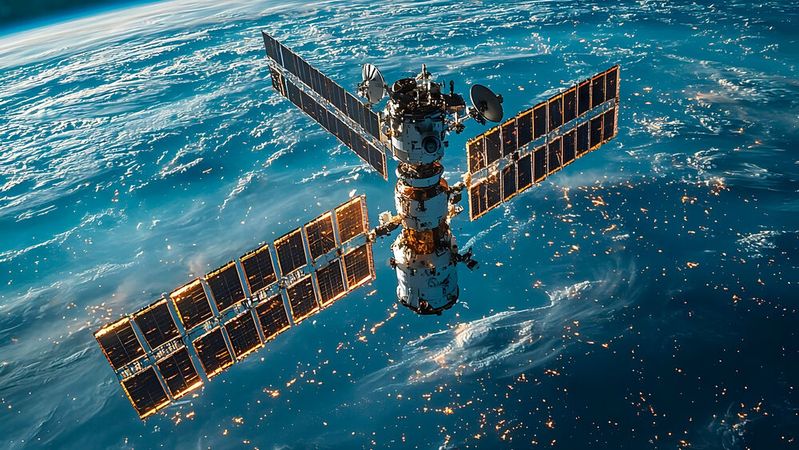
The James Webb Space Telescope (JWST) is the largest space telescope. It was designed to use high-resolution, high-sensitivity, and advanced equipment to perform infrared astronomy. High-quality pictures of gigantic celestial objects enable astronomers to understand the mysteries of the observable universe and estimate the chances of life beyond Earth.
Four pillars of the James Webb Telescope
The James Webb Telescope left our planet in 2022. As the telescope captures and processes advanced infrared images– optics, electronics, sensing, and instrumentation are involved. The James Webb Telescope maintains a cryogenic environment for advanced computing. Such an environment should be easier to maintain, especially without humans. However, direct sun exposure makes it slightly difficult for the space telescope.
The James Webb Telescope consists of self-diagnostic systems that fix any problems onboard, which again involves loads of machine learning functions. It is because the telescope is far in space, out of reach, making manual repairs impossible. The James Webb Telescope contains four modules as part of the payload. Each module supports the telescope as organs support humans to live.
Spacecraft Bus: Brain
The primary function of the spacecraft bus is to manage power generation, distribution, and control. It consists of solar panels, lithium-ion rechargeable batteries, voltage references, and regulators to provide electricity to the James Webb Telescope.
In addition to electricity generation and delivery, the spacecraft bus handles three other critical functions of the James Webb Telescope.
- Communication modules to send and receive information from the Earth.
- Computing and processing of information.
- Altitude control and propulsion of the telescope.
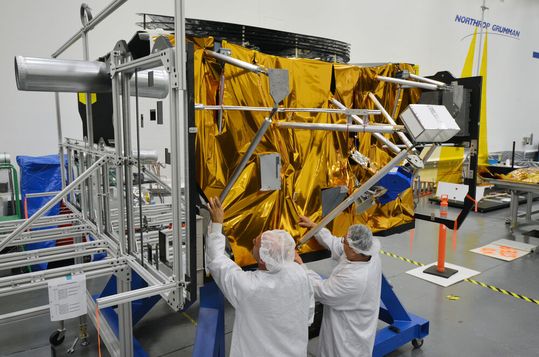
Telescope: Eye
The OTE module (Optical Telescope Element) contains a hexagonal-shaped segmented mirror framework featuring the main mirror, secondary mirror, tertiary mirror, and others coated with 98 % infrared-light reflective materials. All mirrors and optics behind them went into advanced testing for cryogenic operation, slightly above absolute zero.
Instrument Model: Heart
As the name suggests, ISIM (Integrated Science Instrument Model) is the main payload that includes advanced sensors, cameras, instruments, optical meters, cryocoolers, flight software, and other high-tech equipment. ISIM is the “heart” of the James Webb Telescope. In simple words, ISIM consists of “what” the advanced telescope needs to capture images and data for.
Sunshield: Skin
The James Webb Telescope orbits the Sun, rather than the Earth. As a result, the James Webb Telescope uses a sun shield about the size of a tennis court for passive and radiative cooling. Coated with doped silicon, the sun shield is a separate thermal control system that “covers” the telescope from harmful infrared and UV rays of the sun and other planets, just like skin covers humans and fur covers animals.
:quality(80)/p7i.vogel.de/wcms/ed/d8/edd83d7b6f7038c7c15a46fdf2bc6fb7/96879394.jpeg "Now that we have innovative and cheaper ways to capture and retain renewable energy sources such as the sun and wind, renewables are becoming a much more important power source. (Source: ©Mike Fouque - stock.adobe.com)")
BASIC KNOWLEDGE - RENEWABLE ENERGY SOURCES
What is renewable energy? Definition, types, and challenges
“Hidden electronics” behind the James Webb Telescope
Electronics is a part of each James Webb Telescope module. Electronic components assist in various functions.
- Electricity generation and delivery.
- Sensing and instrumentation support.
- Proper alignment of the mirror framework
- Pressure and heat management in the solar shield.
The main role of semiconductors and power electronics is described below.
Solar advantage
We always get electricity from somewhere, whether in our homes or commercial buildings. It is the job of power distribution facilities to supply electricity through wires or the grid. But it is easier than you think. Electricity is no big deal for the James Webb Telescope.
In space, direct sun exposure makes renewable technologies more efficient. 24/7 available sunlight enables the James Webb Telescope to consume continuous power for its tense operation in harsh space environments and cryogenic activities.
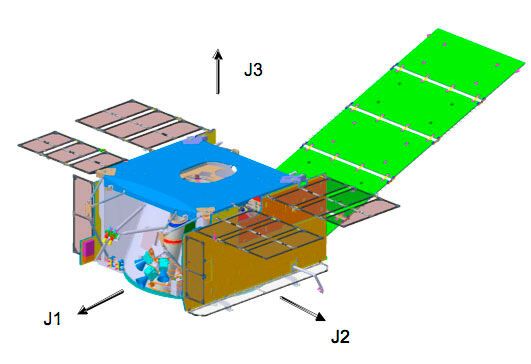
The 20-foot-tall solar array functions as the powerhouse of the James Webb Telescope. When sunlight reaches the telescope, honeycomb-like solar panels housed in the array directly convert it to electricity. Surprisingly, NASA confirmed that the James Webb Telescope consumes 1 kW of power. Not a million watts! The solar array system is efficient at generating 10x through advanced algorithms.
Electronics support
For power management, the James Webb Telescope consists of operational amplifiers, data converters (ADCs/DACs), signal conditioning systems, low-dropout regulators, analog converters, and other electronic devices. These electronic components also enable health monitoring functions to ensure mission success.
Optimal refrigeration
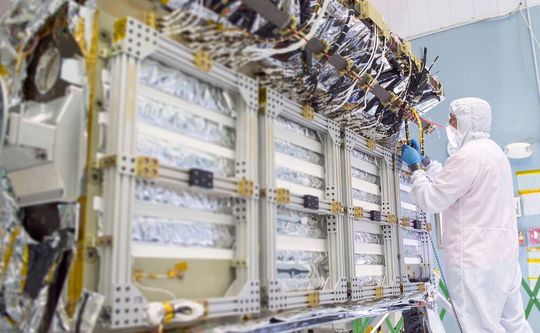
Heat generated in the James Webb Telescope could interfere with infrared astronomy. Whether advanced infrared cameras or radiators, all equipment is built on the foundation of electronics. The ISIM module maintains a cryogenic environment. The job of a cryocooler is to keep infrared sensors at extremely low temperatures. Hence, a thermal control subsystem ensures the stable operation of instruments.
Stranger “chips”
The space environment is harsh due to increased radiation, cosmic waves, solar flares, and geomagnetic storms. There are single upset events (SEE) and continuous radiation. It is because the magnetic shield of Earth is absent to protect the James Webb Telescope. A small NPN transistor behaves quite differently in space than on Earth.
Space-grade semiconductors are designed very carefully and tested rigorously. All semiconductors are radiation-hardened and lightweight. They are manufactured using radiation-resistant special fabrication procedures and need to undergo various certifications for space use. There are loads of semiconductors onboard.
:quality(80):fill(efefef,0)/p7i.vogel.de/wcms/5f/fe/5ffedb2e0ffa6/listing.jpg "listing")
Chips are used in dozens of devices and applications in the telescope. For example, 132 actuators and motor drivers help to achieve focus for the mirror framework, and high-speed op-amps and buck converters provide necessary signal conditioning. Companies such as Analog Devices, Texas Instruments, and many more were seen as key semiconductor contributors.
Why infrared?
The universe has been expanding ever since it came into existence. According to the Big Bang theory, all matter was closely tied together. As time passed, stars and galaxies moved further apart. Light travels at a speed of 300,000 km per second. Distances in space are measured in light-years. One light year means how many kilometers light will cover in one year. The larger the distance, the longer the light takes to reach Earth.
Light from distant galaxies is traveling millions and billions of light-years to reach the Earth. Those galaxies might have moved or might not even exist, but their light is still traveling. When objects move away from each other, wavelengths stretch. In the VIBGYOR spectrum, red exhibits the longest wavelength, and violet marks the shortest. When large celestial objects like stars and galaxies move further into space, wavelengths stretch even more— they move into the red to infrared region. Hence, the James Webb Telescope is designed to be an infrared telescope.
Conclusion
Numerous semiconductors, devices, and electronic systems left the Earth with the telescope. They’re probably never going to come back or for a long time. Careful, 30 years in the making, the James Webb Telescope features some of the most powerful semiconductors and power electronics systems that exhibit a long life, much longer than their Earth counterparts, and will probably operate forever!
References
(ID:50501610)
:quality(80)/p7i.vogel.de/wcms/27/4a/274a833093e4259e2c5b013d06903246/0128485749v2.jpeg "On-orbit AI can detect temperature anomalies such as wildfires, volcanic activity, or industrial accidents with the Spacechips AI1 processer. This helps emergency management teams make faster, better-informed decisions about which fire prone areas are the most vulnerable. (Source: Vicor)")
:quality(80)/p7i.vogel.de/wcms/7b/2c/7b2c4ddd6c8fd3b44fe8afc18f0d7e40/0115676667.jpeg "The article discusses laser diodes and their theory in detail. (Source: MiguelAngel - stock.adobe.com)")