


:quality(80)/p7i.vogel.de/wcms/40/62/4062c2d596e53b038e0f05f6c3182509/0133843963v2.jpeg "Littelfuse introduces ultra-low-capacitance TVS diode arrays with a 6.5 V clamping voltage for transient protection in automotive and consumer electronics. (Source: Littelfuse)")
:quality(80)/p7i.vogel.de/wcms/e5/9e/e59ecc43d3c278aece316be4209113c9/0133732079v2.jpeg "Renesas introduces its first low-voltage GaN FET family, with 100 V devices for power conversion in AI data centers, robotics and industrial systems. (Source: Renesas)")
:quality(80)/p7i.vogel.de/wcms/c4/a7/c4a7243caa7c26af5fe5108f7894050a/0133626683v2.jpeg "Wolfspeed’s new premium 200 mm SiC substrates are designed to provide more consistent starting material for power semiconductor manufacturing. (Source: © Marina - stock.adobe.com)")
:quality(80)/p7i.vogel.de/wcms/91/8b/918b533161e7327075370338d7af97af/0133589801v2.jpeg "Acbel will present scalable DC charging power modules and an 11kW passively cooled 2-in-1 on-board power solution at New Mobility Congress 2026 in Katowice, covering both charging infrastructure and vehicle applications. (Source: Acbel)")
:quality(80)/p7i.vogel.de/wcms/4f/47/4f473b006be95fb33ec3d8e3fd727b06/0133732443v2.jpeg "SEMI Europe joins the European Commission’s STEAM Executive Panel, bringing the semiconductor industry’s skills needs into discussions on education, training and workforce development. (Source: © phonlamaiphoto - stock.adobe.com)")
:quality(80)/p7i.vogel.de/wcms/c4/59/c459b75bff747399a7a7fd58381f3983/0133731182v2.jpeg "Infineon has completed its acquisition of C2i Semiconductors, adding expertise in software-defined power management and multiphase control for AI data-center power systems. (Source: © InfiniteFlow - stock.adobe.com)")
:quality(80)/p7i.vogel.de/wcms/fd/2c/fd2c2388e7985cd4c75cff39f07f6361/0133676222v2.jpeg "Greenconn expands its connector portfolio with the compact WF28 wire-to-board series and new 25 mm and 30 mm stacking-height options for its GC01 floating connectors. (Source: © Greenconn)")
:quality(80)/p7i.vogel.de/wcms/69/06/6906b5f22bfbb3f8b874ba9e459c7d26/0133675448v2.jpeg "New backend manufacturing hub strengthens and further diversifies Infineon's global production network. (Source: © Apriew - stock.adobe.com)")
:quality(80)/p7i.vogel.de/wcms/b4/93/b493d5ce620cf7eb558ca6bcd9852a1e/0133811655v2.jpeg "The massive integration of utility-scale solar photovoltaics demands BESS platforms equipped with high-power-density inverters to mitigate generation intermittency. (Source: Pixabay)")
:quality(80)/p7i.vogel.de/wcms/f8/cb/f8cbf79cc21d48d7cad08e2b620218f7/0133738515v2.jpeg "Microchip and Navitas are demonstrating a 20 kW reference design that converts an 800 VDC data-center bus to a 6 V server rail, combining GaN power devices with digital control. (Source: © Formoney - stock.adobe.com)")
:quality(80)/p7i.vogel.de/wcms/ee/de/eedef7055c094757eb208a9d181e85dc/0133371000v2.jpeg "Resonac has developed 300 mm SiC single-crystal substrates, advancing larger-diameter wafer technology for next-generation power electronics and other high-performance semiconductor applications. (Source: © Resonac)")
:quality(80)/p7i.vogel.de/wcms/7b/76/7b76005554b556df2a7a3794bdf69d44/0132365246v2.jpeg "Hioki’s ST5680A DC Hipot Tester combines CE/UKCA/CSA compliance, an integrated capacitance‑based contact check and time‑series waveform recording (voltage, leakage current, insulation resistance) to standardize hipot and insulation testing across EV cell, module and pack production lines. (Source: Hioki)")
:quality(80)/p7i.vogel.de/wcms/af/7f/af7f7b0fb7f29219fc991b1130f65477/0132241333v2.jpeg "Comprehensive laboratory testing regimens—combining thermal cycling, high‑current stress, EMC, and accelerated lifetime tests—are essential to validate advanced power designs and ensure reliability in real‑world applications. (Source: PRBX)")
:quality(80)/p7i.vogel.de/wcms/16/3d/163df69363f8125315a9826e13ea4b05/0131927425v2.jpeg "Solution will maximize data center and AI factory profitability while delivering engineering-grade insights to design and operations for more efficient, sustainable, and resilient infrastructure. (Source: Cadence)")
:quality(80)/p7i.vogel.de/wcms/85/b7/85b7e90733a2bd8f21515d8f7137f2fc/0131917677v2.jpeg "Renesas acquires Pictorus to integrate its embedded application software platform with Renesas’ MCU and MPU portfolio, helping developers shorten time‑to‑market and simplify system integration. (Source: © lucadp - stock.adobe.com)")
:quality(80)/p7i.vogel.de/wcms/27/07/2707280c807689b437baed3660257404/0133626052v2.jpeg "The quantum behavior of electrons shapes semiconductor devices—and the power converters that deliver electricity to modern computing systems. (Source: © Celt Studio - stock.adobe.com)")
:quality(80)/thumbor.vogel.de/5Bl6c0iqB1PFOqytfynphQLDK3M=/500x500/p7i.vogel.de/wcms/5f/87/5f87eae969051/drazen-dujic-photo.jpeg "Prof. Dr. Drazen Dujic")
SST TECHNOLOGY Inside the Solid State Transformers
Related Vendors
:fill(fff,0)/p7i.vogel.de/companies/68/2c/682c3e2e9a195/logotype-rvb.jpeg "logotype-rvb (MERSEN France)")
:fill(fff,0)/p7i.vogel.de/companies/66/8b/668becd1c07eb/dowa-logo-word--1-.jpeg "dowa-logo-word--1- (DOWA)")
The Solid State Transformer (SST) has been gaining tremendous attention, both in academia and industry, promising extraordinary (often hyped) power conversion performances, well beyond the current state of the art converters. Despite well-evidenced efforts, SST as a technology is still somewhat struggling to gain commercial traction and find its place on the market.
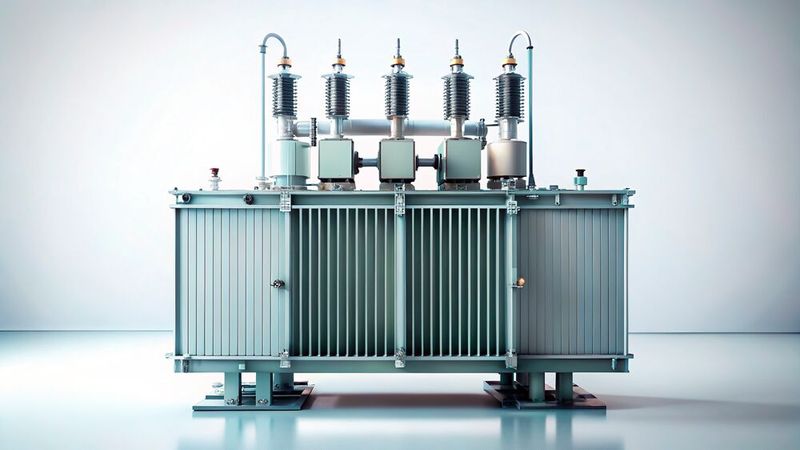
Rather than reviewing and summarising what has been done already and widely reported by many, this article takes a holistic approach. It presents various technical challenges encountered during the practical design of the SST, which require the attention of the power electronics community and warrant significant research efforts. Addressing and overcoming these technical hurdles will enable SST to become a competitive technology on the market and live up to its promises.
An emerging conversion technology
Now and then, a technology undergoes an (r)evolution, upgrading or significantly improving its performance and ultimately replacing the previously used technology, making it obsolete. The Solid State Transformer (SST), as a new and emerging power electronic conversion technology, is aiming to achieve the same power conversion in various AC or DC power systems, industrial, data centres, and e-mobility infrastructure applications. Numerous demonstrators and prototypes have been presented over the last twenty years or more, yet without a significant commercial breakthrough, which would establish the SST on the market as the primary power electronic conversion technology of choice.
Like many other new technologies, there are techno-economic implications or barriers to reach the relevant market segments, but there are also performance-related metrics that must be sufficient and reliable, offering performance beyond the state of the art, for the new conversion technology to be accepted. This article will focus on the latter, as these can be objectively evaluated and discussed. The objective is not to provide an overview of reported works on the SST, but rather to elaborate on many technological nuances associated with the SST technology as a whole, which are often overlooked, especially in research works originating from academia, and in reality require a great deal of research and engineering attention as implications for the SST technology as a whole are profound.
:quality(80)/p7i.vogel.de/wcms/ea/20/ea20c0beb93f34ab43b28750644bbdca/0128983445v2.jpeg "A Cycloconverter is an AC-AC converter that directly converts successive segments of a constant amplitude AC waveform at a higher frequency to another AC waveform at another lower frequency, without a DC link. (Source: © wpw - stock.adobe.com)")
BASIC KNOWLEDGE
Cycloconverters in power electronics
What are solid state transformers?
To discuss and analyse the SST technology, it is important to define it clearly on a system level. It is also important to stress clearly what the SST is not. It is not a direct replacement for a line frequency transformer alone, and it should not be directly compared to it, even though it can obviously perform the AC-AC conversion.
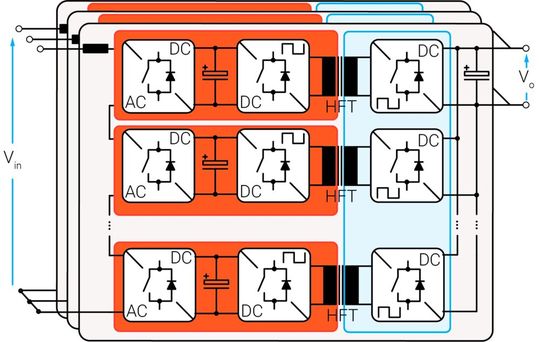
The word transformer inside the SST name leads to a lot of confusion, unfortunately. Despite various topological variations that exist, the SST is essentially a galvanically isolated modular converter. It has power electronic conversion stages at its terminals, regardless of their number (two or more) and type (AC or DC), and the galvanic isolation is achieved with a plurality of integrated high-frequency transformers (HFTs), operated at several tens or hundreds of kHz.
Typically, the SST is a highly modular converter made from many low-power-rated building blocks or modules. It can be designed to perform any conversion: AC-DC, DC-AC, AC-AC, DC-DC, with multiple terminals and with arbitrary numbers of AC phases, even though the single-phase and three-phase AC networks are of practical relevance.
Generally, SST is considered for direct connection to medium voltage networks, serving high power applications in the MW range. It offers voltage adaptation between its terminals, full controllability, and galvanic isolation, needed for safety. While in theory, there is no real limit in terms of applications that SST could serve, some applications (those requiring galvanic isolation) have emerged as early adopters.
The fact that SST utilises isolated high-frequency operated DC-DC stages offers the possibility to improve the power density of the SST, both in terms of volumetric (kW/l) and gravimetric (kW/kg) figures of merit. Hence, the applications that would greatly benefit from the reduced form factor of the conversion solution are the main drivers, such as railway on-board power supply, electric vehicle chargers, data centre power supply, etc.
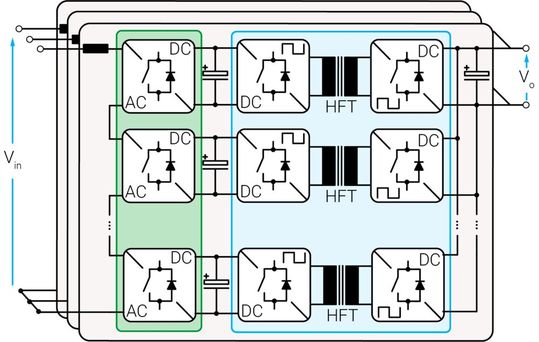
Common to these applications is that they require large powers, typically well over 1 MW, are connected to the medium voltage (MV) AC grid, and need to deliver a low voltage (LV) DC supply. Hence, the most popular and studied SST architecture is for the MVAC to LVDC conversion, utilising the input-series output-parallel (ISOP) structure, and will also be used in this article, for the simplicity and clarity of the discussions, as illustrated in Fig.1.
:quality(80):fill(efefef,0)/images.vogel.de/vogelonline/bdb/1783100/1783113/original.jpg "PB_Energy_Storage_Titel_groß")
SST architecture
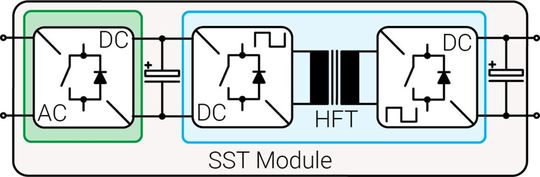
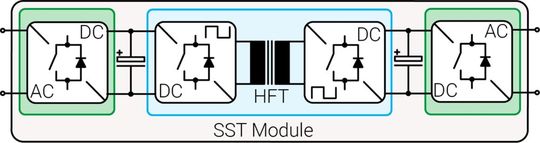
Many SST architectures have been reported in the literature, and on a system-level, Fig. 2 summarises the generic structure of the main SST module, composed of either two (Fig. 2a) or three (Fig. 2b) cascaded power stages performing:
- AC-DC or DC-DC non-isolated power conversion
- DC-DC (AC-AC) isolated power conversion
- DC-AC or DC-DC non-isolated power conversion
, respectively. The exact power electronics topologies inside each of these modules are not fundamentally relevant for the objectives of the article. Not all stages are always needed, and many proposed SSTs are based only on the two-stage architecture, combining one isolated and one non-isolated stage. Finally, a single-stage solution, utilising only isolated stages performing DC-DC or AC-DC conversion, is also possible, but not further discussed.
Furthermore, these modules are connected either in series or in parallel, on either of their sides, to increase the voltage and/or current ratings in accordance with the application needs. Irrespective of the nature of the application system on either side (AC or DC), all four combinations typically used in power electronics, to increase the voltage and/or current ratings, are utilised, leading to the emergence of modular structures as shown in Fig. 3:
- ISOP: input-series, output-parallel
- ISOS: input-series, output-series
- IPOP: input-parallel, output-parallel
- IPOS: input-parallel, output-series
In pure DC applications (e.g., DC-DC SST) or a conversion in a single-phase AC system (e.g., AC-DC SST), resulting modular structures are sufficient. Three-phase applications typically combine these single-phase structures in a star/delta connection on their AC side, as already hinted in Fig.1.
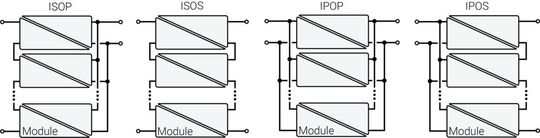
In summary, the SST is a highly modular, galvanically isolated, power electronics converter, which can be realised in an infinite number of ways, by simply choosing different power electronics topologies inside the power stages. Being modular implies that it is also scalable in terms of voltage and current and can be arranged for the needed application ratings. Being isolated, thanks to the presence of isolated DC-DC stages, implies a design degree of freedom in choosing the operating frequency and technologies for the HFTs. Yet these basic features also translate into many challenges in the real world, and are subject to many design trade-offs, as discussed shortly.
SST Technology Challenges
Despite numerous promises and prototypes, realising an SST and launching it as a successful commercial product on the market has proven challenging so far. There are several technical reasons for this, which are related to the internal architecture of SST, requiring a careful engineering design approach and, in some cases, even further research efforts. Realising the MV-rated converter, with the limited blocking voltages of available semiconductor devices, naturally leads to modular SST designs.
Each module contains one or more power electronics stages, mechanically enclosed, electrically and thermally managed, with various signal level electronics (gate drivers, sensors, local controllers), auxiliary power supply (internal or external), communication interfaces with adequate isolation capabilities, including an HFT, as well.
There are many interfaces to be managed on the SST module level: electrical (power), thermal (cooling), mechanical (integration), communication (signal), auxiliary power (if external). Even if a single SST module is of modest complexity, many of them need to be mechanically arranged, interfaced, and precisely time-coordinated during normal operation and under fault conditions.
:quality(80):fill(efefef,0)/p7i.vogel.de/wcms/68/5a/685abaca98e0f/pcim-2025-best-paper-award-korthauer-coverbild.jpeg "PCIM 2025_Best Paper Award_Korthauer_Coverbild")
Modularity and scalability
In a modular SST design, each module is designed to have the specific power, voltage, and current ratings derived and determined somehow. For the sake of illustration and ease of discussion, let’s assume that a single SST module is rated for 100kW, operates with a 1.5kV internal DC link, and can output on the AC side voltage with ±1kV peaks or AC RMS voltage up to 1kV, while it provides 800V on the DC side (data centre requirement nowadays). In addition, the HFT inside the module is designed with specific isolation capabilities, considering the highest MVAC voltage that must be withstood during operation. Let’s assume that a 100kW HFT is isolated to safely operate with MVAC grid voltages up to 10kV±10% (line-to-line voltage).
Having well-defined module ratings directly impacts the SST scalability, making it possible to achieve only a certain system level rating easily. This is generically illustrated in Fig.4 by considering AC-DC ISOP SST and several possible system ratings, as discussed later. If the SST module has well-defined ratings, the series connection of modules increases voltage handling capabilities on the AC side, and the addition of every module increases the overall power ratings of the SST.
However, the isolation capabilities of the HFTs are ultimately defining the maximum MVAC utility voltage that can be reached. In the presented example and considering grid voltage variations and control needs, at least 6 modules per phase of SST are needed for operation from a 10kV AC grid, resulting in an SST design with 18 modules in total or an overall power of 1.8MW.
In case SST should be operated in a higher voltage grid, for example 36kV±10%, new HFTs with higher isolation capabilities are required and must be designed. Let’s assume 100kW HFTs are redesigned for working voltage of 36kV and all other existing parts can be reused, since insulation problem of cascading power stages is solved anyhow outside the power stages. Now at least 23 modules per phase of SST are needed or 69 modules in total to connect to 36kV utility grid, yielding overall power ratings of 6.9MW.
This is illustrated, somewhat simplified, in Fig.4. There exists an available SST design (AD) that can connect to some AC grid voltage, and deliver some power (both are normalised), and this can be achieved thanks to the available HFT1 design inside the DC-DC power stages and the connection of a certain number of SST modules, as discussed earlier. If the SST power ratings need to be increased, irrespective of the utility grid voltage, this is only possible by paralleling the available SST modules, or complete SSTs, which effectively means that power can only be doubled, tripled, etc., and only a limited number of power ratings can be achieved. This is illustrated by sloped lines, representing SST scalability due to different current ratings of the available SST modules, e.g. i or 2i or 3i.
Hence, operating point 1 (OP1) is achievable, eventually by paralleling SSTs. In case that the technical requirement is to achieve OP2, that is not possible with HFT1 due to its isolation capabilities and a new design with higher isolation capabilities is needed, HFT2, to allow cascading more of the SST modules to reach higher MVAC voltages. Still, in case that OP3 is needed in an application, the solution is not obvious, other than to offer a slightly oversized solution in terms of power (above OP3 at the intersection with the 2i sloped line). Alternatively, a completely new SST module design is likely needed, having different voltage and current ratings to be cost-effective.
Certain application requirements, such as low-voltage with high-power ratings (OP4) or high-voltage with low-power ratings (OP5), would require module design to consider them from an early stage, if techno-economically feasible at all.
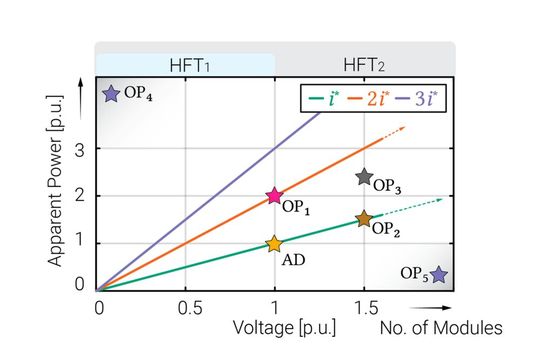
This scalability problem is not unique to SST and can be found in many other modular converter designs. Yet, the key difference is that SST modules integrate HFTs, which need to be custom-designed, with sufficient isolation capabilities, and are not commodity products, as semiconductor devices, available in standardised voltage classes.
Reliability, availability, redundancy
Modularity as a design feature does provide advantages and benefits in the production, due to the volume of scale, opportunity to use lower voltage-rated devices, but also introduces many possible points of failure in the actual SST design. Modularity, if properly executed, concentrates the limited fault energy in a well-contained space, typically around the DC link of the module, but also requires subsequent isolation of the faulty module from the rest of the system, if SST is supposed to continue to operate afterwards, upon successful isolation of the internal fault.
A high number of SST modules equipped with power semiconductors, gate drivers, sensors, capacitors, inductors, auxiliary electronic circuits, etc., results in challenges to ensure high reliability indices. Furthermore, the lack of statistical field data and user experience is not available for SSTs now, to feed back valuable information into new designs. Nevertheless, high up-time or availability must be ensured, and this is addressed typically by implementing some sort of redundancy into the SST design by means of the addition of one or more extra SST modules in series, increasing their overall number beyond the bare minimum for the correct operation.
Using the previous example, let’s assume that a previously designed SST with 18 submodules for a 10kV grid is equipped with an extra SST module per phase. The SST with implemented redundancy now has 7 SST modules per phase or 21 in total.
Implementing redundancy inside the SST brings new design challenges, as for a redundancy to work, all SST modules must be equipped with means to be bypassed and isolated from the rest of the SST in case any of them is faulty. This bypass equipment must be present on both SST module terminals and must act fast and reliably. It increases the module but also the whole SST complexity, cost, size, and it needs control resources and eventually auxiliary power for its operation, as illustrated in Fig.5a. For an ISOP SST, a solution for achieving a short-circuit is needed on the AC side, and a solution for achieving an open-circuit on the DC side, to completely isolate a faulty module.
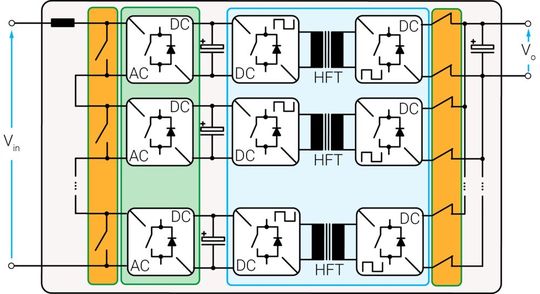
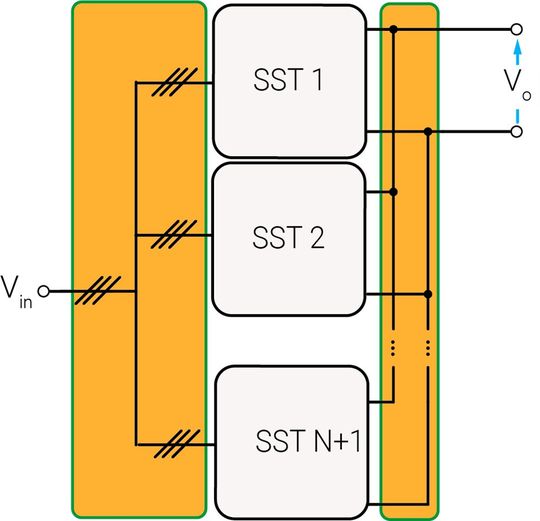
Whether the redundancy is needed inside the SST or not will greatly depend on the application or the imposed technical requirements. If one assumes that many SSTs will be installed in parallel to provide power to a facility of some sort, then implementing N+1 or N+2 redundancy on the system level is likely more cost-effective (Fig.5b). Some applications may even require a complete redundant 2N system with many SSTs without any internal redundancy. On the other hand, a single SST designed for a specific application and installed as a single unit may require redundancy to be implemented internally, on a per-module basis (Fig.5a).
:quality(80)/p7i.vogel.de/wcms/a5/17/a517436470814e8017c3e580b308348e/0127681194v4.jpeg "Robust devices that meet MIL-PRF-27 and MIL-STD-981 standards offer a lower cost, smaller size, and higher density compared to traditional planar transformers. (Source: Vishay)")
PLANAR TRANSFORMERS
Vishay Intertechnology Launches Space-Grade 150 W Planar Transformers Optimized for 28 V Input Forward Converters
High frequency transformers
For many years, low-voltage switched mode power supplies have greatly improved their power density thanks to high-frequency operated power semiconductors and low-loss, high-frequency, magnetic materials, enabling reduction of HFTs inside. In a way, the SST aims to achieve the same for the high voltage multi-MW conversion.
One of the key features distinguishing SST technologies is the presence of the high-power HFTs, providing galvanic isolation and voltage adaptation inside the SST DC-DC module. Even if voltages applied to the winding of these HFTs are small (e.g. ±1500 or ±800V), the isolation design between windings must be carried out considering AC grid working voltages and suitable standards for the insulation coordination to ensure safety in operation. This is proving to be challenging for several reasons.
The expectations to greatly reduce the size of HFT by simply increasing its operating frequency are quickly challenged by isolation distances needed to ensure safety – hence further increasing the switching frequency only increases the losses and impairs the SST efficiency. There are numerous insulating materials available and applicable for HFT designs, but the power electronics community has certain reservations towards some or generally not sufficient knowledge in this domain.
Isolation designs of HFT relying on air are simply too bulky to be attractive, while oil or other isolating liquids are often not desired, despite having an excellent track record in distribution transformer designs. The solid insulation design is often pursued as a highly attractive approach, despite manufacturing challenges and uncertainties associated with long-term operation of dielectrics under mixed-frequency stresses, thermal stresses, partial discharges, and potentially catastrophic failure of winding insulation. The HFT technology for the SST is often largely underestimated, despite having a very large impact on the overall SST performance. This is an area of active research nowadays.
Insulation coordination and power density
It should be already obvious that SST is a medium voltage converter and must be designed in accordance with well-established safety design guidelines, summarised in various insulation coordination standards. In addition to HFTs’ isolation, the selection of types of isolation levels and insulating materials must be carried out and applied to a complete SST, considering relevant over-voltage categories, pollution degrees and other deciding factors. Isolation distances between the SST modules, modules and the SST enclosure, must ensure safety of equipment and personnel during operation.
With a high number of SST modules and considering MVAC grid voltages (e.g. 36kV), a significant space or volume must be dedicated to the isolation, which can significantly impact and increase the overall volume and reduce the power density of the SST during practical realisation, as shown in Fig.6. For an ISOP SST, AC-DC stages and part of DC-DC stages are all floating and need to be isolated for a full working voltage against the SST enclosure and surrounding.
As already discussed, complete system working voltage also appears across the windings of each of the HFTs. It can be increasingly noticed that almost none of the companies working on the SST use power density metrics to describe system-level performances, which used to be the main selling point and all are rather pitching the high efficiency nowadays. Nevertheless, this is a matter of practical engineering design, and careful selection of materials during insulation coordination.
:quality(80)/p7i.vogel.de/wcms/65/22/65223bc58811ced76adbfa7b5615d532/0129061536v2.jpeg "This article explains topological insulators and explores whether they can optimize electronic systems. (Source: © Rick - stock.adobe.com)")
INSULATORS
Groundbreaking discovery of Topological Insulators
Control hardware and software
On purpose, this article does not discuss power electronics topologies or power semiconductors inside the SST modules, as these are simply a design choice that can be motivated by many factors coming from a system-level design perspective such as efficiency, cost, desired number of modules, etc. The control objectives of an SST performing MVAC to LVDC conversion are generally easy to explain and achieve, as these are identical with those of other converters: AC grid current control and DC output voltage control, with various internal control objectives depending on the used topologies for power stages of SST modules.
The challenges emerge due to the high modularity of the SST, where many modules must be coordinated to operate in a synchronised fashion supporting the overall control objectives. Hence, control hardware architecture must be distributed (as well as control software), and some kind of hierarchical levels must be established.
At the level of the SST module, one may have one control card managing the complete module, but there could also be control cards allocated to each power stage of the SST module. Outside the single SST module, many of them in series connection of one phase may be supervised by another control card managing the complete SST phase (if available) or directly from the central control card managing all SST modules at once. Clearly, there is no single way to achieve this, and many control hardware layouts are possible.
As the number of SST modules can greatly vary inside the SST, control hardware must be able to accommodate various topological configurations, exchange relevant data between various control cards, control commands and references, state machines at different levels, coordinate and synchronise the pulse width modulators, manage sensors, faults, coordinate the protection coordination, etc.
While not strictly relevant for the SST control, the control cards, gate drivers, sensors, and all electronics inside the SST module require certain auxiliary power to operate. This can be provided locally from the energy stored in DC link capacitors, provided these are charged somehow, either from the AC grid or by an external pre-charge solution, prior to SST commencing its operation. Alternatively, low-rated auxiliary power may be provided externally, not needing SST to be energised, requiring high-voltage isolated external power supplies, isolated for the same working voltage as the complete SST. Realising these solutions is another active area of research.
Efficiency
The SST efficiency is not a random outcome of the design, but a requirement that will be increasingly imposed by the applications and customers, as SST technology gets accepted. As mentioned in the introduction, many SST designs use multiple cascaded power stages inside the SST module. As every SST module processes a fraction of SST power, its efficiency is a good indicator of the overall SST efficiency.
If we assume that each power stage has 99% efficiency, then an SST module having internally two cascaded stages (e.g. AC-DC + DC-DC) would have an efficiency of 98.01%, while the module with three stages (e.g. AC-DC + DC-DC + DC-AC) would offer an efficiency of 97.03%. Connecting many modules to arrange the final SST, and considering other elements of losses outside the modules, these numbers will drop further, likely by another 0.5% to 1%.
On the other hand, looking into the efficiency numbers announced by companies working on the SST technologies, targets are set to 98.5% and above, for the complete SST. Repeating previous calculations and assuming now that each power stage has 99.5% efficiency, yields an SST module efficiency of 99% for a two-stage solution and 98.5% for a three-stage solution, without considering other sources of losses inside the SST.
Achieving these operational efficiencies is a matter of the overall SST design optimisation, choice of power electronics topologies, power semiconductors, switching frequencies, magnetic devices and selected modulation and control principles. There are numerous ways to achieve them, and the power electronics community will only get better at doing so, as competitive SST solutions reach the market and relevant applications.
Summary
Even though this article is technology-motivated, it is not easy to delve into all nuances associated with practical power electronics design of the SST. The wording SST technology is deliberately used, as there is no consensus in the power electronics community on what is and should be inside an actual SST. The author’s opinion is that SST is a galvanically isolated modular converter, combining various technologies inside and with endless optimisation opportunities and topological variations. As the technical requirement specifications get clearer for various applications, it will be possible to design and optimise SST technology, specifically tailored for the application needs, making it a cost-effective solution providing expected performances.
Perhaps the best way to close this article is to jump into the future and apply an approach from the industrial product management and consider the SST as the product from the user perspective. The Features, Advantages, Benefits (FAB) approach or the framework helps businesses communicate product value to the end users (customers). Features are factual descriptions of the SST characteristics, something that typically excites the researchers and engineers the most. Advantages describe how these features are beneficial for the SST as an advanced conversion system, and hence SST manufacturers are interested in implementing useful features. Benefits explain the positive outcomes that the end-user experiences in an actual application where the SST is used, because of the utilised features implemented by the SST manufacturer.
A rather trivial example would be that any converter with a multilevel voltage waveform (Feature) requires less passive filtering and hence needs a smaller filter (Advantage), resulting in a smaller footprint of a final converter (Benefit). Yet, most of the time, the end-user or the customer may not care or even understand many internal features of the SST. While numerous benefits are claimed for the SST, especially in the academic literature, one needs to approach the analysis carefully and separate technical jargon and hype from the actual engineering reality and deliver and ensure performance indicators that are measurable in the real world.
Times are exciting, the SST technology is great and is coming now!
(ID:50791006)
:quality(80)/p7i.vogel.de/wcms/ea/19/ea199c9380ef3fe0451b96d58576b1cf/0128518937v2.jpeg "From niche deployments to multi-hundred-megawatt projects, BESS reshapes the role of inverters and converters in modern grids. (Source: © Sashkin - stock.adobe.com)")
:quality(80)/p7i.vogel.de/wcms/5d/d1/5dd149a739adc01e402a30c4ad8d3c2c/0131249119v2.jpeg "Power‑over‑Fiber transmits energy via laser and optical fiber to provide true galvanic isolation for auxiliary supplies and gate drivers in SSTs and HVDC circuit breakers, eliminating parasitic coupling and withstanding extreme dv/dt.
(Source: EBV Elektronik)")