


:quality(80)/p7i.vogel.de/wcms/40/62/4062c2d596e53b038e0f05f6c3182509/0133843963v2.jpeg "Littelfuse introduces ultra-low-capacitance TVS diode arrays with a 6.5 V clamping voltage for transient protection in automotive and consumer electronics. (Source: Littelfuse)")
:quality(80)/p7i.vogel.de/wcms/e5/9e/e59ecc43d3c278aece316be4209113c9/0133732079v2.jpeg "Renesas introduces its first low-voltage GaN FET family, with 100 V devices for power conversion in AI data centers, robotics and industrial systems. (Source: Renesas)")
:quality(80)/p7i.vogel.de/wcms/c4/a7/c4a7243caa7c26af5fe5108f7894050a/0133626683v2.jpeg "Wolfspeed’s new premium 200 mm SiC substrates are designed to provide more consistent starting material for power semiconductor manufacturing. (Source: © Marina - stock.adobe.com)")
:quality(80)/p7i.vogel.de/wcms/91/8b/918b533161e7327075370338d7af97af/0133589801v2.jpeg "Acbel will present scalable DC charging power modules and an 11kW passively cooled 2-in-1 on-board power solution at New Mobility Congress 2026 in Katowice, covering both charging infrastructure and vehicle applications. (Source: Acbel)")
:quality(80)/p7i.vogel.de/wcms/4f/47/4f473b006be95fb33ec3d8e3fd727b06/0133732443v2.jpeg "SEMI Europe joins the European Commission’s STEAM Executive Panel, bringing the semiconductor industry’s skills needs into discussions on education, training and workforce development. (Source: © phonlamaiphoto - stock.adobe.com)")
:quality(80)/p7i.vogel.de/wcms/c4/59/c459b75bff747399a7a7fd58381f3983/0133731182v2.jpeg "Infineon has completed its acquisition of C2i Semiconductors, adding expertise in software-defined power management and multiphase control for AI data-center power systems. (Source: © InfiniteFlow - stock.adobe.com)")
:quality(80)/p7i.vogel.de/wcms/fd/2c/fd2c2388e7985cd4c75cff39f07f6361/0133676222v2.jpeg "Greenconn expands its connector portfolio with the compact WF28 wire-to-board series and new 25 mm and 30 mm stacking-height options for its GC01 floating connectors. (Source: © Greenconn)")
:quality(80)/p7i.vogel.de/wcms/69/06/6906b5f22bfbb3f8b874ba9e459c7d26/0133675448v2.jpeg "New backend manufacturing hub strengthens and further diversifies Infineon's global production network. (Source: © Apriew - stock.adobe.com)")
:quality(80)/p7i.vogel.de/wcms/b4/93/b493d5ce620cf7eb558ca6bcd9852a1e/0133811655v2.jpeg "The massive integration of utility-scale solar photovoltaics demands BESS platforms equipped with high-power-density inverters to mitigate generation intermittency. (Source: Pixabay)")
:quality(80)/p7i.vogel.de/wcms/f8/cb/f8cbf79cc21d48d7cad08e2b620218f7/0133738515v2.jpeg "Microchip and Navitas are demonstrating a 20 kW reference design that converts an 800 VDC data-center bus to a 6 V server rail, combining GaN power devices with digital control. (Source: © Formoney - stock.adobe.com)")
:quality(80)/p7i.vogel.de/wcms/ee/de/eedef7055c094757eb208a9d181e85dc/0133371000v2.jpeg "Resonac has developed 300 mm SiC single-crystal substrates, advancing larger-diameter wafer technology for next-generation power electronics and other high-performance semiconductor applications. (Source: © Resonac)")
:quality(80)/p7i.vogel.de/wcms/7b/76/7b76005554b556df2a7a3794bdf69d44/0132365246v2.jpeg "Hioki’s ST5680A DC Hipot Tester combines CE/UKCA/CSA compliance, an integrated capacitance‑based contact check and time‑series waveform recording (voltage, leakage current, insulation resistance) to standardize hipot and insulation testing across EV cell, module and pack production lines. (Source: Hioki)")
:quality(80)/p7i.vogel.de/wcms/af/7f/af7f7b0fb7f29219fc991b1130f65477/0132241333v2.jpeg "Comprehensive laboratory testing regimens—combining thermal cycling, high‑current stress, EMC, and accelerated lifetime tests—are essential to validate advanced power designs and ensure reliability in real‑world applications. (Source: PRBX)")
:quality(80)/p7i.vogel.de/wcms/16/3d/163df69363f8125315a9826e13ea4b05/0131927425v2.jpeg "Solution will maximize data center and AI factory profitability while delivering engineering-grade insights to design and operations for more efficient, sustainable, and resilient infrastructure. (Source: Cadence)")
:quality(80)/p7i.vogel.de/wcms/85/b7/85b7e90733a2bd8f21515d8f7137f2fc/0131917677v2.jpeg "Renesas acquires Pictorus to integrate its embedded application software platform with Renesas’ MCU and MPU portfolio, helping developers shorten time‑to‑market and simplify system integration. (Source: © lucadp - stock.adobe.com)")
:quality(80)/p7i.vogel.de/wcms/27/07/2707280c807689b437baed3660257404/0133626052v2.jpeg "The quantum behavior of electrons shapes semiconductor devices—and the power converters that deliver electricity to modern computing systems. (Source: © Celt Studio - stock.adobe.com)")
BATTERY INTELLIGENCE TI brings intelligence to battery management systems
Related Vendors
:fill(fff,0)/p7i.vogel.de/companies/5f/71/5f71d5f92a5f6/2000px-rogers-corporation-logo-svg.png "2000px-Rogers_Corporation_Logo.svg.png (rogers germany)")
:fill(fff,0)/p7i.vogel.de/companies/68/2c/682c3e2e9a195/logotype-rvb.jpeg "logotype-rvb (MERSEN France)")
Texas Instruments (TI) has introduced the industry's highest-cell-count battery monitor with an integrated electrochemical impedance spectroscopy (EIS) engine, bringing predictive intelligence, comprehensive data and real-time diagnostics to battery monitoring in electric vehicles (EV) and energy storage system (ESS) applications.
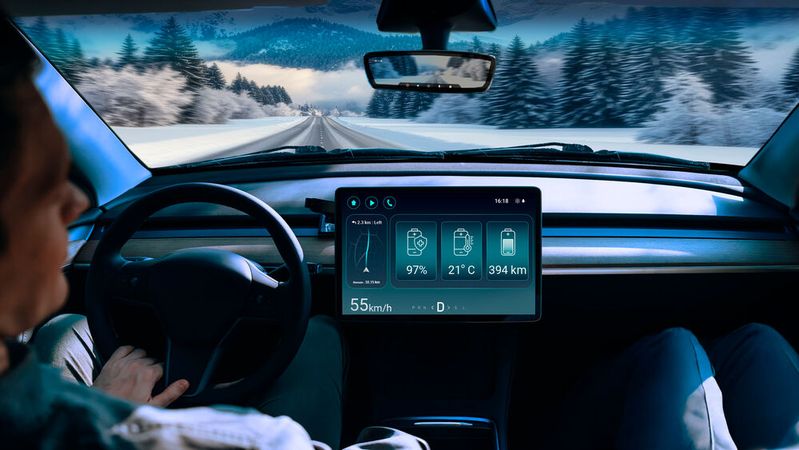
The BQ79826Z-Q1 battery monitor enhances safety and extends battery life by detecting potential failures from within battery cells. The single chip delivers the highest-cell-count monitoring in its class, tracking up to 44% more channels than previous generations. With this increase in channels, the device significantly decreases the number of components required in a battery pack, reducing system complexity and cost without compromising reliability.
"The electrification of transportation and the rapid expansion of energy storage are redefining what battery performance must deliver, and as a leader in battery management technology, TI is uniquely positioned to meet that challenge," said Wenjia Liu, vice president and general manager, battery management systems (BMS) at TI. "Our high-cell-count battery monitor with a built-in EIS engine helps 'shine a light' inside battery cells, delivering rich chemical-state data that enables systems' software to make informed, real-time decisions on safety and performance of the battery pack, allowing engineers to address the most critical challenges in battery management."
:quality(80)/p7i.vogel.de/wcms/ef/3f/ef3f0ba1427bb0be71ae9a57274d5687/0131065708v2.jpeg "BMW Group and the University of Zagreb apply AI to optimise battery cell production, improving quality control, yield and process efficiency. (Source: BMW)")
BATTERY MANUFACTURING
BMW and University of Zagreb use AI to boost battery cell manufacturing
Delivering safety and performance with EIS technology
Just as an electrocardiogram (EKG) monitors the heart, EIS monitors a battery. It delivers continuous, real-time insight that reveals the battery's health and warns of issues before they become critical. Integrated EIS technology enables the BQ78926Z-Q1 to detect fault conditions earlier – from inside the cells – helping maintain safety and notifying passengers of potential vehicle hazards such as thermal runaway.
These same benefits extend to ESSs, where reliable battery monitoring is critical to meeting the growing power demands of artificial intelligence data centers. As effective storage solutions become increasingly vital in the grid-to-gate ecosystem, EIS gives engineers real-time visibility into the state of charge and state of health of each battery cell, regardless of system size.
Maximizing efficiency with industry-leading cell count
The performance of an EV or ESS is fundamentally affected by the quality and efficiency of its batteries. The BQ79826Z-Q1 supports up to 26 cells per device, eight more than any competing solution, setting a new industry standard. Fewer monitoring devices means a lower bill of materials, simplified architecture and reduced board space requirements, translating to meaningful cost savings per channel without sacrificing quality or reliability.
When paired with the BQ79881-Q1 pack monitor and optional TI communications bridge, these devices create a powerful chipset that works across different module sizes, battery chemistries and mechanical designs, giving engineers the flexibility to design once and deploy everywhere. This scalability reduces engineering overhead and accelerates time to market for automotive and energy storage designers.
:quality(80)/p7i.vogel.de/wcms/a8/33/a833e0093c34d0802dd1531caed672a7/0130195574v2.jpeg "Project Manager Christian Schiller at a projection welding machine where battery cells are connected using copper connectors. (Source: Fraunhofer ISE / Photo: Felix Thurn)")
BATTERY MANUFACTORING
Fraunhofer develops new copper welding process for battery cells
Calculating charge readings with the best-in-class accuracy
With a voltage accuracy of <2mV across a full temperature range of –40°C to +125°C, higher resolution analog-to-digital converters and ultra-low noise, the BQ78926Z-Q1 enables more accurate state-of-charge calculations, directly addressing one of the biggest concerns for EV drivers: range anxiety. Utilizing EIS technology, this device enables more accurate temperature and state-of-charge estimation, helping designers achieve longer battery life and faster charging without compromising battery health. With an EIS measurement time that is five times faster than previous solutions, this device delivers the highest functional safety voltage reading per cell. Compliance with Automotive Safety Integrity Level D and International Organization for Standardization 26262 gives designers a smarter, more efficient path to safer, longer-lasting batteries.
(ID:50866481)
:quality(80)/p7i.vogel.de/wcms/0c/bf/0cbf7b312e3c0681d7d3ad25110f244a/0130649548v2.jpeg "LG Energy Solution is expanding its battery portfolio to support growing demand in electric mobility and energy storage. (Source: © Zucide - stock.adobe.com)")
:quality(80)/p7i.vogel.de/wcms/94/54/94548eaecd020681e558d563bc48ba1d/0128926221v2.jpeg "Harbinger is leveraging its electrification platform technology and battery manufacturing expertise to bring energy storage to Airstream travel trailers. (Source: Harbinger)")