


:quality(80)/p7i.vogel.de/wcms/40/62/4062c2d596e53b038e0f05f6c3182509/0133843963v2.jpeg "Littelfuse introduces ultra-low-capacitance TVS diode arrays with a 6.5 V clamping voltage for transient protection in automotive and consumer electronics. (Source: Littelfuse)")
:quality(80)/p7i.vogel.de/wcms/e5/9e/e59ecc43d3c278aece316be4209113c9/0133732079v2.jpeg "Renesas introduces its first low-voltage GaN FET family, with 100 V devices for power conversion in AI data centers, robotics and industrial systems. (Source: Renesas)")
:quality(80)/p7i.vogel.de/wcms/c4/a7/c4a7243caa7c26af5fe5108f7894050a/0133626683v2.jpeg "Wolfspeed’s new premium 200 mm SiC substrates are designed to provide more consistent starting material for power semiconductor manufacturing. (Source: © Marina - stock.adobe.com)")
:quality(80)/p7i.vogel.de/wcms/91/8b/918b533161e7327075370338d7af97af/0133589801v2.jpeg "Acbel will present scalable DC charging power modules and an 11kW passively cooled 2-in-1 on-board power solution at New Mobility Congress 2026 in Katowice, covering both charging infrastructure and vehicle applications. (Source: Acbel)")
:quality(80)/p7i.vogel.de/wcms/4f/47/4f473b006be95fb33ec3d8e3fd727b06/0133732443v2.jpeg "SEMI Europe joins the European Commission’s STEAM Executive Panel, bringing the semiconductor industry’s skills needs into discussions on education, training and workforce development. (Source: © phonlamaiphoto - stock.adobe.com)")
:quality(80)/p7i.vogel.de/wcms/c4/59/c459b75bff747399a7a7fd58381f3983/0133731182v2.jpeg "Infineon has completed its acquisition of C2i Semiconductors, adding expertise in software-defined power management and multiphase control for AI data-center power systems. (Source: © InfiniteFlow - stock.adobe.com)")
:quality(80)/p7i.vogel.de/wcms/fd/2c/fd2c2388e7985cd4c75cff39f07f6361/0133676222v2.jpeg "Greenconn expands its connector portfolio with the compact WF28 wire-to-board series and new 25 mm and 30 mm stacking-height options for its GC01 floating connectors. (Source: © Greenconn)")
:quality(80)/p7i.vogel.de/wcms/69/06/6906b5f22bfbb3f8b874ba9e459c7d26/0133675448v2.jpeg "New backend manufacturing hub strengthens and further diversifies Infineon's global production network. (Source: © Apriew - stock.adobe.com)")
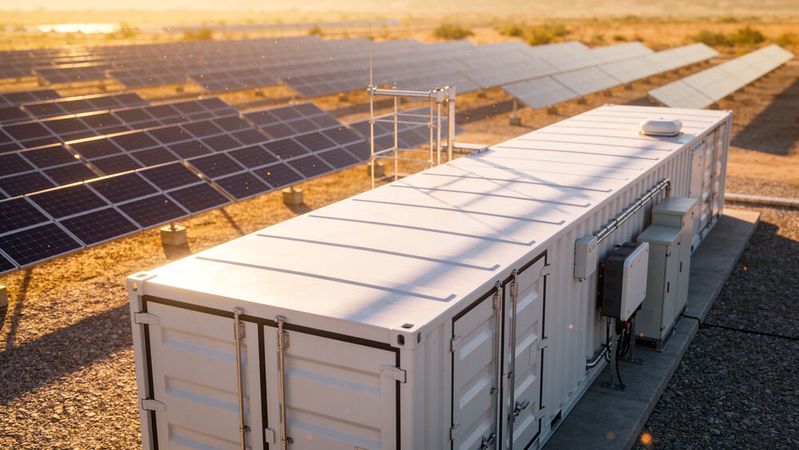
:quality(80)/p7i.vogel.de/wcms/b4/93/b493d5ce620cf7eb558ca6bcd9852a1e/0133811655v2.jpeg "The massive integration of utility-scale solar photovoltaics demands BESS platforms equipped with high-power-density inverters to mitigate generation intermittency. (Source: Pixabay)")
:quality(80)/p7i.vogel.de/wcms/f8/cb/f8cbf79cc21d48d7cad08e2b620218f7/0133738515v2.jpeg "Microchip and Navitas are demonstrating a 20 kW reference design that converts an 800 VDC data-center bus to a 6 V server rail, combining GaN power devices with digital control. (Source: © Formoney - stock.adobe.com)")
:quality(80)/p7i.vogel.de/wcms/ee/de/eedef7055c094757eb208a9d181e85dc/0133371000v2.jpeg "Resonac has developed 300 mm SiC single-crystal substrates, advancing larger-diameter wafer technology for next-generation power electronics and other high-performance semiconductor applications. (Source: © Resonac)")
:quality(80)/p7i.vogel.de/wcms/7b/76/7b76005554b556df2a7a3794bdf69d44/0132365246v2.jpeg "Hioki’s ST5680A DC Hipot Tester combines CE/UKCA/CSA compliance, an integrated capacitance‑based contact check and time‑series waveform recording (voltage, leakage current, insulation resistance) to standardize hipot and insulation testing across EV cell, module and pack production lines. (Source: Hioki)")
:quality(80)/p7i.vogel.de/wcms/af/7f/af7f7b0fb7f29219fc991b1130f65477/0132241333v2.jpeg "Comprehensive laboratory testing regimens—combining thermal cycling, high‑current stress, EMC, and accelerated lifetime tests—are essential to validate advanced power designs and ensure reliability in real‑world applications. (Source: PRBX)")
:quality(80)/p7i.vogel.de/wcms/16/3d/163df69363f8125315a9826e13ea4b05/0131927425v2.jpeg "Solution will maximize data center and AI factory profitability while delivering engineering-grade insights to design and operations for more efficient, sustainable, and resilient infrastructure. (Source: Cadence)")
:quality(80)/p7i.vogel.de/wcms/85/b7/85b7e90733a2bd8f21515d8f7137f2fc/0131917677v2.jpeg "Renesas acquires Pictorus to integrate its embedded application software platform with Renesas’ MCU and MPU portfolio, helping developers shorten time‑to‑market and simplify system integration. (Source: © lucadp - stock.adobe.com)")
:quality(80)/p7i.vogel.de/wcms/27/07/2707280c807689b437baed3660257404/0133626052v2.jpeg "The quantum behavior of electrons shapes semiconductor devices—and the power converters that deliver electricity to modern computing systems. (Source: © Celt Studio - stock.adobe.com)")
RENEWABLE ENEGRY Beyond Power Plants: How smart grids are redefining the future of energy
Related Vendors
:fill(fff,0)/p7i.vogel.de/companies/68/2c/682c3e2e9a195/logotype-rvb.jpeg "logotype-rvb (MERSEN France)")
:fill(fff,0)/p7i.vogel.de/companies/66/9a/669a2816c84be/pcim-logo.png "pcim-logo (PCIM)")
:fill(fff,0)/p7i.vogel.de/companies/68/08/6808a2b3b6595/het-logo.jpeg "het-logo (Heraeus Electronics)")
Across the globe, traditional grid infrastructure is evolving to keep pace with rising demand and an increasingly complex energy mix. Smart grids can provide the solutions we need to support the renewable energy transition, integrate new technologies, and build a more resilient power system for the future.
The electricity grid is one of the great paradoxes of the modern era. We live in a highly digitised society where technology permeates almost every facet of our lives. Electricity is the lifeblood that powers our civilisation. But much of the essential infrastructure behind the technologies that define the 21st century was built for a very different world.
Our relationship with energy is changing. Instead of relying on a small number of large power plants that produce energy for millions of consumers, we’re moving towards a more decentralised and dynamic energy ecosystem. The grid itself is evolving from a passive network into an intelligent system capable of monitoring, analysing, and responding in real time.
Smart grids will allow us to move beyond the traditional power plant model and enter a new era of intelligent electricity management.
Moving beyond traditional power grids
Imagine asking someone from the 1940s to log into a laptop and create an email address. While they might quickly understand the concept, adapting to the technology and infrastructure of today would be a significant challenge. In many ways, we are asking something similar of our electricity grids.
Much of the world’s grid infrastructure was designed for a very different era. For the majority of the last century, electricity systems operated around a centralised, one-way model. Large coal, thermal, nuclear, and hydropower plants generated electricity, which was then transmitted and distributed to consumers through extensive networks. The system was predictable, controllable, and built around a relatively simple relationship between producers and users.
That model powered economic growth for decades. However, our relationship with energy has changed dramatically. The rise of renewable energy, digital technologies, electrification, and distributed energy resources has transformed both how electricity is generated and how it is consumed.
Renewable energy now accounts for approximately 32% of the world’s electrical supply.1 If we continue to phase out fossil fuels and nuclear energy, bodies such as the International Renewable Energy Agency (IRENA) believe that 90% of the world’s electricity could be generated by renewable energy sources by 2050.2
:quality(80)/p7i.vogel.de/wcms/f5/b4/f5b498c35b52c552abe2da62e5627d4c/0130737471v2.jpeg "New IRENA policy advisory shows strategic role of renewables for energy security and resilience; recommends actions for policy makers to address today’s energy crisis: (Source: IRENA)")
RENEWABLE ENERGY
Moving from energy crisis to energy security with renewables
Unlike conventional power stations, wind and solar output is dependent on weather conditions, which makes it highly variable. Managing these fluctuations is increasingly challenging for a grid designed around large, centralised power stations and predictable electricity flows.
Renewable energy is just one part of a complex energy transformation. How electricity flows through the grid is also changing. Rather than simply providing electricity to consumers, the grid must cope with prosumers. Prosumers are households and businesses that both produce and consume energy. Rooftop solar, home batteries, electric vehicles, and other distributed energy resources are all drawing energy from the grid while also feeding power back into it.
A grid designed for one-way flows must now coordinate millions of connected devices that can both consume and produce power. This two-way flow requires a level of flexibility, intelligence, and responsiveness that traditional systems were not built to provide.
Building an intelligent power grid
The International Energy Agency (IEA) defines a smart grid as an electricity network that uses advanced digital technologies to monitor and manage electricity flows from a variety of sources in real time. Smart grids can coordinate generation, storage and consumption to meet the needs of end users.3
Most of the world’s power grids are like a traditional one-way road with occasional potholes, faded markings, and crumbling edges. They’re perfectly suited for a slow and steady procession of vehicles travelling in one direction, but they were never designed for millions of connected vehicles moving in multiple directions at once.
On this old road system, if an accident occurs, someone has to report it before any action can be taken to fix it. This is fine when traffic is predictable, and flows are relatively simple.
A smart grid is more like a multi-lane freeway equipped with sensors, cameras, and a traffic system powered by artificial intelligence. It can monitor conditions in real time, redirect flows to avoid congestion and respond quickly when problems occur. By analysing data and using artificial intelligence (AI), smart grids can even predict potential issues and act before disruptions happen.
This ability to be proactive is one of the main differences between smart grids and legacy grids. Instead of being conduits for the flow of electricity, smart grids are intelligent systems that combine sensors, communication technologies, automation, and AI to monitor conditions, make decisions, and take action in real time.
:quality(80)/p7i.vogel.de/wcms/63/d5/63d5cb8e8029d9826e610bd1c54a00ad/0131310853v2.jpeg "IRENA finds that 24/7 renewable systems—combining solar, wind, storage and flexible resources—can deliver firm power at lower cost than fossil fuels, accelerating the clean energy transition. (Source: IRENA)")
RENEWABLE ENERGY
24/7 renewables outcompete fossil fuels on costs
An array of advanced technologies enables a smart grid to see what is happening, determine the best response, and take action when needed to resolve problems or prevent disruptions before they occur.
Digital sensors are the eyes of a smart grid. Installed across substations, transformers, and transmission and distribution networks, digital sensors collect real-time data on voltage, frequency, temperature, equipment health, and electricity flows.
Advanced metering infrastructure like smart meters enables two-way communication between electricity users and the grid. They provide essential consumption data and measure bi-directional power flows from microgeneration systems, like rooftop solar panels. Smart meters help utilities reduce operational costs while improving visibility across the network. They provide valuable data for demand forecasting and can help identify issues such as voltage fluctuations or power outages more quickly. By 2025, smart meter rollout had reached more than two-thirds of electricity consumers across the EU, according to European Commission data.4
Digital sensors allow the smart grid to see, but AI allows it to analyse information, predict future conditions, and support faster decision-making. Advanced AI systems can analyse vast amounts of data in real time to ensure that the grid is operating as efficiently as possible.
Traditional grid forecasting has historically relied heavily on past consumption patterns. AI can incorporate a much wider range of real-time variables such as weather data, consumer behaviour, industrial activity, renewable generation levels, and electric vehicle (EV) charging patterns to produce much more accurate forecasts. Research using machine learning models has shown that AI-based forecasting methods can significantly improve short-term electricity demand prediction compared with traditional approaches.5
The predictive capabilities of AI make it particularly valuable for smart grids. Instead of operators reacting to problems after they occur, AI helps the grid anticipate changes and adjust before problems emerge. AI-based monitoring and advanced analytics tools can continuously analyse factors such as electricity flows, storage capacity, and usage patterns to optimise flows and reduce operational risks.
As AI technology advances, the next stage of smart grids could involve agentic AI systems capable of independently managing certain energy tasks. Agentic AI could autonomously balance electricity demand, coordinate battery storage, and manage decentralised renewable energy flows.6
But the relationship between AI technologies and the electricity grid is another paradox. While AI is enabling more renewables to be integrated into the energy mix, it’s also driving worldwide electricity demand.7 As the widespread adoption of AI technologies continues, the world will need an increasing number of energy-intensive hyperscale data centres. By as soon as 2028, research predicts that AI use will account for half of all electricity used by data centres.8
The same technology helping us build a smarter energy system is also making that system more demanding to manage. Making the grid bigger isn’t the answer. Instead, the future of energy will depend on creating a more decentralised system where millions of connected energy resources can work together to balance supply and demand.
:quality(80)/p7i.vogel.de/wcms/a7/a7/a7a7ed73783669efc310d1fc51e1bb34/0132155496v2.jpeg "Fragile semiconductor supply chains — from concentrated fabs and toolmakers to constrained raw‑material suppliers — risk delaying renewable deployments and slowing the energy transition unless resilience measures are adopted. (Source: © Fotografos - stock.adobe.com)")
SEMICONDUCTORS
Semiconductor supply chains and the future of clean energy
Decentralisation is the future of energy supply
Our electricity system is moving beyond a model based on a small number of massive power plants. The future grid must manage a fundamentally different energy system built around decentralised supply.
There are now millions of homes and businesses with vehicles, batteries, rooftop solar arrays, and wind turbines feeding energy into the grid. These distributed energy resources (DERs) are changing the role of consumers, turning many homes and businesses from passive users of electricity into active participants in the energy system. By generating electricity closer to where it is consumed, DERs can reduce pressure on transmission networks, minimise energy losses, and improve local grid efficiency.
As well as allowing us to integrate more sources of renewable energy, decentralisation is also more resilient than traditional grid models. Large, centralised assets like power plants can create significant vulnerabilities when failures occur. Decentralised systems spread generation across multiple locations and so reduce the risks associated with single points of failure. Microgrids can operate independently from the wider network during disruptions to provide essential power when the main grid is unavailable.
But as more electricity consumers transform into prosumers, the grid is becoming increasingly complex. We must now manage a range of new vulnerabilities to maintain a reliable and secure energy system.
:quality(80)/p7i.vogel.de/wcms/f0/a1/f0a1ae7496e69c9ec84186d7ebdf897d/0130870335v2.jpeg "Semiconductors enable the energy transition but are also associated with significant material and environmental impacts. (Source: AI generated)")
SEMICONDUCTORS
The material footprint of the energy transition
Safeguarding the smart grid of the future
Realising the full potential of smart grids requires more than deploying new technologies. It will also depend on building an electricity system that is secure, reliable, and supported by long-term investment.
On the financial front, at least, the outlook is positive. Worldwide investment in AI-powered smart grids is booming. The global AI-powered smart grid market was valued at US $6.62 billion in 2025 and is expected to reach US $7.54 billion in 2026 and possibly hit US $12.79 billion by 2030.9 The uptake of smart grid technologies is also expected to drive worldwide investment into transmission infrastructure from the 2025 level of US $372.6 billion to $573.7 billion within five years.10
The European Union has prioritised the digitalisation of the grid in order to speed up the energy transition and remove bottlenecks for data centres and renewables.11 The United States is heavily investing in upgrading smart grid technology through the Grid Resilience and Innovation Partnerships (GRIP) Program, with up to US $10.5 billion allocated to improving grid resilience.12 According to a report by the IEA, 22% of all grid patents between 2011 and 2022 came from the United States, the EU, and Japan.13
China was fastest in terms of innovation speed, rising from just 7% of grid patents in 2013 to 25% by 2022.14 China has also allocated US $548 billion for the development of new smart grid technologies by 2030.15 India rolled out 47.6 million smart meters in 2025, and its grid modernisation market is expected to reach US $7.65 billion within the next decade.16 Smart grid investments are also on the rise across Africa and Latin America.17,18
:quality(80)/p7i.vogel.de/wcms/5d/1e/5d1ebc85067390125b27f483c92ccbac/0131367038v2.jpeg "Empa researcher Konstantin Egorov coats stainless steel components with corrosion-resistant titanium oxide to make the production of green hydrogen more cost-effective. (Source: Empa)")
GREEN HYDROGEN
Making green hydrogen more affordable
But there are still challenges ahead. Building a more intelligent and decentralised electricity system also means creating one that is resilient, secure, and supported by effective regulation.
Maintaining grid reliability in the face of more frequent and severe extreme weather events will be one of the biggest challenges. While smart grids can improve resilience through real-time monitoring, automated fault detection, and faster system recovery, much of the underlying electricity infrastructure is ageing and will require significant investment and modernisation.
Digitalisation also introduces new cybersecurity risks. A decentralised smart grid has millions of connected devices, each one a potential entry point for cyberattacks. Protecting this increasingly connected network will require robust cybersecurity measures built into every layer of the electricity system.
Technologies evolve at a much faster pace than policy. Safeguarding the smart grid of the future will require regulatory frameworks that encourage innovation while ensuring security, interoperability, consumer privacy, and fair market participation.
The future of energy isn’t going to be determined by how much electricity we can generate, but by how effectively we can manage it. Smart grids provide the intelligence and flexibility needed to move beyond traditional power plants to a cleaner, more efficient, and more resilient decentralised electricity system.
Sources
1 https://ember-energy.org/latest-updates/world-surpasses-40-clean-power-as-renewables-see-record-rise/
2 https://www.irena.org/news/pressreleases/2021/mar/fast-track-energy-transitions--to-win-the-race-to-zero
3 https://www.iea.org/news/widespread-deployment-of-smart-grids-is-critical-for-a-secure-cost-effective-and-clean-energy-future
4 https://www.berginsight.com/two-thirds-of-the-electricity-customers-in-europe-had-a-smart-meter-at-the-end-of-2025
5 https://arxiv.org/abs/2503.04757
6 https://www.iea.org/reports/energy-and-ai
7 https://www.researchgate.net/publication/390133771_The_Energy_Hunger_Paradox_of_Artificial_Intelligence_End_of_Clean_Energy_or_Magic_Wand_for_Sustai
8 https://www.energy.gov/articles/doe-releases-new-report-evaluating-increase-electricity-demand-data-centers
9 https://finance.yahoo.com/sectors/energy/articles/ai-powered-smart-grid-market-152000482.html
10 https://www.globaldata.com/media/power/smart-grid-demand-drive-transmission-investment-573-7-billion-2030-forecasts-globaldata/
11 https://energy.ec.europa.eu/news/commission-presents-measures-digitalise-europes-energy-system-while-ensuring-sustainable-2026-06-03_en
12 https://www.energy.gov/oe/speed-power-through-accelerated-reconductoring-and-other-key-advanced-transmission-technology
13; 14 https://www.iea.org/news/electricity-grid-patents-surging-as-countries-target-artificial-intelligence-solutions
15; 16; 17 https://expertlancing.com/technology-innovation/how-india-china-and-africa-are-winning-the-smart-grid-race/
18 https://indepthresearch.org/blog/digital-utility-africa-smart-grids-ai-energy-future/
(ID:50926675)
:quality(80)/p7i.vogel.de/wcms/24/f7/24f7b223072f64176ddf7b0e80b3c04a/0132153842v2.jpeg "Rapid growth in wind and solar has created periods of electricity abundance that ageing transmission grids often cannot absorb, forcing curtailment and underscoring the urgent need for grid upgrades, storage and smarter distribution strategies. (Source: © Giggles - stock.adobe.com)")
:quality(80)/p7i.vogel.de/wcms/a7/a7/a7a7ed73783669efc310d1fc51e1bb34/0132155496v2.jpeg "Fragile semiconductor supply chains — from concentrated fabs and toolmakers to constrained raw‑material suppliers — risk delaying renewable deployments and slowing the energy transition unless resilience measures are adopted. (Source: © Fotografos - stock.adobe.com)")