


:quality(80)/p7i.vogel.de/wcms/99/dd/99dd64ae87c0855129bd405f61d81f81/0133290217v2.jpeg "Microchip’s new 1.2 V SY757xx clock buffers connect modern low-voltage SoCs, FPGAs and AI accelerators with higher-voltage clock components, supporting frequencies up to 250 MHz and additive jitter as low as 26 fs. (Source: Microchip)")
:quality(80)/p7i.vogel.de/wcms/83/d0/83d0b8ea52378c77f98358e29ceccfc0/0133339307v2.jpeg "Capacitors are a critical yet often overlooked component in AI data center power supplies, buffering energy and stabilizing voltage as racks scale toward the megawatt range. (Source: © Parilov - stock.adobe.com)")
:quality(80)/p7i.vogel.de/wcms/10/fc/10fcb98e44d61826e641bc8d3f20f616/0133193677v2.jpeg "The new AEVA and AEVB Series aluminum electrolytic capacitors are engineered for harsh industrial environments, delivering high-CV, long-lifetime performance in compact, surface-mount packages that reliably withstand up to 30g acceleration and operating temperatures extending from -55° to +125°C. (Source: Kyocera)")
:quality(80)/p7i.vogel.de/wcms/f7/42/f74208db9f5f87dca384b38b71c4782e/0133196365v2.jpeg "YAGEO’s EC Flat‑Series temperature sensors combine fast, accurate measurement with resistance to vibration, shock, moisture and dust for demanding automotive and industrial applications. (Source: Yageo)")
:quality(80)/p7i.vogel.de/wcms/57/b6/57b6d33cb929fa4408ad56803ed5f0bc/0133311998v2.jpeg "Elmos and SK keyfoundry are expanding their collaboration on 130 nm technology and have agreed on long-term wafer capacity through 2037 to support reliable automotive semiconductor production. (Source: © remake - stock.adobe.com)")
:quality(80)/p7i.vogel.de/wcms/b4/0a/b40a1de3c8fa631b2aff74ec436c43db/0133314066v2.jpeg "ZF Aftermarket expands its EV service portfolio with new repair kits and solutions for e‑motors, inverters, hybrid modules, mechatronics and electric drive units. (Source: ZF Aftermarket)")
:quality(80)/p7i.vogel.de/wcms/48/e1/48e107b92f976652532facf5ca1e0855/0133290826v2.jpeg "Infineon and SolarEdge are extending their collaboration to develop solid-state protection solutions for 800 VDC AI data centers, aiming to improve fault response, system reliability and power density. (Source: © Grispb - stock.adobe.com)")
:quality(80)/p7i.vogel.de/wcms/99/84/9984f5888ecc71c249f65cea3f0658d1/0133069650v2.jpeg "Yokogawa’s integrated measurement setup helps Vertiv analyse AI-driven pulsed loads, combining power, waveform and thermal data to validate UPS performance and input power smoothing. (Source: YOKOGAWA)")
:quality(80)/p7i.vogel.de/wcms/a4/29/a429b944eb0a69e268015f8300ba8940/0133311989v2.jpeg "Hitachi Energy and Daikin are establishing a German supply of C4‑FN, a specialty insulating gas used in SF₆‑free high‑voltage equipment for more sustainable power grids. (Source: © Ahmed - stock.adobe.com)")
:quality(80)/p7i.vogel.de/wcms/d5/32/d5326e4b05d5cd759e88062f1c0b097a/0133344193v2.jpeg "Co-packaged optics is the latest innovation in data centers where optical modules on silicon chips can assist in scaling megawatt AI infrastructure. (Source: © Rachakrit - stock.adobe.com)")
:quality(80)/p7i.vogel.de/wcms/76/a9/76a9333bc7c6abbf7e29d1b910edb5e2/0133335959v2.jpeg "This article explains PMBus in data center power supplies. (Source: © Gibster - stock.adobe.com)")
:quality(80)/p7i.vogel.de/wcms/35/9c/359cfb6c855204e4d114f88cf5b98b5f/0133078984v2.jpeg "Photonic integrated circuits are next-level chips that will dominate data centers in the upcoming years. (Source: © pier - stock.adobe.com)")
:quality(80)/p7i.vogel.de/wcms/7b/76/7b76005554b556df2a7a3794bdf69d44/0132365246v2.jpeg "Hioki’s ST5680A DC Hipot Tester combines CE/UKCA/CSA compliance, an integrated capacitance‑based contact check and time‑series waveform recording (voltage, leakage current, insulation resistance) to standardize hipot and insulation testing across EV cell, module and pack production lines. (Source: Hioki)")
:quality(80)/p7i.vogel.de/wcms/af/7f/af7f7b0fb7f29219fc991b1130f65477/0132241333v2.jpeg "Comprehensive laboratory testing regimens—combining thermal cycling, high‑current stress, EMC, and accelerated lifetime tests—are essential to validate advanced power designs and ensure reliability in real‑world applications. (Source: PRBX)")
:quality(80)/p7i.vogel.de/wcms/16/3d/163df69363f8125315a9826e13ea4b05/0131927425v2.jpeg "Solution will maximize data center and AI factory profitability while delivering engineering-grade insights to design and operations for more efficient, sustainable, and resilient infrastructure. (Source: Cadence)")
:quality(80)/p7i.vogel.de/wcms/85/b7/85b7e90733a2bd8f21515d8f7137f2fc/0131917677v2.jpeg "Renesas acquires Pictorus to integrate its embedded application software platform with Renesas’ MCU and MPU portfolio, helping developers shorten time‑to‑market and simplify system integration. (Source: © lucadp - stock.adobe.com)")
ECODESIGN Sustainability and the Circular Economy in Power Electronics
Related Vendors
:fill(fff,0)/p7i.vogel.de/companies/6a/20/6a202a4f89a62/mrs-white-on-blue-bg.png "mrs-white-on-blue-bg ()")
:fill(fff,0)/p7i.vogel.de/companies/68/2c/682c3e2e9a195/logotype-rvb.jpeg "logotype-rvb (MERSEN France)")
:fill(fff,0)/p7i.vogel.de/companies/66/8b/668becd1c07eb/dowa-logo-word--1-.jpeg "dowa-logo-word--1- (DOWA)")
The global transition towards electrification and renewable energy has positioned power electronics as the backbone of modern infrastructure. However, the traditional "take-make-dispose" paradigm faces physical and regulatory limits due to shortages of critical materials and the increase in electronic waste.

Integrating the circular economy into this sector proposes a radical change: designing converters and systems not only to maximize power density and efficiency, but also to facilitate their maintainability, modularity, and recyclability.
This article analyzes how innovations in wideband semiconductors, advanced thermal design, and "second life" strategies for passive components are redefining technical sustainability in the industry.
Ecodesign and Hardware Modularity
Ecodesign and hardware modularity represent a paradigm shift in power electronics, moving from sealed and disposable equipment to dynamic systems that maximize their value over multiple life cycles.
Ecodesign serves as the fundamental pillar of prevention by integrating environmental criteria from the initial conception phase to minimize a product's lifecycle impact. This approach focuses on material selection, prioritizing recycled content and eliminating hazardous substances to simplify end-of-life recycling. Additionally, it enhances operational efficiency by optimizing power factor correction circuits to reduce standby energy waste. Finally, through dematerialization, it creates more compact and lightweight equipment, effectively lowering the carbon footprint associated with both raw material extraction and transportation.
Hardware modularity partitions a system into independent functional blocks, enabling the individual management of components based on their condition or update requirements. This strategy offers simplified repairability, as specific faulty modules—such as a DC-DC converter—can be replaced without discarding the entire power unit. It also ensures scalability and upgrades, allowing for increased capacity or the integration of emerging technologies like SiC or GaN semiconductors without rebuilding the core infrastructure. Lastly, standardization through common interfaces promotes interoperability and supports a secondary parts market, significantly extending the system's overall lifespan.
The implementation of these strategies is driven by recent regulations mandating transparency and durability:
- Regulation (EU) 2024/1781 (ESPR): Established as the Ecodesign for Sustainable Products Regulation, this framework entered into force in July 2024 and sets mandatory requirements for the durability, reparability, and recyclability of nearly all physical products in the EU.
- Digital Product Passport (DPP): A cornerstone of the new EU rules, the Digital Product Passport acts as a digital record to track a product’s origin, material composition, and disassembly instructions throughout its entire lifecycle.
- Regulation (EU) 2025/2052: Specifically targeting external power supplies and chargers, this regulation mandates stricter energy efficiency and interoperability standards, such as universal USB-C compatibility, for devices sold in the European market.
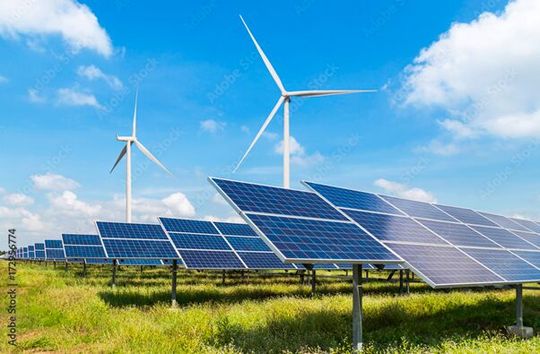
These frameworks directly support the closing of resource loops (10R) by facilitating high-value recovery processes such as remanufacturing and repurposing. For instance, power modules originally used in data centers can be salvaged and redeployed in less demanding applications, such as renewable energy storage systems. This approach leads to a significant reduction in electronic waste, minimizing the generation of technological scrap by preventing the premature replacement of entire systems when only specific components have reached their end-of-life.
:quality(80)/p7i.vogel.de/wcms/f0/c5/f0c53537d794ad168a2625854d6e530b/0127819719v2.jpeg "In future, robots will assist in the upcycling of lithium-ion batteries. Technology development at the Swiss Battery Technology Centre (SBTC) at Switzerland Innovation Park Biel/Bienne. (Source: Innosuisse)")
CIRCULAR ECONOMY
A second life for electric vehicle batteries
Critical Materials and WBG Semiconductors
This section explores how Wide Bandgap (WBG) technology acts as a key enabler for a more sustainable and resource-efficient power electronics industry.
The shift toward higher switching frequencies serves as a primary driver for material efficiency in power electronics. By enabling a significant reduction in the size of passive components such as inductors and transformers, this transition allows for advanced magnetics optimization. Smaller magnetic cores directly decrease the required volume of ferrite materials and copper windings, which substantially lowers the overall system weight and the environmental impact of raw material extraction. Furthermore, in applications like motor drives, more efficient WBG-based power stages facilitate high-performance control algorithms; these can compensate for the use of non-rare-earth magnets or smaller magnetic assemblies, achieving sustainable hardware design without sacrificing operational performance.
The integration of Silicon Carbide (SiC) and Gallium Nitride (GaN) acts as a fundamental enabler for dematerialization within power electronics. By offering superior thermal conductivity and drastically lower switching losses compared to traditional silicon, these WBG semiconductors trigger a domino effect of material savings. First, they simplify thermal management; since WBG devices dissipate less heat and tolerate higher operating temperatures, the need for bulky aluminum heatsinks, cooling fans, or complex liquid systems is significantly diminished.
This leap in performance directly boosts volumetric power density, enabling systems that are up to five times smaller. Consequently, this leads to a reduced system-level footprint, requiring less steel for chassis, fewer potting compounds, and minimal PCB real estate. In sectors like electric vehicles (EVs), these lighter power suites also decrease the structural reinforcement needed for the entire unit, creating a secondary wave of resource conservation across the supply chain.
:quality(80)/p7i.vogel.de/wcms/3f/8a/3f8a509fe74fbd8f221e9a0530516b64/0126938143v2.jpeg "A shift to a circular electronics economy is essential to address the growing e-waste problem and harness economic opportunities through enhanced reuse, refurbishment, and recycling practices, thereby achieving sustainability and economic growth. (Source: © malp - stock.adobe.com)")
SUSTAINABLITY
From e-waste to a circular electronics economy – Facts & figures for a sustainable future
Prognostics and Health Management (PHM) & Digital Twins
In the context of the circular economy, Prognostics and Health Management (PHM) acts as the backbone that prevents premature hardware disposal. By shifting from reactive to predictive strategies, we ensure that power electronic systems reach their maximum theoretical lifespan.
Predictive Maintenance (PdM) integrates real-time sensing with Physics-of-Failure (PoF) models to monitor thermomechanical stressors, enabling active control strategies that mitigate degradation and significantly extend the system's operational lifespan. PHM uses a combination of hardware and software to achieve this:
- Embedded Sensing: Beyond standard current/voltage sensors, advanced systems integrate high-speed temperature sensors directly onto the power module substrate to detect "hot spots" in real-time.
- Active Thermal Control: Algorithms can dynamically adjust the switching frequency (fsw) or modulation strategy to redistribute thermal stress during peak loads, effectively smoothing out the degradation process.
- Gate Driver Intelligence: Modern smart gate drivers can monitor the Vce(on) (on-state voltage drop) or switching times. Changes in these parameters serve as early indicators of semiconductor aging before a catastrophic failure occurs.
Digital Twins serve as high-fidelity virtual models that optimize the entire lifecycle of power converters by integrating real-time sensor data with Physics-of-Failure modeling. This synergy enables precise estimation of Remaining Useful Life (RUL), allowing for predictive maintenance that reduces component waste. Beyond monitoring, these virtual environments facilitate risk-free scenario simulation to minimize electrical stress and enhance performance. Ultimately, the Digital Twin acts as a Digital Product Passport, providing the verified health data necessary to certify hardware for second-life applications, such as repurposing EV inverters for stationary energy storage.
:quality(80)/p7i.vogel.de/wcms/b1/0a/b10a283cdf3e5f156781a7273c71a7e0/0129107484v2.jpeg "Circular design strategies are increasingly shaping how power electronics are designed, reused, and recovered across their life cycle. (Source: © Enrique - stock.adobe.com)")
CIRCULAR ELECTRONICS
Circularity in power electronics: Status of R-strategy adoption
Second-Life Strategies and Advanced Recycling
Cascading, or second-life repurposing, is a strategic approach that extends the functional value of power modules, particularly those salvaged from Electric Vehicles (EVs). Even when an EV inverter or battery pack is deemed "end-of-life" by automotive standards—typically having reached 70–80% of its original capacity—it retains significant utility for less strenuous tasks. By shifting these components from high-demand mobile environments to more stable roles, the industry maximizes the return on the energy and materials originally invested in their production.
In practice, these retired modules are integrated into Stationary Energy Storage Systems (SESS), where they play a vital role in supporting renewable energy grids. These systems store surplus power generated from solar or wind sources, releasing it during peak demand or periods of low generation. This transition effectively bridges the gap between the automotive and energy sectors, providing a cost-effective solution for grid-scale storage.
The environmental and economic impact of this strategy is profound. By delaying the energy-intensive recycling phase, cascading significantly reduces the lifecycle carbon footprint of power electronics, potentially doubling the greenhouse gas benefits of electrification. Furthermore, it lowers the financial barrier for large-scale energy storage, making the transition to a circular economy both technically feasible and commercially attractive.
To illustrate the shift toward a circular economy, the table below highlights how urban mining techniques optimize material reclamation while reducing ecological footprints.
| Category | Details | Environmental Impact |
| Concept | Urban Metallurgy: Reclamation of high-value materials from Waste Electrical and Electronic Equipment (WEEE). | Reduces the need for destructive primary mining, preserving natural ecosystems and biodiversity. |
| Pyrometallurgy | High-temperature smelting processes used to isolate metals. | High energy consumption and potential for toxic gas emissions if not strictly filtered. |
| Hydrometallurgy | Chemical leaching (e.g., using MSA or nitric acid) to extract elements. | Lower carbon footprint than smelting, but requires careful wastewater management to avoid soil/water acidity |
| Energy Efficiency | Approximately 90% lower energy use than extracting from virgin ore. | Massive reduction in greenhouse gas (GHG) emissions compared to traditional mining operations |
| Recovery Yields | Yields up to 99% for strategic materials like gallium and tin. | Promotes a circular economy by keeping critical minerals in the loop and reducing hazardous landfill waste. |
Life Cycle Assessment (LCA) and Circularity Metrics
The LCA of power electronics evaluates the environmental trade-off between a device’s high operational efficiency and its embedded carbon footprint. While WBG materials like SiC and GaN drastically reduce energy losses during the use phase, their fabrication and cleanroom processes are significantly more energy-intensive than those of traditional Silicon. A technical LCA conducts a net-benefit analysis to determine the environmental payback period, ensuring that the total energy saved by the converter's performance over its lifetime effectively offsets the high embodied energy required for its specialized manufacturing.
To quantify these impacts, the Material Circularity Indicator (MCI) is being adapted for power hardware to measure how restorative a system truly is. Moving beyond simplistic recyclable labels, the MCI provides a granular score based on the fraction of recycled input, the product's utility—defined by its lifespan and intensity of use—and the actual recovery efficiency of critical materials like copper, silver, and rare-earth magnets. This metric allows engineers to rank designs not just by their electrical performance, but by their ability to keep high-value materials within the economic loop.
Finally, End-of-Life (EoL) Modeling highlights how physical architecture dictates the recyclability index of power modules. For instance, integrated power modules (IPMs) encapsulated in epoxy resins often yield lower circularity scores because the permanent bonding hinders the recovery of high-purity semiconductor dies. In contrast, press-pack or screw-terminal designs facilitate easier disassembly and cleaner material separation, significantly improving the yield of high-value components at the end of the product's first life.
:quality(80)/p7i.vogel.de/wcms/8d/3d/8d3d8943c4ea211a64cabb24f7404944/0125827250v2.jpeg "The European Green Deal drives the electronics sector toward climate neutrality by 2050, emphasizing circular economy principles to enhance sustainability and competitiveness. Find out more about this here. (Source: © Vanessa - stock.adobe.com)")
CLIMATE NEUTRAL
The EU Green Deal and the electronics sector: A strategic imperative for circularity
Conclusion
The transition to sustainable power electronics demands a deep synergy between physical design and data intelligence. While ecodesign and modularity lay the groundwork for repairable hardware, the use of WBG semiconductors optimizes energy efficiency and reduces the reliance on critical materials. However, true circularity is achieved through the implementation of Digital Twins and PHM, which transform static components into dynamic assets capable of reporting their own state for second-life strategies.
By validating these advancements with precise LCA metrics, the industry not only minimizes its environmental footprint but also ensures that power systems serve as the resilient and transparent engine of a decarbonized global economy.
(ID:50786216)
:quality(80)/p7i.vogel.de/wcms/99/e7/99e713ba9dc419691f57166a045897b1/0126690706v2.jpeg "Discover how the circular economy is transforming electronics by extending product life, reducing waste, and optimizing resource use through strategic frameworks and innovative approaches. (Source: © Andy - stock.adobe.com)")
:quality(80)/p7i.vogel.de/wcms/3f/8a/3f8a509fe74fbd8f221e9a0530516b64/0126938143v2.jpeg "A shift to a circular electronics economy is essential to address the growing e-waste problem and harness economic opportunities through enhanced reuse, refurbishment, and recycling practices, thereby achieving sustainability and economic growth. (Source: © malp - stock.adobe.com)")