


:quality(80)/p7i.vogel.de/wcms/64/58/6458e523668e20b377363222fa42a55f/0130220409v2.jpeg "EPC’s Phase 18 report provides new insights into the reliability and robustness of eGaN power devices under real-world operating conditions. (Source: © danter - stock.adobe.com)")
:quality(80)/p7i.vogel.de/wcms/54/4c/544c477d212f04b137d64a4ebcda4222/0130222019v2.jpeg "Microchip’s new BZpack SiC power modules are designed to deliver high efficiency and reliability in demanding power conversion applications. (Source: Microchip)")
:quality(80)/p7i.vogel.de/wcms/da/f4/daf432573fac7d099d1b9fad5196c3f9/0130217438v2.jpeg "Renesas introduces a 650 V bidirectional GaN switch designed to improve efficiency and enable new architectures in power conversion systems for solar, energy storage, and AI data centers. (Source: Renesas)")
:quality(80)/p7i.vogel.de/wcms/58/52/5852190506e6905c28cd76ce374f81cf/0130213855v2.jpeg "Toshiba expands its portfolio of isolators and solid-state relays for reliable switching and signal isolation in industrial and power electronics applications. (Source: Toshiba)")
:quality(80)/p7i.vogel.de/wcms/70/00/7000469e10c35ed7751729db836151d0/0130184622v2.jpeg "Vincent Roche, CEO and Chair of Analog Devices (left), and Wirat Sri-amonkitkul, Managing Director of Analog Devices Thailand (right), at the ribbon-cutting ceremony marking the opening of ADI’s new advanced manufacturing facility in Thailand. (Source: Analog Devices)")
:quality(80)/p7i.vogel.de/wcms/cb/aa/cbaa3bbaed9f2eed05ed6747db579c09/0130182472v2.jpeg "PCIM Europe 2026 will once again bring together industry experts to discuss the latest developments in power electronics, energy management, and intelligent motion. (Source: Mesago Messe Frankfurt GmbH / Arturo Rivas Gonzalez)")
:quality(80)/p7i.vogel.de/wcms/d8/88/d888d47fa237c81aa2e3755df3abaa1e/0130111322v2.jpeg "The BCM6135 is a breakthrough bidirectional 800V-to-48V DC-DC converter that enables lighter, smaller and more efficient power delivery networks in electric vehicles. Its compact size can reduce power system volume by nearly 50%. (Source: Vicor)")
:quality(80)/p7i.vogel.de/wcms/b7/5e/b75e1eedc8b901bbaa392e426a2a702f/0130108005v2.jpeg "Fraunhofer EMFT presents strategic recommendations to strengthen Europe’s semiconductor ecosystem and technological sovereignty. (Source: Fraunhofer EMFT)")
:quality(80)/p7i.vogel.de/wcms/b9/f2/b9f2b934f2ccfc87ac330e242cd6032b/0130189442v2.jpeg "2D semiconductor fabrication is incompatible with existing procedures and lacks commercialization. A team of researchers from China has solved this problem. (Source: © TheWaterMeloonProjec - stock.adobe.com)")
:quality(80)/p7i.vogel.de/wcms/a8/33/a833e0093c34d0802dd1531caed672a7/0130195574v2.jpeg "Project Manager Christian Schiller at a projection welding machine where battery cells are connected using copper connectors. (Source: Fraunhofer ISE / Photo: Felix Thurn)")
:quality(80)/p7i.vogel.de/wcms/b9/26/b9265548cf4e6fe7e45789b711d01f8f/0130098748v2.jpeg "Gallium nitride (GaN) power devices are increasingly challenging silicon MOSFETs in low-voltage power conversion by enabling higher efficiency and switching performance. (Source: AI-generated (OpenAI DALL·E))")
:quality(80)/p7i.vogel.de/wcms/3c/4b/3c4bbc68dda65c7071b4376fb57423b0/0130030465v2.jpeg "Faraday’s laws explain the fundamental behavior of magnetic fields and electronic devices in dynamic use cases. The operation of transformers, wireless chargers, induction cookers, induction motors, magnetic levitating trains (MAGLEV Trains), electric violin, and many others depends upon Faraday’s laws. (Source: © Sheraz - stock.adobe.com)")
:quality(80)/p7i.vogel.de/wcms/34/4a/344a3dc5a19429cf6726b7f8f7e2ee32/0130109719v2.jpeg "Hioki’s new measurement solutions enable precise analysis of power electronics systems and energy efficiency. (Source: Hioki)")
:quality(80)/p7i.vogel.de/wcms/be/c8/bec8d43fc0ee73414274be44608b2970/0129748903v2.jpeg "The Infiniium XR804KA real-time oscilloscope delivers faster response time, improved stability, and streamlined workflows for high-speed digital and compliance testing. (Source: Keysight)")
:quality(80)/p7i.vogel.de/wcms/23/ee/23ee4a97790d6009dbfd7d9577ffa723/0129220424v2.jpeg "The R&S FPL1044 with the new RTSA option makes 40 MHz real-time frequency analysis available up to 44 GHz. (Source: Rohde & Schwarz )")
:quality(80)/p7i.vogel.de/wcms/3c/d1/3cd1cacbceb792ba63727199c61ca434/0127801860v2.jpeg "Thanks to cloud technology, users can collaborate on projects from anywhere and always have access to the latest planning data. (Source: SIEMENS)")
SEMICONDUCTOR WAFER Scientists from China enable mass production of 2D semiconductor wafers
Related Vendors
:fill(fff,0)/p7i.vogel.de/companies/63/c7/63c7da97be945/diotec.png "diotec (Diotec Semiconductor AG)")
:fill(fff,0)/p7i.vogel.de/companies/60/7e/607ec89d5d9b5/white-frame.jpg "white frame.jpg (www.rohm.com)")
:fill(fff,0)/p7i.vogel.de/companies/68/c2/68c2b622b43e1/logo.jpeg "logo (IQ Evolution GmbH)")
2D semiconductors are harder to produce compared to traditional silicon semiconductors. According to recent news from the SCMP - South China Morning Post, researchers have simplified the production of 2D semiconductors. The transistors built on the newly developed modular process exhibit a 10 times higher electron mobility.

2D semiconductors exhibit honeycomb-like structures. These layered semiconductors are only a few atoms thick and are held together by van der Waals forces. Compared to bulk conventional semiconductors, 2D semiconductors offer superior electrical properties due to tunable band gaps.
The manufacturing process of 2D semiconductors involves depositing or growing these atomically thin materials over diverse substrates. Examples of 2D semiconductors include graphene and transition metal dichalcogenides, such as molybdenum disulfide and tungsten diselenide.
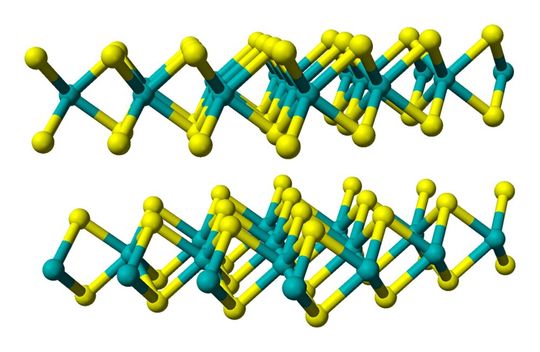
Manufacturers cannot produce large defect-free 2D semiconductor wafers in volume. The fabrication process requires the precise transportation of chemical precursors from different sources during growth. In simple words, different chemicals are involved in 2D wafer production.
At present, the production capacity of molybdenum disulfide is limited to one small wafer, typically 2-4 inches, per lot. The reason is uneven distribution and non-uniformity. It is not a commercial solution like standard 12-inch wafers.
:quality(80)/p7i.vogel.de/wcms/71/fd/71fdcc22d9a9bd2f42985f692c4aefa2/0128924236v2.jpeg "Wolfspeed reported a milestone in silicon carbide manufacturing with the successful production of a single-crystal 300mm SiC wafer. (symbolic image) (Source: © Four888 - stock.adobe.com)")
SIC MANUFACTORING
Breakthrough in 300mm silicon carbide technology
Growth technique
A collaborative effort by members of both Southeast University in Nanjing and Nanjing University introduced a novel crystal growth technique to manufacture a 6-inch molybdenum disulfide wafer. The technique could be as beneficial as the Czochralski growth process for silicon crystals, which enables the production of high-purity wafers, leading to higher yields for foundries.
The usual growth process of molybdenum disulfide crystals is chemical vapor deposition (CVD), in which the substrate is exposed to a chamber with gaseous raw material. The absorption deposits of thin films on the wafer surface.
The metal-organic chemical vapour deposition technique (MOCVD) uses metal-organic precursors to deposit crystalline films on substrates. The MOCVD method is able to grow 8-inch films. However, the 2D semiconductors grown through MOCVD contain numerous surface defects and carbon contamination.
The researchers chose to use oxygen in the chemical vapour deposition process to reduce energy consumption and improve production rates. Hence, the researchers named this method oxygen MOCVD or oxy-MOCVD.
Using the oxy-MOCVD method, the researchers were able to produce a 6-inch single-crystalline molybdenum disulfide film on a sapphire substrate. With the new oxy-MOCVD method, the growth rate exceeded 100 times that of the conventional molybdenum disulfide production.
The developed molybdenum disulfide film was uniform and free of carbon imperfections. Researchers fabricated FETs on the sapphire substrate. The 2D semiconductor transistors showed 10x higher electron mobility than the transistors developed using conventional molybdenum disulfide wafers.
Substrate stacking
The ongoing research to scale mass production of 2D semiconductors is not new. In 2023, researchers from Peking University in Beijing were able to produce fifteen 2-inch wafers and three 12-inch wafers per batch.
The newly developed technique, known as substrate stacking, uses self-contained growth modules that ensure face-to-face distribution across the wafer. The modules were stacked vertically to form an integrated array that enables mass production.
The researchers chose to produce monolayer films of molybdenum disulfide. The well-documented experiment involved several reliable techniques, such as optical spectroscopy, electron microscopy, and chemical transport tests, to confirm the quality and uniformity of produced crystals.
:quality(80)/p7i.vogel.de/wcms/7d/40/7d406bd959b3a9127c33a66157f9030a/0128339184v4.jpeg "The global digital infrastructure depends on the production of advanced semiconductor materials (Source: © uflypro - stock.adobe.com)")
SEMICONDUCTOR
Semiconductor materials: A comprehensive overview
What change could the mass production of 2D semiconductor wafers bring?
2D semiconductors remain an active subject of research for the scientific community and enterprises alike. Some researchers consider 2D semiconductors as heroes once Moore’s law reaches the critical miniaturization limit.
All the latest transistor technologies, FinFET and GaaFET, are built by shaping channels from bulk single-crystal silicon wafers. 2D semiconductors are likely to rule the industry when GaaFETs hit physical limits.
The world runs on conventional 3D bulk crystals of silicon that make up high-yield wafers. Larger wafers are important for semiconductor manufacturers to reduce time-to-market and improve yields. Larger 2D semiconductor wafers in mass production could support Moore’s law.
References
- https://www.sciencedirect.com/science/article/abs/pii/S2095927323004206
- https://www.scmp.com/news/china/science/article/3343807/chinese-scientists-hit-breakthrough-2d-semiconductor-wafers?module=perpetual_scroll_0&pgtype=article
- https://interestingengineering.com/innovation/china-2d-semiconductor-wafer
(ID:50792974)
:quality(80)/p7i.vogel.de/wcms/0a/3e/0a3e2d39de6cdc7e3a830f4671ad2b83/0127848345v2.jpeg "This article explains whether gallium oxide as a semiconductor is worth the time of the power electronics industry. (Source: © IYearDesign - stock.adobe.com)")
:quality(80)/p7i.vogel.de/wcms/ef/f7/eff78f21c54995d45f8bfce6131c1b33/0125055923v2.jpeg "Argon plasma in the vacuum chamber during magnetron sputtering, with the substrate in the center of the photograph. (Source: Empa)")