


:quality(80)/p7i.vogel.de/wcms/7f/4b/7f4b97757cea82c0675209630577dc22/0133974130v2.jpeg "Vox Power’s EIRE600 delivers up to 600 W in a compact 5 × 3-inch package, with forced-air or conduction cooling options for industrial and medical equipment. (Source: Vox Power)")
:quality(80)/p7i.vogel.de/wcms/55/97/5597c3436e3bc92ee7ba23b6f9d289e9/0134032539v2.jpeg "Littelfuse’s TP7.0SMD-XC automotive TVS diode series uses foldback technology to provide low clamping voltage for protecting sensitive vehicle electronics. (Bild: Littelfuse)")
:quality(80)/p7i.vogel.de/wcms/51/f8/51f84448e666230bb11a02566abd1177/0133958187v3.jpeg "Microchip’s radiation-tolerant GaN point-of-load converter supplies up to 20 A for space-based processors, FPGAs, microcontrollers and ASICs. (Source: Microchip)")
:quality(80)/p7i.vogel.de/wcms/0a/7c/0a7c08f368ae1d91f758dd18d2a32e88/0133978423v2.jpeg "EPFL researchers have demonstrated a GaN transistor that withstands nearly 4 kV, using an intrinsic polarization superjunction design to distribute electric fields more evenly. (Source: EPFL)")
:quality(80)/p7i.vogel.de/wcms/5b/94/5b94232ca4183d6fcc2dccc7394d7544/0134041114v4.jpeg "Siemens and NVIDIA are testing AI applications at Siemens’ Erlangen electronics factory, using digital twins to support production planning and prepare inspection systems before physical prototypes are available. (Bild: Siemens)")
:quality(80)/p7i.vogel.de/wcms/b4/1f/b41f2731a07b608e60eca3663e280301/0133980549v2.jpeg "Multi-year agreement with Wolfspeed supports Infineon’s conversion from 150-millimeter to 200-millimeter silicon carbide (SiC) manufacturing (Source: © Ada - stock.adobe.com)")
:quality(80)/p7i.vogel.de/wcms/e3/0a/e30a8813bcf44b16f0dceb63a0747d29/0133984094v2.jpeg "The semiconductor is only one part of the design. Higher voltage, frequency and power density also increase the demands on electronic packaging materials such as die attach, substrates, top-side interconnects and module attach. (Source: Generated by AI)")
:quality(80)/p7i.vogel.de/wcms/5d/fb/5dfba5e5f38daf2b8597b05656af29c0/0133956337v2.jpeg "Wolfspeed has received a conditional commitment for a loan of up to $1.5 billion from the U.S. Department of War to support its domestic wide-bandgap semiconductor supply chain. (Source: © AspctStyle - stock.adobe.com)")
:quality(80)/p7i.vogel.de/wcms/bf/b6/bfb6ac295759be32d567df9849b6767e/0134094495v2.jpeg "Fraunhofer ISE reports that 25 Ah pouch cells with silicon-rich anodes retained more than 83% of their initial capacity after 1,000 cycles when tested under 1,000 kPa axial pressure. (Bild: Fraunhofer ISE)")
:quality(80)/p7i.vogel.de/wcms/16/dc/16dca55e6ef80e6b5da68bc628da2dcc/0133844782v2.jpeg "This article explains virtual power plants in modern renewable-heavy grids. (Source: © M@rketVisualsStudio - stock.adobe.com)")
:quality(80)/p7i.vogel.de/wcms/e8/33/e8330aae4bea3578b98ec2c1403d367a/0133980001v2.jpeg "IRENA’s 2026 World Energy Transition Outlook identifies faster electrification powered by renewables as central to meeting future global energy needs. (Source: Irena)")
:quality(80)/p7i.vogel.de/wcms/6c/b4/6cb405f47d25035e256ae90fe3a66ee6/0134032112v2.jpeg "Sungrow’s PowerTitan 3.0 energy storage platform uses onsemi EliteSiC hybrid power modules, with the companies reporting peak inverter efficiency above 99.3%. (Bild: onsemi)")
:quality(80)/p7i.vogel.de/wcms/7b/76/7b76005554b556df2a7a3794bdf69d44/0132365246v2.jpeg "Hioki’s ST5680A DC Hipot Tester combines CE/UKCA/CSA compliance, an integrated capacitance‑based contact check and time‑series waveform recording (voltage, leakage current, insulation resistance) to standardize hipot and insulation testing across EV cell, module and pack production lines. (Source: Hioki)")
:quality(80)/p7i.vogel.de/wcms/af/7f/af7f7b0fb7f29219fc991b1130f65477/0132241333v2.jpeg "Comprehensive laboratory testing regimens—combining thermal cycling, high‑current stress, EMC, and accelerated lifetime tests—are essential to validate advanced power designs and ensure reliability in real‑world applications. (Source: PRBX)")
:quality(80)/p7i.vogel.de/wcms/16/3d/163df69363f8125315a9826e13ea4b05/0131927425v2.jpeg "Solution will maximize data center and AI factory profitability while delivering engineering-grade insights to design and operations for more efficient, sustainable, and resilient infrastructure. (Source: Cadence)")
:quality(80)/p7i.vogel.de/wcms/85/b7/85b7e90733a2bd8f21515d8f7137f2fc/0131917677v2.jpeg "Renesas acquires Pictorus to integrate its embedded application software platform with Renesas’ MCU and MPU portfolio, helping developers shorten time‑to‑market and simplify system integration. (Source: © lucadp - stock.adobe.com)")
:quality(80)/p7i.vogel.de/wcms/f8/34/f834240d434a0c265a2ccafe614c8cd7/0134032109v4.jpeg "Hard- and soft-switching techniques shape voltage and current during device transitions, influencing switching losses, EMI and thermal performance in power converters. (Bild: © Mrthullab - stock.adobe.com)")
:quality(80)/p7i.vogel.de/wcms/27/07/2707280c807689b437baed3660257404/0133626052v2.jpeg "The quantum behavior of electrons shapes semiconductor devices—and the power converters that deliver electricity to modern computing systems. (Source: © Celt Studio - stock.adobe.com)")
FLEXIBLE POWER CONVERSION Multiport power converters: All-in-one solution
Related Vendors
:fill(fff,0)/p7i.vogel.de/companies/5f/71/5f71d5f92a5f6/2000px-rogers-corporation-logo-svg.png "2000px-Rogers_Corporation_Logo.svg.png (rogers germany)")
:fill(fff,0)/p7i.vogel.de/companies/68/2c/682c3e2e9a195/logotype-rvb.jpeg "logotype-rvb (MERSEN France)")
Modern power systems don’t have a single source or load. The need for efficiency drives a system to run multiple power conversion stages in parallel. A multiport converter (MPC) enters the picture, replacing modular power conversion cells. Simply put, multiport converters can replace cascaded converters by integrating more than two distinct energy sources and loads into a single aggregated controllable hub. In renewable-backed grids, multiport converters can result in efficient energy management, grid stability, and cost savings.
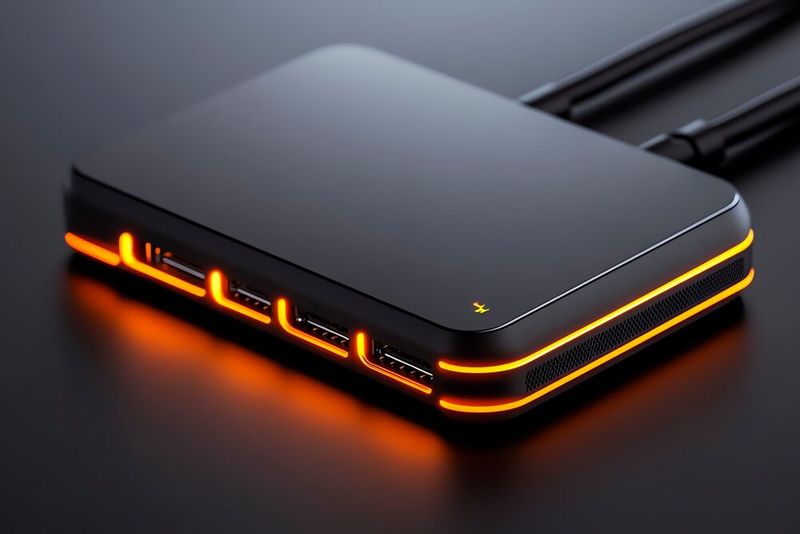
In distributed networks (DNs), multiple conversion stages make the entire system bulky and complex. Multiport converters replace power conversion stages with a single stage. These converters can have N input and M output ports. Based on the design, either a DC bus or a mult-winding high-frequency transformer can serve as the connecting link between all the ports.
Each port can either be unidirectional or bidirectional. Some research suggests that multiport converters might also integrate a single storage unit for the entire power system. Multiport converters can perform all the functions of a cascaded converter. Common MPC functions are DC-to-DC or DC-to-AC-to-DC power conversion. Buck and boost DC-to-DC converters are commonly used in MPC.
All DC-AC conversion and vice versa occur at the same switching frequency. The phase shift occurs between different ports. That’s how multiport converters can enable control over the direction and magnitude of power flow. A controller can control power flow using phase-shift modulation, pulse-width modulation (PWM), and predictive control strategies.
Multiport converters are of three types: isolated, non-isolated, and partially-isolated. Just as the name suggests, non-isolated multiport converters don’t offer electrical isolation. All the ports are connected across a common ground. DC-to-DC buck-boost multiport converters follow a non-isolated construction. The efficiency and power density of such converters are high.
Partially-isolated multiport power converters can isolate some power conversion stages (not all). Isolation exists between the source and load ports. All sources can be connected on a single bus. Partially isolated multiport power converters offer moderate-to-high efficiency in photovoltaic applications.
Isolated multiport converters provide complete isolation between all conversion stages using a multi-winding high-frequency transformer. Wide bandgap semiconductors, SiC and GaN, are used in isolated multiport converters. A GaN-based triple active bridge (TAB) multiport converter shows an efficiency of 98.87% at 100 kHz switching.
Potential applications of multiport converters
Multiport converters are applicable in power electronics, industrial power management, electric vehicle charging, data centres, microgrids, and high-voltage applications.
EV charging: Multiport converters can help EV charging stations combine grid power, solar power, and battery storage. EV charging stations can perform vehicle-to-grid (V2G) and grid-to-vehicle (G2V) conversion. The extra power from the battery can be fed back to the grid.
Photovoltaic storage: A solar cell connected to a multiport converter can charge an EV battery (photovoltaic-to-vehicle - PV2V) or station battery for later use (photovoltaic-to-battery - PV2B). Multiport converters support maximum power point tracking (MPPT) in PV modules.
Microgrids: Multiport converters can support DC microgrids, grid islands, or nanogrids with multiple energy sources, including photovoltaics, battery energy storage systems (BESS), ultracapacitors for transients, and various others.
Data centres: The transition towards 400/800 HVDC at the rack calls for lower losses at each DC-to-DC converter stage. Multiport converters in data centres can connect series-stacked voltage domains to a shared stage using a multi-winding transformer.
Benefits of multiport power converters
ScienceDirect shares three benefits of using an MPC over cascade converters: higher power density, fewer semiconductor switches, and a single point of control for bidirectional power flow.
- Multiport converters engineer bidirectional power flow.
- Multiport converters reduce the point of failure, component count, system weight, and power losses.
- Multiport converters are energy-efficient and support decarbonization initiatives.
Downside of multiport power converters
The only downside of multiport power converters is the lack of implementation and integration in real applications. Some manufacturers sell three-port DC-DC low-to-medium power converters for grid power, solar, and battery charging stations. Manufacturers and OEMs are yet to sell high-power standalone catalogue multiport converters that adhere to grid codes and meet all regulatory standards.
Researchers from Princeton University consider multiport converters a part of flexible, programmable, granular, and adaptive (FPGA) power electronics. They simulated a 100-port (multiport) power converter and built a 4-port (multiport) power converter to validate the simulation model. The main purpose of the developed multiport converter is based on programmable power flow.
References
- https://www.nature.com/articles/s41598-025-21893-8
- https://www.princeton.edu/~minjie/files/multiport_paper.pdf
- https://www.sciencedirect.com/science/article/pii/S2772671124001542
(ID:50859132)
:quality(80)/p7i.vogel.de/wcms/b1/5e/b15ee02b0ba02db70cf61e37d66ad1d3/0129349127v2.jpeg "Vehicle-to-grid (V2G) chargers enable bidirectional energy flow, allowing electric vehicles to act as mobile energy storage systems that can both draw power from and feed power back into the grid. (Source: © medienvirus - stock.adobe.com)")
:quality(80)/p7i.vogel.de/wcms/ae/f8/aef812b9e9d135f80060a3c50b03d034/0130157717v2.jpeg "Solid-state transformers (SSTs) promise more flexible and efficient power conversion, but significant technical challenges still limit their large-scale commercial adoption. (Source: © Curie - stock.adobe.com)")