


:quality(80)/p7i.vogel.de/wcms/b9/32/b932b48e411d9f6c41a59522880b1e2c/0130564051v2.jpeg "Infineon's silicon carbide power semiconductors will enhance efficiency, power density and reliability of DG Matrix's solid-state transformer platform
(Source: Infineon)")
:quality(80)/p7i.vogel.de/wcms/b2/96/b296e5c2062f79566ea08574774c6cf4/0130561033v2.jpeg "Bourns introduces high-current shielded power inductors designed for compact, high-density electronic applications. (Source: BOURNS)")
:quality(80)/p7i.vogel.de/wcms/1e/d0/1ed0d794c7c01906cdf1857db64b65de/0130401429v2.jpeg "The new TOPSwitchGaN flyback IC family extends the power range of flyback converters to 440 W—well beyond the limits that traditionally required more complex resonant and LLC topologies. (Source: Power Integrations)")
:quality(80)/p7i.vogel.de/wcms/1a/77/1a77d5d537e694652bf91fc2d1bb0701/0130398629v2.jpeg "The new evaluation platform enables developers to explore the performance benefits of seventh-generation GaN technology in motor control systems. (Source: © danter - stock.adobe.com)")
:quality(80)/p7i.vogel.de/wcms/70/00/7000469e10c35ed7751729db836151d0/0130184622v2.jpeg "Vincent Roche, CEO and Chair of Analog Devices (left), and Wirat Sri-amonkitkul, Managing Director of Analog Devices Thailand (right), at the ribbon-cutting ceremony marking the opening of ADI’s new advanced manufacturing facility in Thailand. (Source: Analog Devices)")
:quality(80)/p7i.vogel.de/wcms/cb/aa/cbaa3bbaed9f2eed05ed6747db579c09/0130182472v2.jpeg "PCIM Europe 2026 will once again bring together industry experts to discuss the latest developments in power electronics, energy management, and intelligent motion. (Source: Mesago Messe Frankfurt GmbH / Arturo Rivas Gonzalez)")
:quality(80)/p7i.vogel.de/wcms/d8/88/d888d47fa237c81aa2e3755df3abaa1e/0130111322v2.jpeg "The BCM6135 is a breakthrough bidirectional 800V-to-48V DC-DC converter that enables lighter, smaller and more efficient power delivery networks in electric vehicles. Its compact size can reduce power system volume by nearly 50%. (Source: Vicor)")
:quality(80)/p7i.vogel.de/wcms/b7/5e/b75e1eedc8b901bbaa392e426a2a702f/0130108005v2.jpeg "Fraunhofer EMFT presents strategic recommendations to strengthen Europe’s semiconductor ecosystem and technological sovereignty. (Source: Fraunhofer EMFT)")
:quality(80)/p7i.vogel.de/wcms/e6/49/e6495c2d66253b8a488f774bed717d0b/0130452223v2.jpeg "Boron nitride has exceptional chemical and thermal properties. When voltage is applied to boron nitride, it emits light. (Source: © kaliel - stock.adobe.com)")
:quality(80)/p7i.vogel.de/wcms/94/c0/94c0221bedb88a883b9d451560a8dd95/0130559763v2.jpeg "The Humpback Creek hydroelectric facility in Cordova, Alaska, was the site of an edge data center pilot project. (Source: Chelsea Haisman via NLR)")
:quality(80)/p7i.vogel.de/wcms/15/ac/15ac0b12b7efcf6aee296745d4686d51/0130461814v2.jpeg "SiC devices are key enablers for higher efficiency and power density in modern electric vehicle systems. (Source: ROHM)")
:quality(80)/p7i.vogel.de/wcms/ae/f8/aef812b9e9d135f80060a3c50b03d034/0130157717v2.jpeg "Solid-state transformers (SSTs) promise more flexible and efficient power conversion, but significant technical challenges still limit their large-scale commercial adoption. (Source: © Curie - stock.adobe.com)")
:quality(80)/p7i.vogel.de/wcms/34/4a/344a3dc5a19429cf6726b7f8f7e2ee32/0130109719v2.jpeg "Hioki’s new measurement solutions enable precise analysis of power electronics systems and energy efficiency. (Source: Hioki)")
:quality(80)/p7i.vogel.de/wcms/be/c8/bec8d43fc0ee73414274be44608b2970/0129748903v2.jpeg "The Infiniium XR804KA real-time oscilloscope delivers faster response time, improved stability, and streamlined workflows for high-speed digital and compliance testing. (Source: Keysight)")
:quality(80)/p7i.vogel.de/wcms/23/ee/23ee4a97790d6009dbfd7d9577ffa723/0129220424v2.jpeg "The R&S FPL1044 with the new RTSA option makes 40 MHz real-time frequency analysis available up to 44 GHz. (Source: Rohde & Schwarz )")
:quality(80)/p7i.vogel.de/wcms/3c/d1/3cd1cacbceb792ba63727199c61ca434/0127801860v2.jpeg "Thanks to cloud technology, users can collaborate on projects from anywhere and always have access to the latest planning data. (Source: SIEMENS)")
WIDE BANDGAP MATERIALS Exploring insulating boron nitride as a semiconductor
Related Vendors
:fill(fff,0)/p7i.vogel.de/companies/62/b9/62b980cddf5d6/ceramtec.png "ceramtec (www.ceramtec-group.com)")
:fill(fff,0)/p7i.vogel.de/companies/60/7e/607ec89d5d9b5/white-frame.jpg "white frame.jpg (www.rohm.com)")
:fill(fff,0)/p7i.vogel.de/companies/66/8b/668becd1c07eb/dowa-logo-word--1-.jpeg "dowa-logo-word--1- (DOWA)")
The industry needs power semiconductor devices with higher power densities and electron mobilities. Both are achievable with the help of a wide band gap and various other properties. It makes so many compounds suitable to become the next standard in the industry. Silicon carbide (SiC) and gallium nitride (GaN) replaced silicon in many power applications.
The industry is also betting on upcoming aluminum nitride (AIN) wafers. But there are some lesser-known compounds, such as boron nitride (BN), that cannot be ignored. Boron nitride is a legacy insulator. Researchers doped boron nitride and explored its semiconducting capabilities. The article explores insulating boron nitride as a semiconductor.
BN: Boron Nitride
Boron nitride was discovered in the early 1900s. Boron nitride is a compound mixture of boron (Z = 5) and nitrogen (Z = 7), having a chemical formula of BN. Both boron and nitrogen, having a valency of 3, are bonded in a 1:1 ratio for stability.
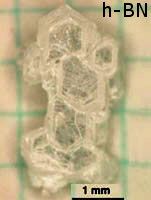
Boron nitride is found in amorphous (a-BN), hexagonal (h-BN), cubic (c-BN), and wurtzite (w-BN) structures. h-BN, c-BN, and w-BN are crystalline. However, a-BN is non-crystalline. Out of all crystalline forms, h-BN is the most stable structure, while others are subject to doping in various applications.
:quality(80)/p7i.vogel.de/wcms/4d/e0/4de02f76a37cbb3df30dd231de589c8e/0128866890v2.jpeg "Both legacy and vGaN show higher carrier mobility and band gap energies compared to other power semiconductors. (Source: © phonlamaiphoto - stock.adobe.com)")
GALLIUM NITRIDE
Onsemi’s new vGaN vs legacy GaN
Boron nitride as a semiconductor
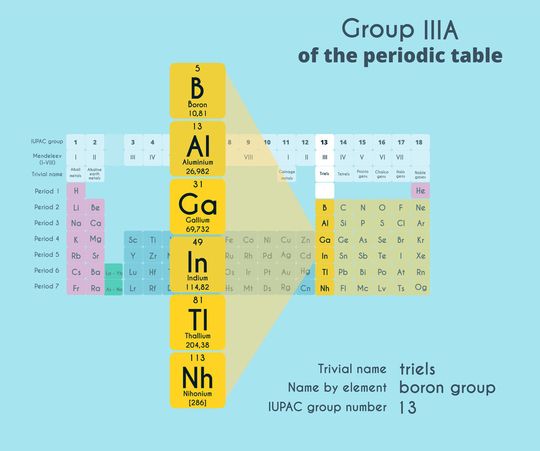
Boron is a III-V compound. If we look at the periodic table, boron is a lll element - group 13 element with aluminum (Al), gallium (Ga), indium (In), thallium (Th), and nihonium (Nh).
Nitrogen is a V element - group 15 element with phosphorus (P), arsenic (As), antimony (Sb), and bismuth (Bi).
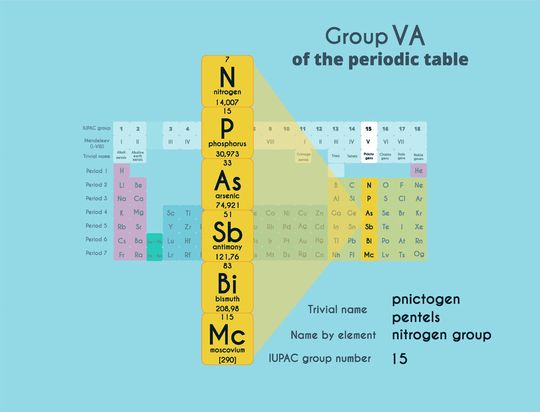
It is worth noticing that all other III-V compounds are semiconductor materials. Ga from III and N from V make GaN, Ga from III and As from V make GaAs, In from III and P from V make InP, and many more. Group characteristics are one of the reasons that make boron nitride a potential semiconductor, along with other group compounds.
Boron nitride can be made as n-type and p-type semiconductors. N-type impurities, such as silicon (Si), sulphur (S), and carbon forms (C), can make n-type BN. Beryllium (Be), a p-type impurity, can make p-type BN.
The structure of hexagonal boron nitride is similar to graphite. Atoms of boron and nitrogen in each h-BN layer form partial covalent bonds with ionic characters or polar covalent bonds. Weak van der Waals forces bind these h-BN layers.
If we consider a monolayer of hexagonal boron nitride, it resembles graphene, which has a honeycomb-like structure. The thermal conductivity of h-BN is similar to that of graphene. According to the latest research, graphene is a promising 2D semiconductor. However, the monolayer of hexagonal boron nitride is insulating in nature.
The insulating capability makes h-BN applicable for functioning as a dielectric in 2D semiconductors. However, boron nitride can potentially function like a semiconductor due to its wide bandgap of 5.8-6 eV and optical properties. Bulk hexagonal boron nitride has an indirect band gap.
Surprisingly, boron nitride can exhibit both direct and indirect band gaps. In the monolayer, h-BN exhibits a direct band gap due to the strong attraction between excitons. The direct bandgap gives rise to photoluminescence comparable to 2D semiconductors, such as bismuth diselenide.
Photoluminescence refers to the process by which a semiconductor material emits light after absorption of photons. It is verifiable in cubic boron nitride. The crystal structure of c-BN is similar to diamond. If voltage is applied to both h-BN and c-BN, they emit deep UV light in the range of 250 nm.
:quality(80)/p7i.vogel.de/wcms/64/58/6458e523668e20b377363222fa42a55f/0130220409v2.jpeg "EPC’s Phase 18 report provides new insights into the reliability and robustness of eGaN power devices under real-world operating conditions. (Source: © danter - stock.adobe.com)")
GAN REALIABILITY
EPC releases phase 18 reliability report on eGaN devices
Applications and future trends
Insulating boron nitride is a million-dollar market. Automotive applications, electronics, and aerospace capture most of the market.
Both forms of boron nitride, hexagonal and cubic, are quite hard, similar to diamonds. They exhibit high thermal and chemical stability.
Some applications of boron nitride are as follows:
- Laser printers
- Thermal management materials
- Lubricant in combustion engines at low and high temperatures in automotive applications and defense
- Aerogels
- Cutting tools
- Cosmetic production processes
- Ceramics
- Rubbers
- Coatings
Nanotubes: Boron nitride nanotubes are used in quantum sensing, thermal management systems, composites, and various other applications. According to recent research, boron nitride nanotubes can be 1000 times more efficient than current methods for chemical sensing in liquids.
Semiconductor industry: At present, boron nitride, in any of its forms, is not used as a semiconductor material. The internal structure makes them insulators. Hence, boron nitride is instead used to provide insulation in advanced chips.
Boron nitride-based ceramic plates are applicable in semiconductor fabrication during wafer production, chemical vapor deposition, and ion implantation stages. The reason fabrication units choose boron nitride is its high temperature stability, purity, chemical inertness, and insulation properties.
Optical properties, driven by an indirect-to-direct bandgap switch, make boron nitride semiconductors an active subject of research. A recent study suggested that the thermal expansion of boron nitride can be controlled. It means that modified boron nitride can show stable electrical performance.
Another research verified the intrinsic ferromagnetic behavior of hexagonal boron nitride chemically combined with graphene and fluorine atoms, highly reactive elements. The modified compound of h-BN, graphene, and fluorine exhibited a wide band gap of 3.8 eV.
:quality(80)/p7i.vogel.de/wcms/b9/f2/b9f2b934f2ccfc87ac330e242cd6032b/0130189442v2.jpeg "2D semiconductor fabrication is incompatible with existing procedures and lacks commercialization. A team of researchers from China has solved this problem. (Source: © TheWaterMeloonProjec - stock.adobe.com)")
SEMICONDUCTOR WAFER
Scientists from China enable mass production of 2D semiconductor wafers
Power electronics: Both hexagonal boron nitride and cubic boron nitride exhibit high thermal and chemical stability values. The ability to combat chemicals and sustain high-temperature operation makes them a futuristic power semiconductor.
Energy storage: Researchers in India developed an electrode using carbon nanotubes with boron nitride. It could potentially lead to efficient energy storage solutions in the future.
Topological phonons: Scientists proved the existence of phonons in hexagonal boron nitride. Similar to topological insulators, phonons are symmetry-protected and stable. In simple words, the research showed hexagonal boron nitride can be tailored to control heat transport on a nanoscale.
References
- https://www.nature.com/articles/nphoton.2015.277#:~:text=Hexagonal%20boron%20nitride%20is%20a,intense%20emission%20around%20215%20nm.
- https://www.azom.com/article.aspx?ArticleID=8369
- https://www.nature.com/articles/s41467-025-67538-2
- https://moatcity.com/blog-kiln-furniture/applications-of-boron-nitride-plates-in-the-semiconductor-industry-a-revolution-in-high-performance-materials/#:~:text=Boron%20nitride%20(BN)%20plates%20are%20a%20high%2Dperformance,*%20**Electrical%20insulation**%20Suitable%20for%20high%2Dvoltage%20environments
- https://arxiv.org/abs/2504.20443
- https://www.sciencedirect.com/science/article/abs/pii/S254252932100208X?via%3Dihub
- https://timesofindia.indiatimes.com/city/ahmedabad/iit-gn-team-develops-hybrid-electrode/articleshow/128521740.cms
- https://arxiv.org/abs/2502.18764
(ID:50804751)
:quality(80)/p7i.vogel.de/wcms/7d/40/7d406bd959b3a9127c33a66157f9030a/0128339184v4.jpeg "The global digital infrastructure depends on the production of advanced semiconductor materials (Source: © uflypro - stock.adobe.com)")
:quality(80)/p7i.vogel.de/wcms/0a/3e/0a3e2d39de6cdc7e3a830f4671ad2b83/0127848345v2.jpeg "This article explains whether gallium oxide as a semiconductor is worth the time of the power electronics industry. (Source: © IYearDesign - stock.adobe.com)")