


:quality(80)/p7i.vogel.de/wcms/2f/f3/2ff3221bf7665de2d0acf83760bfd1fa/0130031523v2.jpeg "Wolfspeed presents a 300 mm silicon carbide technology platform designed to support advanced packaging and high-efficiency power delivery for AI data center infrastructure. (Source: Wolfspeed)")
:quality(80)/p7i.vogel.de/wcms/c3/16/c316e955a97f5d72d9678297b237b9e5/0129932858v2.jpeg "Left: the single-phase version of the SENTRON ECPD with RCM, right: a model of the future three-phase version of the SENTRON ECPD. (Source: Siemens)")
:quality(80)/p7i.vogel.de/wcms/ef/0a/ef0adb0acf793fe147cc27c21f6a7a67/0129954238v2.jpeg "Empower Semiconductor introduces embedded silicon capacitors designed to improve power delivery and stability in AI and high-performance computing processors. (symbolic image) (Source: © IF.arc - stock.adobe.com)")
:quality(80)/p7i.vogel.de/wcms/53/f9/53f9301dfc9292d02960f7996c79cc6e/0129927601v2.jpeg "Wolfspeed’s new 10 kV SiC MOSFET enables high-voltage power conversion for grid and industrial applications. (symbolic image) (Source: © CREATIVE- 3.4 - stock.adobe.com)")
:quality(80)/p7i.vogel.de/wcms/6e/cd/6ecd41d095d5111cf4ed37b714844487/0129930878v2.jpeg "PCIM Asia Shenzhen provides a platform for industry experts to present new developments in power electronics and electrification technologies. (symbolic image) (Source: © killykoon - stock.adobe.com)")
:quality(80)/p7i.vogel.de/wcms/02/c0/02c0e9722f70b1134dbf96fb59a9c73d/0129655179v2.jpeg "The PCIM Conference 2026 will take place from June 9-11, featuring discussions on power electronics trends, including GaN technology and AI applications. (symbolic image) (Source: © Elmira - stock.adobe.com)")
:quality(80)/p7i.vogel.de/wcms/cc/67/cc670ea2029cd2af5c641af70e1bf734/0129816392v4.jpeg "Fraunhofer IAF coordinates the EU SUPREME project to accelerate GaN and SiC power semiconductor innovation in Europe. (Source: Fraunhofer IAF)")
:quality(80)/p7i.vogel.de/wcms/ea/e6/eae6aee30071e67a5627027974437134/0129544613v2.jpeg "GlobalFoundries and Renesas strengthen their collaboration to support U.S.-based semiconductor production and supply chain resilience. (Source: © ronstik - stock.adobe.com)")
:quality(80)/p7i.vogel.de/wcms/23/1a/231a97643aa7fc3adf2704a6273756c3/0130030642v2.jpeg "Gallium nitride (GaN) power devices are increasingly challenging silicon MOSFETs in low-voltage power conversion by enabling higher efficiency and switching performance. (Source: © Sheraz - stock.adobe.com)")
:quality(80)/p7i.vogel.de/wcms/3c/4b/3c4bbc68dda65c7071b4376fb57423b0/0130030465v2.jpeg "Faraday’s laws explain the fundamental behavior of magnetic fields and electronic devices in dynamic use cases. The operation of transformers, wireless chargers, induction cookers, induction motors, magnetic levitating trains (MAGLEV Trains), electric violin, and many others depends upon Faraday’s laws. (Source: © Sheraz - stock.adobe.com)")
:quality(80)/p7i.vogel.de/wcms/b1/5e/b15ee02b0ba02db70cf61e37d66ad1d3/0129349127v2.jpeg "Vehicle-to-grid (V2G) chargers enable bidirectional energy flow, allowing electric vehicles to act as mobile energy storage systems that can both draw power from and feed power back into the grid. (Source: © medienvirus - stock.adobe.com)")
:quality(80)/p7i.vogel.de/wcms/26/d5/26d591cc340077026eac56a0e7564faf/0129949603v2.jpeg "Flexible: The solid silicone-based electrolyte is elastic, thereby compensating for the voids that form in solid-state batteries during charging and discharging. (Source: Empa)")
:quality(80)/p7i.vogel.de/wcms/be/c8/bec8d43fc0ee73414274be44608b2970/0129748903v2.jpeg "The Infiniium XR804KA real-time oscilloscope delivers faster response time, improved stability, and streamlined workflows for high-speed digital and compliance testing. (Source: Keysight)")
:quality(80)/p7i.vogel.de/wcms/23/ee/23ee4a97790d6009dbfd7d9577ffa723/0129220424v2.jpeg "The R&S FPL1044 with the new RTSA option makes 40 MHz real-time frequency analysis available up to 44 GHz. (Source: Rohde & Schwarz )")
:quality(80)/p7i.vogel.de/wcms/3c/d1/3cd1cacbceb792ba63727199c61ca434/0127801860v2.jpeg "Thanks to cloud technology, users can collaborate on projects from anywhere and always have access to the latest planning data. (Source: SIEMENS)")
:quality(80)/p7i.vogel.de/wcms/5a/a0/5aa0436498af618297961fd54ab36cdf/0126290792v2.jpeg "Siemens accelerates student-led semiconductor innovation across Europe’s leading technical universities through Cre8Ventures’ Open Higher Education Program developed in collaboration with Arm and University of Southampton (Source: Siemens Digital Industries Software)")
SUPERCONDUCTIVITY World’s first electronic 3D flat-band to boost superconductivity
Related Vendors
:fill(fff,0)/p7i.vogel.de/companies/60/7e/607ec89d5d9b5/white-frame.jpg "white frame.jpg (www.rohm.com)")
:fill(fff,0)/p7i.vogel.de/companies/5f/71/5f71d5f92a5f6/2000px-rogers-corporation-logo-svg.png "2000px-Rogers_Corporation_Logo.svg.png (rogers germany)")
:fill(fff,0)/p7i.vogel.de/companies/68/08/6808a2b3b6595/het-logo.jpeg "het-logo (Heraeus Electronics)")
November 2023 has an achievement to bring to the world of science and technology. The team of genius physicists from MIT claim that they have successfully developed a flat band in a three-dimensional crystal structure.
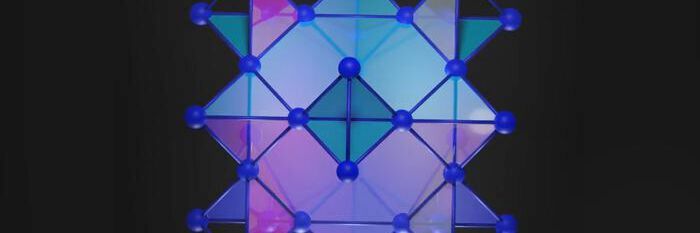
MIT physicists develop 3D- flat band
The latest buzz is that MIT physicists have developed a flat band in a three-dimensional crystal structure. The physicists “trapped” the electrons into an energy band. These electrons slowly settle to become immovable and chained together. As a result, these electrons are said to possess the same energy and function as a single entity. The energy band where electrons become too heavy to move and have the same energy is what they call a flat band.
The word 3D flat band implies the fact that this scientific win was achieved in a three-dimensional solid-state crystal. Hence, the scientists call their experiment a “3D electronic flat band”. One of the reasons for this win is credited to the smart lattice geometry of synthesized crystals. The surprisingly rare cubic arrangement of atoms resembles a popular Japanese woven basket artwork “Kagome”.
The team of physicists has worked really hard to search extensively for a unique geometry supporting their experiment. Apparently, the team is happy about their development of 3D flat bands from the Kagome arrangement. Physicists from the team are eager to explore the so-called “exotic electron states” for new emerging technologies and wish to sustain superconducting character at higher temperatures.
:quality(80):fill(efefef,0)/p7i.vogel.de/wcms/65/40/6540aa7ec3a0b/whitepaper-littelfuse-coverbild.png "Whitepaper Littelfuse Coverbild")
Were there 2D flat bands before?
Earlier 2D flat bands were subject to the photoemission test. To confirm 2D flat band states, physicists needed to measure the energy of an individual electron in the crystal. The physicists trapped electrons in two dimensions in the hexagonal space between interconnected triangles inside a crystal lattice.
However, electrons skipped from the third dimension. It failed 2D flat bands, making them unstable. Fortunately, electrons cannot escape from any of the three dimensions in the recent 3D electronic flat band. This is because the flat band state is a function of the crystal lattice geometry.
Are 3D flat bands new?
Yes, 3D flat bands are the latest confirmed states! Physicists claim that they were successfully able to extend 2D flat band states to 3D. The base material to test out the flat band state was pyrochlore. In practice, pyrochlore is a mineral with a high three-dimensional symmetric atomic structure.
In simple words, pyrochlore forms a repetitive pattern of cubic lattices, following the kagome geometry. Physicists synthesized pyrochlore with calcium and nickel atoms to form a pyrochlore metal CaNi2 compound. The two calcium and nickel atoms were heated and cooled during the process.
Later in the paper, physicists interchanged calcium and nickel atoms with rhodium and ruthenium. Adjustments were theoretically made to flat band states to align them with fermi levels and explore possibilities of superconductivity on a positive temperature scale.
:quality(80):fill(efefef,0)/p7i.vogel.de/wcms/64/f1/64f1b1b92cd2e/whitepaper-tektronix-coverbild.png "Whitepaper Tektronix Coverbild")
What are flat bands?
An energy band is a collection of probable discrete permissible energy levels where electrons can be present.
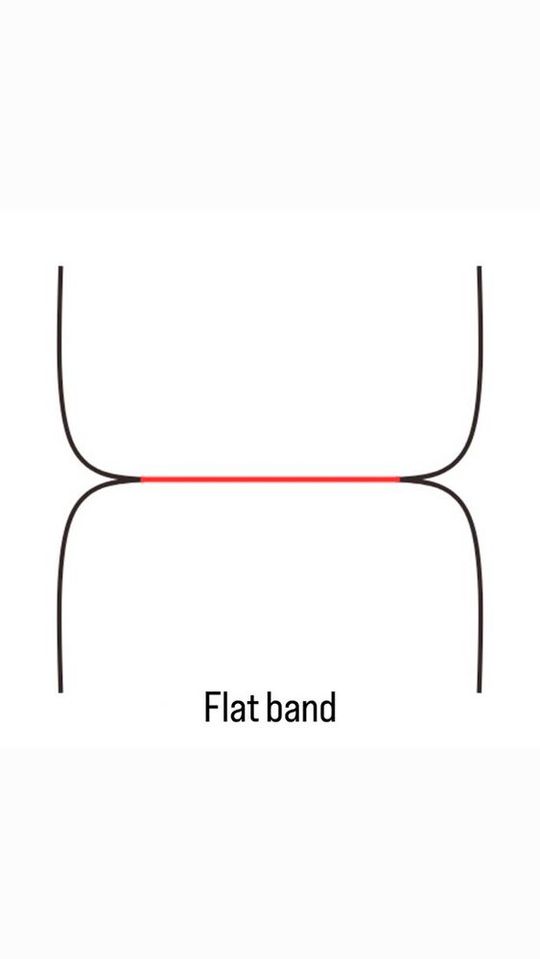
A flat band is a type of energy band region where energy levels are constant over a wide range of momentum. Simply put, an electron’s energy is independent of its momentum in a flat band. A mathematical relationship ‘effective mass approximation’ clearly states that an effective mass of an electron is inversely proportional to the curvature of the energy-momentum relationship.
1/m=1/h2⋅d2E/dk2
Where
- m is the effective mass of an electron
- h is the reduced plank’s constant
- E is the energy of the electron
- k is the wave vector
The effective mass equation can describe flat bands as a function of a charged particle’s effective mass and energy. We can obtain effective mass by inversing the equation. The constant value of the energy level reduces the second-order derivative to zero. When zero is the denominator, the result becomes infinite.
m → ∞
Hence, the effective mass of a charged particle becomes infinite in a flat band. As a result, the group velocity of charge carriers is zero. A flat band can be defined as an energy level where charge carriers have zero group velocity and infinite effective mass. In simple words, the charged particles are extremely “heavy” and cannot move around the crystal lattice. These charged particles just “sit” in the crystal lattice and do not move at all.
:quality(80)/p7i.vogel.de/wcms/3c/8a/3c8a6795c3b3d0303e5b1b82e1a76e22/0115359730.jpeg "The article discusses the truth about LK-99, and its superconductor properties, and lists various studies around it. (Source: Rokas - stock.adobe.com)")
INSULATORS
The “Wrong Superconductor”: LK-99
How are flat bands related to superconductivity?
The reason for the superconductive character is explained through BCS theory. At normal temperature, atoms in any material continuously vibrate. When current passes through the material, electrons collide with the atoms and lose energy. The hindrance to the flow of current is known as resistivity.
At extremely low temperatures near absolute zero (0 Kelvin or -273 degrees Celsius), the vibration of atoms is very low. However, there is some minimal energy for atoms to vibrate. When electrons cross the structure in such low temperatures, the chances of collision and loss of energy are extremely low.
The positive charge on the atoms, now called phonon, slightly interacts with an electron as it moves through the crystal lattice. Another electron follows the moving electron with the same interaction with the phonons. These two electrons interact with phonons and move through the lattice without any collision.
The electron pair is known as the “cooper pair”. A copper pair behaves like a boson and occupies the lowest energy state. Hence, no energy is lost and the material is said to have zero resistivity.
The tendency of charge particles to have infinite effective mass with zero group velocity and enhanced electronic interactions in flat bands change the electronic correlations to support the formation of copper pairs. Moreover, flat bands do not need to reach low critical temperatures, like superconductors, to exist.
In fact, flat bands can exist at any temperature, even higher temperatures! There is no defined temperature and pressure condition for flat bands to exist and operate. The existence of flat bands is rather dependent upon the geometry of the crystal. In such a case, cooper pair formation can take place at higher temperatures- opening the room for high-temperature superconductors!
Can 3D flat bands be important to power electronics?
Yes, 3D flat bands can be crucial to power electronics. In the near future, 3D flat bands can pave the way for superconductors to exist at room temperatures. The resulting technology can be the invention of lossless long-distance power transmission lines, enhanced heat dissipation capability of power devices, efficient power conductors, high-power technology to support qubit transmission, etc.
(ID:49795152)
:quality(80)/p7i.vogel.de/wcms/0c/07/0c07df7a5dbd70fd5d3c5e3276ff2d9f/0127824058v2.jpeg "Graphene’s atomic lattice reveals new clues about the nature of superconductivity. (Source: MIT)")
:quality(80)/p7i.vogel.de/wcms/0c/71/0c7136f0406689ac88a83b3d5c9404c8/0123816960v2.jpeg "Diamond is a good contender for becoming a mainstream semiconductor material in high-power, high-frequency, and high-temperature applications. Due to its exceptional properties, diamond is often explored as a potential alternative to existing semiconductor options. Learn more here. (Source: mjaud - stock.adobe.com)")