


:quality(80)/p7i.vogel.de/wcms/bc/97/bc97cce107109a551f26fb8076ae1da8/0129190430v2.jpeg "A 200V BCD process enables efficient and reliable high-voltage power ICs for automotive electronics and data center power systems. (Source: © ModernFiles - stock.adobe.com)")
:quality(80)/p7i.vogel.de/wcms/ab/34/ab3461e7aabc1beab6f2598d09f1d9b4/0128949857v2.jpeg "Designed for demanding in-vehicle environments, the 28nm SuperFlash Gen 4 Automotive Grade 1 platform supports robust embedded flash for automotive MCUs and connected systems. (symbolic image) (Source: © lil - stock.adobe.com)")
:quality(80)/p7i.vogel.de/wcms/cd/92/cd9200bfe196631a5fd7b5b85e25a5a6/0128944352v2.jpeg "Delta’s HPC 350: a 350 kW high-power fast EV charger designed for grid-constrained, high-utilization sites. (Source: Delta)")
:quality(80)/p7i.vogel.de/wcms/44/4d/444dda9649b5619c79d019c7dc1efcfc/0128974547v2.jpeg "Designed for portable electronics, 28V USB-C dual-role PD controllers coordinate power requests and regulate sourcing or sinking power over USB-C. (symbolic Image) (Source: © Elja - stock.adobe.com)")
:quality(80)/p7i.vogel.de/wcms/b3/13/b313941dbf7adc57c6d144966106d82b/0129219607v2.jpeg "CFIUS approval allows Wolfspeed to complete an equity issuance to Renesas as part of its court-approved restructuring process. (Source: © tippapatt - stock.adobe.com)")
:quality(80)/p7i.vogel.de/wcms/56/a4/56a4d9b6ee131a7a00b8b89dabf108f9/0128979281v2.jpeg "Thsi acquisition expands access to processor IP solutions and strengthens the foundry’s platform for building advanced chips. (symbolic image) (Source: © Shoaib - stock.adobe.com)")
:quality(80)/p7i.vogel.de/wcms/67/62/676279913d77e1db48eb5cbe9be4c767/0128937895v2.jpeg "(Bild: © WrightStudio - stock.adobe.com)")
:quality(80)/p7i.vogel.de/wcms/0f/a2/0fa2b5bdc21e408fd73e637d226d5210/0128681532v2.jpeg "Symbolic Image: Wind and solar power lead Germany’s electricity generation in 2025, marking a continued shift toward renewable energy. (Source: © koosy - stock.adobe.com)")
:quality(80)/p7i.vogel.de/wcms/7d/40/7d406bd959b3a9127c33a66157f9030a/0128339184v4.jpeg "The global digital infrastructure depends on the production of advanced semiconductor materials (Source: © uflypro - stock.adobe.com)")
:quality(80)/p7i.vogel.de/wcms/65/22/65223bc58811ced76adbfa7b5615d532/0129061536v2.jpeg "This article explains topological insulators and explores whether they can optimize electronic systems. (Source: © Rick - stock.adobe.com)")
:quality(80)/p7i.vogel.de/wcms/ea/20/ea20c0beb93f34ab43b28750644bbdca/0128983445v2.jpeg "A Cycloconverter is an AC-AC converter that directly converts successive segments of a constant amplitude AC waveform at a higher frequency to another AC waveform at another lower frequency, without a DC link. (Source: © wpw - stock.adobe.com)")
:quality(80)/p7i.vogel.de/wcms/b1/0a/b10a283cdf3e5f156781a7273c71a7e0/0129107484v2.jpeg "Circular design strategies are increasingly shaping how power electronics are designed, reused, and recovered across their life cycle. (Source: © Enrique - stock.adobe.com)")
:quality(80)/p7i.vogel.de/wcms/23/ee/23ee4a97790d6009dbfd7d9577ffa723/0129220424v2.jpeg "The R&S FPL1044 with the new RTSA option makes 40 MHz real-time frequency analysis available up to 44 GHz. (Source: Rohde & Schwarz )")
:quality(80)/p7i.vogel.de/wcms/3c/d1/3cd1cacbceb792ba63727199c61ca434/0127801860v2.jpeg "Thanks to cloud technology, users can collaborate on projects from anywhere and always have access to the latest planning data. (Source: SIEMENS)")
:quality(80)/p7i.vogel.de/wcms/5a/a0/5aa0436498af618297961fd54ab36cdf/0126290792v2.jpeg "Siemens accelerates student-led semiconductor innovation across Europe’s leading technical universities through Cre8Ventures’ Open Higher Education Program developed in collaboration with Arm and University of Southampton (Source: Siemens Digital Industries Software)")
:quality(80)/p7i.vogel.de/wcms/cb/30/cb30ebdca7fcaea281749cb396654eb3/0124716339v2.jpeg "Rolls-Royce unveils Battery Analytics for its mtu EnergyPack, offering real-time insights, predictive maintenance, and enhanced cybersecurity to boost performance and longevity. (Source: Rolls-Royce plc)")
BUSINESS OPERATIONS Will Broadcom and TSMC break up Intel’s business?
Related Vendors
:fill(fff,0)/p7i.vogel.de/companies/62/b9/62b980cddf5d6/ceramtec.png "ceramtec (www.ceramtec-group.com)")
:fill(fff,0)/p7i.vogel.de/companies/60/7e/607ec89d5d9b5/white-frame.jpg "white frame.jpg (www.rohm.com)")
:fill(fff,0)/p7i.vogel.de/companies/66/8b/668becd1c07eb/dowa-logo-word--1-.jpeg "dowa-logo-word--1- (DOWA)")
The semiconductor industry may be heading for a major shake-up. Broadcom and TSMC are exploring separate deals that would effectively split Intel into two parts — one focused on chip design and marketing, the other on manufacturing.
Broadcom is reportedly interested in Intel’s design and marketing division, while Taiwan Semiconductor Manufacturing Co. (TSMC) is considering acquiring its fabrication plants. The move comes as Intel struggles financially and faces leadership uncertainty, as well as growing pressure from U.S. regulators.
Broadcom’s interest in Intel’s chip design business
Broadcom, a major player in the semiconductor industry, has a history of acquiring companies to expand its reach. If it acquires Intel’s chip design division, it would gain access to Intel’s x86 architecture expertise, adding to its existing portfolio, which includes Arm-based technologies. This could allow Broadcom to compete more directly with AMD, Nvidia, and Qualcomm in the data center and AI chip markets.
Broadcom’s strategy has typically avoided the expensive and complex business of chip manufacturing. Instead, it focuses on high-margin, fabless semiconductor design. By offloading manufacturing responsibilities to TSMC or another foundry, Broadcom could maximize the value of Intel’s design assets without the capital burden of running fabrication plants. However, any deal would face regulatory scrutiny, particularly over concerns that Broadcom’s growing influence in the semiconductor market could limit competition.
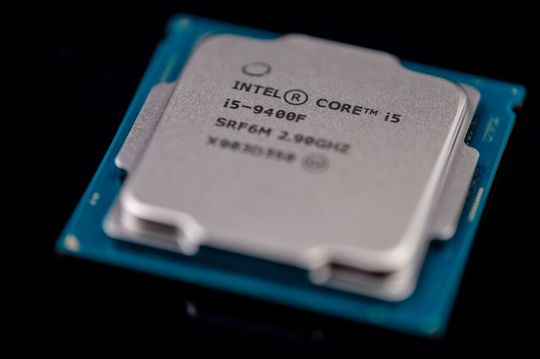
TSMC’s potential takeover of Intel’s fabs
TSMC, the world’s largest contract chip manufacturer, is reportedly looking at Intel’s fabrication plants, which could strengthen its global production capacity. Intel has struggled to compete with TSMC’s advanced manufacturing processes, particularly in smaller nodes. If TSMC takes over Intel’s fabs, it could increase efficiency and output, potentially reducing its dependence on facilities in Taiwan.
However, U.S. regulators have expressed concerns about foreign ownership of Intel’s domestic chip plants. The Trump administration has indicated it would oppose TSMC controlling Intel’s U.S. fabs, citing national security risks. Intel’s fabs are also eligible for nearly $8 billion in CHIPS Act subsidies, but those funds require majority U.S. ownership. If TSMC moves forward with an acquisition, it may need to structure the deal in a way that satisfies regulatory requirements — possibly by forming a U.S.-led consortium.
:quality(80)/p7i.vogel.de/wcms/4c/5f/4c5f0fb776f0864a409a3b861dfe8757/0122700117v2.jpeg "Driven by AI, EVs, and high-performance computing, the semiconductor industry anticipates significant growth in 2025, reaching $717 billion in revenue, but faces challenges like supply chain strains, mature node shortages, and geopolitical uncertainties. Find out more here. (Source: Raitalinn - stock.adobe.com)")
SEMICONDUCTOR INDUSTRY
Semiconductor industry outlook for 2025: Demand growing alongside new challenges
Intel’s decline and the broader industry impact
Intel has been losing ground to competitors for years. Its foundry division alone lost $13.4 billion in 2024, and overall revenue has dropped amid stiff competition from AMD and Nvidia. Cost-cutting efforts, including layoffs and reduced R&D investment, haven’t reversed the trend. The company has also faced leadership turmoil. Former CEO Pat Gelsinger resigned in late 2024, and interim chairman Frank Yeary is now focused on boosting stock value rather than long-term operational strategy. Intel’s board is open to selling off assets, including its programmable chip unit Altera, which signals deeper financial distress.
If the Broadcom-TSMC split happens, Intel would resemble AMD, which spun off its foundry business into GlobalFoundries in 2008. Broadcom would strengthen its position in chip design, while TSMC would expand its manufacturing dominance. But breaking up Intel also risks further weakening the company’s ability to innovate, as its integrated design and manufacturing approach has historically been a strength.
Regulatory barriers could still block the deal, particularly given the U.S. government’s stance on keeping chip manufacturing under domestic control. If the deal collapses, other suitors — such as private equity firms or U.S.-led consortiums — may step in to acquire parts of Intel. The situation remains fluid, and any outcome will have major implications for the semiconductor industry, U.S.-Taiwan relations, and the broader tech supply chain.
Power Electronics in the Energy Transition

The parameters for energy transition and climate protection solutions span education, research, industry, and society. In the new episode of "Sound On. Power On.", Frank Osterwald of the Society for Energy and Climate Protection Schleswig‐Holstein talks about the holistic guidance his organization can provide.
Listen now!
(ID:50336099)
:quality(80)/p7i.vogel.de/wcms/7f/83/7f830072a8e4d36be9340e80e8c2fe55/0123713749v2.jpeg "TSMC's joint venture talks with Nvidia, Broadcom, Qualcomm, and AMD could be a vital lifeline for Intel's struggling foundries, reshaping the US semiconductor landscape. Find out more about this here. (Source: Ariawan - stock.adobe.com)")
:quality(80)/p7i.vogel.de/wcms/87/8d/878d28d85fad10c7debc92446c60146b/0123870413v2.jpeg "Despite record sales in Q1 2025 fueled by surging demand for AI and advanced packaging, the global chip industry faces persistent supply issues due to production challenges and geopolitical constraints. Find out more here. (Source: IM Imagery - stock.adobe.com)")