


:quality(80)/p7i.vogel.de/wcms/7f/4b/7f4b97757cea82c0675209630577dc22/0133974130v2.jpeg "Vox Power’s EIRE600 delivers up to 600 W in a compact 5 × 3-inch package, with forced-air or conduction cooling options for industrial and medical equipment. (Source: Vox Power)")
:quality(80)/p7i.vogel.de/wcms/55/97/5597c3436e3bc92ee7ba23b6f9d289e9/0134032539v2.jpeg "Littelfuse’s TP7.0SMD-XC automotive TVS diode series uses foldback technology to provide low clamping voltage for protecting sensitive vehicle electronics. (Bild: Littelfuse)")
:quality(80)/p7i.vogel.de/wcms/51/f8/51f84448e666230bb11a02566abd1177/0133958187v3.jpeg "Microchip’s radiation-tolerant GaN point-of-load converter supplies up to 20 A for space-based processors, FPGAs, microcontrollers and ASICs. (Source: Microchip)")
:quality(80)/p7i.vogel.de/wcms/0a/7c/0a7c08f368ae1d91f758dd18d2a32e88/0133978423v2.jpeg "EPFL researchers have demonstrated a GaN transistor that withstands nearly 4 kV, using an intrinsic polarization superjunction design to distribute electric fields more evenly. (Source: EPFL)")
:quality(80)/p7i.vogel.de/wcms/5b/94/5b94232ca4183d6fcc2dccc7394d7544/0134041114v4.jpeg "Siemens and NVIDIA are testing AI applications at Siemens’ Erlangen electronics factory, using digital twins to support production planning and prepare inspection systems before physical prototypes are available. (Bild: Siemens)")
:quality(80)/p7i.vogel.de/wcms/b4/1f/b41f2731a07b608e60eca3663e280301/0133980549v2.jpeg "Multi-year agreement with Wolfspeed supports Infineon’s conversion from 150-millimeter to 200-millimeter silicon carbide (SiC) manufacturing (Source: © Ada - stock.adobe.com)")
:quality(80)/p7i.vogel.de/wcms/e3/0a/e30a8813bcf44b16f0dceb63a0747d29/0133984094v2.jpeg "The semiconductor is only one part of the design. Higher voltage, frequency and power density also increase the demands on electronic packaging materials such as die attach, substrates, top-side interconnects and module attach. (Source: Generated by AI)")
:quality(80)/p7i.vogel.de/wcms/5d/fb/5dfba5e5f38daf2b8597b05656af29c0/0133956337v2.jpeg "Wolfspeed has received a conditional commitment for a loan of up to $1.5 billion from the U.S. Department of War to support its domestic wide-bandgap semiconductor supply chain. (Source: © AspctStyle - stock.adobe.com)")
:quality(80)/p7i.vogel.de/wcms/bf/b6/bfb6ac295759be32d567df9849b6767e/0134094495v2.jpeg "Fraunhofer ISE reports that 25 Ah pouch cells with silicon-rich anodes retained more than 83% of their initial capacity after 1,000 cycles when tested under 1,000 kPa axial pressure. (Bild: Fraunhofer ISE)")
:quality(80)/p7i.vogel.de/wcms/16/dc/16dca55e6ef80e6b5da68bc628da2dcc/0133844782v2.jpeg "This article explains virtual power plants in modern renewable-heavy grids. (Source: © M@rketVisualsStudio - stock.adobe.com)")
:quality(80)/p7i.vogel.de/wcms/e8/33/e8330aae4bea3578b98ec2c1403d367a/0133980001v2.jpeg "IRENA’s 2026 World Energy Transition Outlook identifies faster electrification powered by renewables as central to meeting future global energy needs. (Source: Irena)")
:quality(80)/p7i.vogel.de/wcms/6c/b4/6cb405f47d25035e256ae90fe3a66ee6/0134032112v2.jpeg "Sungrow’s PowerTitan 3.0 energy storage platform uses onsemi EliteSiC hybrid power modules, with the companies reporting peak inverter efficiency above 99.3%. (Bild: onsemi)")
:quality(80)/p7i.vogel.de/wcms/7b/76/7b76005554b556df2a7a3794bdf69d44/0132365246v2.jpeg "Hioki’s ST5680A DC Hipot Tester combines CE/UKCA/CSA compliance, an integrated capacitance‑based contact check and time‑series waveform recording (voltage, leakage current, insulation resistance) to standardize hipot and insulation testing across EV cell, module and pack production lines. (Source: Hioki)")
:quality(80)/p7i.vogel.de/wcms/af/7f/af7f7b0fb7f29219fc991b1130f65477/0132241333v2.jpeg "Comprehensive laboratory testing regimens—combining thermal cycling, high‑current stress, EMC, and accelerated lifetime tests—are essential to validate advanced power designs and ensure reliability in real‑world applications. (Source: PRBX)")
:quality(80)/p7i.vogel.de/wcms/16/3d/163df69363f8125315a9826e13ea4b05/0131927425v2.jpeg "Solution will maximize data center and AI factory profitability while delivering engineering-grade insights to design and operations for more efficient, sustainable, and resilient infrastructure. (Source: Cadence)")
:quality(80)/p7i.vogel.de/wcms/85/b7/85b7e90733a2bd8f21515d8f7137f2fc/0131917677v2.jpeg "Renesas acquires Pictorus to integrate its embedded application software platform with Renesas’ MCU and MPU portfolio, helping developers shorten time‑to‑market and simplify system integration. (Source: © lucadp - stock.adobe.com)")
:quality(80)/p7i.vogel.de/wcms/f8/34/f834240d434a0c265a2ccafe614c8cd7/0134032109v4.jpeg "Hard- and soft-switching techniques shape voltage and current during device transitions, influencing switching losses, EMI and thermal performance in power converters. (Bild: © Mrthullab - stock.adobe.com)")
:quality(80)/p7i.vogel.de/wcms/27/07/2707280c807689b437baed3660257404/0133626052v2.jpeg "The quantum behavior of electrons shapes semiconductor devices—and the power converters that deliver electricity to modern computing systems. (Source: © Celt Studio - stock.adobe.com)")
A TRIBUTE TO GEORGE BOOLE What is 1+1 in Boolean Algebra?
Related Vendors
:fill(fff,0)/p7i.vogel.de/companies/6a/20/6a202a4f89a62/mrs-white-on-blue-bg.png "mrs-white-on-blue-bg ()")
:fill(fff,0)/p7i.vogel.de/companies/60/7e/607ec89d5d9b5/white-frame.jpg "white frame.jpg (www.rohm.com)")
:fill(fff,0)/p7i.vogel.de/companies/60/21/60214fbbcc5e0/index.png "index.png (Kundenwebsite)")
George Boole was a famous mathematician who made a significant contribution to modern semiconductor technology. Read this article to learn about the “electronic” ground-breaking invention of a new field of mathematics called “Boolean algebra” and its significance in electrical and electronics fields.
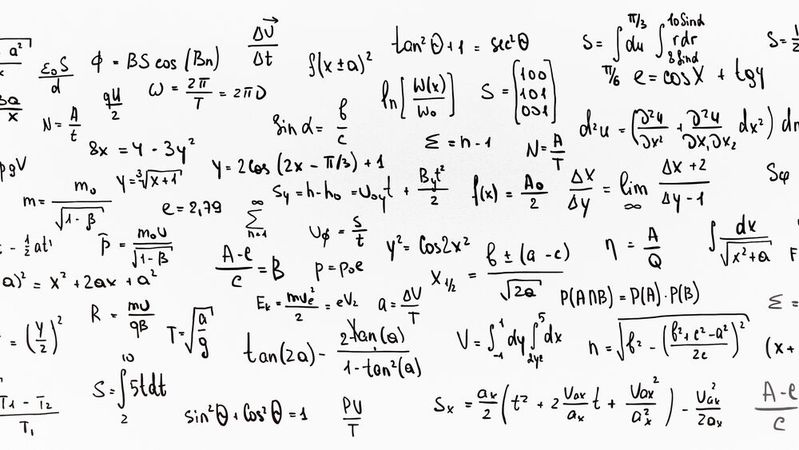
One plus one was always two. But in the world of electronics, one plus one becomes one. In honor of his birthday on November 02, this article talks about that brilliant mind called George Boole, who gave the meaning of turn-on (1) and turn-off (0) to semiconductors.
Why does 1 + 1 = 1 in electronics?
In electronics, there are two main fields: analog and digital electronics. While analog electronics is a continuous time-varying signal, the digital signal represents only two discrete values 0 or 1. This means a device can either remain on or off — no in-between. 0 represents off, open-circuit, low, and false. On the other hand, 1 represents on, short-circuit, high, and true.
In a traditional electronic circuit, two LEDs are connected together. If both LEDs are ”on”— the current is said to flow across the device. If one of them is on, current still flows. However, no current flows across the device when both LEDs are off. As a result, 1 + 1 remains always 1 in electronics. 0 + 1 = 1, 1 + 0 = 1, and 0 + 0 = 0 holds true.
What is Boolean algebra and why is it so important?
The name “Boolean Algebra” is used in honor of its inventor George Boole. Boolean algebra is a separate branch of mathematics that integrates the principles of logic and set theory in terms of binary and symbolic variables. There are only two values “0” or “1”. 0 represents “false” and 1 represents “true”. There is no “maybe”— Just a universe of yes or no!
Boolean algebra is used for example in digital circuit design, computer programming like Pascal and assembly language, database queuing, cryptography, modeling, CAD, and simulations. Simply put, Boolean algebra is the foundation of all modern electronics. Logic gates operation is based on Boolean algebra.
What did Boole do first in the world?
Boolean Algebra
Boole replaced addition with the logic operator “OR” and multiplication with the logic operator “AND”. These two are basic logic gates that have laid the foundation of semiconductor technology.
Symbolic algebra
In the 18th century, most mathematics involved using numbers and alphabets. Boole was the first person to use symbols for simplifying calculations. Researchers also mention Boole to talk about earlier versions of invariant theory.
George Boole — The man who introduced a new field of algebra
Early life
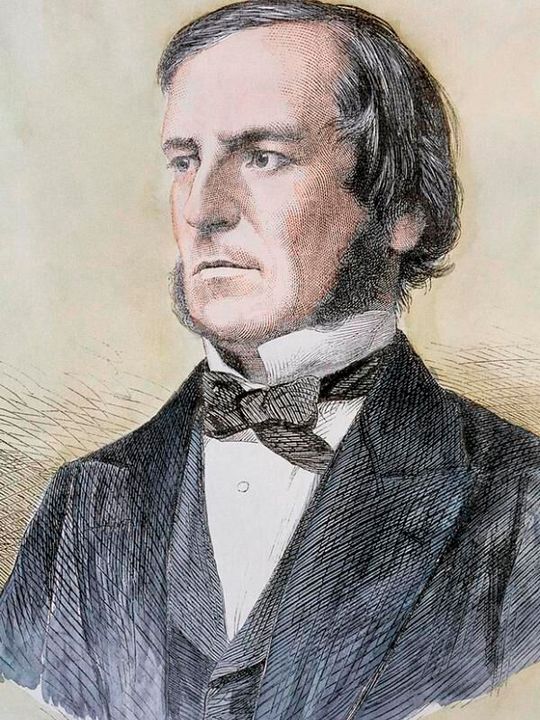
Born on 2 November 1815 in Lincoln, Lincolnshire, England, George Boole Jnr is the brain behind the foundation of today’s digital technology. Surprisingly, George Boole was largely a self-taught mathematician and logician. At the age of 14, Boole became a teen prodigy for translating a Latin poem into English.
During Boole’s initial years, his father taught him mathematics and optical instruments. After his father's business declined, he started to support his family at 16. Boole participated in the Lincoln Mechanics' Institute, where he studied mathematics and calculus independently. It took him a long time to master calculus without a teacher. At 19, Boole took a risk and started his start-up — opened his own school.
Professional career
During the later years of his life, in 1849, Boole did what he loved. He began teaching mathematics at the University College Cork in Ireland. In 1854, Boole published a monograph on algebraic logic called “An Investigation of the Laws of Thought on Which are Founded the Mathematical Theories of Logic and Probabilities”. This was his second monograph but the first “Boolean Algebra” description.
No matter how correct a mathematical theorem may appear to be, one ought never to be satisfied that there was not something imperfect about it until it also gives the impression of being beautiful.
During his lifetime, Boole wrote about 50 articles and several papers on mathematics, most of them revolving around logic. He emphasized the integration of algebra and calculus. Boole’s famous work “The Mathematical Analysis of Logic (1847)” introduced symbolic logic. Other works include The Treatise on Differential Equations (1859), A Treatise on the Calculus of Finite Differences (1860), and many more.
Recognition
Boole took several accolades to his name including the Royal Society's first gold medal for mathematics and the Keith Medal. In addition, he was awarded honorary degrees from the Universities of Dublin and Oxford. Just like everyone on this planet, Boole laid his last breath on December 8, 1864, at the young age of 49.
Post his death, Boole’s work was extended and refurbished by a variety of authors and mathematicians. During his lifetime, Boolean algebra didn’t gain the recognition it has in the 21st century. When scientists like Claude Shannon used Boolean algebra, it gained worldwide attention. Today Boolean algebra is credited for laying the foundation of the Information Age.
Why November 2?
On November 2, 2015, students at University College Cork celebrated their 200th birthday, which was covered by several online media publications and websites. The college runs a website dedicated to Boole to continue his legacy. Today at his 209th anniversary, Power and Beyond salutes his legacy for laying the foundation of semiconductors and modern computing.
References
(ID:50210335)
:quality(80)/p7i.vogel.de/wcms/27/07/2707280c807689b437baed3660257404/0133626052v2.jpeg "The quantum behavior of electrons shapes semiconductor devices—and the power converters that deliver electricity to modern computing systems. (Source: © Celt Studio - stock.adobe.com)")
:quality(80)/p7i.vogel.de/wcms/7d/40/7d406bd959b3a9127c33a66157f9030a/0128339184v4.jpeg "The global digital infrastructure depends on the production of advanced semiconductor materials (Source: © uflypro - stock.adobe.com)")