


:quality(80)/p7i.vogel.de/wcms/53/61/53619895ee4ec91e216ceab62918f8f4/0131724438v2.jpeg "The new MX series by GES High Voltage: Handling up to 20 kV DC and supporting up to 9 poles. (Source: GES High Voltage)")
:quality(80)/p7i.vogel.de/wcms/8c/c3/8cc3f77472b8af8ca61b5bf8cb7ee8f0/0131704631v2.jpeg "ROHM launches New Top-Side Cooling Package for SiC MOSFETs, Combining High Heat Dissipation with High Voltage Support (Source: ROHM)")
:quality(80)/p7i.vogel.de/wcms/d8/ff/d8ffb208c8b62dca4424e25cf8493e00/0131667998v4.jpeg "Integrated, thermally optimized line reactor for power electronics applications. (Source: Block)")
:quality(80)/p7i.vogel.de/wcms/93/fa/93fac0d35290aa5065c18e0a132517c1/0131665788v2.jpeg "The new high performance fuses from Mersen combine the best AC/DC electrical characteristics in a single compact housing (Source: Mersen)")
:quality(80)/p7i.vogel.de/wcms/b5/58/b55874104bf128af36ab420983a1a74f/0131625728v2.jpeg "GC01 (0.5 mm pitch) delivers floating, tolerance‑compensating board‑to‑board performance for high‑speed applications; GB05 provides secure wire‑to‑board connections for automotive and industrial systems. (Source: © WrightStudio - stock.adobe.com)")
:quality(80)/p7i.vogel.de/wcms/e3/a2/e3a2c363179aa46339ba27d0a1785217/0131622335v2.jpeg "At PCIM 2026 Mersen presents new electrical protection solutions for data centers. (Source: © nerminmuminovic - stock.adobe.com)")
:quality(80)/p7i.vogel.de/wcms/df/de/dfde53ac2f23feddfb142593b89981ed/0131617862v2.jpeg "Advanced die‑attach and solder preform solutions from MacDermid Alpha enable more repeatable manufacturing and higher reliability for automotive, industrial and AI data‑center power modules. (Source: MacDermid Alpha)")
:quality(80)/p7i.vogel.de/wcms/eb/0c/eb0c8cf409c67fd4fc2d73b7c507a015/0131581571v2.jpeg "The PCIM Executive Circle brings together selected industry leaders for strategic dialogue on market trends, technological challenges and the future of power electronics. (Source: PCIM)")
:quality(80)/p7i.vogel.de/wcms/5c/f5/5cf53b6db2706b86ac6eb5c407704d27/0131699647v2.jpeg "This article explains inductors in electrical and electronics engineering. (Source: © Iurii - stock.adobe.com)")
:quality(80)/p7i.vogel.de/wcms/e8/b1/e8b1b3c2722724a07ec9835292cf568e/0131681282v2.jpeg "STMicroelectronics expands its PowerGaN portfolio with 700 V HEMTs (6–29 A, 53–270 mΩ typ.), delivering lower switching and conduction losses to increase efficiency and power density for AI servers, robotics and industrial power supplies. (Source: STMicroelectronics)")
:quality(80)/p7i.vogel.de/wcms/3f/77/3f77be835f67d66c9c7bbf179577577a/0131631955v2.jpeg "Inspector examination of photovoltaic modules using a thermal imaging camera (Source: © kanpisut - stock.adobe.com)")
:quality(80)/p7i.vogel.de/wcms/84/1f/841f6921da6203c30dac2963c7a0df81/0131601493v2.jpeg "New multi‑chemistry systems from CATL target fast charging, higher energy density and lightweight flexible applications, with sodium‑ion mass‑production plans announced for 2026. (Source: CATL)")
:quality(80)/p7i.vogel.de/wcms/34/4a/344a3dc5a19429cf6726b7f8f7e2ee32/0130109719v2.jpeg "Hioki’s new measurement solutions enable precise analysis of power electronics systems and energy efficiency. (Source: Hioki)")
:quality(80)/p7i.vogel.de/wcms/be/c8/bec8d43fc0ee73414274be44608b2970/0129748903v2.jpeg "The Infiniium XR804KA real-time oscilloscope delivers faster response time, improved stability, and streamlined workflows for high-speed digital and compliance testing. (Source: Keysight)")
:quality(80)/p7i.vogel.de/wcms/23/ee/23ee4a97790d6009dbfd7d9577ffa723/0129220424v2.jpeg "The R&S FPL1044 with the new RTSA option makes 40 MHz real-time frequency analysis available up to 44 GHz. (Source: Rohde & Schwarz )")
:quality(80)/p7i.vogel.de/wcms/3c/d1/3cd1cacbceb792ba63727199c61ca434/0127801860v2.jpeg "Thanks to cloud technology, users can collaborate on projects from anywhere and always have access to the latest planning data. (Source: SIEMENS)")
CYBERSECURITY Cybersecurity in power electronics – Can we safeguard the future?
Related Vendors
:fill(fff,0)/p7i.vogel.de/companies/6a/20/6a202a4f89a62/mrs-white-on-blue-bg.png "mrs-white-on-blue-bg ()")
:fill(fff,0)/p7i.vogel.de/companies/60/7e/607ec89d5d9b5/white-frame.jpg "white frame.jpg (www.rohm.com)")
:fill(fff,0)/p7i.vogel.de/companies/61/dc/61dc0e8c2e420/dspace-logo-1000px-220107.png "dspace-logo-1000px-220107 (dSPACE GmbH)")
Power electronics are integral to our way of life. However, the proliferation of technology has made us increasingly vulnerable to cybercriminals. With the acceleration of AI driving the frequency and severity of sophisticated cyberattacks, can we protect our devices, systems, and critical infrastructure from threat actors?
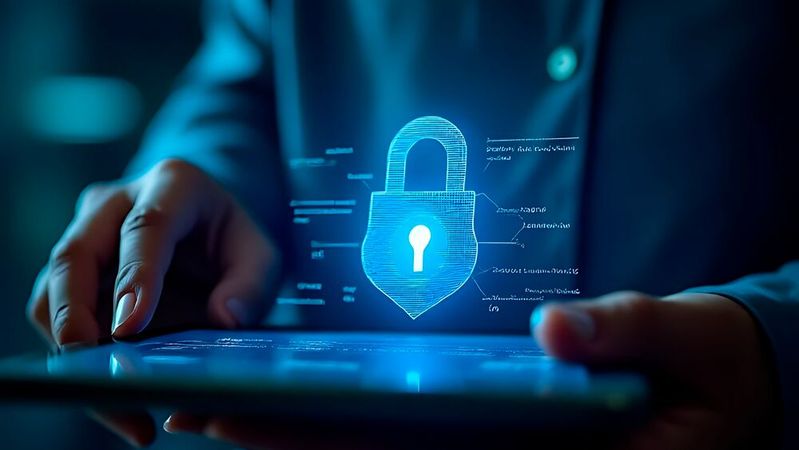
Technology permeates nearly every aspect of modern society. More than 5.56 billion people use the internet daily, approximately 67.9 per cent of all the people on Earth. Over 95 % of the world's critical infrastructure has been digitised. Our transportation systems, healthcare, biosecurity, communications, water, electricity, and financial institutions depend heavily on digital systems.
The world has never been as connected, informed, or as efficient as it is right now. But our high-tech society is also incredibly vulnerable to exploitation, manipulation, and data theft.
Cybercriminals can breach nearly any environment by exploiting common everyday devices. Production lines can be forced to shut down. Governments and major corporations can be held to ransom. Electricity and water supplies can be disrupted. Railways, airports, and roads can be thrown into disarray. Essential services can be taken offline. Misinformation campaigns can disrupt political systems, sow discord amongst populations, and erode trust in governmental systems.
The entire technology ecosystem is at risk. Software development, hardware manufacturing, cloud services, and even the logistics of distributing technology are common cyberattack targets.
In a world where technology is omnipresent and seemingly omnipotent, cybercrime poses an existential threat. Nothing and no one is safe. And the problem is getting worse.
Today’s cyber crooks don’t need to have powerful computers or special skills. They’re often backed by nation states or employ armies of AI-powered bots to launch massive attacks. And they almost never get caught.
Cybercrime – The World’s Third Biggest Economy
Estimating the costs of cybercrime isn’t easy. Reliable data is hard to find. There’s also no universal standard or requirement for reporting cybercrime incidents. Cyberattacks often go unreported or undetected. Payments to cybercriminals are usually made in untraceable cryptocurrencies, and the bad guys don’t tend to fill in tax returns.
According to some sources, the global cost of cybercrime is between US$9.2 to US$12.5 trillion by the end of 2025. That’s more than two and a half times what the US retail giant Walmart is projected to earn during the same period. Going by these figures, if cybercrime were a country, it would have the third-largest GDP in the world.
However, some industry analysts accuse the cybersecurity industry of inflating the numbers. According to the dissenters, the real costs of cybercrime in 2025 are between US$1.2 to US$2.5 trillion.
Either way, one thing is startlingly clear: cybercrime doesn’t just pay, it pays very well indeed.
Cybercrime now brings in as much money, or more, than the trade in illegal drugs. Millions of people are thought to be involved. Individuals, hacker groups, organised crime syndicates, and state-sponsored actors across the globe are all hard at work breaking into systems and stealing data.
Hacking isn’t just profitable, it’s low risk. Again, the data is somewhat unreliable, but security companies and non-governmental organisations like the World Economic Forum estimate that less than 5 % of cybercriminals ever face charges for their crimes.
:quality(80)/p7i.vogel.de/wcms/5e/bb/5ebbe75f7a3e316aaf85f2d59c2026a5/0104580546.jpeg "Power supply and other electronic components in cars are no longer standalone devices, posing a growing cybersecurity challenge. (Source: gemeinfrei)")
PART 1 - POWER ELECTRONICS CYBERSECURITY
As power electronics comes online, cyber-attack risk increases
Criminals use an array of tech tools to mask their locations and identities. VPNs, proxies, and the Tor network all make it almost impossible for authorities to track and apprehend perpetrators.
Cybercrime is also simple. Most of the techniques black hat hackers and criminals use don’t require special skills or years of intense training. Low-tech psychological tricks like phishing or social engineering trick people into giving away access to confidential personal and corporate data.
And if a would-be hacker can’t sweet-talk their way into a system and doesn’t know how to code? No problem. Cybercriminals can get on the dark web and download AI-powered point-and-click hacking tools. These types of programs aren’t hard to find. Every day, security experts detect more than 500,000 new ransomware tools. Over one billion pieces of malware are known to exist. Most of them are as easy to use as a word processor.
Crime can also be outsourced. Highly skilled black hat hackers offer their services for rent. This is so common there’s now a nifty acronym for it: CaaS, cybercrime-as-a-service.
The bottom line is that it’s more profitable, safer, and easier than ever before to be a cybercriminal. And there’s no lack of available targets. No wonder the rate of cybercrime is skyrocketing.
While they may bicker about the profit margins of cybercrime, cybersecurity experts agree when it comes to how vulnerable we are. Criminal cyberattacks against businesses or individuals happen at a rate of one every 11 seconds. Microsoft has reported that it tracks 7,000 password attacks every second. Cyberattacks have risen by 15 % worldwide over the last year.
In theory, anything that runs on code and connects to a network is a potential target. This includes everyday devices and the systems that control essential infrastructures like electricity and water. Even the chips that power our technology can be hacked.
Attacking the Heart of Power Electronics - Cybercrime and Semiconductors
Semiconductors are the beating heart of the digital age. Chips can be found in everything from children’s toys to house keys to missiles. Semiconductors have transformed from commercial assets into strategic geopolitical instruments.
The critical importance of semiconductors makes the industry especially vulnerable. A study from Deloitte highlighted the risks to semiconductor manufacturers by stating that:
“…the intellectual property of semiconductor companies is one of the world’s most important targets for cyberattacks.”
Cybercriminals and state-sponsored threat actors have put companies at all stages of the semicon industry in the crosshairs. Recent attacks have focused on the semiconductor supply chain, manufacturing infrastructure, and the chips themselves. Some of the biggest names in the industry are frequently targeted.
In 2023, TSMC, the Taiwanese behemoth of semiconductor manufacturing, was hit by a LockBit ransomware attack. The ransomware operators demanded US$ $70 million or they would reveal sensitive corporate data gained from hacking a supplier. TSMC didn’t give in to the demands, saying that the stolen data didn’t pose a threat to operations.
Within the last three years, major players such as AMD, NVIDIA, and Intel have all been the target of hackers and ransomware. While these companies managed to fend off the attacks, others haven’t been so fortunate.
In 2023, a supplier to the semiconductor company Applied Materials was attacked by ransomware operators. The cost of the disruption to the supply chain to Applied Materials was an estimated US$250 million.
:quality(80):fill(efefef,0)/p7i.vogel.de/wcms/5f/fe/5ffedb2e0ffa6/listing.jpg "listing")
Downstream and upstream suppliers and manufacturers aren’t the only targets. Attackers have also gone after the idea factories that drive innovation in advanced semiconductor technologies.
The Eindhoven University of Technology (TU/e) in the Netherlands has a long-standing relationship with ASML. ASML has heavily invested in the university and closely collaborates with TU/e to train future talent and advance critical semiconductor research.
Unfortunately, a group of cybercriminals was all too aware of this close collaboration.
On January 11, 2025, TU/e suffered a sophisticated, highly invasive cyberattack. For several days, hackers were able to penetrate and access the university's network. Information from compromised university accounts, sold on the dark web, allowed the hackers to compromise a so-called ‘break glass’ account designed for emergency access only. Worryingly, the breach went unnoticed for five days. Even more concerning is that no one is sure just how long the system was compromised.
In response to the attack, the university immediately suspended operations and took all systems offline. In the end, no ransom demands were made, although the attackers did come very close to accessing critical files. Authorities later categorised the attack as a near-miss ransomware incident.
To date, the perpetrators of the TU/e cyberattack have not been publicly identified or charged.
After the attack, ASML formally announced that none of its systems or data were compromised in the breach. Despite this, some analysts believe the attack contributed to a 12 % decline in the value of ASML shares. Investors, it seems, are becoming increasingly wary of the impact of cyberattacks on the semiconductor industry.
Threat actors could also strike the fundamental foundations of the industry. There are ways for cybercriminals to hack into production processes and the chips themselves.
Zero-day exploits are system vulnerabilities not yet detected by companies. These types of security flaws are exceedingly rare and can be sold on darknet forums for huge amounts of money or traded for highly valuable data. They’re a popular vector used for gaining unauthorised access to semiconductor production processes. Zero-day exploits can target essential fabrication equipment (like ASML lithography systems), firmware, or EDA (Electronic Design Automation) tools.
Academics have simulated scenarios where pseudo-attackers use zero-day exploits to inject malicious payloads into EDA software. Research has shown that side-channel hardware trojans can be introduced into the final design of a chip without detection. This could weaken chip integrity and result in firmware-level backdoors being installed in new chips.
These kinds of trojans can remain dormant and undetected for years. Once activated, criminal groups or state-sponsored threat actors could exploit them to carry out widespread surveillance, disrupt critical infrastructure, cause major economic damage, or compromise military operations.
Cybercrimes against semicon manufacturers pose serious risks to national security interests and essential services. These risks are being intensified by the latest technological innovations.
The Double-Edged Sword – AI in Power Electronics Cybersecurity
There is a deeply symbiotic relationship between AI and the semiconductor industry. AI and semiconductors are locked together in an escalating evolutionary process.
The AI industry relies on a continuous supply of high-performance chips. At the same time, semicon companies are using AI to optimise chip design, for predictive maintenance, and to detect design errors or flaws. The result is faster time-to-market, improved chip quality, and lower manufacturing costs.
AI is also a formidable weapon against cybercrime. It can analyse vast amounts of data in real-time, so unusual patterns or anomalies can be instantly detected and intruders stopped in their tracks. Potential system vulnerabilities or security gaps can be identified and fixed before hackers get a chance to exploit them.
But there’s a flipside to the power of AI. Cybercriminals are learning how to harness the immense capabilities of AI to launch increasingly sophisticated attacks.
Machine learning enables malicious programs to study the behaviours of antivirus software and intrusion detection systems. Viruses, trojans, and malware can adjust their code or activity patterns to avoid triggering alarms. Researchers demonstrated that a malicious program only needs to change one per cent of its code to stay hidden. This is a serious concern for the power electronics industry and semiconductor manufacturers whose design and production systems are based on proprietary algorithms and hardware.
:quality(80):fill(efefef,0)/p7i.vogel.de/wcms/66/c5/66c5de0fac082/pcim-2024-keynote-prof--dr.jpeg "PCIM 2024_Keynote Prof. Dr. Rolf Hellinger_Cover (stock.adobe.com - putilov_denis)")
PCIM 2024 - Keynote
The Impact of AI on the Entire Power Electronics Lifecycle
Highly convincing deepfakes are used to obtain passwords and gain access to systems via social engineering. Generative AI tools like GANs and transformer models can mimic a real person's voice, facial expressions, and mannerisms with incredible accuracy.
Deepfake technology has already been widely used to dupe people out of huge sums of money. In two recent cases, cybercriminals used deepfakes to pose as a CFO and a company director. The first case netted the scammers US$25 million, while the second haul came to US$35 million.
Applying deepfakes and social engineering techniques to the highly sensitive semiconductor industry could be disastrous. Attackers could trick employees into sharing confidential designs, modifying chip specs, or granting access to restricted systems. Just one successful deception incident could disrupt operations and cost billions in damage control and recovery.
The continued integration of AI into semiconductor manufacturing also poses a variety of risks. Adversarial attacks can deceive AI models by subtly manipulating input data, causing the model to make incorrect decisions. Once again, this is bad news for the semicon industry. This kind of attack could disrupt predictive maintenance or result in faults going undetected. Manufacturing equipment could go offline, or compromised chips could enter the market.
Chips can also be compromised through data poisoning attacks, which inject malicious data during the model’s training phase. When hackers trigger the poisoned input, the chip may malfunction or behave maliciously.
A successful breach in one AI component can cascade through the infrastructure with catastrophic results. In August 2024, Microchip Technology, a US semiconductor manufacturer, had to scramble to contain a server breach. Even with quick action, it still took two days to contain the intrusion. The ripple effect of the attack led to reduced production capacity across several facilities.
It’s impossible to sharpen the bright side of the AI sword without honing the dark side to a fine edge. Fortunately, there are steps we can take to protect essential power electronics from cyberattacks.
Safeguarding the Future – How to Protect Essential Power Electronics from Cyberattacks
Cybercriminals are constantly inventing sophisticated penetration techniques and social engineering tactics. The black hats are also discovering the power of working as a group. Coordinated, large-scale multi-vector attacks using AI agents are becoming commonplace.
Security professionals and governments are caught playing a dangerous game of constant catch-up. This doesn’t mean the good guys aren’t without ways to thwart and repel attackers. And some of the most successful defences against high-tech cybercriminals are surprisingly low tech.
Strip away the technology, and many cybercriminals rely on tried-and-true deception tactics that have been employed by swindlers for decades. But as the saying goes, you can’t con a con. If you know the tricks, you’re less likely to fall for them.
Security awareness training teaches staff to recognise common social engineering techniques used by fraudsters and encourages people to always be on the alert for suspicious behaviour. A zero-trust culture based on the principle “Never trust, always verify” is a solid defence against crafty hackers.
So are old-fashioned fences. You can’t just walk into a bank and waltz into the vault. Controlling physical access to systems is a low-tech and highly effective way of protecting data.
Good digital hygiene is also critical. “Password-123” or your birthday and the name of your first pet isn’t going to stop a hacker from getting into your accounts. Strong passwords, password managers, and multi-factor authentication (MFA) procedures make it much harder for hackers to finesse or brute force their way into systems.
:quality(80)/p7i.vogel.de/wcms/f2/45/f24564943c4e5073b84d6d02f072cb62/93020699.jpeg "According to Deloitte in its 2019 Deloitte and MAPI Smart Factory Study, a number of new risks relative to smart factory initiatives have come to light, from operational to financial and strategic to compliance. (Source: gemeinfrei)")
SMART FACTORIES
Cybersecurity: The biggest threat to smart factories
There are also several high-tech ways to learn more about cybercrime techniques and stop hackers from getting anywhere near sensitive data. Sandbox environments allow researchers to safely run and examine malicious programs. AI-based threat detection systems can analyse network traffic, detect anomalies, and identify malware. Zero trust architecture continuously verifies every user and device. Regular penetration testing and vulnerability assessments can uncover weaknesses.
Consistent vigilance is the key to fending off hackers. This is especially true for semicon fabs. Cybersecurity protocols must be embedded into every stage of the semiconductor lifecycle. If attackers compromise chips during design, manufacturing, or deployment, even the best software defences can be bypassed.
The development of advanced cryptographic semiconductors like KAIST’s Cryptoristor demonstrates how security can be integrated at the hardware level to generate unpredictable encryption keys. Blockchain or other tamper-evident technologies are also able to effectively track chip provenance and ensure authenticity.
Networks and Industrial Control Systems (ICS) need segmentation to limit lateral movement in the event of a breach. Design files must always be encrypted. Continuous monitoring of all suppliers and third-party vendors is essential to ensure security compliance. And every company should develop and regularly update a cyberattack incident response plan.
Semiconductors are the cornerstone of today’s digitised society. They’re also potential gateways to catastrophic failure. To ensure the continued advancement of technology and the safety of essential digital infrastructure, these core technologies must be protected.
Cherilyn Pascoe, the NIST NCCoE Director, summed up the situation when she said: “Semiconductors are integral to both national security and the global economy – we need to do everything in our power to protect the industry.”
Safeguarding the future requires cooperation as well as cutting-edge technology. No single player can win the battle against cybercriminals. Companies, governments, and regulators need to act together to share information, close security gaps, and enforce regulations. Clear regulations and industry-wide standards are essential to ensure consistent security practices across the supply chain. Global stability and the continued development of the digital age depend on it.
Sources
(ID:50463229)
:quality(80)/p7i.vogel.de/wcms/27/80/2780526e234a31f7c81793540410eac7/0126581147v2.jpeg "Smart inverters face connectivity issues with secure routers and modern firewalls. Security must not be compromised to gain quick connectivity. Learn more here. (Source: © innni - stock.adobe.com)")
:quality(80)/p7i.vogel.de/wcms/9b/b4/9bb4cf010396f5ff49baba8658945ea4/0127009386v2.jpeg "Electric vehicles, viewed as the future of sustainable mobility, offer environmental benefits over combustion engines, despite challenges related to battery production and charging infrastructure. (Source: © Mustafa - stock.adobe.com)")