


:quality(80)/p7i.vogel.de/wcms/7f/4b/7f4b97757cea82c0675209630577dc22/0133974130v2.jpeg "Vox Power’s EIRE600 delivers up to 600 W in a compact 5 × 3-inch package, with forced-air or conduction cooling options for industrial and medical equipment. (Source: Vox Power)")
:quality(80)/p7i.vogel.de/wcms/55/97/5597c3436e3bc92ee7ba23b6f9d289e9/0134032539v2.jpeg "Littelfuse’s TP7.0SMD-XC automotive TVS diode series uses foldback technology to provide low clamping voltage for protecting sensitive vehicle electronics. (Bild: Littelfuse)")
:quality(80)/p7i.vogel.de/wcms/51/f8/51f84448e666230bb11a02566abd1177/0133958187v3.jpeg "Microchip’s radiation-tolerant GaN point-of-load converter supplies up to 20 A for space-based processors, FPGAs, microcontrollers and ASICs. (Source: Microchip)")
:quality(80)/p7i.vogel.de/wcms/0a/7c/0a7c08f368ae1d91f758dd18d2a32e88/0133978423v2.jpeg "EPFL researchers have demonstrated a GaN transistor that withstands nearly 4 kV, using an intrinsic polarization superjunction design to distribute electric fields more evenly. (Source: EPFL)")
:quality(80)/p7i.vogel.de/wcms/5b/94/5b94232ca4183d6fcc2dccc7394d7544/0134041114v4.jpeg "Siemens and NVIDIA are testing AI applications at Siemens’ Erlangen electronics factory, using digital twins to support production planning and prepare inspection systems before physical prototypes are available. (Bild: Siemens)")
:quality(80)/p7i.vogel.de/wcms/b4/1f/b41f2731a07b608e60eca3663e280301/0133980549v2.jpeg "Multi-year agreement with Wolfspeed supports Infineon’s conversion from 150-millimeter to 200-millimeter silicon carbide (SiC) manufacturing (Source: © Ada - stock.adobe.com)")
:quality(80)/p7i.vogel.de/wcms/e3/0a/e30a8813bcf44b16f0dceb63a0747d29/0133984094v2.jpeg "The semiconductor is only one part of the design. Higher voltage, frequency and power density also increase the demands on electronic packaging materials such as die attach, substrates, top-side interconnects and module attach. (Source: Generated by AI)")
:quality(80)/p7i.vogel.de/wcms/5d/fb/5dfba5e5f38daf2b8597b05656af29c0/0133956337v2.jpeg "Wolfspeed has received a conditional commitment for a loan of up to $1.5 billion from the U.S. Department of War to support its domestic wide-bandgap semiconductor supply chain. (Source: © AspctStyle - stock.adobe.com)")
:quality(80)/p7i.vogel.de/wcms/bf/b6/bfb6ac295759be32d567df9849b6767e/0134094495v2.jpeg "Fraunhofer ISE reports that 25 Ah pouch cells with silicon-rich anodes retained more than 83% of their initial capacity after 1,000 cycles when tested under 1,000 kPa axial pressure. (Bild: Fraunhofer ISE)")
:quality(80)/p7i.vogel.de/wcms/16/dc/16dca55e6ef80e6b5da68bc628da2dcc/0133844782v2.jpeg "This article explains virtual power plants in modern renewable-heavy grids. (Source: © M@rketVisualsStudio - stock.adobe.com)")
:quality(80)/p7i.vogel.de/wcms/e8/33/e8330aae4bea3578b98ec2c1403d367a/0133980001v2.jpeg "IRENA’s 2026 World Energy Transition Outlook identifies faster electrification powered by renewables as central to meeting future global energy needs. (Source: Irena)")
:quality(80)/p7i.vogel.de/wcms/6c/b4/6cb405f47d25035e256ae90fe3a66ee6/0134032112v2.jpeg "Sungrow’s PowerTitan 3.0 energy storage platform uses onsemi EliteSiC hybrid power modules, with the companies reporting peak inverter efficiency above 99.3%. (Bild: onsemi)")
:quality(80)/p7i.vogel.de/wcms/7b/76/7b76005554b556df2a7a3794bdf69d44/0132365246v2.jpeg "Hioki’s ST5680A DC Hipot Tester combines CE/UKCA/CSA compliance, an integrated capacitance‑based contact check and time‑series waveform recording (voltage, leakage current, insulation resistance) to standardize hipot and insulation testing across EV cell, module and pack production lines. (Source: Hioki)")
:quality(80)/p7i.vogel.de/wcms/af/7f/af7f7b0fb7f29219fc991b1130f65477/0132241333v2.jpeg "Comprehensive laboratory testing regimens—combining thermal cycling, high‑current stress, EMC, and accelerated lifetime tests—are essential to validate advanced power designs and ensure reliability in real‑world applications. (Source: PRBX)")
:quality(80)/p7i.vogel.de/wcms/16/3d/163df69363f8125315a9826e13ea4b05/0131927425v2.jpeg "Solution will maximize data center and AI factory profitability while delivering engineering-grade insights to design and operations for more efficient, sustainable, and resilient infrastructure. (Source: Cadence)")
:quality(80)/p7i.vogel.de/wcms/85/b7/85b7e90733a2bd8f21515d8f7137f2fc/0131917677v2.jpeg "Renesas acquires Pictorus to integrate its embedded application software platform with Renesas’ MCU and MPU portfolio, helping developers shorten time‑to‑market and simplify system integration. (Source: © lucadp - stock.adobe.com)")
:quality(80)/p7i.vogel.de/wcms/f8/34/f834240d434a0c265a2ccafe614c8cd7/0134032109v4.jpeg "Hard- and soft-switching techniques shape voltage and current during device transitions, influencing switching losses, EMI and thermal performance in power converters. (Bild: © Mrthullab - stock.adobe.com)")
:quality(80)/p7i.vogel.de/wcms/27/07/2707280c807689b437baed3660257404/0133626052v2.jpeg "The quantum behavior of electrons shapes semiconductor devices—and the power converters that deliver electricity to modern computing systems. (Source: © Celt Studio - stock.adobe.com)")
ELECTRONIC TESTING How to test an inductor?
Related Vendors
:fill(fff,0)/p7i.vogel.de/companies/6a/20/6a202a4f89a62/mrs-white-on-blue-bg.png "mrs-white-on-blue-bg ()")
:fill(fff,0)/p7i.vogel.de/companies/63/c7/63c7da97be945/diotec.png "diotec (Diotec Semiconductor AG)")
:fill(fff,0)/p7i.vogel.de/companies/66/9a/669a2816c84be/pcim-logo.png "pcim-logo (PCIM)")
Inductors play a critical role in power electronics, controlling current surges and serving as magnetic energy storage devices to manage, convert, and filter power. A poorly functioning inductor might result in overheating, poor voltage regulation, abnormal values, and even failure of power semiconductor devices. The article answers the question of “how to test an inductor?”
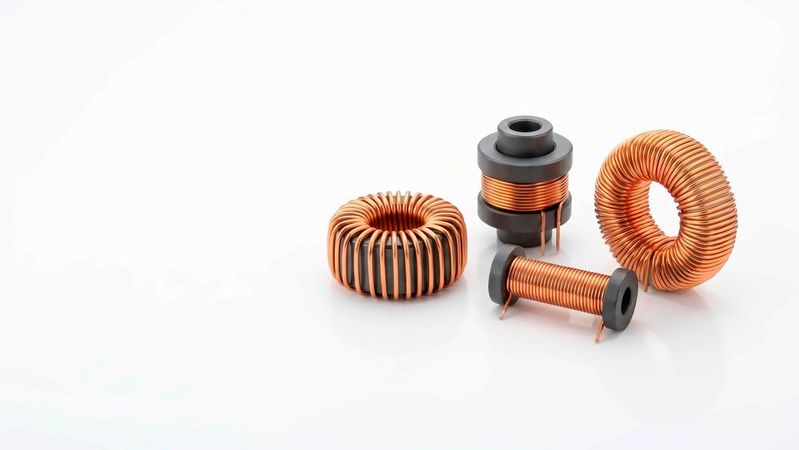
Electronic testing is a critical part of electronic component production and semiconductor fabrication. After electronic component production, manufacturers conduct a series of tests on components/semiconductors to prepare datasets.
Even after implementing advanced manufacturing processes, some defective components can be produced. The defect remains unnoticed until it is integrated into printed circuit boards (PCBs). Another use case of component failure is prolonged use. The component starts to heat up and produce faulty values in the multimeter readings.
As a result, every component in a circuit must be assessed to ensure reliability, safety, and optimal performance. Some electronic components are prone to failure due to their limited lifecycle.
Faulty inductors
Based on packaging, there are two types of inductors: surface mount technology (SMT) and through-hole technology (THT). SMT inductors are smaller in size and mounted on the surface of PCBs.
THT inductors are larger in size and soldered on PCBs, which makes them capable of handling large currents and voltages. They are used in power electronic applications, PMICs, power supplies, and many more.
A faulty inductor is defined as a component that no longer functions as per its datasheet. It fails to store energy in the magnetic field, cannot resist current changes, and heats up abnormally. The reason for the fault is operation under large currents or voltages. All thanks to power electronics. Some physical signs indicate the need for testing or potential failure.
- Excessively unusual heating at normal loads.
- Discoloration.
- Open/cut winding.
- Holes/cracked body.
- Peeling of solder points.
- Noise during operation.
- High ripple currents.
- Poor voltage regulation.
- Changed values.
- Altered performance after stress/impact.
How to test an inductor?
The answer to the question of how to test an inductor revolves around multimeters.
- 1. Take the multimeter and connect the red and black probes respectively.
- 2. Set the multimeter to Ohmic mode. Use the lowest resistance range.
- 3. Touch the terminals of the inductors using both probes.
- 4. You must hear a beeping sound.
Healthy inductor: A healthy inductor shows resistance in a few milliohms, typically less than 1 ohm. Ideally, the resistance of an inductor should be zero. However, real inductors exhibit a small resistance due to internal wiring.
Open circuit: The multimeter shows 0L/infinite resistance. The inductor enters failure mode due to overheating from excessive current handling. The reason could be an internal wire or coil winding breakdown or tearing.
Short circuit: The multimeter shows 0.0 Ohm. Overheating can melt the insulating area of the inductor. It leads to an internal short where two coils touch each other.
How to avoid inductor failure?
Derating is a classical method to avoid inductor failure. Just as the name suggests, derating is related to component ratings. Derating refers to the practice of using an electronic component below its rating to maximize its mean time between failure (MTBF) and lifetime.
The term “rating” covers all current ratings, voltage ratings, power ratings, and operating temperature limits. If you are confused about how to test an inductor? You must be ready to expect low failure rates if derating has been followed.
Operating an inductor below 20% of its maximum rated value will double its lifecycle. The same principle applies to other electronic devices or components. By following the principle of derating, inductors contribute to device functioning in safe operating areas (SOA) to prevent self-damage.
PCIM Expo 2026: Secure your ticket now

Looking for the latest power electronics solutions? At the PCIM Expo, you will find reliable technologies that will equip you for the future. Learn all about new components, sustainable systems, and more. Benefit from the Early Bird Rate until 30 April 2026. Secure your ticket now!
(ID:50853207)
:quality(80)/p7i.vogel.de/wcms/c2/90/c2900da3fdc8cfaea5c3ac8944ccab86/0127527872v2.jpeg "Capacitors are prone to failure. With the help of a multimeter, you can easily assess their health. (Source: © PoodPhoto - stock.adobe.com)")
:quality(80)/p7i.vogel.de/wcms/f0/d8/f0d82f06ed1b7abb3245dfc4c317cb55/0127949994v2.jpeg "Visual representation of component ageing in power electronics, highlighting thermal and material stress effects across the system (Bild: © Surya16 - stock.adobe.com)")