


:quality(80)/p7i.vogel.de/wcms/2f/f3/2ff3221bf7665de2d0acf83760bfd1fa/0130031523v2.jpeg "Wolfspeed presents a 300 mm silicon carbide technology platform designed to support advanced packaging and high-efficiency power delivery for AI data center infrastructure. (Source: Wolfspeed)")
:quality(80)/p7i.vogel.de/wcms/c3/16/c316e955a97f5d72d9678297b237b9e5/0129932858v2.jpeg "Left: the single-phase version of the SENTRON ECPD with RCM, right: a model of the future three-phase version of the SENTRON ECPD. (Source: Siemens)")
:quality(80)/p7i.vogel.de/wcms/ef/0a/ef0adb0acf793fe147cc27c21f6a7a67/0129954238v2.jpeg "Empower Semiconductor introduces embedded silicon capacitors designed to improve power delivery and stability in AI and high-performance computing processors. (symbolic image) (Source: © IF.arc - stock.adobe.com)")
:quality(80)/p7i.vogel.de/wcms/53/f9/53f9301dfc9292d02960f7996c79cc6e/0129927601v2.jpeg "Wolfspeed’s new 10 kV SiC MOSFET enables high-voltage power conversion for grid and industrial applications. (symbolic image) (Source: © CREATIVE- 3.4 - stock.adobe.com)")
:quality(80)/p7i.vogel.de/wcms/6e/cd/6ecd41d095d5111cf4ed37b714844487/0129930878v2.jpeg "PCIM Asia Shenzhen provides a platform for industry experts to present new developments in power electronics and electrification technologies. (symbolic image) (Source: © killykoon - stock.adobe.com)")
:quality(80)/p7i.vogel.de/wcms/02/c0/02c0e9722f70b1134dbf96fb59a9c73d/0129655179v2.jpeg "The PCIM Conference 2026 will take place from June 9-11, featuring discussions on power electronics trends, including GaN technology and AI applications. (symbolic image) (Source: © Elmira - stock.adobe.com)")
:quality(80)/p7i.vogel.de/wcms/cc/67/cc670ea2029cd2af5c641af70e1bf734/0129816392v4.jpeg "Fraunhofer IAF coordinates the EU SUPREME project to accelerate GaN and SiC power semiconductor innovation in Europe. (Source: Fraunhofer IAF)")
:quality(80)/p7i.vogel.de/wcms/ea/e6/eae6aee30071e67a5627027974437134/0129544613v2.jpeg "GlobalFoundries and Renesas strengthen their collaboration to support U.S.-based semiconductor production and supply chain resilience. (Source: © ronstik - stock.adobe.com)")
:quality(80)/p7i.vogel.de/wcms/b1/5e/b15ee02b0ba02db70cf61e37d66ad1d3/0129349127v2.jpeg "Vehicle-to-grid (V2G) chargers enable bidirectional energy flow, allowing electric vehicles to act as mobile energy storage systems that can both draw power from and feed power back into the grid. (Source: © medienvirus - stock.adobe.com)")
:quality(80)/p7i.vogel.de/wcms/26/d5/26d591cc340077026eac56a0e7564faf/0129949603v2.jpeg "Flexible: The solid silicone-based electrolyte is elastic, thereby compensating for the voids that form in solid-state batteries during charging and discharging. (Source: Empa)")
:quality(80)/p7i.vogel.de/wcms/4d/e0/4de02f76a37cbb3df30dd231de589c8e/0128866890v2.jpeg "Both legacy and vGaN show higher carrier mobility and band gap energies compared to other power semiconductors. (Source: © phonlamaiphoto - stock.adobe.com)")
:quality(80)/p7i.vogel.de/wcms/18/0b/180b7b63afc91e523592d8a5ce161c96/0129847487v2.jpeg "InGaAs-based photodetectors enable sensitive and fast detection in the short-wave infrared spectrum for modern sensing and communication applications. (Source: © VITALII - stock.adobe.com)")
:quality(80)/p7i.vogel.de/wcms/be/c8/bec8d43fc0ee73414274be44608b2970/0129748903v2.jpeg "The Infiniium XR804KA real-time oscilloscope delivers faster response time, improved stability, and streamlined workflows for high-speed digital and compliance testing. (Source: Keysight)")
:quality(80)/p7i.vogel.de/wcms/23/ee/23ee4a97790d6009dbfd7d9577ffa723/0129220424v2.jpeg "The R&S FPL1044 with the new RTSA option makes 40 MHz real-time frequency analysis available up to 44 GHz. (Source: Rohde & Schwarz )")
:quality(80)/p7i.vogel.de/wcms/3c/d1/3cd1cacbceb792ba63727199c61ca434/0127801860v2.jpeg "Thanks to cloud technology, users can collaborate on projects from anywhere and always have access to the latest planning data. (Source: SIEMENS)")
:quality(80)/p7i.vogel.de/wcms/5a/a0/5aa0436498af618297961fd54ab36cdf/0126290792v2.jpeg "Siemens accelerates student-led semiconductor innovation across Europe’s leading technical universities through Cre8Ventures’ Open Higher Education Program developed in collaboration with Arm and University of Southampton (Source: Siemens Digital Industries Software)")
RENEWABLE ENERGY The role of power electronics in renewable energy and sustainability
Related Vendors
:fill(fff,0)/p7i.vogel.de/companies/60/7e/607ec89d5d9b5/white-frame.jpg "white frame.jpg (www.rohm.com)")
:fill(fff,0)/p7i.vogel.de/companies/61/dc/61dc0e8c2e420/dspace-logo-1000px-220107.png "dspace-logo-1000px-220107 (dSPACE GmbH)")
:fill(fff,0)/p7i.vogel.de/companies/68/2c/682c3e2e9a195/logotype-rvb.jpeg "logotype-rvb (https://www.mersen.com/en)")
The world is grappling with an increasing need for renewable and sustainable energy sources. As a result, it has become an imperative for governments across the world to integrate renewable energy into the power grid.
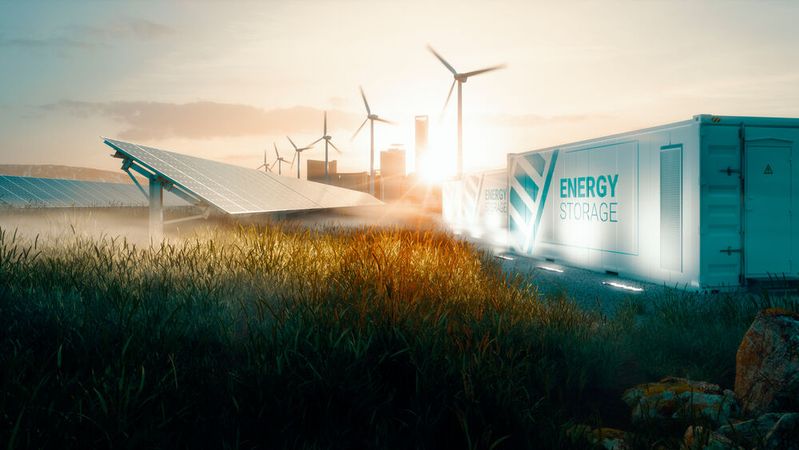
Renewable energy sources, including solar, wind, and hydropower have shown substantial promise in their potential to reduce greenhouse gas emissions and slow down climate change. At the same time, however, harnessing these energy sources effectively requires advanced technology - and power electronics drive them.
How does renewable energy drive sustainability?
Renewable energy is fundamentally transforming the way we produce and consume energy. Unlike fossil fuels, renewable energy sources such as solar, wind, hydro, and geothermal are abundant, naturally replenished, and have a minimal environmental footprint.
One of the most significant contributions of renewable energy to sustainability is its role in reducing greenhouse gas (GHG) emissions. Fossil fuel-based power generation is a major source of carbon dioxide (CO2) and other harmful emissions that contribute to global warming and climate change.
:quality(80)/p7i.vogel.de/wcms/bb/22/bb22a5a4e996092e29f00c46d0b0d573/0102838784v2.jpeg "As the need and demand for clean, sustainable energy continues to increase and renewable technologies become more advanced, more renewable energy projects are being developed. (Source: gopixa - stock.adobe.com)")
RENEWABLE ENERGY
Ten of the world’s largest renewable energy projects
What is the energy transition?
The energy transition is the global shift from a reliance on fossil fuels such as coal, oil, and natural gas to renewable and sustainable energy sources like solar, wind, hydro, and geothermal power.
This transition is driven by the need to address climate change, reduce greenhouse gas emissions, and create a more sustainable and resilient energy system. Key drivers of the transition include:
- Climate Change: The burning of fossil fuels is a major source of carbon dioxide (CO2) and other greenhouse gases, which contribute to global warming and climate change. Transitioning to renewable energy sources is essential for reducing these emissions and limiting global temperature rise. In addition, global agreements like the Paris Agreement set targets for reducing emissions and transitioning to cleaner energy sources to mitigate the effects of climate change.
- Energy Security: Renewable energy sources are abundant and locally available, reducing dependence on imported fuels and enhancing energy security. In addition, renewable energy technologies have lower operating costs and are not subject to the price volatility associated with fossil fuels, providing more stable energy pricing.
- Economic and Social Benefits: The renewable energy sector creates a wide range of jobs, from manufacturing and installation to maintenance and research. This job creation supports economic growth and development. Meanwhile, reducing air pollution from fossil fuel combustion leads to significant public health benefits, including fewer respiratory and cardiovascular diseases.
The electrical components driving the energy transition
Through their applications in renewable energy systems, electric vehicles, energy storage, and efficient power management, electrical components enable the efficient conversion, control, and conditioning of electrical power. Power electronics therefore contribute significantly to reducing energy consumption and enhancing the integration of renewable energy systems and the energy transition.
:quality(80)/p7i.vogel.de/wcms/f9/29/f92903189bb36304a6bbc7ca5ba8e3fc/0117522391.jpeg "Read more about the differences between inverters and converters in this article. (Source: BORIS - stock.adobe.com)")
POWER ELECTRONICS
Inverter vs converter: What's the difference?
Inverters: Bridging DC and AC power
Inverters are essential in renewable energy systems, particularly in solar power installations. Solar panels generate direct current (DC) electricity, but most homes and businesses run on alternating current (AC). Inverters convert the DC output from solar panels into AC, making it usable for everyday electrical needs.
There are different types of inverters, each tailored for specific applications:
- String Inverters: These are used in residential and small commercial solar power systems. They connect a series of solar panels (a string) to a single inverter. String inverters are cost-effective and have high efficiency.
- Microinverters: These are installed on each solar panel, converting DC to AC right at the source. They offer advantages in terms of optimized performance and monitoring, especially in installations with shading or complex roof structures.
- Central Inverters: Used in large-scale solar farms, these inverters handle high power levels and are designed for utility-scale applications. They provide centralized control and are highly efficient for large arrays of solar panels.
Converters: Enhancing energy compatibility and efficiency
Converters are used for managing and optimizing the flow of electricity. They ensure that renewable energy generation is compatible with the grid and other energy systems.
Key types include:
- DC-DC Converters: These are used to step up (boost) or step down (buck) the DC voltage levels. In solar power systems, they can be used to match the voltage levels of solar panels to the optimal operating range of inverters or batteries.
- AC-DC Converters: Essential in systems where AC power needs to be converted to DC, such as in charging stations for electric vehicles (EVs). They facilitate efficient energy transfer from the grid to the EV batteries.
- Bidirectional Converters: These allow for the two-way flow of electricity, making them essential in energy storage systems. They enable energy to be stored in batteries when production exceeds demand and then feed it back into the grid or use it when needed.
:quality(80)/p7i.vogel.de/wcms/dc/a2/dca2307d17ba96e0362e1c25587377a4/87566427.jpeg "Buck-boost converters are equivalent to flyback converters that use a single inductor instead of a transformer. (Source: Unsplash)")
Energy Transformation
Advantages of buck-boost converters
Batteries and energy storage systems
Energy storage systems, particularly those using lithium-ion batteries, have become indispensable in renewable energy setups. They store excess energy generated during peak production times and release it during periods of low production or high demand. This capability helps to smooth out the intermittency associated with renewable sources like solar and wind.
Power optimizers
Power optimizers are devices used in solar power systems to maximize the energy output of each solar panel. By adjusting the operating point of each panel, power optimizers mitigate losses due to shading, debris, or panel mismatch. They work in conjunction with inverters to enhance overall system efficiency.
Advanced control systems and smart grids
The integration of advanced control systems and smart grid technology further enhances the sustainability of renewable energy sources. Smart grids incorporate digital technology to monitor and manage the transport of electricity from all generation sources to meet the varying electricity demands of end-users efficiently. They enable better integration of renewable energy sources by balancing supply and demand dynamically, reducing wastage, and improving reliability.
The future of renewable energy components
The continuous advancement in semiconductor technology is driving the development of more efficient and compact electrical components. Innovations such as silicon carbide (SiC) and gallium nitride (GaN) semiconductors are leading to the creation of more efficient inverters and converters, capable of operating at higher voltages and temperatures with reduced losses.
Electrical components like inverters, converters, and energy storage systems are the backbone of renewable energy applications. They ensure that the energy harnessed from sources like solar and wind is efficiently converted, stored, and utilized, making significant contributions to sustainability. As technology progresses, these components will become even more efficient, further driving the adoption of renewable energy worldwide.
Experience power electronics for E-Mobility & Energy Storage
Would you like to experience the trends in power electronics for E-Mobility and Energy Storage at first hand? Become part of the PCIM Europe exhibition from 11 – 13 June 2024 in Nuremberg, Germany. There, you can experience a stage with top-class presentations as well as Live Product Demos at the stand of specialized exhibitors.
Learn more
(ID:50046532)
:quality(80)/p7i.vogel.de/wcms/7b/cf/7bcf68ed577974a86f4679c4b4b85b46/0128095713v2.jpeg "Symbolic Image: Deployment of heat batteries by Rondo and EDP aims to enhance energy efficiency and sustainability for Heineken's production processes. (Source: © Kittinan - stock.adobe.com)")
:quality(80)/p7i.vogel.de/wcms/f0/43/f04364d49fac1eb1ffd699a48cbaebfe/0126468158v2.jpeg "Solar power is rapidly transforming the energy landscape by offering a clean, abundant, and increasingly affordable alternative to fossil fuels, while presenting unique historical insights and environmental benefits, despite some production challenges. (Source: © peterschreiber.media - stock.adobe.com)")