


:quality(80)/p7i.vogel.de/wcms/10/fc/10fcb98e44d61826e641bc8d3f20f616/0133193677v2.jpeg "The new AEVA and AEVB Series aluminum electrolytic capacitors are engineered for harsh industrial environments, delivering high-CV, long-lifetime performance in compact, surface-mount packages that reliably withstand up to 30g acceleration and operating temperatures extending from -55° to +125°C. (Source: Kyocera)")
:quality(80)/p7i.vogel.de/wcms/f7/42/f74208db9f5f87dca384b38b71c4782e/0133196365v2.jpeg "YAGEO’s EC Flat‑Series temperature sensors combine fast, accurate measurement with resistance to vibration, shock, moisture and dust for demanding automotive and industrial applications. (Source: Yageo)")
:quality(80)/p7i.vogel.de/wcms/b2/82/b28212428745dd8a4634ad4f4912012f/0132902689v2.jpeg "New 15 V, 25 V and 40 V eGaN FETs deliver ultra-low on-resistance, high current capability, and exceptional radiation immunity for high-density space power conversion (Source: EPC Space)")
:quality(80)/p7i.vogel.de/wcms/7b/4f/7b4f433302c490cac22eee9c12499e65/0132780211v2.jpeg "Littelfuse introduces the TPSMD‑FL series of high‑power surface‑mount TVS diodes, designed to simplify ISO 7637 load‑dump protection and safeguard automotive electronics against severe voltage transients. (Source: Littlefuse)")
:quality(80)/p7i.vogel.de/wcms/78/38/783841efab284c1b4453777e7ebea26d/0133190419v2.jpeg "Diodes has completed its acquisition of Elevate Semiconductor, expanding its analog and mixed-signal portfolio and strengthening its presence in the high-growth automated test equipment market. (Source: © peopleimages.com - stock.adobe.com)")
:quality(80)/p7i.vogel.de/wcms/1f/79/1f79d69530465de26a832c742fc60319/0133117717v2.jpeg "With 30,000 sqm of exhibition space, 20,157 trade visitors, 271 exhibitors, and 131 expert presentations as part of the conference program, the event sent a strong message about the industry's innovative strength and dynamism. (Source: Mesago Messe Frankfurt GmbH)")
:quality(80)/p7i.vogel.de/wcms/43/4d/434db2291567e847e54332004942a225/0132958267v2.jpeg "GlobalWafers has joined the SEMI Taiwan Materials Alliance, with CEO Doris Hsu serving as co‑chair, to advance critical materials technologies, accelerate collaborative innovation and strengthen global semiconductor supply chain resilience. (Source: © jiwon - stock.adobe.com)")
:quality(80)/p7i.vogel.de/wcms/6f/72/6f72f93d1e4c5a248a97dd3b8f32a336/0132997898v2.jpeg "Infineon plans to acquire C2i Semiconductors to combine software‑defined multiphase control and smart power stages with its broad power‑semiconductor portfolio for intelligent, scalable AI data‑center power delivery. (Source: © Grispb - stock.adobe.com)")
:quality(80)/p7i.vogel.de/wcms/87/97/879728679e7010f81e53a86923cde74c/0133218625v2.jpeg "Conceptual illustration of polar wurtzite niobium aluminum nitride (NbAlN), a transition-metal-containing nitride semiconductor that preserves the crystal structure and polarity of GaN. (Source: Associate Professor Atsushi Kobayashi from Tokyo University of Science, Japan)")
:quality(80)/p7i.vogel.de/wcms/ac/31/ac31c9478d80894d725d02883ae7ed5d/0133176534v2.jpeg "Average models allow power designers to simulate DC‑DC converters and three‑phase PFC circuits quickly, analyse small‑signal behaviour and evaluate loop stability without modelling every switching event. (Source: © AI - stock.adobe.com)")
:quality(80)/p7i.vogel.de/wcms/96/80/9680b468d7f682c8b6c15b07300afbb0/0133177854v2.jpeg "Grid-forming inverters are also known as grid-forming resources and grid-forming IBR. This article explains grid-forming inverters in detail. (Bild: © only_kim - stock.adobe.com)")
:quality(80)/p7i.vogel.de/wcms/57/c6/57c6fa81922a9849a917bdfed82eddf7/0133052494v2.jpeg "Rising demand for high-end materials shifts production toward higher-margin products, reducing output of standard loss materials. (Source: NCAB)")
:quality(80)/p7i.vogel.de/wcms/7b/76/7b76005554b556df2a7a3794bdf69d44/0132365246v2.jpeg "Hioki’s ST5680A DC Hipot Tester combines CE/UKCA/CSA compliance, an integrated capacitance‑based contact check and time‑series waveform recording (voltage, leakage current, insulation resistance) to standardize hipot and insulation testing across EV cell, module and pack production lines. (Source: Hioki)")
:quality(80)/p7i.vogel.de/wcms/af/7f/af7f7b0fb7f29219fc991b1130f65477/0132241333v2.jpeg "Comprehensive laboratory testing regimens—combining thermal cycling, high‑current stress, EMC, and accelerated lifetime tests—are essential to validate advanced power designs and ensure reliability in real‑world applications. (Source: PRBX)")
:quality(80)/p7i.vogel.de/wcms/16/3d/163df69363f8125315a9826e13ea4b05/0131927425v2.jpeg "Solution will maximize data center and AI factory profitability while delivering engineering-grade insights to design and operations for more efficient, sustainable, and resilient infrastructure. (Source: Cadence)")
:quality(80)/p7i.vogel.de/wcms/85/b7/85b7e90733a2bd8f21515d8f7137f2fc/0131917677v2.jpeg "Renesas acquires Pictorus to integrate its embedded application software platform with Renesas’ MCU and MPU portfolio, helping developers shorten time‑to‑market and simplify system integration. (Source: © lucadp - stock.adobe.com)")
RENEWABLE ENERGY Ten of the world’s largest renewable energy projects
Related Vendors
:fill(fff,0)/p7i.vogel.de/companies/62/a0/62a0a0de7d56a/aic-europe-logo.jpeg "aic-europe-logo (AIC Europe)")
:fill(fff,0)/p7i.vogel.de/companies/5f/71/5f71d5f92a5f6/2000px-rogers-corporation-logo-svg.png "2000px-Rogers_Corporation_Logo.svg.png (rogers germany)")
:fill(fff,0)/p7i.vogel.de/companies/68/08/6808a2b3b6595/het-logo.jpeg "het-logo (Heraeus Electronics)")
The year ahead promises valuable new growth paths for the renewable energy industry as concern for climate change grows. With this in mind, here’s a look at 10 of the world’s largest renewable energy projects.
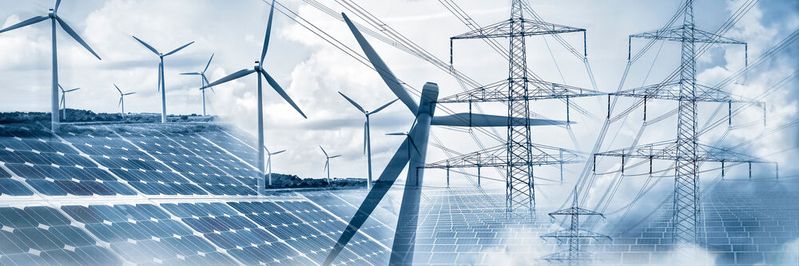
Rapid improvements in technology and falling costs of renewable energy resources have made renewables one of the most competitive energy sources. With new projects receiving more funding than ever before, renewable energy is one of the world’s fastest-growing industries.
Renewable energy growth in 2024 continued to build on the strong momentum seen in 2023, with several notable capacity additions and milestones. Global renewable capacity additions are expected to reach 666 GW in 2024, up from 507 GW in 2023, representing a 31 % increase. Solar PV and wind are forecast to account for 95 % of all renewable capacity additions through 2030, with solar PV installations being on track to reach 593 GW in 2024, a 29 % increase from 2023.
:quality(80)/p7i.vogel.de/wcms/c6/02/c602a27180349f43e956d5beed07a16a/0122288658v1.jpeg "The Mohammed bin Rashid Al Maktoum Solar Park is the largest single-site solar park in the world based on the Independent Power Producer model.(Source: Dubai Electricity and Water Authority’s)")
:quality(80)/p7i.vogel.de/wcms/d7/43/d743ba5908cda66d478d97d714d79ea5/0122288661v1.jpeg "Karnataka Renewable Energy Development Ltd and the Solar Energy Corporation of India established a joint venture company in March 2015 to implement solar power projects in Karnataka.(Source: By Contains modified Copernicus Sentinel data 2020, Attribution, https://commons.wikimedia.org/w/index.php?curid=92808644)")
:quality(80)/p7i.vogel.de/wcms/4c/05/4c05f0bcfb48d7b28860fea9e07de241/0122289067v1.jpeg "The Dogger Bank Offshore Development Zone, located between 125 and 290km off the east coast of Yorkshire, extends over approximately 8660km² and water depths range from 18m to 63m.(Source: Voltaire Jan de Nul)")
:quality(80)/p7i.vogel.de/wcms/99/b9/99b9a10216c52f846b41ab7b75f1c629/0122289256v1.jpeg "Hornsea 2’s 165 turbines in the North Sea can generate enough green energy to power 1.4 million UK homes.(Source: Ørsted)")
While every renewable energy project is just as important as the next when it comes to improving the world’s energy supply, it’s important to understand the sheer scale that some of these projects operate on to truly appreciate just how important renewable energy is for the future of our planet.
With this in mind, let’s look at some of the largest renewable energy projects across four different types of renewable energy sources: solar, wind, hydro, and geothermal. These are in no particular order and “larger” projects (i.e., other than those listed) may exist.
Largest solar renewable energy projects
Following the 2015 Paris Agreement, there was a surge in new solar farms as governments all around the world rushed to achieve their national clean energy targets. For a long time, the U.S. led the world in solar but today, countries such as India and China are dominating the space.
:quality(80):fill(efefef,0)/p7i.vogel.de/wcms/61/09/6109228bdc722/kampagnenbild-webkon-pb-20210831.jpeg "Kampagnenbild_Webkon_PB_20210831 (Pexels)")
WEB CONFERENCE: THE FUTURE OF ENERGY
Renewable energies – chances & challenges for a clean future
Xinjiang Solar Farm, China
The Xinjiang Solar Farm in China, the world’s largest solar installation, boasts a massive 5 GW capacity. Connected to the grid in June 2024, it spans 200,000 acres (810 km²) and generates approximately 6.09 billion kWh of electricity annually. To put its scale into perspective, this output could power an entire country like Papua New Guinea for a year.
With its 5 GW capacity, the farm surpasses previous record-holding projects like the 3 GW Ningxia Tenggeli desert solar project and the 3 GW Golmud Wutumeiren solar complex. This massive installation highlights China’s commitment to expanding its renewable energy capacity and reducing reliance on fossil fuels, aligning with the country’s long-term energy and sustainability goals.
Mohammed bin Rashid Al Maktoum Solar Park, Dubai, UAE
The Mohammed bin Rashid Al Maktoum Solar Park in Dubai is the world’s largest single-site solar installation, covering 77 km² with a planned capacity of 5,000 MW by 2030. Developed in phases, it combines photovoltaic (PV) and concentrated solar power (CSP) technologies, with an investment of AED 50 billion (approximately $13.6 billion).
Notable milestones include the world’s tallest solar tower (262.44 meters) and a 15-hour thermal energy storage system in Phase 4, as well as achieving the world’s lowest solar energy cost at US$1.6953 cents per kWh in Phase 5. Currently generating 2,860 MW, the park reduces carbon emissions by 6.5 million tonnes annually and provides clean energy to thousands of residences.
The solar park is integral to Dubai’s Clean Energy Strategy 2050 and Net Zero Carbon Emissions Strategy 2050, aiming to transition the emirate to 100 % clean energy by mid-century.
Pavagada Solar Park, India
The Pavagada Solar Park, also known as Shakti Sthala, is one of the world’s largest solar installations, located in Karnataka, India. Spanning 13,000 acres (53 km²) in Pavagada taluk, Tumkur district, the park has a total installed capacity of 2,050 MW, divided into eight 250 MW sections, each further split into smaller 50 MW blocks.
Developed by Karnataka Solar Power Development Corporation Limited (KSPDCL), a joint venture between SECI and KREDL, the project generates over 4,500 million units of electricity annually, reducing carbon emissions by 6.5 million tons. Companies like Azure Power, SB Energy, Fortum, and Tata Power Renewable Energy contributed to the park’s development, using a mix of thin-film and polycrystalline solar panel technologies. The project’s innovative land-leasing model set it apart, with land leased from 2,300 farmers for 25–35 years, earning ₹ 21,000 per acre annually, increasing by 5 % every two years.
Largest wind renewable energy projects
Wind energy is one of the fastest-growing renewable energy sources. According to the 16th Annual Global Wind Energy Council report, 93 GW of new capacity was added in 2020, representing a 53 percent year-on-year increase.
:quality(80):fill(efefef,0)/images.vogel.de/vogelonline/bdb/1783100/1783113/original.jpg "PB_Energy_Storage_Titel_groß")
Dogger Bank Wind Farm, UK
The Dogger Bank Wind Farm will be the world’s largest offshore wind farm upon completion, located 130 km off the Yorkshire coast in the North Sea. Developed in three phases - Dogger Bank A, B, and C - it will have a total capacity of 3.6 GW, powered by 277 GE Haliade-X turbines, each capable of generating up to 14 MW. Once fully operational by 2026, the project will supply renewable energy to 6 million UK homes annually. It is the first UK wind farm to use high-voltage direct current (HVDC) transmission, ensuring efficient electricity transfer over long distances.
The project represents a major milestone in construction and innovation. The Voltaire, the world’s largest installation vessel, is used to install the massive turbines, each with 107-meter blades - one rotation of which can power a UK home for two days. The wind farm has already created over 2,000 jobs and is a joint venture between SSE Renewables, Equinor, and Vårgrønn. Covering an area almost as large as Greater London, Dogger Bank will help reduce CO₂ emissions equivalent to removing 1.5 million cars from the road annually and play a key role in achieving the UK’s Net Zero goals.
Hornsea 2 Offshore Wind Farm, UK
The Hornsea 2 Offshore Wind Farm is currently the world’s largest operational offshore wind farm, located 89 km off the Yorkshire coast in the North Sea. Covering 462 square kilometers, it has a total capacity of 1.32 GW, powered by 165 Siemens Gamesa turbines, each capable of producing 8 MW. Fully operational since August 2022, Hornsea 2 generates enough clean energy to power over 1.4 million UK homes annually. The turbines, with rotor diameters of 167 meters and 81.5-meter blades, use high-voltage alternating current (HVAC) transmission to efficiently deliver power to the onshore grid at North Killingholme.
As part of Ørsted’s larger Hornsea Zone development, Hornsea 2 contributes to a total planned capacity exceeding 4 GW. Its impact extends beyond power generation, playing a significant role in reducing carbon emissions and helping the UK meet its renewable energy and Net Zero targets. Hornsea 2 highlights the UK’s position as a global leader in offshore wind energy and serves as a benchmark for future large-scale projects. While Dogger Bank will soon surpass it in scale, Hornsea 2 remains a key milestone in offshore wind innovation and sustainability.
Largest hydroelectric renewable energy projects
Hydropower is one of the oldest and most widely used renewable energy sources. China is the world’s largest producer of hydroelectricity and operates three of the world’s 10 biggest hydroelectric power plants.
Three Gorges, China
Three Gorges is a 22.5 GW hydroelectric power plant in Yichang, China. It’s the world’s largest hydropower station and is a conventional impoundment facility that exploits the water resources of the Yangtze River to produce electricity.
Construction of the $29 billion Three Gorges facility began in 1993 and was completed almost 20 years later in 2012. As part of the project, a 181-meter tall and 2,335-meter-long gravity dam was built. The plant itself consists of 32 turbine units that are each rated over 700 MW, and two 50 MW power generators. The annual output of the hydroelectric plant is estimated to be around 85 TWh.
Itaipu, Brazil/Paraguay
The 14 GW Itaipu hydroelectric plant is located on the Parana River at the border between Brazil and Paraguay. Construction of Itaipu began all the way back in 1972 and was completed in 1982 at a cost of $19.6 billion. Power production at the facility began in 1984.
In 2018, the Itaipu facility supplied 15 % of Brazil’s and 90 % of Paraguay’s energy consumption. It consists of 20 generating units with a capacity of 700 MW each. It produced 103.1 million MWh in 2016, which at the time made it the biggest generating hydropower plant in the world.
Take a closer look at the Itaipu Binacional Hydroelectric Plant in this video:
Largest geothermal renewable energy projects
Geothermal activity has been chugging along in the background - or rather, below the surface - for centuries, and we’re only just now beginning to utilize it for energy production. While Iceland is famous for powering its entire country with geothermal energy, the largest geothermal project is located in the United States.
The Geysers Geothermal Complex, United States
Located around 120 kilometers north of San Francisco is Geysers Geothermal Complex, the world’s largest geothermal energy project. The complex is made up of 15 power plants that together have a combined installed capacity of 1,205 MW (1.2 GW).
The Geysers complex coves an area of 78 square kilometers and production from the geothermal field has been going on since the 1960s.
Watch now - The Geysers' power plant keeps California's electric grid green:
Larderello Geothermal Complex, Italy
The Larderello Geothermal Complex in Tuscany, Italy, is the world’s first geothermal power plant and a cornerstone of geothermal energy history. Electricity generation at Larderello began in 1904, and the first commercial plant was built in 1913, producing 250 kW. It remained the only industrial producer of geothermal electricity until 1958.
Located in the "Valle del Diavolo" (Devil’s Valley), the area is geologically active, with natural steam temperatures reaching 202°C. Operated by Enel Green Power, the complex now consists of 34 power plants with a total installed capacity of 800 MW, generating 4,800 GWh annually—enough to power one million Italian households. This accounts for 10 % of the world’s geothermal electricity and supplies 34 % of Tuscany’s electricity needs.
(ID:48024689)
:quality(80)/p7i.vogel.de/wcms/d6/0f/d60f24f3aa73867f3ea1ef414f744b79/0129662401v2.jpeg "In 2025, battery storage costs hit a record low of $78/MWh, the lowest level since tracking began in 2009. (Source: © Mike Mareen - stock.adobe.com)")
:quality(80)/p7i.vogel.de/wcms/24/f7/24f7b223072f64176ddf7b0e80b3c04a/0132153842v2.jpeg "Rapid growth in wind and solar has created periods of electricity abundance that ageing transmission grids often cannot absorb, forcing curtailment and underscoring the urgent need for grid upgrades, storage and smarter distribution strategies. (Source: © Giggles - stock.adobe.com)")