


:quality(80)/p7i.vogel.de/wcms/7f/4b/7f4b97757cea82c0675209630577dc22/0133974130v2.jpeg "Vox Power’s EIRE600 delivers up to 600 W in a compact 5 × 3-inch package, with forced-air or conduction cooling options for industrial and medical equipment. (Source: Vox Power)")
:quality(80)/p7i.vogel.de/wcms/55/97/5597c3436e3bc92ee7ba23b6f9d289e9/0134032539v2.jpeg "Littelfuse’s TP7.0SMD-XC automotive TVS diode series uses foldback technology to provide low clamping voltage for protecting sensitive vehicle electronics. (Bild: Littelfuse)")
:quality(80)/p7i.vogel.de/wcms/51/f8/51f84448e666230bb11a02566abd1177/0133958187v3.jpeg "Microchip’s radiation-tolerant GaN point-of-load converter supplies up to 20 A for space-based processors, FPGAs, microcontrollers and ASICs. (Source: Microchip)")
:quality(80)/p7i.vogel.de/wcms/0a/7c/0a7c08f368ae1d91f758dd18d2a32e88/0133978423v2.jpeg "EPFL researchers have demonstrated a GaN transistor that withstands nearly 4 kV, using an intrinsic polarization superjunction design to distribute electric fields more evenly. (Source: EPFL)")
:quality(80)/p7i.vogel.de/wcms/5b/94/5b94232ca4183d6fcc2dccc7394d7544/0134041114v4.jpeg "Siemens and NVIDIA are testing AI applications at Siemens’ Erlangen electronics factory, using digital twins to support production planning and prepare inspection systems before physical prototypes are available. (Bild: Siemens)")
:quality(80)/p7i.vogel.de/wcms/b4/1f/b41f2731a07b608e60eca3663e280301/0133980549v2.jpeg "Multi-year agreement with Wolfspeed supports Infineon’s conversion from 150-millimeter to 200-millimeter silicon carbide (SiC) manufacturing (Source: © Ada - stock.adobe.com)")
:quality(80)/p7i.vogel.de/wcms/e3/0a/e30a8813bcf44b16f0dceb63a0747d29/0133984094v2.jpeg "The semiconductor is only one part of the design. Higher voltage, frequency and power density also increase the demands on electronic packaging materials such as die attach, substrates, top-side interconnects and module attach. (Source: Generated by AI)")
:quality(80)/p7i.vogel.de/wcms/5d/fb/5dfba5e5f38daf2b8597b05656af29c0/0133956337v2.jpeg "Wolfspeed has received a conditional commitment for a loan of up to $1.5 billion from the U.S. Department of War to support its domestic wide-bandgap semiconductor supply chain. (Source: © AspctStyle - stock.adobe.com)")
:quality(80)/p7i.vogel.de/wcms/bf/b6/bfb6ac295759be32d567df9849b6767e/0134094495v2.jpeg "Fraunhofer ISE reports that 25 Ah pouch cells with silicon-rich anodes retained more than 83% of their initial capacity after 1,000 cycles when tested under 1,000 kPa axial pressure. (Bild: Fraunhofer ISE)")
:quality(80)/p7i.vogel.de/wcms/16/dc/16dca55e6ef80e6b5da68bc628da2dcc/0133844782v2.jpeg "This article explains virtual power plants in modern renewable-heavy grids. (Source: © M@rketVisualsStudio - stock.adobe.com)")
:quality(80)/p7i.vogel.de/wcms/e8/33/e8330aae4bea3578b98ec2c1403d367a/0133980001v2.jpeg "IRENA’s 2026 World Energy Transition Outlook identifies faster electrification powered by renewables as central to meeting future global energy needs. (Source: Irena)")
:quality(80)/p7i.vogel.de/wcms/6c/b4/6cb405f47d25035e256ae90fe3a66ee6/0134032112v2.jpeg "Sungrow’s PowerTitan 3.0 energy storage platform uses onsemi EliteSiC hybrid power modules, with the companies reporting peak inverter efficiency above 99.3%. (Bild: onsemi)")
:quality(80)/p7i.vogel.de/wcms/7b/76/7b76005554b556df2a7a3794bdf69d44/0132365246v2.jpeg "Hioki’s ST5680A DC Hipot Tester combines CE/UKCA/CSA compliance, an integrated capacitance‑based contact check and time‑series waveform recording (voltage, leakage current, insulation resistance) to standardize hipot and insulation testing across EV cell, module and pack production lines. (Source: Hioki)")
:quality(80)/p7i.vogel.de/wcms/af/7f/af7f7b0fb7f29219fc991b1130f65477/0132241333v2.jpeg "Comprehensive laboratory testing regimens—combining thermal cycling, high‑current stress, EMC, and accelerated lifetime tests—are essential to validate advanced power designs and ensure reliability in real‑world applications. (Source: PRBX)")
:quality(80)/p7i.vogel.de/wcms/16/3d/163df69363f8125315a9826e13ea4b05/0131927425v2.jpeg "Solution will maximize data center and AI factory profitability while delivering engineering-grade insights to design and operations for more efficient, sustainable, and resilient infrastructure. (Source: Cadence)")
:quality(80)/p7i.vogel.de/wcms/85/b7/85b7e90733a2bd8f21515d8f7137f2fc/0131917677v2.jpeg "Renesas acquires Pictorus to integrate its embedded application software platform with Renesas’ MCU and MPU portfolio, helping developers shorten time‑to‑market and simplify system integration. (Source: © lucadp - stock.adobe.com)")
:quality(80)/p7i.vogel.de/wcms/f8/34/f834240d434a0c265a2ccafe614c8cd7/0134032109v4.jpeg "Hard- and soft-switching techniques shape voltage and current during device transitions, influencing switching losses, EMI and thermal performance in power converters. (Bild: © Mrthullab - stock.adobe.com)")
:quality(80)/p7i.vogel.de/wcms/27/07/2707280c807689b437baed3660257404/0133626052v2.jpeg "The quantum behavior of electrons shapes semiconductor devices—and the power converters that deliver electricity to modern computing systems. (Source: © Celt Studio - stock.adobe.com)")
BASIC KNOWLEDGE The current “speed breaker”
Related Vendors
:fill(fff,0)/p7i.vogel.de/companies/6a/20/6a202a4f89a62/mrs-white-on-blue-bg.png "mrs-white-on-blue-bg ()")
:fill(fff,0)/p7i.vogel.de/companies/5f/71/5f71d5f92a5f6/2000px-rogers-corporation-logo-svg.png "2000px-Rogers_Corporation_Logo.svg.png (rogers germany)")
:fill(fff,0)/p7i.vogel.de/companies/66/8b/668becd1c07eb/dowa-logo-word--1-.jpeg "dowa-logo-word--1- (DOWA)")
All resistors, whether small or big in rating, function like a speed breaker to the current flow. Engineers can control the current in a circuit and reach the desired output by connecting a resistor of the required value. By enabling circuit control, resistors function as building blocks of electronic devices. This article explains resistors with their types and applications. It also answers the question of “What do resistors do in electronics?”
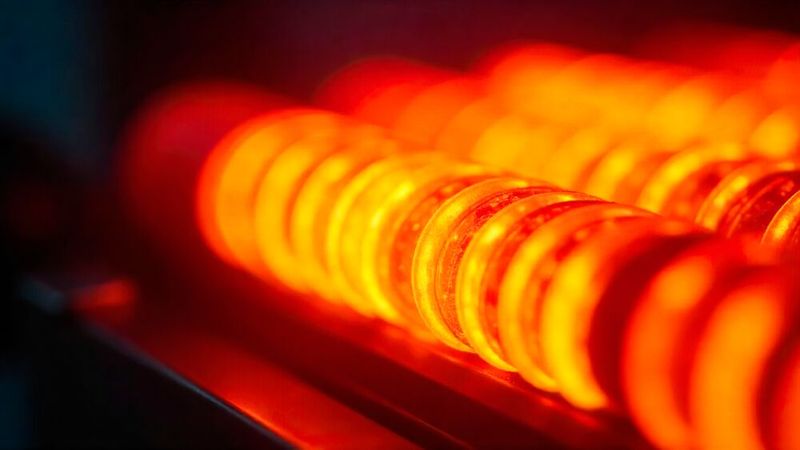
A resistor is a passive electronic component because it doesn’t produce its own electrical energy or supply the existing energy in the circuit. It can only absorb or dissipate electrical energy. Hence, resistors affect other “entities” present in the circuit.
What is a resistor?
A resistor is a very common passive electronic component that restricts the current flow in a circuit, which in turn produces a voltage drop proportional to the value of circuit current. The purpose of using a resistor can be current flow reduction, voltage regulation, voltage division, signal level adjustment, and various other uses.
Resistor symbol
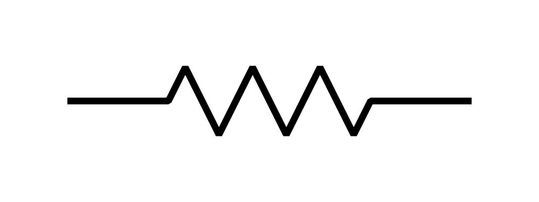
There are two resistor symbols. The resistor symbol with zig-zag lines is set by the American National Standards Institute (ANSI). The same resistor symbol is heavily used in US schematic software and datasheets.
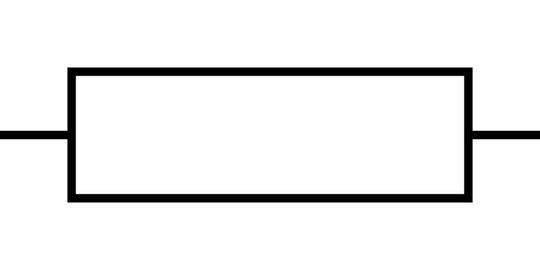
Another resistor symbol resembles an empty rectangle. The International Electrotechnical Commission (IEC) sets these symbols. It is widely used across Europe.
Resistance of a resistor
A resistor is named as such because it exhibits resistance. In 1828, German physicist George Simon Ohm shared a universal law governing voltage and currents known as Ohm’s law.
Ohm’s law states that the current flowing in a conductor is directly proportional to the potential difference applied across its ends, only if temperature, pressure, and other physical conditions don’t change.
V ∝ I
V = RI
The proportionality constant R is referred to as resistance. Resistance is defined as the property of a resistor, or any material, by virtue of which it can resist the flow of current. So, any material, in its natural form, can exhibit resistance to the flow of current.
Resistance can also be defined as:
It implies that if the voltage is kept constant, resistance and current are inversely proportional. Under constant supply voltage, if current increases in a circuit, the resistance decreases. The same applies to the opposite. Under constant supply voltage, if the current decreases in a circuit, the resistance increases.
The reason for resistance, or perhaps the existence of resistors, lies in the deep chemistry of materials. All materials, whether conductors, semiconductors, or insulators, contain electrons in the lattice. Movement of electrons refers to the flow of current. These electrons are free to move in metals. In the classical sense, metals are termed as pools of electrons.
In semiconductors, somewhat fewer charge carriers are available to move. Once they move, they are likely to collide with other electronics or ions. Resistance in conductors and semiconductors arises due to these collisions. Insulators tightly pack these electrons. There aren’t many electrons or charge carriers to move. Hence, insulators have high resistance.
Resistance further depends upon the area and length of the conductor. The resistance of a conductor increases with an increase in the length of the conductor.
R ∝ L
The resistance of a conductor decreases with an increase in the cross-sectional area of the conductor.
Combining both values gives us:
The proportionality constant defines specific resistance or resistivity.
Specific resistance is important when you’re choosing a material. If specific resistance is high, the material can be an insulator. On the other hand, if specific resistance is low, the material can be a conductor. Semiconductor materials fall within the range.
Resistors in parallel vs series
Series and parallel are two arrangements of resistors that can allow designers to control the value of currents and voltages in a circuit and achieve desired characteristics.
Resistors in series
A series connection is marked by end-to-end connected resistors. The current flowing through all such resistors remains the same. But a voltage drop occurs at each resistor.
Let us assume a circuit with three resistors connected in series.
Voltage drop can be calculated by Ohm’s law. The value of the voltage drop is determined by the value of that particular resistor.
For resistor R1, V1 = i x R1
For resistor R2, V2 = i x R2
For resistor R3, V3 = i x R3
In a series connection, the sum of all these voltage drops equals the total voltage drop in the circuit.
VTotal = V1 + V2 + V3
The total resistance offered by all the resistors is the sum of each resistance.
i x RTotal = (I x R1) + (I x R2) + (I x R3)
i x RTotal = I x (R1 + R2 + R3)
Cancelling out the common value of I.
RTotal = R1 + R2 + R3
The value of total resistance is always larger than the largest individual resistance.
The total power consumed in the circuit with resistors in series is equal to the sum of the power consumed by each resistor.
P = P1 + P2 + P3
As the current across each resistor remains the same, we use the power formula with current.
P = i2 RTotal
P = i2(R1 + R2 + R3)
Resistors in series are applicable in LED current limiters, low-power circuits, voltage divider networks (explained below), biasing active devices, and protective gear.
Resistors in parallel
In the parallel resistor connection, one end of each resistor is connected to a common point, and the other end of each resistor is connected to another common point.
The voltage drop remains the same at each resistor. As a result, each resistor provides a separate path for current to flow.
Let us assume a circuit with three resistors in parallel. The value of current in each branch depends upon the value of the resistor present in the same branch.
Applying Ohm’s law.
Total current equals the sum of all branch currents.
The reciprocal of the total resistance offered by all the resistors is the sum of the reciprocals of each resistance. It means that the value of total resistance is always smaller than the smallest individual resistance.
The total power consumed in the circuit with resistors in parallel is equal to the sum of the power consumed by each resistor.
P = P1 + P2 + P3
As the voltage drop across each resistor remains the same, we use the power formula with voltage.
P = V2 Rtotal
Resistors in parallel are applicable in load sharing, current division, power distribution, DC power supplies, and resistance reduction circuits.
:quality(80):fill(efefef,0)/p7i.vogel.de/wcms/5f/fe/5ffedb2e0ffa6/listing.jpg "listing")
Pullup and pulldown resistor
All digital logic and integrated circuits have three states: high (1), low (0), and floating, where the pin is not pulled to either high or low. A floating state represents a high impedance state. A microcontroller cannot read a floating state correctly. It can falsely interpret high or low.
Pull up resistor: A Pull up resistor is connected between the appropriate pin and the supply voltage. A pull up resistor can “pull up” the floating pin to a higher logic level (1).
Pull down resistor: A Pull down resistor is connected between the appropriate pin and the ground. A pull down resistor can “pull down” the floating pin to a higher logic level (0).
Push switch: A pair of pullup and pulldown resistor can function with the help of a push button switch. When the switch is closed, pull up resistor connected between the microcontroller pin and the supply voltage sets the microcontroller pin to logical high (1). When the switch is open, pull down resistor connected between the microcontroller pin and ground sets the microcontroller pin to logical low (0).
Pullup and Pulldown resistor pair is built into modern microcontrollers. They are useful in various applications, including switching interfacing in microcontrollers, resistive sensors in analog-to-digital converters, and a protocol bus.
What do resistors do?
Apart from pullup and pulldown resistor functions, resistors are useful in a large number of applications. In fact, resistors are a part of almost every electronic circuit around us! The answer to the question “What do resistors do” is that they perform various meaningful operations.
Current limiting: The main function of resistors is to perform current limiting. This is because it is important to restrict the current flow in a circuit. 100% energy doesn't need to pass through the system.
Power electronics: Resistors used in power electronics can withstand and dissipate large amounts of power. In general, small resistors are rated between ⅛ W and 1 W. Power resistors are rated at least 5 W. Heat sinks and liquid cooling systems assist power resistors to ensure safe operation.
Grids: Industrial electronics and power grids that deal with large amounts of current use large-size resistors that are comparable to the size of refrigerators. These grid resistors are metal alloy strips arranged in a lattice to handle currents up to 500 A.
Consumer electronics: Due to their ability to generate heat, resistors are applicable in consumer electronics, such as heaters and toasters. Resistors in heater applications offer controllable heat to objects placed in their line of sight with the help of infrared radiation. On the other hand, toasters use controlled heat from resistors.
Signal conditioning: Resistors, along with capacitors and inductors, form the LCR filter for tuning and removing ripples in audio devices, communication circuits, and power systems. With capacitors, resistors form RC low-pass filters to block high-frequency signals. With inductors, resistors form LC high-pass filters to block low-frequency signals.
Sensing: Resistors up to a few ohms in current-sense shunt circuits measure current by converting it into a measurable voltage drop. In addition, resistors can sense many physical quantities, including temperature, pressure, and light. Applications include automation systems, industrial monitoring, and IoT.
Surge protection: In transient conditions like voltage spikes or inrush currents, resistors offer surge protection by opening the circuit. In a series connection, resistors reduce high voltage and limit faulty currents. Resistors absorb or dissipate excess energy. In some applications, resistors open-circuit heavy ground current surges to ensure protection.
Voltage divider: A series connection distributes voltage proportionally among all the resistors based on their values. Arranging resistors in series forms a voltage divider network, where each resistor produces a fraction of the high input voltage. Voltage dividers are used in potentiometers, analog-to-digital converter inputs, reference voltage circuits, and sensor interfacing applications.
Biasing: If you’re wondering what resistors do for semiconductor devices, they define the Q-point. Simply put, resistors help set reference operating points for active devices like transistors. For amplifiers, biasing with the help of resistors ensures that signals are amplified linearly.
Resistor types
Alloys are used to construct most basic resistor types found in consumer and industrial electronics. By definition, alloys are materials made using two or more elements, at least one of which is a metal. Alloys usually make good resistors that exhibit a high value of electrical resistance, mechanical strength, temperature coefficient, and corrosion resistance.
One such example is Nichrome because alloys exhibit higher specific resistance than constituent metals due to restricted electron movement. Electrons cannot move much due to the randomness of the medium caused by different types of ions. There are three main categories of resistors: fixed, variable, and special types. Let us look at each resistor type in detail.
Fixed resistors
Fixed resistors are components that offer the same amount of resistance throughout their life cycle. Once manufactured, the resistance value of fixed resistors remains constant and cannot be adjusted. Fixed resistors are among the most common electronic components used across the globe.
For example, a fixed resistor rated 10 kilo Ohms would always offer a resistance of 10 kilo Ohms in the circuit, regardless of which application it is used in. The fixed resistor symbol is the same as the common resistor symbol. There are many types of fixed resistors, such as carbon, metal, and wire-wound.
1. Carbon composition resistors: Carbon composition resistors (CCR) are common, inexpensive resistors found in student laboratories. Carbon powder, in combination with an insulating material like ceramic, is moulded in a cylindrical shape and packaged in a through-hole. It is painted to show the resistor color code marking. Carbon resistors exhibit poor stability and a short life cycle as they get damaged under overvoltage.
2. Carbon film resistors: Carbon film resistors are manufactured by depositing a thin layer of amorphous carbon on an insulating ceramic surface. A helical shape is cut from the solid-state mixture to have the desired fixed resistance. Carbon film resistors show better operating and temperature stability than carbon composition resistors. They are found in consumer and general electronic devices.
3. Metal film resistors: Similar to carbon film resistors, metal film resistors are manufactured by depositing a layer of metal, such as nickel chromium, over an insulating substrate. Metal film resistors offer reasonable tolerance, temperature stability, noise characteristics, and reliability. It allows the manufactured resistor to serve precision-based applications, such as audio engineering and electronic instrumentation.
4. Wire wound resistors: Wire wound resistors are manufactured by winding a wire made from nichrome alloy around an insulating material, such as ceramic, plastic, or fibreglass core. Wire-wound resistors are designed to withstand high temperatures. As a result, wire-wound resistors can be suitable for high power levels in power electronic applications, including power supplies, factory machines, and audio systems.
Variable resistors
The resistance of variable resistors can be changed post-manufacture. Variable resistors can be adjusted manually. They can also automatically adjust resistance in response to circuit conditions to control current and voltages.
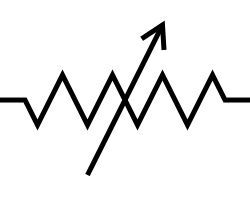
Similar to fixed resistors, there are two resistor symbols for variable types. The resistor symbol includes a line crossing zig-zag lines or an empty box.
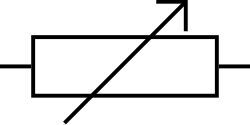
5. Potentiometer: A potentiometer, commonly known as a pot, is a three-terminal variable resistor. Two terminals of a potentiometer are connected to a resistive element, and the third is connected to a sliding contact. A potentiometer doesn’t change the original potential difference, functioning as an ideal voltmeter. In certain applications, potentiometers can measure unknown EMF. A potentiometer works as a voltage divider in various applications, including light dimmers and volume control.
6. Rheostat: A rheostat is a two-terminal variable resistor with one adjustable and another movable contact. The construction is similar to a potentiometer. The function of a rheostat is to vary resistance for current control in a circuit. The operating principle is based on Ohm’s law, which states that increasing resistance decreases the current and vice versa. A rheostat varies resistance in series with a load in control applications.
Nonlinear resistors
Not all resistors follow Ohm’s law. Technically, in a general sense, current should always decrease when resistance increases. The current should always increase when the resistance value decreases. Both are opposite of each other.
Practically, the change is not constant. Current will always decrease when resistance increases, but not in accordance with Ohm’s law. The slope is differential. Semiconductor devices don’t follow Ohm’s law. Based on this phenomenon, there are various special resistor types.
7. Thermistor: A thermistor is a type of semiconductor resistor where the value of resistance varies with respect to changes in temperature. Negative-temperature coefficient (NTC) thermistors, where resistance decreases with increasing temperature. Less resistance at higher temperatures. NTC thermistors are used as low-temperature thermometers, digital thermostats, inrush current limiters, and compensator networks.
Positive-temperature coefficient (PTC) thermistors, where resistance increases with increasing temperature. Higher resistance at higher temperatures. Another type of PTC thermistor, known as a silistor, is a silicon thermistor following the semiconductor curve. Resistance increases with temperature rise. Applications of PTC include protective circuits, heaters, and current-limiting applications.
8. Light dependent resistor: If you’re wondering what are light dependent resistors? Light dependent resistor (LDR), also known as a photoresistor, is a popular component used in automatic lighting, light sensing, camera control, alarm systems, and audio compression. The value of resistance of an LDR depends upon the intensity of light to which they are subjected.
An LDR decreases resistance with an increase in the light intensity. Ideally, an LDR should exhibit infinite resistance in the dark and zero resistance in the presence of intense light. The real number is a few mega Ohms in dark and small values of resistance in Ohms. The sensitivity of such resistors varies with the wavelength of light.
9. Varistor: A varistor is a voltage-dependent resistor that functions as a surge protection component. The resistance of a VDR varies with the applied voltage, but not strictly with Ohm’s law. The curve rather resembles diode clamping behavior. It switches between a high-resistance stage under normal voltage and a low-resistance stage under high voltage. Metal oxide varistor (MOV), made from zinc oxide, clamps voltage spikes.
10. Neutral earthing resistor: A neutral earthing resistor (NER) or neutral grounding resistor (NGR) with a rating of 8 kA is used to limit fault currents. A neutral earthing resistor, connected to the ground, protects Y-generators and transformers in AC distribution systems. In practice, a neutral earthing resistor absorbs a large amount of faulty current and dissipates energy within safe limits.
11. Fusible resistor: A fusible resistor combines the functionalities of a resistor and a fuse. Unlike fuses, fusible resistors are made from nichrome. Fusible resistors perform their normal operation of current control in the circuit, but during faulty conditions, they open the circuit like a fuse. Fusible resistors offer cost benefits in power supplies, consumer electronics, portables, and audio engineering.
References
https://www.agsdevices.com/types-of-resistors/#Fixed_Resistors_Types_and_Applications
https://eepower.com/resistor-guide/resistor-types/potentiometer/
https://ampcontrolgroup.com/resource/white-paper-what-neutral-earthing-resistor
https://www.doeeet.com/content/eee-components/passive-components/fusible-resistors-vs-fuses-differences/
(ID:50828300)
:quality(80)/p7i.vogel.de/wcms/9e/b0/9eb01567f828f28e7922897edc690be2/0130454119v2.jpeg "Voltage drop is a result of current flowing through a resistor. (Source: © Viktor - stock.adobe.com)")
:quality(80)/p7i.vogel.de/wcms/bf/a2/bfa277a5c1330e67e3ba50d9da823970/0127853966v2.jpeg "Historically, capacitors were named as condensers. But the condenser was another device, not even similar to the capacitor. In the 20th century, the term \"capacitor\" replaced the term \"condenser.\" The industry took a considerable time to accept the new name. (Source: © Kuzmick - stock.adobe.com)")