


:quality(80)/p7i.vogel.de/wcms/10/fc/10fcb98e44d61826e641bc8d3f20f616/0133193677v2.jpeg "The new AEVA and AEVB Series aluminum electrolytic capacitors are engineered for harsh industrial environments, delivering high-CV, long-lifetime performance in compact, surface-mount packages that reliably withstand up to 30g acceleration and operating temperatures extending from -55° to +125°C. (Source: Kyocera)")
:quality(80)/p7i.vogel.de/wcms/f7/42/f74208db9f5f87dca384b38b71c4782e/0133196365v2.jpeg "YAGEO’s EC Flat‑Series temperature sensors combine fast, accurate measurement with resistance to vibration, shock, moisture and dust for demanding automotive and industrial applications. (Source: Yageo)")
:quality(80)/p7i.vogel.de/wcms/b2/82/b28212428745dd8a4634ad4f4912012f/0132902689v2.jpeg "New 15 V, 25 V and 40 V eGaN FETs deliver ultra-low on-resistance, high current capability, and exceptional radiation immunity for high-density space power conversion (Source: EPC Space)")
:quality(80)/p7i.vogel.de/wcms/7b/4f/7b4f433302c490cac22eee9c12499e65/0132780211v2.jpeg "Littelfuse introduces the TPSMD‑FL series of high‑power surface‑mount TVS diodes, designed to simplify ISO 7637 load‑dump protection and safeguard automotive electronics against severe voltage transients. (Source: Littlefuse)")
:quality(80)/p7i.vogel.de/wcms/78/38/783841efab284c1b4453777e7ebea26d/0133190419v2.jpeg "Diodes has completed its acquisition of Elevate Semiconductor, expanding its analog and mixed-signal portfolio and strengthening its presence in the high-growth automated test equipment market. (Source: © peopleimages.com - stock.adobe.com)")
:quality(80)/p7i.vogel.de/wcms/1f/79/1f79d69530465de26a832c742fc60319/0133117717v2.jpeg "With 30,000 sqm of exhibition space, 20,157 trade visitors, 271 exhibitors, and 131 expert presentations as part of the conference program, the event sent a strong message about the industry's innovative strength and dynamism. (Source: Mesago Messe Frankfurt GmbH)")
:quality(80)/p7i.vogel.de/wcms/43/4d/434db2291567e847e54332004942a225/0132958267v2.jpeg "GlobalWafers has joined the SEMI Taiwan Materials Alliance, with CEO Doris Hsu serving as co‑chair, to advance critical materials technologies, accelerate collaborative innovation and strengthen global semiconductor supply chain resilience. (Source: © jiwon - stock.adobe.com)")
:quality(80)/p7i.vogel.de/wcms/6f/72/6f72f93d1e4c5a248a97dd3b8f32a336/0132997898v2.jpeg "Infineon plans to acquire C2i Semiconductors to combine software‑defined multiphase control and smart power stages with its broad power‑semiconductor portfolio for intelligent, scalable AI data‑center power delivery. (Source: © Grispb - stock.adobe.com)")
:quality(80)/p7i.vogel.de/wcms/87/97/879728679e7010f81e53a86923cde74c/0133218625v2.jpeg "Conceptual illustration of polar wurtzite niobium aluminum nitride (NbAlN), a transition-metal-containing nitride semiconductor that preserves the crystal structure and polarity of GaN. (Source: Associate Professor Atsushi Kobayashi from Tokyo University of Science, Japan)")
:quality(80)/p7i.vogel.de/wcms/ac/31/ac31c9478d80894d725d02883ae7ed5d/0133176534v2.jpeg "Average models allow power designers to simulate DC‑DC converters and three‑phase PFC circuits quickly, analyse small‑signal behaviour and evaluate loop stability without modelling every switching event. (Source: © AI - stock.adobe.com)")
:quality(80)/p7i.vogel.de/wcms/96/80/9680b468d7f682c8b6c15b07300afbb0/0133177854v2.jpeg "Grid-forming inverters are also known as grid-forming resources and grid-forming IBR. This article explains grid-forming inverters in detail. (Bild: © only_kim - stock.adobe.com)")
:quality(80)/p7i.vogel.de/wcms/57/c6/57c6fa81922a9849a917bdfed82eddf7/0133052494v2.jpeg "Rising demand for high-end materials shifts production toward higher-margin products, reducing output of standard loss materials. (Source: NCAB)")
:quality(80)/p7i.vogel.de/wcms/7b/76/7b76005554b556df2a7a3794bdf69d44/0132365246v2.jpeg "Hioki’s ST5680A DC Hipot Tester combines CE/UKCA/CSA compliance, an integrated capacitance‑based contact check and time‑series waveform recording (voltage, leakage current, insulation resistance) to standardize hipot and insulation testing across EV cell, module and pack production lines. (Source: Hioki)")
:quality(80)/p7i.vogel.de/wcms/af/7f/af7f7b0fb7f29219fc991b1130f65477/0132241333v2.jpeg "Comprehensive laboratory testing regimens—combining thermal cycling, high‑current stress, EMC, and accelerated lifetime tests—are essential to validate advanced power designs and ensure reliability in real‑world applications. (Source: PRBX)")
:quality(80)/p7i.vogel.de/wcms/16/3d/163df69363f8125315a9826e13ea4b05/0131927425v2.jpeg "Solution will maximize data center and AI factory profitability while delivering engineering-grade insights to design and operations for more efficient, sustainable, and resilient infrastructure. (Source: Cadence)")
:quality(80)/p7i.vogel.de/wcms/85/b7/85b7e90733a2bd8f21515d8f7137f2fc/0131917677v2.jpeg "Renesas acquires Pictorus to integrate its embedded application software platform with Renesas’ MCU and MPU portfolio, helping developers shorten time‑to‑market and simplify system integration. (Source: © lucadp - stock.adobe.com)")
BASIC KNOWLEDGE - POWER CONVERSION How to convert AC to DC?
Related Vendors
:fill(fff,0)/p7i.vogel.de/companies/63/c7/63c7da97be945/diotec.png "diotec (Diotec Semiconductor AG)")
:fill(fff,0)/p7i.vogel.de/companies/5f/71/5f71d5f92a5f6/2000px-rogers-corporation-logo-svg.png "2000px-Rogers_Corporation_Logo.svg.png (rogers germany)")
:fill(fff,0)/p7i.vogel.de/companies/68/2c/682c3e2e9a195/logotype-rvb.jpeg "logotype-rvb (MERSEN France)")
This article explains the essentials of AC to DC conversion, from understanding AC and DC currents to the key steps involved and real-world applications for powering electronics.
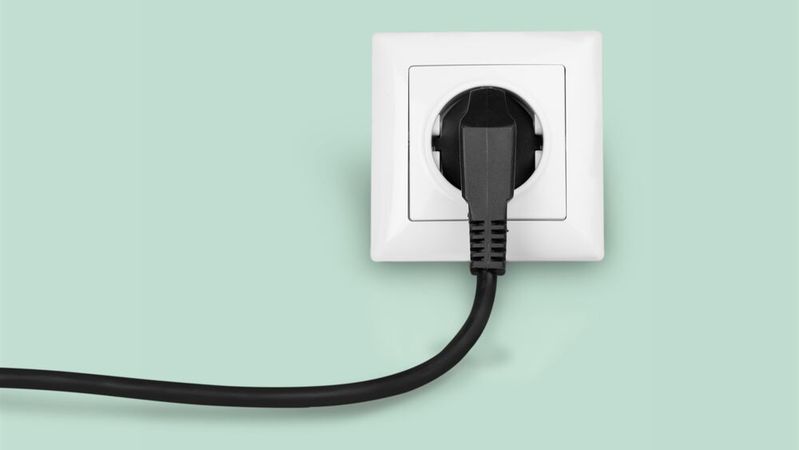
Alternating Current (AC) and Direct Current (DC) are two fundamental types of electrical current flow. AC, commonly supplied to homes and businesses, periodically changes direction, typically in a sinusoidal wave pattern. DC, on the other hand, flows steadily in a single direction and is used in most electronic devices and batteries.
Converting AC to DC is essential because many electronic devices, appliances, and vehicles require DC power to operate. While AC is efficient for long-distance power transmission and is readily available from wall outlets, most modern electronics use integrated circuits and other components that function on DC power.
Understanding AC vs DC currents
It’s important to truly understand the differences between AC and DC currents before considering conversion.
Alternating Current, as we’ve already touched on, periodically reverses direction, with its magnitude changing continuously over time. Key features of AC include its cyclical fluctuation between positive and negative values, a standard frequency (usually 50 or 60 Hz, depending on the country), and a sinusoidal waveform that creates a smooth, oscillating pattern.
One of AC's major advantages is that its voltage can be easily transformed to higher or lower levels using transformers, making it highly efficient for long-distance power transmission. As a result, AC is the primary form of electricity used in homes and businesses worldwide.
In contrast, Direct Current flows in a single, constant direction, with a steady voltage that does not fluctuate over time. DC is commonly used in electronic devices and batteries, as it provides stable power necessary for their operation. Unlike AC, DC cannot be easily transmitted over long distances but is ideal for low-voltage applications. Common sources of DC include batteries, solar cells, and fuel cells.
Why is AC to DC conversion necessary?
Converting AC to DC is essential in many everyday applications:
- Electronic devices like smartphones, laptops, and TVs all run on DC power, but household outlets provide AC, so power adapters and chargers convert AC to DC.
- Industrial equipment often requires DC for precise control, and renewable energy systems like solar panels generate DC that must sometimes be converted to AC for grid use.
- Battery charging and LED lighting also require DC, making AC to DC conversion critical. The conversion process involves several stages: transforming the voltage, rectifying AC to pulsating DC with diodes, filtering to smooth the DC, and regulating to maintain a stable output voltage.
:quality(80)/p7i.vogel.de/wcms/f4/ae/f4ae74243cba68677697623180e5fb70/0117195607.jpeg "Power converters are essential for integrating renewable energy sources into existing power systems. This article highlights the importance and applications of power converters and explains the different types of power converters. (Source: BillionPhotos.com - stock.adobe.com)")
BASIC KNOWLEDGE
An introduction to power converters
The basics of AC to DC conversion
How to convert AC to DC can be explained on the basis of four key steps:
- 1. Voltage transformation: The first step in AC to DC conversion is adjusting the AC voltage to a suitable level for the desired DC output. A transformer is used to either step up or step down the voltage based on its turns ratio. This prepares the voltage for conversion, especially if the input AC voltage is much higher or lower than needed.
- 2. Rectification: Rectification converts AC into a unidirectional, pulsating DC by allowing current to flow in only one direction. Diodes are used to achieve this, with two main types of rectification: half-wave rectification, which passes only the positive half of the AC waveform, and full-wave rectification, which uses a bridge of four diodes to convert both positive and negative halves to DC.
- 3. Filtering: After rectification, the DC output still contains ripples. Filtering smooths out these fluctuations using capacitors that charge during voltage peaks and discharge during troughs, reducing the ripple and creating a steadier DC output.
- 4. Regulation: Voltage regulation keeps the DC output constant, even if there are changes in the input voltage or load. Linear regulators dissipate excess power as heat to stabilize the voltage, while switching regulators use high-frequency switching for more efficient regulation. This step is essential for powering sensitive devices that require steady voltage.
Applications of AC to DC converters
AC to DC converters play a crucial role in numerous applications across various industries. Their ability to transform alternating current into direct current is essential for powering many modern devices and systems. Some of these include:
- Power adapters: Power adapters are essential AC to DC converters in everyday electronics. Laptop chargers convert 100-240V AC to around 19V DC, while smartphone chargers reduce AC from outlets to 5V DC for USB charging. Televisions also rely on internal power supplies to convert AC mains into the DC voltages required by their components.
- Solar energy: In solar power systems, AC to DC conversion is key for efficient energy storage and grid integration. Solar inverters with battery backup convert DC from solar panels to AC for home use, then back to DC for battery storage. In DC-coupled solar systems, DC-to-DC converters optimize voltage for battery charging directly from the panels, reducing energy loss and improving storage efficiency.
- Automotive: Modern vehicles rely on DC power for their electronic systems. Alternators, equipped with rectifiers, convert AC generated by the engine into DC for charging the battery and powering electronics. Additionally, electric vehicle (EV) chargers convert AC from the grid to DC, necessary for charging EV batteries.
Conclusion
AC to DC conversion is fundamental in modern electronics and power systems, enabling AC power from outlets to be converted to DC, which is essential for devices like smartphones, laptops, and solar batteries. Understanding the key steps — voltage transformation, rectification, filtering, and regulation — provides insight into how power adapters, renewable energy systems, and automotive electronics operate efficiently.
(ID:50236665)
:quality(80)/p7i.vogel.de/wcms/1c/b2/1cb285bfd0312e3ef03b2238a2172d3a/0126807421v2.jpeg "Power modules are essential in electric vehicles for efficient power conversion, motor control, regenerative braking, charging, and boosting, driving technological advancements in the automotive industry. (Source: © Maksym - stock.adobe.com)")
:quality(80)/p7i.vogel.de/wcms/47/e1/47e15fce96f9a6bbc8e0e26c6723fc2f/0131803702v5.jpeg "Sustainable architecture: Advanced photovoltaic solar glass (Source: © Jo-El - stock.adobe.com)")