


:quality(80)/p7i.vogel.de/wcms/10/fc/10fcb98e44d61826e641bc8d3f20f616/0133193677v2.jpeg "The new AEVA and AEVB Series aluminum electrolytic capacitors are engineered for harsh industrial environments, delivering high-CV, long-lifetime performance in compact, surface-mount packages that reliably withstand up to 30g acceleration and operating temperatures extending from -55° to +125°C. (Source: Kyocera)")
:quality(80)/p7i.vogel.de/wcms/f7/42/f74208db9f5f87dca384b38b71c4782e/0133196365v2.jpeg "YAGEO’s EC Flat‑Series temperature sensors combine fast, accurate measurement with resistance to vibration, shock, moisture and dust for demanding automotive and industrial applications. (Source: Yageo)")
:quality(80)/p7i.vogel.de/wcms/b2/82/b28212428745dd8a4634ad4f4912012f/0132902689v2.jpeg "New 15 V, 25 V and 40 V eGaN FETs deliver ultra-low on-resistance, high current capability, and exceptional radiation immunity for high-density space power conversion (Source: EPC Space)")
:quality(80)/p7i.vogel.de/wcms/7b/4f/7b4f433302c490cac22eee9c12499e65/0132780211v2.jpeg "Littelfuse introduces the TPSMD‑FL series of high‑power surface‑mount TVS diodes, designed to simplify ISO 7637 load‑dump protection and safeguard automotive electronics against severe voltage transients. (Source: Littlefuse)")
:quality(80)/p7i.vogel.de/wcms/78/38/783841efab284c1b4453777e7ebea26d/0133190419v2.jpeg "Diodes has completed its acquisition of Elevate Semiconductor, expanding its analog and mixed-signal portfolio and strengthening its presence in the high-growth automated test equipment market. (Source: © peopleimages.com - stock.adobe.com)")
:quality(80)/p7i.vogel.de/wcms/1f/79/1f79d69530465de26a832c742fc60319/0133117717v2.jpeg "With 30,000 sqm of exhibition space, 20,157 trade visitors, 271 exhibitors, and 131 expert presentations as part of the conference program, the event sent a strong message about the industry's innovative strength and dynamism. (Source: Mesago Messe Frankfurt GmbH)")
:quality(80)/p7i.vogel.de/wcms/43/4d/434db2291567e847e54332004942a225/0132958267v2.jpeg "GlobalWafers has joined the SEMI Taiwan Materials Alliance, with CEO Doris Hsu serving as co‑chair, to advance critical materials technologies, accelerate collaborative innovation and strengthen global semiconductor supply chain resilience. (Source: © jiwon - stock.adobe.com)")
:quality(80)/p7i.vogel.de/wcms/6f/72/6f72f93d1e4c5a248a97dd3b8f32a336/0132997898v2.jpeg "Infineon plans to acquire C2i Semiconductors to combine software‑defined multiphase control and smart power stages with its broad power‑semiconductor portfolio for intelligent, scalable AI data‑center power delivery. (Source: © Grispb - stock.adobe.com)")
:quality(80)/p7i.vogel.de/wcms/87/97/879728679e7010f81e53a86923cde74c/0133218625v2.jpeg "Conceptual illustration of polar wurtzite niobium aluminum nitride (NbAlN), a transition-metal-containing nitride semiconductor that preserves the crystal structure and polarity of GaN. (Source: Associate Professor Atsushi Kobayashi from Tokyo University of Science, Japan)")
:quality(80)/p7i.vogel.de/wcms/ac/31/ac31c9478d80894d725d02883ae7ed5d/0133176534v2.jpeg "Average models allow power designers to simulate DC‑DC converters and three‑phase PFC circuits quickly, analyse small‑signal behaviour and evaluate loop stability without modelling every switching event. (Source: © AI - stock.adobe.com)")
:quality(80)/p7i.vogel.de/wcms/96/80/9680b468d7f682c8b6c15b07300afbb0/0133177854v2.jpeg "Grid-forming inverters are also known as grid-forming resources and grid-forming IBR. This article explains grid-forming inverters in detail. (Bild: © only_kim - stock.adobe.com)")
:quality(80)/p7i.vogel.de/wcms/57/c6/57c6fa81922a9849a917bdfed82eddf7/0133052494v2.jpeg "Rising demand for high-end materials shifts production toward higher-margin products, reducing output of standard loss materials. (Source: NCAB)")
:quality(80)/p7i.vogel.de/wcms/7b/76/7b76005554b556df2a7a3794bdf69d44/0132365246v2.jpeg "Hioki’s ST5680A DC Hipot Tester combines CE/UKCA/CSA compliance, an integrated capacitance‑based contact check and time‑series waveform recording (voltage, leakage current, insulation resistance) to standardize hipot and insulation testing across EV cell, module and pack production lines. (Source: Hioki)")
:quality(80)/p7i.vogel.de/wcms/af/7f/af7f7b0fb7f29219fc991b1130f65477/0132241333v2.jpeg "Comprehensive laboratory testing regimens—combining thermal cycling, high‑current stress, EMC, and accelerated lifetime tests—are essential to validate advanced power designs and ensure reliability in real‑world applications. (Source: PRBX)")
:quality(80)/p7i.vogel.de/wcms/16/3d/163df69363f8125315a9826e13ea4b05/0131927425v2.jpeg "Solution will maximize data center and AI factory profitability while delivering engineering-grade insights to design and operations for more efficient, sustainable, and resilient infrastructure. (Source: Cadence)")
:quality(80)/p7i.vogel.de/wcms/85/b7/85b7e90733a2bd8f21515d8f7137f2fc/0131917677v2.jpeg "Renesas acquires Pictorus to integrate its embedded application software platform with Renesas’ MCU and MPU portfolio, helping developers shorten time‑to‑market and simplify system integration. (Source: © lucadp - stock.adobe.com)")
INTERNATIONAL WORLD WOMEN'S DAY Girl power in electronics and electrical industry
Related Vendors
:fill(fff,0)/p7i.vogel.de/companies/62/b9/62b980cddf5d6/ceramtec.png "ceramtec (www.ceramtec-group.com)")
:fill(fff,0)/p7i.vogel.de/companies/60/21/60214fbbcc5e0/index.png "index.png (Kundenwebsite)")
:fill(fff,0)/p7i.vogel.de/companies/68/08/6808a2b3b6595/het-logo.jpeg "het-logo (Heraeus Electronics)")
On the occasion of International Women's Day, we would like to present some statistics that shed light on the current status of women in the industry and present a list of support programmes that empower and encourage women on their way into the electronics and electrical industry.
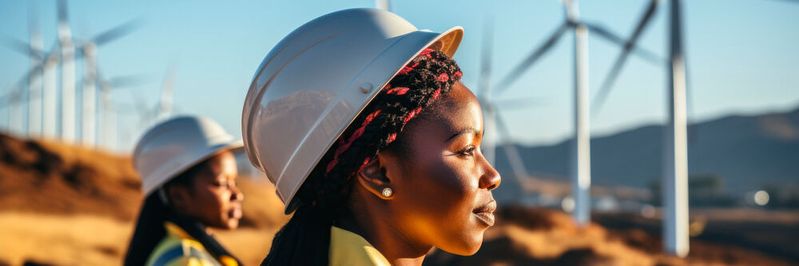
Where do women stand in the electronics and electrical industry?
The engineering role of women in electronics and electrical engineering is to design, develop, manufacture, and test tech products, processes, and systems- just like any other man. Some women work on-site with hardware and electricity to produce results while others work remotely on software. Regarding electronics and electrical engineering, high engagement from women is seen in the countries that manufacture semiconductors such as China, Japan, South Korea - and surprisingly India, which hasn’t started a semiconductor fabrication unit yet.
According to the latest engineering statistics, 600,000 students were awarded a bachelor’s degree in engineering, in 2023. Attaining a bachelor’s degree in engineering doesn’t clearly mean that students started to work. A lot of engineering graduates switch careers for personal reasons or lack of skills. Globally, 68 % of electronics engineers start working after graduation. Only 16 % or less go for postgraduate and doctoral programs. Countries like Australia, the USA, the UK, India, and China produce the most engineering graduates.
Out of the engineering workforce, women make up 13.7 %. Simply put, out of 100 engineers, only 14 are women and 86 are men. Over 50 years, the number of women in the engineering workforce increased up to 12 %. In a country-wise breakdown, the number of women engineers is about 9 % in the USA, 16 % in the UK, and 22.7 % in China. India is seen to have the highest number of women engineers about 30 % since 2018.
For women, computer and IT are among the most popular careers, followed by electronics and electrical engineering. Civil and mechanical engineering ranks as the least women's favorite field. A total number of 8.8 % of women are electronics or electrical engineers in the world. India has among the highest number of women undergraduates studying electronics engineering about 41.7 %. In conclusion, Asian women are rising in the electronics and electrical industry more than in the US and UK.
:quality(80)/p7i.vogel.de/wcms/ab/e3/abe36eb688ca3e516b777fee5eafc196/0110194277.jpeg "Women can take up multiple roles in Electrical and Electronics Engineering like power engineers, power distribution engineers, control engineers, IC layout designers, hardware developers, network planners, technicians, semiconductor developers, and many more. (Source: tonefotografia - stock.adobe.com)")
INTERNATIONAL WOMEN'S DAY
These four women have revolutionized electrical and electronics engineering
The future of women in technical fields
Electrical and electronics engineering is a rapidly growing industry. Besides engineering roles, women in the electronics and electrical industry work in marketing, consulting, analytics, accounting, and various other roles. Women take up managerial and leadership roles across various verticals in the electronics and electrical industry. Electronics engineers are annually compensated slightly higher in the USA than electrical engineers. There is a low gender pay gap in the electronics industry about USD5,000 annually. It still means that more and more women are entering the electronics and electrical fields. The industry is set to witness a growth of 3 % on average in the upcoming years.
Women in STEM careers: Increased awareness needed
The expected rise in the number of females in electronics and electrical fields highlights an important trend paving the way to an innovative future. Yet, women often feel deterred from pursuing a career in technology due to stereotypes, prejudices, and rigid structures. As a German speaking study by the Uniersity of applied sciences Upper Austria (FH OÖ) in 2023 reveals, more than half of the surveyed female students do not consider a technical-scientific education, lacking motivation and sufficient information from their environment. Although these results pertain to Austrian students, international studies report similar findings. According to Dr. Martina Gaisch, Head of Diversity Management at FH OÖ and Program Director at the IT Faculty in Hagenberg, girls often choose traditional professions because they are unfamiliar with others, hear that STEM careers are unfeminine, and receive too little positive feedback for their interest in STEM.
But Women like Hedy Lamarr or Esther Marley Conwell represent just a few success stories of how women can significantly shape and revolutionize the electronics industry in the long term. For women to follow in the footsteps of their female predecessors and assert themselves in a still male-dominated world, stronger rethinking processes are needed, which can be initiated, for example, through support programs.
It simply requires a strengthening of self-confidence and better information about the opportunities such education offers
Therefore, the next part of this article aims to highlight specific programs and initiatives that support women in science, thereby encouraging them to pursue a corresponding career path.
- IEEE Women in Engineering (WIE): One of the largest professional organizations globally, dedicated to promoting women in all engineering disciplines, including electrical and power electronics. They offer scholarships, conferences, workshops, and networking opportunities specifically for women in these fields.
- Society of Women Engineers (SWE) Scholarships: SWE provides numerous scholarships for women pursuing a degree in an engineering discipline or a related area, including electrical engineering. These scholarships are available for female students from freshman to doctoral levels.
- Palantir Women in Technology Scholarship: This scholarship targets women enrolled in technical degree programs, including electrical engineering. It provides financial support and a workshop at Palantir.
- Google Women Techmakers Scholars Program: Formerly known as the Google Anita Borg Memorial Scholarship, this program supports women aspiring to excel in the tech industry, including electrical engineering. It offers a scholarship and a retreat at Google.
- Adobe Research Women-in-Technology Scholarship: Adobe offers this scholarship to outstanding female students in technical degree programs, including electrical engineering, to honor their achievements and support their progress.
These programs not only offer financial support but also valuable resources such as mentoring, internship opportunities, and networking events specifically designed to support and encourage women in these technical fields. By providing women with the space to unfold their enthusiasm for the world of technology, we can further drive technological progress and look forward to an innovative future where women and men alike make valuable contributions.
(ID:49956643)
:quality(80)/p7i.vogel.de/wcms/51/72/51726a890dc35d74f494908b29681028/0132478976v2.jpeg "Bosch intends to start U.S. based commercial manufacturing in 2026 – just three years after acquiring the Roseville site. (Source: Bosch)")
:quality(80)/p7i.vogel.de/wcms/7b/a6/7ba619ef2fef52c0abf5f69f1514fc13/0128485335v2.jpeg "Symbolic Image: The PCIM Asia Conference in New Delhi spotlights India’s growing role in power electronics (Source: © David - stock.adobe.com)")