


:quality(80)/p7i.vogel.de/wcms/2f/f3/2ff3221bf7665de2d0acf83760bfd1fa/0130031523v2.jpeg "Wolfspeed presents a 300 mm silicon carbide technology platform designed to support advanced packaging and high-efficiency power delivery for AI data center infrastructure. (Source: Wolfspeed)")
:quality(80)/p7i.vogel.de/wcms/c3/16/c316e955a97f5d72d9678297b237b9e5/0129932858v2.jpeg "Left: the single-phase version of the SENTRON ECPD with RCM, right: a model of the future three-phase version of the SENTRON ECPD. (Source: Siemens)")
:quality(80)/p7i.vogel.de/wcms/ef/0a/ef0adb0acf793fe147cc27c21f6a7a67/0129954238v2.jpeg "Empower Semiconductor introduces embedded silicon capacitors designed to improve power delivery and stability in AI and high-performance computing processors. (symbolic image) (Source: © IF.arc - stock.adobe.com)")
:quality(80)/p7i.vogel.de/wcms/53/f9/53f9301dfc9292d02960f7996c79cc6e/0129927601v2.jpeg "Wolfspeed’s new 10 kV SiC MOSFET enables high-voltage power conversion for grid and industrial applications. (symbolic image) (Source: © CREATIVE- 3.4 - stock.adobe.com)")
:quality(80)/p7i.vogel.de/wcms/6e/cd/6ecd41d095d5111cf4ed37b714844487/0129930878v2.jpeg "PCIM Asia Shenzhen provides a platform for industry experts to present new developments in power electronics and electrification technologies. (symbolic image) (Source: © killykoon - stock.adobe.com)")
:quality(80)/p7i.vogel.de/wcms/02/c0/02c0e9722f70b1134dbf96fb59a9c73d/0129655179v2.jpeg "The PCIM Conference 2026 will take place from June 9-11, featuring discussions on power electronics trends, including GaN technology and AI applications. (symbolic image) (Source: © Elmira - stock.adobe.com)")
:quality(80)/p7i.vogel.de/wcms/cc/67/cc670ea2029cd2af5c641af70e1bf734/0129816392v4.jpeg "Fraunhofer IAF coordinates the EU SUPREME project to accelerate GaN and SiC power semiconductor innovation in Europe. (Source: Fraunhofer IAF)")
:quality(80)/p7i.vogel.de/wcms/ea/e6/eae6aee30071e67a5627027974437134/0129544613v2.jpeg "GlobalFoundries and Renesas strengthen their collaboration to support U.S.-based semiconductor production and supply chain resilience. (Source: © ronstik - stock.adobe.com)")
:quality(80)/p7i.vogel.de/wcms/b1/5e/b15ee02b0ba02db70cf61e37d66ad1d3/0129349127v2.jpeg "Vehicle-to-grid (V2G) chargers enable bidirectional energy flow, allowing electric vehicles to act as mobile energy storage systems that can both draw power from and feed power back into the grid. (Source: © medienvirus - stock.adobe.com)")
:quality(80)/p7i.vogel.de/wcms/26/d5/26d591cc340077026eac56a0e7564faf/0129949603v2.jpeg "Flexible: The solid silicone-based electrolyte is elastic, thereby compensating for the voids that form in solid-state batteries during charging and discharging. (Source: Empa)")
:quality(80)/p7i.vogel.de/wcms/4d/e0/4de02f76a37cbb3df30dd231de589c8e/0128866890v2.jpeg "Both legacy and vGaN show higher carrier mobility and band gap energies compared to other power semiconductors. (Source: © phonlamaiphoto - stock.adobe.com)")
:quality(80)/p7i.vogel.de/wcms/18/0b/180b7b63afc91e523592d8a5ce161c96/0129847487v2.jpeg "InGaAs-based photodetectors enable sensitive and fast detection in the short-wave infrared spectrum for modern sensing and communication applications. (Source: © VITALII - stock.adobe.com)")
:quality(80)/p7i.vogel.de/wcms/be/c8/bec8d43fc0ee73414274be44608b2970/0129748903v2.jpeg "The Infiniium XR804KA real-time oscilloscope delivers faster response time, improved stability, and streamlined workflows for high-speed digital and compliance testing. (Source: Keysight)")
:quality(80)/p7i.vogel.de/wcms/23/ee/23ee4a97790d6009dbfd7d9577ffa723/0129220424v2.jpeg "The R&S FPL1044 with the new RTSA option makes 40 MHz real-time frequency analysis available up to 44 GHz. (Source: Rohde & Schwarz )")
:quality(80)/p7i.vogel.de/wcms/3c/d1/3cd1cacbceb792ba63727199c61ca434/0127801860v2.jpeg "Thanks to cloud technology, users can collaborate on projects from anywhere and always have access to the latest planning data. (Source: SIEMENS)")
:quality(80)/p7i.vogel.de/wcms/5a/a0/5aa0436498af618297961fd54ab36cdf/0126290792v2.jpeg "Siemens accelerates student-led semiconductor innovation across Europe’s leading technical universities through Cre8Ventures’ Open Higher Education Program developed in collaboration with Arm and University of Southampton (Source: Siemens Digital Industries Software)")
CHIP SHORTAGE TSMC CEO predicts chip shortages through 2025
Related Vendors
:fill(fff,0)/p7i.vogel.de/companies/62/a0/62a0a0de7d56a/aic-europe-logo.jpeg "aic-europe-logo (AIC Europe)")
:fill(fff,0)/p7i.vogel.de/companies/68/00/6800eb0040fb9/cobalt-vertical-aligned-bold.png "cobalt-vertical-aligned-bold (CISSOID SA)")
:fill(fff,0)/p7i.vogel.de/companies/69/30/693022b11e5db/logo.jpeg "logo (MBS-Hodde GmbH & Co. KG)")
TSMC CEO C.C. Wei predicts the AI chip shortage will persist until 2025 or 2026, correcting previous estimates by former chairman Mark Liu who expected a resolution by 2024.
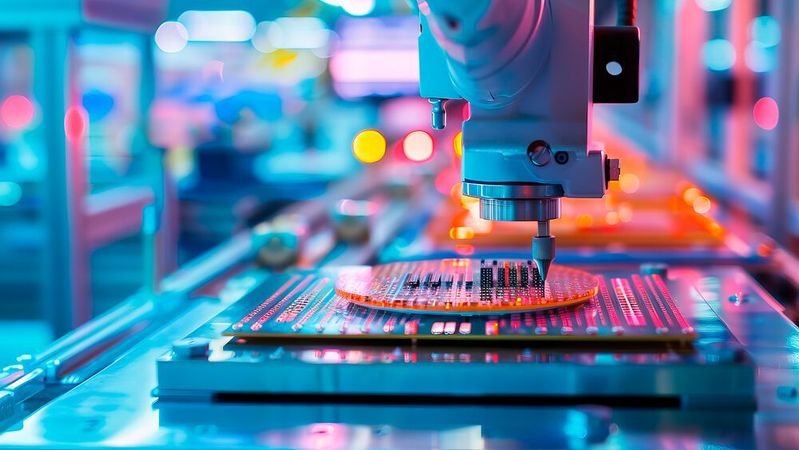
The CEO of Taiwan Semiconductor Manufacturing Co. (TSMC), the world’s largest contract chipmaker, has predicted that the AI chip shortage will continue through 2025 and possibly until 2026. In a TSMC Q2 earnings call on July 18, C. C. Wei said that he was “working on the problem” despite customer demand being so high. “I hope in 2025 or 2026 we can reach the balance,” he said.
The comments corrected previous statements made by former chairman Mark Liu in September 2023 when he predicted 2024 as the year AI chip shortages would end for the company. At that time Liu clarified that it was the packaging, not the chip itself, that created the shortage.
Wei confirmed that the bottleneck remains in the CoWoS (Chip-on-Wafer-on-Substrate) packaging capacity, which is essential for linking processors to high-bandwidth memory (HBM). "From last year to this year, we have more than doubled the CoWoS capacity," Wei said, adding that the company plans to double it again next year.
:quality(80)/p7i.vogel.de/wcms/90/1b/901be2f3de5787e00dcd5d7fafa59333/0119258051v2.jpeg "Find out more about the current chip shortage situation in this article. (Source: Mohsin - stock.adobe.com)")
CHIP SHORTAGE NEWS
The global semiconductor crisis: A review of Q2 2024
As part of the shortage solution, Wei said TSMC was working with overseas partners to increase supply and support customers. The company is currently building new plants in Arizona and Kumamoto, Japan, with funding from partner investors and government subsidies. Wei assured that these expansion plans remain unchanged despite recent comments by U.S. Republican presidential candidate Donald Trump.
In a recent interview with Bloomberg, Trump claimed that Taiwan “doesn’t give [the U.S.] anything,” and that Taiwan should “pay” the U.S. to defend it. The comments sent TSMC's share price down almost eight percent on the New York Stock Exchange.
On today's TSMC earnings call, Morgan Stanley's Charlie Chan noted that Trump "talked about... Taiwan/TSMC" taking 100 percent of the chip business from the US, quipping: "So congrats on the positive high market share." Chan added: "Concern is growing that the US continues to depend on our island/ TSMC, [for] chip production. So, our question is for shareholders, right, how TSMC is going to mitigate this potential geopolitical risk?.... And maybe a technical question ... if we are shipping a chip to US customers, do we need to pay for the US tariff?"
Wei responded to clarify that so far, TSMC has not changed any of their original expansion plans and that the Arizona fab will still be going ahead.
Power Electronics in the Energy Transition

The parameters for energy transition and climate protection solutions span education, research, industry, and society. In the new episode of "Sound On. Power On.", Frank Osterwald of the Society for Energy and Climate Protection Schleswig‐Holstein talks about the holistic guidance his organization can provide.
Listen now!
(ID:50126153)
:quality(80)/p7i.vogel.de/wcms/87/8d/878d28d85fad10c7debc92446c60146b/0123870413v2.jpeg "Despite record sales in Q1 2025 fueled by surging demand for AI and advanced packaging, the global chip industry faces persistent supply issues due to production challenges and geopolitical constraints. Find out more here. (Source: IM Imagery - stock.adobe.com)")
:quality(80)/p7i.vogel.de/wcms/7f/83/7f830072a8e4d36be9340e80e8c2fe55/0123713749v2.jpeg "TSMC's joint venture talks with Nvidia, Broadcom, Qualcomm, and AMD could be a vital lifeline for Intel's struggling foundries, reshaping the US semiconductor landscape. Find out more about this here. (Source: Ariawan - stock.adobe.com)")