


:quality(80)/p7i.vogel.de/wcms/10/fc/10fcb98e44d61826e641bc8d3f20f616/0133193677v2.jpeg "The new AEVA and AEVB Series aluminum electrolytic capacitors are engineered for harsh industrial environments, delivering high-CV, long-lifetime performance in compact, surface-mount packages that reliably withstand up to 30g acceleration and operating temperatures extending from -55° to +125°C. (Source: Kyocera)")
:quality(80)/p7i.vogel.de/wcms/f7/42/f74208db9f5f87dca384b38b71c4782e/0133196365v2.jpeg "YAGEO’s EC Flat‑Series temperature sensors combine fast, accurate measurement with resistance to vibration, shock, moisture and dust for demanding automotive and industrial applications. (Source: Yageo)")
:quality(80)/p7i.vogel.de/wcms/b2/82/b28212428745dd8a4634ad4f4912012f/0132902689v2.jpeg "New 15 V, 25 V and 40 V eGaN FETs deliver ultra-low on-resistance, high current capability, and exceptional radiation immunity for high-density space power conversion (Source: EPC Space)")
:quality(80)/p7i.vogel.de/wcms/7b/4f/7b4f433302c490cac22eee9c12499e65/0132780211v2.jpeg "Littelfuse introduces the TPSMD‑FL series of high‑power surface‑mount TVS diodes, designed to simplify ISO 7637 load‑dump protection and safeguard automotive electronics against severe voltage transients. (Source: Littlefuse)")
:quality(80)/p7i.vogel.de/wcms/78/38/783841efab284c1b4453777e7ebea26d/0133190419v2.jpeg "Diodes has completed its acquisition of Elevate Semiconductor, expanding its analog and mixed-signal portfolio and strengthening its presence in the high-growth automated test equipment market. (Source: © peopleimages.com - stock.adobe.com)")
:quality(80)/p7i.vogel.de/wcms/1f/79/1f79d69530465de26a832c742fc60319/0133117717v2.jpeg "With 30,000 sqm of exhibition space, 20,157 trade visitors, 271 exhibitors, and 131 expert presentations as part of the conference program, the event sent a strong message about the industry's innovative strength and dynamism. (Source: Mesago Messe Frankfurt GmbH)")
:quality(80)/p7i.vogel.de/wcms/43/4d/434db2291567e847e54332004942a225/0132958267v2.jpeg "GlobalWafers has joined the SEMI Taiwan Materials Alliance, with CEO Doris Hsu serving as co‑chair, to advance critical materials technologies, accelerate collaborative innovation and strengthen global semiconductor supply chain resilience. (Source: © jiwon - stock.adobe.com)")
:quality(80)/p7i.vogel.de/wcms/6f/72/6f72f93d1e4c5a248a97dd3b8f32a336/0132997898v2.jpeg "Infineon plans to acquire C2i Semiconductors to combine software‑defined multiphase control and smart power stages with its broad power‑semiconductor portfolio for intelligent, scalable AI data‑center power delivery. (Source: © Grispb - stock.adobe.com)")
:quality(80)/p7i.vogel.de/wcms/87/97/879728679e7010f81e53a86923cde74c/0133218625v2.jpeg "Conceptual illustration of polar wurtzite niobium aluminum nitride (NbAlN), a transition-metal-containing nitride semiconductor that preserves the crystal structure and polarity of GaN. (Source: Associate Professor Atsushi Kobayashi from Tokyo University of Science, Japan)")
:quality(80)/p7i.vogel.de/wcms/ac/31/ac31c9478d80894d725d02883ae7ed5d/0133176534v2.jpeg "Average models allow power designers to simulate DC‑DC converters and three‑phase PFC circuits quickly, analyse small‑signal behaviour and evaluate loop stability without modelling every switching event. (Source: © AI - stock.adobe.com)")
:quality(80)/p7i.vogel.de/wcms/96/80/9680b468d7f682c8b6c15b07300afbb0/0133177854v2.jpeg "Grid-forming inverters are also known as grid-forming resources and grid-forming IBR. This article explains grid-forming inverters in detail. (Bild: © only_kim - stock.adobe.com)")
:quality(80)/p7i.vogel.de/wcms/57/c6/57c6fa81922a9849a917bdfed82eddf7/0133052494v2.jpeg "Rising demand for high-end materials shifts production toward higher-margin products, reducing output of standard loss materials. (Source: NCAB)")
:quality(80)/p7i.vogel.de/wcms/7b/76/7b76005554b556df2a7a3794bdf69d44/0132365246v2.jpeg "Hioki’s ST5680A DC Hipot Tester combines CE/UKCA/CSA compliance, an integrated capacitance‑based contact check and time‑series waveform recording (voltage, leakage current, insulation resistance) to standardize hipot and insulation testing across EV cell, module and pack production lines. (Source: Hioki)")
:quality(80)/p7i.vogel.de/wcms/af/7f/af7f7b0fb7f29219fc991b1130f65477/0132241333v2.jpeg "Comprehensive laboratory testing regimens—combining thermal cycling, high‑current stress, EMC, and accelerated lifetime tests—are essential to validate advanced power designs and ensure reliability in real‑world applications. (Source: PRBX)")
:quality(80)/p7i.vogel.de/wcms/16/3d/163df69363f8125315a9826e13ea4b05/0131927425v2.jpeg "Solution will maximize data center and AI factory profitability while delivering engineering-grade insights to design and operations for more efficient, sustainable, and resilient infrastructure. (Source: Cadence)")
:quality(80)/p7i.vogel.de/wcms/85/b7/85b7e90733a2bd8f21515d8f7137f2fc/0131917677v2.jpeg "Renesas acquires Pictorus to integrate its embedded application software platform with Renesas’ MCU and MPU portfolio, helping developers shorten time‑to‑market and simplify system integration. (Source: © lucadp - stock.adobe.com)")
CHIP SHORTAGE NEWS The global semiconductor crisis: A review of Q2 2024
Related Vendors
:fill(fff,0)/p7i.vogel.de/companies/6a/20/6a202a4f89a62/mrs-white-on-blue-bg.png "mrs-white-on-blue-bg ()")
:fill(fff,0)/p7i.vogel.de/companies/60/7e/607ec89d5d9b5/white-frame.jpg "white frame.jpg (www.rohm.com)")
:fill(fff,0)/p7i.vogel.de/companies/68/08/6808a2b3b6595/het-logo.jpeg "het-logo (Heraeus Electronics)")
The global chip shortage has been an urgent matter for some time now. But what has happend since than and what is the current situation? In this article you will find out what's been going on in the second quarter of 2024. Let’s take a look at some of the main developments.
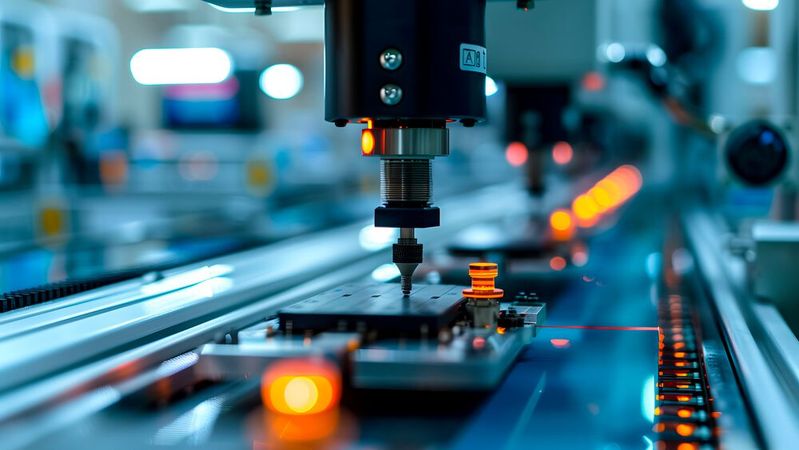
Semiconductors are the building blocks of modern technology, forming the foundations for everything from simple electronics to electric vehicles. When the pandemic hit in 2020, however, it sent the entire industry into a flurry as supply chains were suddenly disrupted and consumer demands shifted.
This led to what was a very turbulent few years between 2020 and 2022 where supply constraints consistently hit automotive and electronics manufacturers, causing significant production bottlenecks and cutbacks. This was especially problematic for the automotive sector where manufacturers worldwide struggled to meet demand for new vehicles due to a lack of chips for safety-critical systems.
In the last year, however, things have begun to stabilise. There was a market rebound in late 2023 and although the outlook is still challenging, positive signs are pointing towards the end of the shortage. In many ways, it’s already over.
Global semiconductor sales increase
In early June, the Semiconductor Industry Association announced that global semiconductor industry sales were $46.4 billion during April 2024, representing an increase of 15.8 % compared to the April 2023 total of $40.1 billion and 1.1 % more than the March 2024 total of $45.9 billion. Additionally, a newly released WSTS industry forecast projects annual global sales increases of 16.0 % in 2024 and 12.5 % in 2025.
:quality(80)/p7i.vogel.de/wcms/5b/73/5b73a221c7bdb5440df288680735cb61/0117460816.jpeg "Read more about the current status of the global chip shortage in this recap. (Source: GrafiThink - stock.adobe.com)")
CHIP SHORTAGE NEWS
The Global Semiconductor Crisis: A Review of Q1 2024
These strong sales figures have been made possible by significant improvements in production, echoing the commitments made to increase semiconductor production by both governments and the private sector. On the government side, a wave of legislative activity is strengthening domestic chip production capabilities in economies including the U.S., European Union, and Japan. Landmark bills like the European Chips Act and the U.S. CHIPS Act share common goals to increase chip production, invest in research and development to propel innovation and enable collaboration between public and private sectors.
It's important to keep in mind that these efforts are taking place against a backdrop of rising geopolitical tensions. For example, the ongoing effort by the U.S. to stifle China’s domestic chipmaking could pose potential supply chain risks. Meanwhile, the ongoing war in Ukraine and a potential war in Taiwan could limit access to critical materials. Despite these difficulties, all signs point towards a diversified future where domestic industries bolster chip manufacturing. This will go a long way in preventing any future shortages.
Private investment and industry adaptations
In terms of private sector efforts to ease the shortage, there has been a wave of record-breaking investments and innovations that are pointing towards a brighter future. Samsung recently announced a US $230 billion investment into chip production over the next decade, with a significant portion of that dedicated to expanding capacity.
It’s important to keep in mind that while investments like this are great news, chip production is a capital-intensive effort that requires a highly skilled workforce. It can therefore take years for a meaningful increase in production to materialize following capital investment. So, while the tide is turning, it’s a slow process. This is reflected by lead times - the period between a chip being ordered and delivered - which are falling in some sectors, illustrating that foundries are catching up with demand.
Additionally, many industries are actively adapting to the shortage. In the automotive industry, for example, the concept of chip redesign is being explored. Manufacturers are also finding ways to keep assembly lines running by using more readily available components. AI is also adapting, with cloud-based processing enabling chip limitations to be bypassed.
Global semiconductor fab capacity growing
Global semiconductor fab capacity is also growing, indicating that these collective efforts are paying off. Capacity is projected to expand by 6 % in 2024 and 7 % in 2025, reaching an unprecedented 33.7 million wafers per month (8-inch equivalent), driven by the growing demand for chips, particularly for AI applications.
Leading-edge capacity for advanced nodes (5nm and below) is set to grow by 13 % in 2024, with major players like Intel, Samsung, and TSMC beginning production of 2nm Gate-All-Around (GAA) chips, aiming for a 17 % increase in 2025. This surge is attributed to the proliferation of AI, which necessitates high-performance chips for data center training, inference, and other leading-edge devices, creating a cycle where AI drives semiconductor content growth, spurring further industry investment.
Regionally, Chinese chipmakers are leading with a projected 14 % capacity increase to 10.1 million wpm by 2025, fuelled by substantial investments from major foundry suppliers despite potential oversupply risks. Other key regions like Taiwan and South Korea are expected to grow at more moderate rates of 4 % and 7 %, respectively. At the same time, the Americas, Japan, Europe & Mideast, and Southeast Asia are forecasted to see modest increases in their semiconductor capacities.
Segment-wise, the foundry sector is anticipated to grow by 11 % in 2024 and 10 % in 2025, bolstered by Intel and Chinese expansion, while the memory sector, particularly DRAM, is set for significant growth due to AI-driven demand for higher bandwidth memory, contrasting with the slower recovery in the 3D NAND market.
:quality(80):fill(efefef,0)/p7i.vogel.de/wcms/5f/fe/5ffedb2e0ffa6/listing.jpg "listing")
Is the shortage over?
While the semiconductor shortage is easing, it’s not entirely resolved. For the automotive industry, the shortage has largely subsided, with production losses due to chip shortages decreasing significantly in 2023. Automakers have adapted to the constrained supply, leading to a more stable production environment, although some uncertainties and risks of future disruptions remain.
The situation is also complex in other areas. High-demand industries like advanced computing and consumer electronics continue to face challenges, particularly with the supply of leading-edge and specialized chips. While production capacity is expanding globally, with new manufacturing facilities being established, the full resolution of the chip shortage depends on addressing various structural issues, including geopolitical tensions and supply chain vulnerabilities. So, while significant progress has been made, the chip shortage is not entirely over.
(ID:50082526)
:quality(80)/p7i.vogel.de/wcms/a7/a7/a7a7ed73783669efc310d1fc51e1bb34/0132155496v2.jpeg "Fragile semiconductor supply chains — from concentrated fabs and toolmakers to constrained raw‑material suppliers — risk delaying renewable deployments and slowing the energy transition unless resilience measures are adopted. (Source: © Fotografos - stock.adobe.com)")
:quality(80)/p7i.vogel.de/wcms/37/e5/37e51381f4f8c8b5fa547e66fa63a8c2/0126972536v2.jpeg "Almost five years since supply chain chaos brought the semiconductor industry to its knees, most sectors have finally normalized. But AI supply remains constrained. (Source: © Dara - stock.adobe.com)")