


:quality(80)/p7i.vogel.de/wcms/55/5b/555bb8759d60243792dd736b86585f29/0130909253v2.jpeg "New DFN‑packaged ultrafast diodes with wettable flanks enable automated inspection and reliable high‑current performance in DC/DC converters and traction inverters. (symbolic image) (Source: © Natalia - stock.adobe.com)")
:quality(80)/p7i.vogel.de/wcms/db/75/db7507346cd4842ca5eb8838f45861ce/0130908924v2.jpeg "KYOCERA AVX launches the FFLK traction‑grade DC filtering capacitors for demanding EV and industrial power applications. (Source: KYOCERA AVX)")
:quality(80)/p7i.vogel.de/wcms/44/0f/440f92984dc6c58eec920824ef55b54c/0130740285v2.jpeg "TDK’s new high‑voltage common‑mode choke enables compact 1250 V DC converter designs with effective EMI suppression. (Source: TDK)")
:quality(80)/p7i.vogel.de/wcms/be/dc/bedc263ae2b17f59ef71bfc822b95d27/0130740269v2.jpeg "RECOM expands its portfolio with discrete isolated DC/DC building blocks — SMD transformers, driver ICs and rectifiers for custom power designs. (Source: RECOM)")
:quality(80)/p7i.vogel.de/wcms/ea/60/ea600a89db0dc673ba3b6eb1ca56093e/0130736129v2.jpeg "Infineon is expanding its semiconductor portfolio to support next-generation automotive power and control systems. (Source: Infineon)")
:quality(80)/p7i.vogel.de/wcms/8b/ae/8bae28ce8ab5e6820bc036ce49939261/0130655531v2.jpeg "Higher material prices impact global logistics. (Source: © MAGNIFIER - stock.adobe.com)")
:quality(80)/p7i.vogel.de/wcms/de/9b/de9beb17c1467fdb18301a114f31bf8e/0130651681v2.jpeg "PCIM Expo & Conference 2026 brings together 650+ exhibitors and 500+ presentations on power electronics, SiC/GaN devices, and energy management. (Source: Mesago Messe Frankfurt GmbH / Arturo Rivas Gonzalez)")
:quality(80)/p7i.vogel.de/wcms/47/47/474773560a05ff45872e5942c2702e11/0130617850v2.jpeg "Global renewable energy capacity grew by nearly 700 GW in 2025, highlighting the continued momentum of the energy transition. (Source: Irena)")
:quality(80)/p7i.vogel.de/wcms/07/89/0789a27b7dcc43dbdafd17f2b601e3a7/0130908474v2.jpeg "Empa’s H2 Districts project demonstrated hydrogen fuel cells supplying electricity and medium‑temperature heat to a district network, achieving >90% total efficiency. (Source: © dhita - stock.adobe.com)")
:quality(80)/p7i.vogel.de/wcms/9e/b0/9eb01567f828f28e7922897edc690be2/0130454119v2.jpeg "Voltage drop is a result of current flowing through a resistor. (Source: © Viktor - stock.adobe.com)")
:quality(80)/p7i.vogel.de/wcms/db/bb/dbbb1b9c429bd4fc375a7937bb083ba1/0130804041v2.jpeg "Rapid AI growth is driving demand for hyperscale data centres, increasing energy and water use and raising sustainability concerns. (Source: © Joachim - stock.adobe.com)")
:quality(80)/p7i.vogel.de/wcms/a3/30/a330337e234ac2000bb8829ce34ce001/0130871678v2.jpeg "Green transition in power electronics: Ecodesign and modular systems close the material loop. (Source: © DigiArtStudio - stock.adobe.com)")
:quality(80)/p7i.vogel.de/wcms/34/4a/344a3dc5a19429cf6726b7f8f7e2ee32/0130109719v2.jpeg "Hioki’s new measurement solutions enable precise analysis of power electronics systems and energy efficiency. (Source: Hioki)")
:quality(80)/p7i.vogel.de/wcms/be/c8/bec8d43fc0ee73414274be44608b2970/0129748903v2.jpeg "The Infiniium XR804KA real-time oscilloscope delivers faster response time, improved stability, and streamlined workflows for high-speed digital and compliance testing. (Source: Keysight)")
:quality(80)/p7i.vogel.de/wcms/23/ee/23ee4a97790d6009dbfd7d9577ffa723/0129220424v2.jpeg "The R&S FPL1044 with the new RTSA option makes 40 MHz real-time frequency analysis available up to 44 GHz. (Source: Rohde & Schwarz )")
:quality(80)/p7i.vogel.de/wcms/3c/d1/3cd1cacbceb792ba63727199c61ca434/0127801860v2.jpeg "Thanks to cloud technology, users can collaborate on projects from anywhere and always have access to the latest planning data. (Source: SIEMENS)")
MOORE'S LAW These are the 5 smallest power devices
Related Vendors
:fill(fff,0)/p7i.vogel.de/companies/63/c7/63c7da97be945/diotec.png "diotec (Diotec Semiconductor AG)")
:fill(fff,0)/p7i.vogel.de/companies/66/8b/668becd1c07eb/dowa-logo-word--1-.jpeg "dowa-logo-word--1- (DOWA)")
:fill(fff,0)/p7i.vogel.de/companies/68/08/6808a2b3b6595/het-logo.jpeg "het-logo (Heraeus Electronics)")
The article lists the five smallest power devices. But does the miniaturization of power devices depend upon Moore’s law? Would the industry integrate trillions of transistors to perform simple operations like power conversion and control? The article also discusses Moore’s law’s impact on power devices.
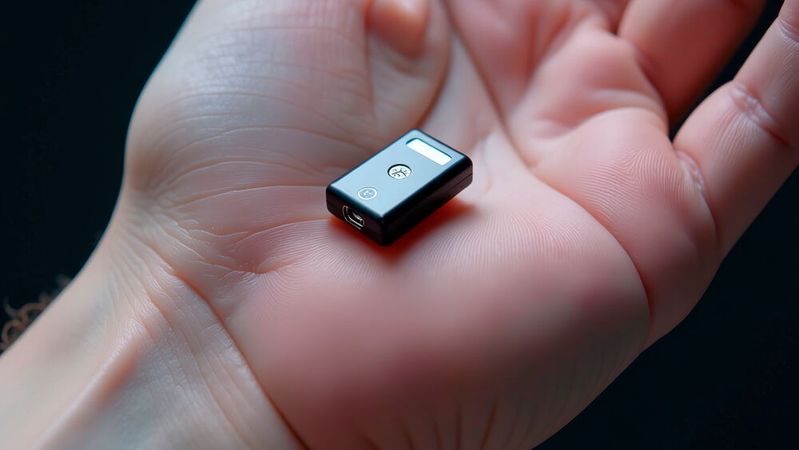
Moore’s law accelerates the development of smaller chips, pushing the need for stable power delivery. The ever-increasing demand amidst miniaturization trends requires compact and efficient power electronic devices. The section lists the five smallest power devices.
Inductor smaller than nails
Samsung Electro-Mechanics, a subsidiary of the renowned South Korean electronics manufacturer Samsung, developed the world's smallest power inductor. The size of a single power inductor is much smaller than a human nail. In addition, multiple power inductors kept together were still smaller than the nail.
The power inductor width, length, and thickness are 0.8 mm, 0.4 mm, and 0.65 mm. Nano-grade ultra-microscopic and light-based semiconductor fabrication technology optimized the coil placement of magnetic material to reduce the size of the power inductor by 50 %. Applications include smartphones, wearables, and EVs.
Mini MOSFETs
In 2022, Nexperia, a semiconductor manufacturing company based in the Netherlands, introduced one of the smallest MOSFETs. The 20-30 V MOSFETs are suitable for small-sized power electronic applications. Surprisingly, this MOSFET package occupies just 0.63 x 0.33 mm— 13 % lower space than industry-grade discrete MOSFETs.
Despite their smaller size, these MOSFETs exhibit excellent thermal conductivity and 74 % reduced RDS (on) or on-state resistance between drain-to-source terminals. Applications include power electronics, high-speed motor drivers, load switches, portables, wearables, hearing aids, advanced AI and ML devices, and many more.
:quality(80):fill(efefef,0)/p7i.vogel.de/wcms/5f/fe/5ffedb2e0ffa6/listing.jpg "listing")
Pearl-sized GaN FET
EPC, a California-based semiconductor fabrication company focusing on GaN (Gallium Nitride) power management solutions, launched the world’s smallest 100 Volts 1 milliohm GaN FET. The GaN FET is smaller than the size of a pearl earring, about 5x smaller than similar 100V silicon MOSFETs.
GaN FET offers ultra-low on-state resistance and carbon footprint, leading to higher power conversion efficiency, sustainability, and reduced energy consumption. The GaN FET is a commercial-grade solution developed for applications such as high-frequency DC-DC conversion in data centers, drone motor drivers, and solar MPPT chargers.
Tiny guardians
TVS diodes (Transient Voltage Suppressors) suppress high voltage spikes. These devices are protective components that suppress all voltages above the breakdown point or the specified clamping point. In late 2023, Littlefuse released a series of high-power TVS diodes that offer kilo-ampere surge current ratings.
Generally, TVS diodes are sold in larger packages. The series is compatible with the automated PCB assembly process. In addition to protection, TVS diodes can enable PCB designers to save up to 60-80 % of the board space, making the final component smaller.
Keychain charger
In late 2024, a Las Vegas company, Mello Power, Inc., launched its only product marketed as the “fashionable” everyday essential. The 20W charger weighs about 28 grams, equivalent to three tablespoons of sugar— less than an ounce. The smallest charger grabbed all the attention of the people on the internet through its appealing visuals.
The smallest charger incorporates a GaN semiconductor, instead of SiC (Silicon Carbide) power semiconducting material. GaN enables the charger to offer fast charging solutions at lower heat dissipation to smartphones, hearing aids, bluetooth speakers, power banks, and USB-C-powered portable gadgets.
Moore’s law in power electronics
Moore’s law emphasizes the smaller size of logic and memory chips. The transistor count keeps on doubling every two years. However, the trend is not seen across power electronics. Power chips do not contain billions or trillions of transistors. In the near future, power chips are unlikely to reach the same figure reached by memory and logic chips.
:quality(80)/p7i.vogel.de/wcms/7e/1a/7e1aef7dbda36fb926d0013566c1c3ef/0121954634v4.jpeg "Moore's Law, the driver of technological advancement through miniaturization, is nearing its end. As transistor sizes approach atomic limits, new technologies like 3D chip stacking, quantum computing, and neuromorphic computing are being explored to sustain progress. (Source: DALL-E)")
SEMICONDUCTORS
Moore's Law: You can't go smaller than an atom
Power transistor count
Power chip manufacturers have not listed the official figure for transistor count. Power-integrated circuits contain several thousand transistors, much less than logic and memory chips. These power ICs are simple regulators and converters.
Some advanced drivers, power digital controllers, ASICs (Application Specific Integrated Circuits), and PMICs (Power Management Integrated Circuits) may reach up to 2 million transistors per chip.
Why is Moore's law not important for the power industry?
Miniaturization does not define the efficiency of the power chip. Usually, power chips are heavier and larger. Power devices are designed to handle high voltages and currents. The functionality of these power chips does not require the dense transistor logic of processors— power chips do not need to perform complex computing operations and store large amounts of data.
The primary function of power chips is to perform effective power conversion, power control, voltage regulation, switching, power supply distribution, power saving, heat dissipation, and multiple power-related operations. These functions are not complex like advanced computing, logic, and memory instructions. As a result, power chips do not need to be smaller to be efficient.
Does Moore’s law affect the power industry?
As memory and logic chips are getting smaller and smaller, they require advanced power solutions. So, yes! Efficient power solutions are key for systems to leverage Moore's law. Ideally, there should be no gap between power supply and power consumption. Power solutions must adapt and improvise to bridge this gap in ever-increasing transistor counts.
When transistors, or anything for that matter, become smaller, they consume less power. On the whole, the number of transistors still increases. Densely packed transistors demand more current for operation. As a result, the power density increases— increasing power dissipation. Hence, Moore’s law demands better performance from power supplies and management circuits.
:quality(80):fill(efefef,0)/p7i.vogel.de/wcms/66/4e/664efb5ea2f9e/wp-dc-dc-book-of-knowledge-recom-coverbild.png "WP_DC_DC_Book of knowledge_RECOM_Coverbild")
How does the power industry support Moore’s law?
Historically, power devices were optimized for their SWaP characteristics (size, weight, and power consumption). In modern times, power devices are designed to tackle increased transients, faulty conditions, and heat dissipation, triggered by shrinking die size.
New materials
The industry focuses on power semiconducting materials like wideband gap GaN and SiC to improve power conversion and switching speeds.
Intelligent power management
Power integrated circuits offer multiple power supply, control, and management functions in a single chip. Some power ICs include power management integrated circuits and power rails.
Advanced packaging solutions
Three-dimensional power packaging (3DPP) integrates multiple power and control functions into a single package. Such approaches keep pace with Moore’s law.
Energy management
Implementing energy storage systems (ESS) is another way to follow Moore’s law trends.
PCIM Expo 2025: Become an exhibitor now

Let’s elevate your company’s global presence within the power electronics industry! Showcase your solutions, connect with the international community and shape the future at the PCIM Expo from 6 – 8 May 2025 in Nuremberg, Germany.
Learn more
(ID:50407915)
:quality(80)/p7i.vogel.de/wcms/37/f0/37f0579b316150e010442b4d4f820171/0122207252v2.jpeg "The article discusses the significance of transistor count in the semiconductor industry, highlighting the current record-holding chips and exploring the future trends of miniaturization. (Source: nattapon - stock.adobe.com)")
:quality(80)/p7i.vogel.de/wcms/37/64/376449c482d7bc5493c77d057638fe59/0126287882v2.jpeg "At PCIM 2025, Michael Harrison unveiled Enphase Energy's groundbreaking use of GaN HEMT Bi-Directional Switches in their IQ9 PV microinverter, marking a pivotal advancement in power conversion technology. (Source: © roei - stock.adobe.com)")