


:quality(80)/p7i.vogel.de/wcms/2f/f3/2ff3221bf7665de2d0acf83760bfd1fa/0130031523v2.jpeg "Wolfspeed presents a 300 mm silicon carbide technology platform designed to support advanced packaging and high-efficiency power delivery for AI data center infrastructure. (Source: Wolfspeed)")
:quality(80)/p7i.vogel.de/wcms/c3/16/c316e955a97f5d72d9678297b237b9e5/0129932858v2.jpeg "Left: the single-phase version of the SENTRON ECPD with RCM, right: a model of the future three-phase version of the SENTRON ECPD. (Source: Siemens)")
:quality(80)/p7i.vogel.de/wcms/ef/0a/ef0adb0acf793fe147cc27c21f6a7a67/0129954238v2.jpeg "Empower Semiconductor introduces embedded silicon capacitors designed to improve power delivery and stability in AI and high-performance computing processors. (symbolic image) (Source: © IF.arc - stock.adobe.com)")
:quality(80)/p7i.vogel.de/wcms/53/f9/53f9301dfc9292d02960f7996c79cc6e/0129927601v2.jpeg "Wolfspeed’s new 10 kV SiC MOSFET enables high-voltage power conversion for grid and industrial applications. (symbolic image) (Source: © CREATIVE- 3.4 - stock.adobe.com)")
:quality(80)/p7i.vogel.de/wcms/6e/cd/6ecd41d095d5111cf4ed37b714844487/0129930878v2.jpeg "PCIM Asia Shenzhen provides a platform for industry experts to present new developments in power electronics and electrification technologies. (symbolic image) (Source: © killykoon - stock.adobe.com)")
:quality(80)/p7i.vogel.de/wcms/02/c0/02c0e9722f70b1134dbf96fb59a9c73d/0129655179v2.jpeg "The PCIM Conference 2026 will take place from June 9-11, featuring discussions on power electronics trends, including GaN technology and AI applications. (symbolic image) (Source: © Elmira - stock.adobe.com)")
:quality(80)/p7i.vogel.de/wcms/cc/67/cc670ea2029cd2af5c641af70e1bf734/0129816392v4.jpeg "Fraunhofer IAF coordinates the EU SUPREME project to accelerate GaN and SiC power semiconductor innovation in Europe. (Source: Fraunhofer IAF)")
:quality(80)/p7i.vogel.de/wcms/ea/e6/eae6aee30071e67a5627027974437134/0129544613v2.jpeg "GlobalFoundries and Renesas strengthen their collaboration to support U.S.-based semiconductor production and supply chain resilience. (Source: © ronstik - stock.adobe.com)")
:quality(80)/p7i.vogel.de/wcms/3c/4b/3c4bbc68dda65c7071b4376fb57423b0/0130030465v2.jpeg "Faraday’s laws explain the fundamental behavior of magnetic fields and electronic devices in dynamic use cases. The operation of transformers, wireless chargers, induction cookers, induction motors, magnetic levitating trains (MAGLEV Trains), electric violin, and many others depends upon Faraday’s laws. (Source: © Sheraz - stock.adobe.com)")
:quality(80)/p7i.vogel.de/wcms/b1/5e/b15ee02b0ba02db70cf61e37d66ad1d3/0129349127v2.jpeg "Vehicle-to-grid (V2G) chargers enable bidirectional energy flow, allowing electric vehicles to act as mobile energy storage systems that can both draw power from and feed power back into the grid. (Source: © medienvirus - stock.adobe.com)")
:quality(80)/p7i.vogel.de/wcms/26/d5/26d591cc340077026eac56a0e7564faf/0129949603v2.jpeg "Flexible: The solid silicone-based electrolyte is elastic, thereby compensating for the voids that form in solid-state batteries during charging and discharging. (Source: Empa)")
:quality(80)/p7i.vogel.de/wcms/4d/e0/4de02f76a37cbb3df30dd231de589c8e/0128866890v2.jpeg "Both legacy and vGaN show higher carrier mobility and band gap energies compared to other power semiconductors. (Source: © phonlamaiphoto - stock.adobe.com)")
:quality(80)/p7i.vogel.de/wcms/be/c8/bec8d43fc0ee73414274be44608b2970/0129748903v2.jpeg "The Infiniium XR804KA real-time oscilloscope delivers faster response time, improved stability, and streamlined workflows for high-speed digital and compliance testing. (Source: Keysight)")
:quality(80)/p7i.vogel.de/wcms/23/ee/23ee4a97790d6009dbfd7d9577ffa723/0129220424v2.jpeg "The R&S FPL1044 with the new RTSA option makes 40 MHz real-time frequency analysis available up to 44 GHz. (Source: Rohde & Schwarz )")
:quality(80)/p7i.vogel.de/wcms/3c/d1/3cd1cacbceb792ba63727199c61ca434/0127801860v2.jpeg "Thanks to cloud technology, users can collaborate on projects from anywhere and always have access to the latest planning data. (Source: SIEMENS)")
:quality(80)/p7i.vogel.de/wcms/5a/a0/5aa0436498af618297961fd54ab36cdf/0126290792v2.jpeg "Siemens accelerates student-led semiconductor innovation across Europe’s leading technical universities through Cre8Ventures’ Open Higher Education Program developed in collaboration with Arm and University of Southampton (Source: Siemens Digital Industries Software)")
MATERIAL SCIENCE The strange world of metamaterials
Related Vendors
:fill(fff,0)/p7i.vogel.de/companies/62/b9/62b980cddf5d6/ceramtec.png "ceramtec (www.ceramtec-group.com)")
:fill(fff,0)/p7i.vogel.de/companies/5f/71/5f71d5f92a5f6/2000px-rogers-corporation-logo-svg.png "2000px-Rogers_Corporation_Logo.svg.png (rogers germany)")
:fill(fff,0)/p7i.vogel.de/companies/62/95/6295c25c8dc1a/schunk-sonosystems-300dpi.png "schunk-sonosystems-300dpi (Schunk)")
Human eyes can only see an object if it reflects or scatters light. Or if light passes through the same. Imagine a material that could bend light to make objects invisible. Think again about a construction material that could make buildings invisible to earthquakes. The answer is metamaterials. These “strangely behaving” materials are slowly becoming the new talk of the tech town. The article introduces metamaterials and their applications. It emphasizes metamaterial use in wireless power transfer.
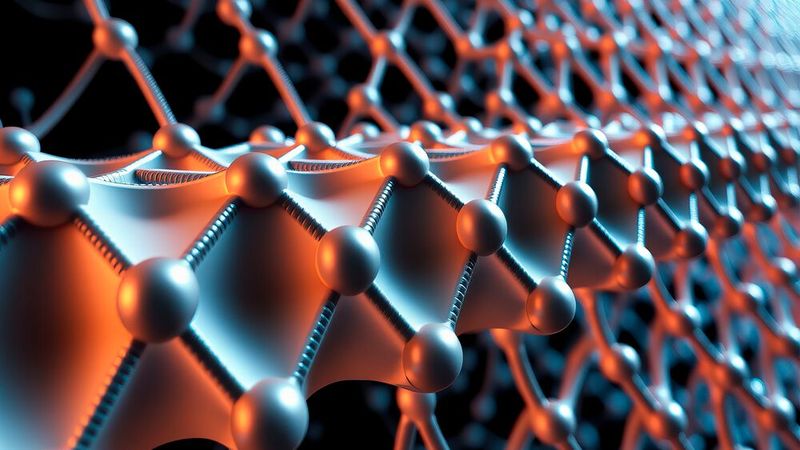
The word “meta” is derived from a word called “beyond”— meaning “beyond materials”. Metamaterials have been researched since the late nineteenth and early twentieth centuries. The ultimate goal was to build materials that could manipulate electromagnetic waves. Loads of studies were done and experiments were conducted for years until the first metamaterials were invented between 2001 and 2006.
As of 2024, the metamaterial market is valued at USD0.22 billion. The metamaterial market may hit a new high of USD1.38 billion in 2029 at an exceptional CAGR of 44.8 %. Such a high growth rate is uncommon across a wide range of industries.
What are metamaterials and why are they gaining popularity?
Metamaterials are special artificially engineered materials to exhibit unique properties that are not found in naturally occurring substances. They exhibit “smart” properties through their structure to manipulate acoustic, electromagnetic, and seismic waves. These unique properties are visible through their behavior, size, geometry, orientation, and shape.
Some examples of unique metamaterial properties include:
- Negative refractive index.
- Inverse Doppler’s effect.
- Electromagnetic cloaking.
- Negative thermal conductivity.
- Negative density and stiffness.
- Shape reconfigurability.
- Negative permeability.
- Negative dielectric constant.
- Negative Poisson’s ratio.
- Anomalous wave propagation.
- Perfect wave absorption.
- Chirality.
- Anisotropy.
Generally, all materials exhibit properties similar to their base materials and composition. For example, an integrated circuit manufactured on a silicon substrate exhibits semiconducting behavior like silicon. Such behavior does not apply to metamaterials - their properties are independent of base material and composition.
The nanostructures responsible for building metamaterials are called meta-atoms. Meta atoms are periodically or randomly arranged in groups with size and spacing much smaller than the wavelength of incoming incident electromagnetic light. The main property of metamaterials is their unusual behavior after receiving incident electromagnetic light.
Metamaterials can affect electric permittivity (0) and magnetic permeability (0). Opal and vanadium oxide can also behave like metamaterials due to their unusual behavior against incident light. However, most metamaterials are artificially produced.
The world is constantly running to miniaturize chips, manufacture room-temperature superconductors, and replace silicon and lithium with promising materials. As a result, numerous experiments are conducted worldwide to build metamaterials.
Applications of metamaterials
In addition to their unique properties and behavior, metamaterials are gaining popularity due to their wide range of applications. Metamaterials began commercialization in the early 2000s.
Electronics
Out of 1D, 2D, and 3D metamaterials, compact 1D planar metamaterials are extensively used for electronics, smart home-based IoT, and wireless power transfer applications. 3D metamaterials improve transmission efficiency but have large sizes and offer high losses. In PCBs, metamaterials have improved substrate thickness and efficiency.
Optics
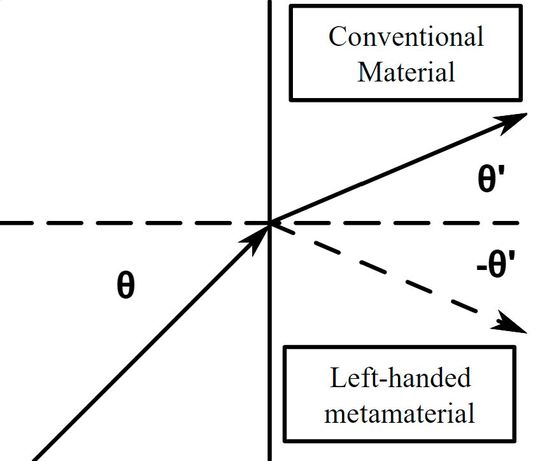
One of the very first experiments of metamaterials enabled building materials with negative refractive index. These metamaterials are called electromagnetic metamaterials. They tend to bend light backward. Negative refractive index metamaterials build superlens— to reach infinite resolution beyond the diffraction limit.
Metamaterials can be used for polarization demultiplexers, on-chip biosensors, optical waveguides, light generation, and antireflection structures. Metamaterials have given rise to a new field of optics known as transformation optics. Metamaterials offer different electric permittivity (0) and magnetic permeability (0) values to manipulate light wave propagation.
Hyperbolic metamaterials
Hyperbolic metamaterials behave like metals for certain polarization angles and dielectric materials for others. Due to their anisotropic nature, they are applicable in sensing, modulation, imaging, optical signal processing, and non-linear optics.
Thermal industry
Metamaterials are used in fibers and carbon nanotubes to manipulate their heat-related behavior and negative thermal conductivity.
Renewables
As mentioned above, “perfect absorption” is a metamaterial property. It facilitates metamaterial use for renewable technologies like solar photovoltaic and photodetection systems. In addition, metamaterials can be used for energy harvesting and management in solar cells.
RF applications
Tunable metamaterials adjust their properties with respect to frequency changes. They can interact with terahertz radiation. Such metamaterials help to build antennas to enhance their radiated power for wireless applications and satellite communication.
Acoustics
Metamaterials can be used as sound filters for medical diagnostics and testing. They can aid in making noise-cancellation devices due to sound wave manipulation capabilities.
Electromagnetic cloaking
Cloaking is hypothetical, often shown in sci-fi movies. Electromagnetic cloaking is a concept where an object becomes invisible to electromagnetic waves for a specific set of frequencies. Metamaterials can offer electromagnetic cloaking. However, cloaking in any form is currently a hypothetical technology.
Seismic cloaking
Some researchers claim that mechanical metamaterial use can minimize earthquake-related damage to artificial structures. Some experiments verify that seismic metamaterials are measurable for frequencies below 100 Hz. Simulations and computations show that mechanical metamaterials exhibit seismic cloaking. Long wavelength seismic waves could be directed in a direction away from the artificial structure— as if it was never there!
Metamaterials for wireless power transfer
WPT (Wireless Power Transmission) is a concept in electronics that enables energy transfer without physical contact using electric and magnetic fields. There are two types of WPT: near field and far field. An example of near-field WPT is wireless phone charging. On the other hand, the transmission of signals through MIMO antennas is far-field WPT.
Obstacles should be absent for effective far-field WPT. On the other hand, distance is comparatively low for near-field WPT. However, there is no contact between the transmitter and receiver in both WPT types. Transmission efficiency decreases with distance. During operation, magnetic flux leakage can lead to hazardous situations.
:quality(80)/p7i.vogel.de/wcms/b1/c3/b1c33ac7cdba81f770e69a53794bd8fb/0119505396v2.jpeg "Near-field wireless power technology is gaining traction for consumer electronics and medical devices, with promising advancements in areas like magnetic diodes and dynamic charging for electric vehicles. (Source: MAY - stock.adobe.com)")
WPT
Wireless power: Present and future developments
Metamaterial types for WPT
Metamaterials are placed between transmitting and receiving coils in a WPT system. There are three types of metamaterials based on electric permittivity (0) and magnetic permeability (0) values. Each material has its own electric permittivity and magnetic permeability. Altering both of them offers control over a material’s electromagnetic response. It can bend light waves or show negative refraction.
Electric permittivity (0) is a measure of the ability of a material to pass an electric field through it. Here, 0 in 0 marks the permittivity of free space— how much does the free space allow electric fields to spread out or resist them? Magnetic permeability (0) is a measure of the ability of a material to pass a magnetic field through it. Here, 0 in 0 represents the permeability of free space— how much does the free space allow magnetic fields to pass through them?
Double positive: Electric permittivity (0) and magnetic permeability (0) are positive. Such metamaterials exist naturally. However, the mainstream metamaterial applications do not rely on such materials.
Double negative: Electric permittivity and magnetic permeability are negative. These metamaterials are left-handed materials that exhibit properties like negative refraction.
Single negative: One of the two, electric permittivity or magnetic permeability, remains negative. Mu-negative metamaterials (MNG) have negative magnetic permeability and positive electric permittivity. Epsilon-negative metamaterials (ENG) have a negative electric permittivity and positive magnetic permeability. MNZ materials are metamaterials with near-zero magnetic permeability.
:quality(80):fill(efefef,0)/p7i.vogel.de/wcms/62/9f/629f676eea2c7/p-b-whitepaper-fraunhofer-ikts.jpeg "P&B Whitepaper Fraunhofer IKTS")
Benefits of using metamaterials in WPT
In WPT, negative metamaterials improve transmission efficiency, misalignment tolerance capabilities, and safety. Adjusting meta-atom placements can tailor their permeability property to shield magnetic flux leakage. Placing metamaterials between two dipoles alters their mutual and self-inductances. Simply put, metamaterials increase coupling to improve overall WPT efficiency.
MNG metamaterials amplify evanescent waves to enhance the efficiency of WPT. Evanescent waves, electric or magnetic, do not propagate like electromagnetic waves due to total internal reflection at the boundary. MNG metamaterials amplify these waves to maximize magnetic field transmission.
Coil misalignment is another issue that reduces WPT efficiency. A hybrid metamaterial plate with a tunable capacitor is an optimal solution to combat coil misalignment. MNZ metamaterials provide magnetic shielding to protect WPT systems from unwanted interference without compromising efficiency.
Metamaterial limitations
Metamaterials are still a subject of research. Less practical implementation is across the electronic and optical industries. Some challenges related to metamaterials are listed below.
- High losses.
- Low practical efficiency.
- Poor low-frequency operation.
- Inability to operate at multiple frequencies for wide bands.
- Low dynamic control.
- Large size and weight make them unsuitable for portable and consumer electronic applications. The miniaturization of metamaterials is a subject of ongoing research.
- Complex and costly manufacturing processes.
References
Power Electronics in the Energy Transition

The parameters for energy transition and climate protection solutions span education, research, industry, and society. In the new episode of "Sound On. Power On.", Frank Osterwald of the Society for Energy and Climate Protection Schleswig‐Holstein talks about the holistic guidance his organization can provide.
Listen now!
(ID:50258081)
:quality(80)/p7i.vogel.de/wcms/97/19/9719983f8596dcb47f64dba9648c4dc5/0124622838v2.jpeg "Germanium, despite failing as a semiconductor, held a strong market for two decades in the mid-20th century, with legacy texts favoring it over silicon. Today, it's still used with silicon in various applications. Learn more about this here. (Source: Polycrystalline-germanium / Jurii / CC BY 3.0 / Wikimedia Commons)")
:quality(80)/p7i.vogel.de/wcms/d3/94/d394a64cd41a47471e8cca3ca82e7c66/0123626672v2.jpeg "Common mode choke filters using nanocrystalline cores (right) are significantly smaller than ferrite (left) and require less copper turns. (Source: CBMM | Niobium)")