


:quality(80)/p7i.vogel.de/wcms/10/fc/10fcb98e44d61826e641bc8d3f20f616/0133193677v2.jpeg "The new AEVA and AEVB Series aluminum electrolytic capacitors are engineered for harsh industrial environments, delivering high-CV, long-lifetime performance in compact, surface-mount packages that reliably withstand up to 30g acceleration and operating temperatures extending from -55° to +125°C. (Source: Kyocera)")
:quality(80)/p7i.vogel.de/wcms/f7/42/f74208db9f5f87dca384b38b71c4782e/0133196365v2.jpeg "YAGEO’s EC Flat‑Series temperature sensors combine fast, accurate measurement with resistance to vibration, shock, moisture and dust for demanding automotive and industrial applications. (Source: Yageo)")
:quality(80)/p7i.vogel.de/wcms/b2/82/b28212428745dd8a4634ad4f4912012f/0132902689v2.jpeg "New 15 V, 25 V and 40 V eGaN FETs deliver ultra-low on-resistance, high current capability, and exceptional radiation immunity for high-density space power conversion (Source: EPC Space)")
:quality(80)/p7i.vogel.de/wcms/7b/4f/7b4f433302c490cac22eee9c12499e65/0132780211v2.jpeg "Littelfuse introduces the TPSMD‑FL series of high‑power surface‑mount TVS diodes, designed to simplify ISO 7637 load‑dump protection and safeguard automotive electronics against severe voltage transients. (Source: Littlefuse)")
:quality(80)/p7i.vogel.de/wcms/78/38/783841efab284c1b4453777e7ebea26d/0133190419v2.jpeg "Diodes has completed its acquisition of Elevate Semiconductor, expanding its analog and mixed-signal portfolio and strengthening its presence in the high-growth automated test equipment market. (Source: © peopleimages.com - stock.adobe.com)")
:quality(80)/p7i.vogel.de/wcms/1f/79/1f79d69530465de26a832c742fc60319/0133117717v2.jpeg "With 30,000 sqm of exhibition space, 20,157 trade visitors, 271 exhibitors, and 131 expert presentations as part of the conference program, the event sent a strong message about the industry's innovative strength and dynamism. (Source: Mesago Messe Frankfurt GmbH)")
:quality(80)/p7i.vogel.de/wcms/43/4d/434db2291567e847e54332004942a225/0132958267v2.jpeg "GlobalWafers has joined the SEMI Taiwan Materials Alliance, with CEO Doris Hsu serving as co‑chair, to advance critical materials technologies, accelerate collaborative innovation and strengthen global semiconductor supply chain resilience. (Source: © jiwon - stock.adobe.com)")
:quality(80)/p7i.vogel.de/wcms/6f/72/6f72f93d1e4c5a248a97dd3b8f32a336/0132997898v2.jpeg "Infineon plans to acquire C2i Semiconductors to combine software‑defined multiphase control and smart power stages with its broad power‑semiconductor portfolio for intelligent, scalable AI data‑center power delivery. (Source: © Grispb - stock.adobe.com)")
:quality(80)/p7i.vogel.de/wcms/87/97/879728679e7010f81e53a86923cde74c/0133218625v2.jpeg "Conceptual illustration of polar wurtzite niobium aluminum nitride (NbAlN), a transition-metal-containing nitride semiconductor that preserves the crystal structure and polarity of GaN. (Source: Associate Professor Atsushi Kobayashi from Tokyo University of Science, Japan)")
:quality(80)/p7i.vogel.de/wcms/ac/31/ac31c9478d80894d725d02883ae7ed5d/0133176534v2.jpeg "Average models allow power designers to simulate DC‑DC converters and three‑phase PFC circuits quickly, analyse small‑signal behaviour and evaluate loop stability without modelling every switching event. (Source: © AI - stock.adobe.com)")
:quality(80)/p7i.vogel.de/wcms/96/80/9680b468d7f682c8b6c15b07300afbb0/0133177854v2.jpeg "Grid-forming inverters are also known as grid-forming resources and grid-forming IBR. This article explains grid-forming inverters in detail. (Bild: © only_kim - stock.adobe.com)")
:quality(80)/p7i.vogel.de/wcms/57/c6/57c6fa81922a9849a917bdfed82eddf7/0133052494v2.jpeg "Rising demand for high-end materials shifts production toward higher-margin products, reducing output of standard loss materials. (Source: NCAB)")
:quality(80)/p7i.vogel.de/wcms/7b/76/7b76005554b556df2a7a3794bdf69d44/0132365246v2.jpeg "Hioki’s ST5680A DC Hipot Tester combines CE/UKCA/CSA compliance, an integrated capacitance‑based contact check and time‑series waveform recording (voltage, leakage current, insulation resistance) to standardize hipot and insulation testing across EV cell, module and pack production lines. (Source: Hioki)")
:quality(80)/p7i.vogel.de/wcms/af/7f/af7f7b0fb7f29219fc991b1130f65477/0132241333v2.jpeg "Comprehensive laboratory testing regimens—combining thermal cycling, high‑current stress, EMC, and accelerated lifetime tests—are essential to validate advanced power designs and ensure reliability in real‑world applications. (Source: PRBX)")
:quality(80)/p7i.vogel.de/wcms/16/3d/163df69363f8125315a9826e13ea4b05/0131927425v2.jpeg "Solution will maximize data center and AI factory profitability while delivering engineering-grade insights to design and operations for more efficient, sustainable, and resilient infrastructure. (Source: Cadence)")
:quality(80)/p7i.vogel.de/wcms/85/b7/85b7e90733a2bd8f21515d8f7137f2fc/0131917677v2.jpeg "Renesas acquires Pictorus to integrate its embedded application software platform with Renesas’ MCU and MPU portfolio, helping developers shorten time‑to‑market and simplify system integration. (Source: © lucadp - stock.adobe.com)")
MATERIAL SCIENCE Switching between superconductors and insulators
Related Vendors
:fill(fff,0)/p7i.vogel.de/companies/5f/71/5f71d5f92a5f6/2000px-rogers-corporation-logo-svg.png "2000px-Rogers_Corporation_Logo.svg.png (rogers germany)")
:fill(fff,0)/p7i.vogel.de/companies/66/8b/668becd1c07eb/dowa-logo-word--1-.jpeg "dowa-logo-word--1- (DOWA)")
:fill(fff,0)/p7i.vogel.de/companies/69/30/693022b11e5db/logo.jpeg "logo (MBS-Hodde GmbH & Co. KG)")
The article is based on the latest news from Princeton University that states that physicists have witnessed the sudden death of quantum fluctuations in a quantum phase transition. Read the article to know more about the ground-breaking discovery.
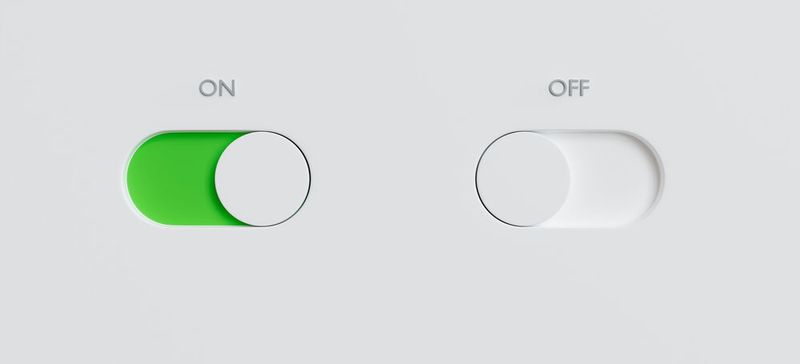
What did physicists at Princeton University do?
Physicists from Princeton University have discovered an abrupt fall of “quantum fluctuations” when a superconductor transforms into an insulator. The researchers cooled down a crystalline material to a temperature near absolute zero but the rarest of the rare happened with gate voltage adjustment. The resulting material exhibited characteristics of an insulator and superconductor! The research can open the doors for room-temperature superconductivity.
The experiment defies the laws of physics
Change of structure
The experiment started with physicists slicing a bulk crystal of a monolayered semiconductor metal called Tungsten Ditelluride (WTe2) into a 2D ultra-thin material. The transition from a 3D crystalline structure to a 2D thin layer helps understand quantum effects in insulators and superconductors.
Cooling down the material
As we all know superconductors exist at very low temperatures, the next step involved cooling down Tungsten Ditelluride to a temperature near absolute zero. The noted temperature was fifty milliKelvins or -273.10 degrees Celsius, low enough to understand quantum effects in detail.
Controlling gate voltage
The third step was to convert the insulating Tungsten Ditelluride into a superconductor by introducing extra electrons. A small gate voltage was enough to transition insulating Tungsten Ditelluride into superconducting material. Scientists observed that controlling this low-magnitude gate voltage could adjust electron density.
Quantum critical point
The critical electron density point is called the quantum critical point (QCP). Above QCP, quantum fluctuations start to appear and disturb the supercurrent.
Quantum fluctuations are defined as random changes in the thermodynamic states of a material at the threshold of the quantum transition. The temperature, pressure, magnetic field, gate voltage, and electron density are subject to change for measuring quantum fluctuations. In the case of superconductors, quantum fluctuations are not favorable to sustain the superconductive state. The rise in quantum fluctuations eliminates the superconductive character of superconductive material, making it electrically resistive.
Three-dimensional structures have better superconductive characteristics than two-dimensional materials. Lower dimensions have a high amount of quantum fluctuations. It means that one-dimensional thin layers or insulators are unstable for superconductive behavior. In the experiment, quantum fluctuations gave rise to quantum vortexes. A quantum vortex is a microscopic whirlpool-like structure that traps magnetic fields. The word “whirlpool” clearly indicates that supercurrent starts to reduce. Multiple quantum vortices emerged spontaneously in Tungsten Ditelluride to oppose the superconductive behavior.
Nernst experiment
Princeton Physicists implemented the “Nernst Experiment” to detect quantum vortices. The method involved slightly heating some portions of Tungsten Ditelluride while the other side remained at the same low temperature. When one side was slightly heated, quantum vortices moved toward the cooler side. The supercurrent flow between these two layers confirmed “Josephson Junction” in Tungsten Ditelluride. Josephson junction is a measure of the macroscopic behavior of superconductors.
Quantum fluctuations
Physicists lowered the electron density below the QCP through the reduction in doping concentration. Strangely, quantum vortices suddenly disappeared! Professor Sanfeng Wu from the research team said “What we found, by directly looking at quantum fluctuations near the transition, was clear evidence of a new quantum phase transition that disobeys the standard theoretical descriptions known in the field."
What does the “sudden death of quantum fluctuations” mean?
Quantum fluctuations favor insulators. Princeton University professors quote in simple words “Quantum fluctuations kill superconductivity”. The sudden death of quantum fluctuations for insulating states means that the material exists in an undefined state. It requires a new understanding of superconductivity. Scientists commented that the experiment allowed for the quantum transition of Tungsten Ditelluride from an insulator to a superconductor like an electronic switch. The OFF state represented an insulator and the ON state of the switch was a superconductor.
To summarize the experiment
- 1. Bulk monolayer crystal Tungsten Ditelluride was peeled into ultra-thin 2D material. The physical transformation converted Tungsten Ditelluride into a strong insulator.
- 2. Tungsten Ditelluride was cooled down to millikelvins or -273.10 degrees Celsius but it required more electrons to turn into a superconductor.
- 3. A small gate voltage introduced extra electrons to initiate the quantum phase transition. When electron density reached above the QCP, the insulator Tungsten Ditelluride turned into a strong superconductor.
- 4. Superconducting characteristics started to weaken due to the lattice imperfections and other factors. Quantum fluctuations abruptly grew to generate quantum vortices.
- 5. The temperature of Tungsten Ditelluride was slightly increased from one side. A new method called the “Nernst Experiment” confirmed the presence of Josephson’s effect.
- 6. Physicists lowered electron density below QCP. The material turned into an insulator but quantum fluctuations suddenly ended. Tungsten Ditelluride showed the characteristics of an insulator and superconductor together.
Key takeaways from the research
The material was supposed to become an insulator below QCP with a high amount of quantum fluctuations. However, quantum fluctuations suddenly disappeared. Heating the superconducting material is supposed to initiate quantum fluctuations that go on to end superconductivity and allow high resistance to take over the material. However, the Tungsten Ditelluride behaved like an insulator that conducts along the surface. The experiment gave rise to a new quantum state that hasn’t yet been discovered or understood. In conclusion, the electrical behavior of Tungsten Ditelluride can enable manufacturers to build room-temperature superconductors.
Power Electronics in the Energy Transition

The parameters for energy transition and climate protection solutions span education, research, industry, and society. In the new episode of "Sound On. Power On.", Frank Osterwald of the Society for Energy and Climate Protection Schleswig‐Holstein talks about the holistic guidance his organization can provide.
Listen now!
(ID:49969544)
:quality(80)/p7i.vogel.de/wcms/65/22/65223bc58811ced76adbfa7b5615d532/0129061536v2.jpeg "This article explains topological insulators and explores whether they can optimize electronic systems. (Source: © Rick - stock.adobe.com)")
:quality(80)/p7i.vogel.de/wcms/0c/07/0c07df7a5dbd70fd5d3c5e3276ff2d9f/0127824058v2.jpeg "Graphene’s atomic lattice reveals new clues about the nature of superconductivity. (Source: MIT)")