


:quality(80)/p7i.vogel.de/wcms/2f/f3/2ff3221bf7665de2d0acf83760bfd1fa/0130031523v2.jpeg "Wolfspeed presents a 300 mm silicon carbide technology platform designed to support advanced packaging and high-efficiency power delivery for AI data center infrastructure. (Source: Wolfspeed)")
:quality(80)/p7i.vogel.de/wcms/c3/16/c316e955a97f5d72d9678297b237b9e5/0129932858v2.jpeg "Left: the single-phase version of the SENTRON ECPD with RCM, right: a model of the future three-phase version of the SENTRON ECPD. (Source: Siemens)")
:quality(80)/p7i.vogel.de/wcms/ef/0a/ef0adb0acf793fe147cc27c21f6a7a67/0129954238v2.jpeg "Empower Semiconductor introduces embedded silicon capacitors designed to improve power delivery and stability in AI and high-performance computing processors. (symbolic image) (Source: © IF.arc - stock.adobe.com)")
:quality(80)/p7i.vogel.de/wcms/53/f9/53f9301dfc9292d02960f7996c79cc6e/0129927601v2.jpeg "Wolfspeed’s new 10 kV SiC MOSFET enables high-voltage power conversion for grid and industrial applications. (symbolic image) (Source: © CREATIVE- 3.4 - stock.adobe.com)")
:quality(80)/p7i.vogel.de/wcms/6e/cd/6ecd41d095d5111cf4ed37b714844487/0129930878v2.jpeg "PCIM Asia Shenzhen provides a platform for industry experts to present new developments in power electronics and electrification technologies. (symbolic image) (Source: © killykoon - stock.adobe.com)")
:quality(80)/p7i.vogel.de/wcms/02/c0/02c0e9722f70b1134dbf96fb59a9c73d/0129655179v2.jpeg "The PCIM Conference 2026 will take place from June 9-11, featuring discussions on power electronics trends, including GaN technology and AI applications. (symbolic image) (Source: © Elmira - stock.adobe.com)")
:quality(80)/p7i.vogel.de/wcms/cc/67/cc670ea2029cd2af5c641af70e1bf734/0129816392v4.jpeg "Fraunhofer IAF coordinates the EU SUPREME project to accelerate GaN and SiC power semiconductor innovation in Europe. (Source: Fraunhofer IAF)")
:quality(80)/p7i.vogel.de/wcms/ea/e6/eae6aee30071e67a5627027974437134/0129544613v2.jpeg "GlobalFoundries and Renesas strengthen their collaboration to support U.S.-based semiconductor production and supply chain resilience. (Source: © ronstik - stock.adobe.com)")
:quality(80)/p7i.vogel.de/wcms/23/1a/231a97643aa7fc3adf2704a6273756c3/0130030642v2.jpeg "Gallium nitride (GaN) power devices are increasingly challenging silicon MOSFETs in low-voltage power conversion by enabling higher efficiency and switching performance. (Source: © Sheraz - stock.adobe.com)")
:quality(80)/p7i.vogel.de/wcms/3c/4b/3c4bbc68dda65c7071b4376fb57423b0/0130030465v2.jpeg "Faraday’s laws explain the fundamental behavior of magnetic fields and electronic devices in dynamic use cases. The operation of transformers, wireless chargers, induction cookers, induction motors, magnetic levitating trains (MAGLEV Trains), electric violin, and many others depends upon Faraday’s laws. (Source: © Sheraz - stock.adobe.com)")
:quality(80)/p7i.vogel.de/wcms/b1/5e/b15ee02b0ba02db70cf61e37d66ad1d3/0129349127v2.jpeg "Vehicle-to-grid (V2G) chargers enable bidirectional energy flow, allowing electric vehicles to act as mobile energy storage systems that can both draw power from and feed power back into the grid. (Source: © medienvirus - stock.adobe.com)")
:quality(80)/p7i.vogel.de/wcms/26/d5/26d591cc340077026eac56a0e7564faf/0129949603v2.jpeg "Flexible: The solid silicone-based electrolyte is elastic, thereby compensating for the voids that form in solid-state batteries during charging and discharging. (Source: Empa)")
:quality(80)/p7i.vogel.de/wcms/be/c8/bec8d43fc0ee73414274be44608b2970/0129748903v2.jpeg "The Infiniium XR804KA real-time oscilloscope delivers faster response time, improved stability, and streamlined workflows for high-speed digital and compliance testing. (Source: Keysight)")
:quality(80)/p7i.vogel.de/wcms/23/ee/23ee4a97790d6009dbfd7d9577ffa723/0129220424v2.jpeg "The R&S FPL1044 with the new RTSA option makes 40 MHz real-time frequency analysis available up to 44 GHz. (Source: Rohde & Schwarz )")
:quality(80)/p7i.vogel.de/wcms/3c/d1/3cd1cacbceb792ba63727199c61ca434/0127801860v2.jpeg "Thanks to cloud technology, users can collaborate on projects from anywhere and always have access to the latest planning data. (Source: SIEMENS)")
:quality(80)/p7i.vogel.de/wcms/5a/a0/5aa0436498af618297961fd54ab36cdf/0126290792v2.jpeg "Siemens accelerates student-led semiconductor innovation across Europe’s leading technical universities through Cre8Ventures’ Open Higher Education Program developed in collaboration with Arm and University of Southampton (Source: Siemens Digital Industries Software)")
BATTERY TECHNOLOGY Scientists remove anode from a solid sodium battery
Related Vendors
:fill(fff,0)/p7i.vogel.de/companies/62/a0/62a0a0de7d56a/aic-europe-logo.jpeg "aic-europe-logo (AIC Europe)")
:fill(fff,0)/p7i.vogel.de/companies/5f/71/5f71d5f92a5f6/2000px-rogers-corporation-logo-svg.png "2000px-Rogers_Corporation_Logo.svg.png (rogers germany)")
:fill(fff,0)/p7i.vogel.de/companies/62/95/6295c25c8dc1a/schunk-sonosystems-300dpi.png "schunk-sonosystems-300dpi (Schunk)")
Researchers have invented a new battery without an anode to empower electric vehicles, the grid, and modern renewable energy-based technologies. One of the main highlights of this experiment is not the lithium-ion battery but a sodium battery. And that too in the solid form! Check out the article to read about the latest news and how the new invention could shape the industry.
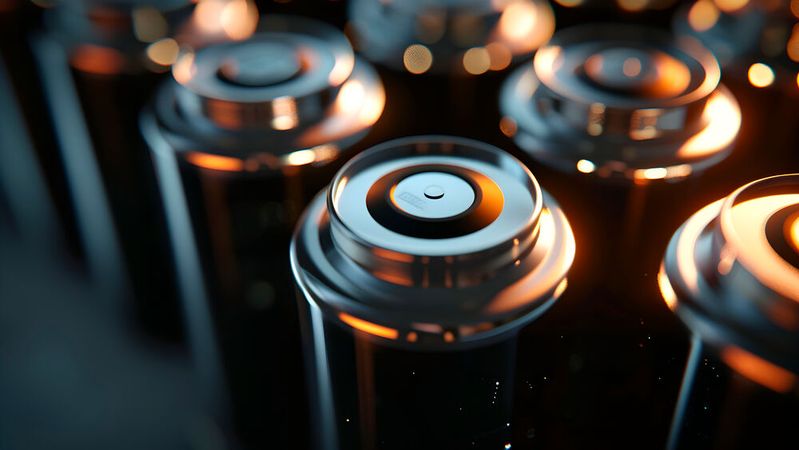
Researchers at LESC (Laboratory for Energy Storage and Conversion) have recently eliminated anode and liquid electrolyte from a sodium battery. The inventors address the device as an integration of the three existing but different battery technologies: “sodium”, “solid-state”, and “anode-free”.
LESC, led by Professor Y. Shirley Meng, is a collaboration between two research entities: the University of Chicago’s Pritzker School of Molecular Engineering and the University of California San Diego’s Aiiso Yufeng Li Family Department of Chemical and Nano Engineering.
Every battery consists of two electrodes and an electrolytic solution where charge flows. There is a negative electrode “anode”, positive electrode “cathode”, and current collectors that connect both the electrodes with external circuitry. In this new invention, the current collector carries out the functions of the anode.
Instead of the anode, sodium metal is directly deposited onto a current collector made from aluminum pellets. This configuration eliminates the formation of undesirable interphase layers to improve battery efficiency and lifetime. In simple words, such batteries are cheaper and exhibit fast charging and high storage capabilities.
The experiment uses a solid electrolyte made from sodium borohydride and a cathode made from low-cost sodium chromium oxide. The strong solid-solid interface between these two materials demonstrates stable reversible cycles. Researchers suggest reasonable pressure and temperature conditions to pave the way for commercially available solutions.
:quality(80):fill(efefef,0)/p7i.vogel.de/wcms/64/8c/648c25203b497/best-paper-award-2023-cover-hamzeh-beiranvand.png "Best Paper Award 2023 Cover_Hamzeh Beiranvand")
Anode-free solid-state sodium battery: Detail
Anode-free sodium-ion batteries address limitations of traditional batteries by eliminating the anode and using a solid electrolyte. This approach avoids problems like dendrite formation and allows for stable cycling with high efficiency.
Limitations of traditional sodium-ion batteries
Despite potential, traditional sodium-ion batteries struggle with material limitations that hinder their stability and lifespan.
SEI process
Unstable anode morphology forms a passivation layer known as SEI (Solid Electrolyte Interphase). This is a natural process happening in every battery. Sometimes called the “necessary evil", the SEI insulating layer can be beneficial and disadvantageous at the same time.
The SEI layer supports ion mobility during charging and discharging cycles. However, the SEI layer can become unstable and increase cell resistance with time. It forms structures known as dendrites, which degrade the battery operation and can cause short circuits.
Liquid electrolyte
In traditional sodium-ion batteries, sodium metal is deposited on the anode during the charging cycle and stripped off from its surface during the discharge cycle.
Sodium is a highly reactive material, even more than lithium. It reacts with the liquid electrolyte during cycles. As a result, sodium metal deposition is challenging with liquid electrolytes due to the formation of dendrites and chemical reactions at the interface.
Eliminating anode
Eliminating the anode from the battery reduces the effects of these chemical processes and lowers the battery size. A combination of a stable solid electrolyte and a current collector can replace anode operation. A strong solid contact between the electrolyte and current collector enables effective sodium metal deposition and stripping.
:quality(80)/p7i.vogel.de/wcms/b4/ac/b4ac36b6cbd5b439cf884d9e023e3f85/87522375.jpeg "The humble battery is by far one of the most crucial enabling technologies of the 21 st Century. (Source: Adobe Stock)")
BATTERY BASICS
Battery energy storage systems: Past, present, and future
In anode-free batteries, sodium metal must be deposited on the current collector during the charge cycle and stripped off during the discharge cycle. Deposition of sodium metal into this current collector retains the low reduction potential of sodium to maintain high cell voltage and current density.
Choosing a solid electrolyte
Traditional solid electrolytes limit performance due to poor contact and instability, prompting the search for better options like sodium borohydride and aluminum pellets.
Traditional sodium-ion battery
Initially, sodium-ion batteries used solid electrolytes made from sodium triphosphate and a current collector made from aluminum foil. The aluminum foil current collector could not create strong contact with the electrolyte. As a result, this combination would exhibit electrical breakdown at lower voltages and dendrite formation.
Aluminum pellet
In this experiment, sodium borohydride is the solid electrolyte. Choosing a current collector made from aluminum pellets creates a strong and uniform contact with the solid electrolyte. The solid-solid robust interface of aluminum pellets and sodium borohydride allows the battery to deposit dense sodium metal during the charging process.
During the experiment, the aluminum pellet current collector was cold pressed to create a strong contact with pore elimination. When sodium metal strips off during the discharge process, pores could trap the metal. It leads to inefficiency and deterioration of the battery.
Stack pressure
Stack pressure is another factor that enables dense sodium metal deposition on the current collector to improve the charge storage capabilities of the battery. Solid-state batteries use high stack pressures to ensure performance. However, this experiment indicates that low pressures with temperature adjustment and proper management are a commercially optimal solution.
Reversible cycles
In this experiment, the cathode is made from a low-cost sodium chromium oxide. During the charging cycle, the cathode is given an input voltage. It undergoes chemical reactions, resulting in the deposition of sodium metal on the current collector. Deposition of sodium metal stores charge.
During the discharge cycle, the cathode undergoes chemical reactions that strip off sodium metal from the current collector. Sodium ions integrate into the solid electrolyte to complete the circuit. The experiment indicates a scope for similar performance in larger cell sizes with higher densities.
Result
To match lithium-ion battery operation, sodium batteries must have high density and cell voltage. The battery was able to stably charge and discharge for four hundred cycles at an average coulombic efficiency of 99.96 %. In conclusion, this experiment showcases a stable solid-state sodium battery without anode.
:quality(80)/images.vogel.de/vogelonline/bdb/1921100/1921139/original.jpg "Multilayer, ceramic solid-state cathode for initial functional tests. (Fraunhofer IPA)")
BATTERY TECHNOLOGY
Production technology for solid state batteries
What can anode-free solid-state sodium batteries do?
The minds behind the new invention say “Sodium solid-state batteries are usually seen as a far-off-in-the-future technology, but we hope that this paper can invigorate more push into the sodium area by demonstrating that it can indeed work well, even better than the lithium version in some cases,”.
The possible benefits of anode-free sodium solid-state batteries are listed below.
Affordable charging solutions
Eliminating the anode electrode from a battery reduces its weight and volume. Sodium is a cheap and abundant alternative to existing battery types. As a result, anode-free sodium batteries are predicted to be sold at lower costs than their counterparts.
Replacement of Lithium-ion batteries
Lithium-ion batteries have high demand but less supply. In Earth’s crust, lithium makes up only 20 parts per million compared to sodium with 20,000 parts per million. In addition, only a few countries have lithium reserves but sodium is extensively present in oceans.
Environmentally friendly option
The process of lithium extraction or lithium mining is expensive and environmentally damaging. On the other hand, sodium extraction is “more environmentally friendly” than lithium extraction. Moreover, the electrification of lithium is challenging and costlier than the electrification of sodium.
Improved charge density
The technology minimizes the effects of SEI and improves energy density and battery lifetime. This anode-free sodium solid-state battery is expected to charge faster and last longer with fewer needs for replacements.
References
www.nature.com
pme.uchicago.edu
Power Electronics in the Energy Transition

The parameters for energy transition and climate protection solutions span education, research, industry, and society. In the new episode of "Sound On. Power On.", Frank Osterwald of the Society for Energy and Climate Protection Schleswig‐Holstein talks about the holistic guidance his organization can provide.
Listen now!
(ID:50098784)
:quality(80)/p7i.vogel.de/wcms/26/d5/26d591cc340077026eac56a0e7564faf/0129949603v2.jpeg "Flexible: The solid silicone-based electrolyte is elastic, thereby compensating for the voids that form in solid-state batteries during charging and discharging. (Source: Empa)")
:quality(80)/p7i.vogel.de/wcms/82/14/82142acb974664ccbf755d77be6fe881/0126347614v2.jpeg "Potassium-ion batteries, with their abundant materials and low costs, could revolutionize renewable energy storage by providing an alternative to lithium-ion technology. (Source: © IBEX.Media - stock.adobe.com)")