


:quality(80)/p7i.vogel.de/wcms/2f/f3/2ff3221bf7665de2d0acf83760bfd1fa/0130031523v2.jpeg "Wolfspeed presents a 300 mm silicon carbide technology platform designed to support advanced packaging and high-efficiency power delivery for AI data center infrastructure. (Source: Wolfspeed)")
:quality(80)/p7i.vogel.de/wcms/c3/16/c316e955a97f5d72d9678297b237b9e5/0129932858v2.jpeg "Left: the single-phase version of the SENTRON ECPD with RCM, right: a model of the future three-phase version of the SENTRON ECPD. (Source: Siemens)")
:quality(80)/p7i.vogel.de/wcms/ef/0a/ef0adb0acf793fe147cc27c21f6a7a67/0129954238v2.jpeg "Empower Semiconductor introduces embedded silicon capacitors designed to improve power delivery and stability in AI and high-performance computing processors. (symbolic image) (Source: © IF.arc - stock.adobe.com)")
:quality(80)/p7i.vogel.de/wcms/53/f9/53f9301dfc9292d02960f7996c79cc6e/0129927601v2.jpeg "Wolfspeed’s new 10 kV SiC MOSFET enables high-voltage power conversion for grid and industrial applications. (symbolic image) (Source: © CREATIVE- 3.4 - stock.adobe.com)")
:quality(80)/p7i.vogel.de/wcms/6e/cd/6ecd41d095d5111cf4ed37b714844487/0129930878v2.jpeg "PCIM Asia Shenzhen provides a platform for industry experts to present new developments in power electronics and electrification technologies. (symbolic image) (Source: © killykoon - stock.adobe.com)")
:quality(80)/p7i.vogel.de/wcms/02/c0/02c0e9722f70b1134dbf96fb59a9c73d/0129655179v2.jpeg "The PCIM Conference 2026 will take place from June 9-11, featuring discussions on power electronics trends, including GaN technology and AI applications. (symbolic image) (Source: © Elmira - stock.adobe.com)")
:quality(80)/p7i.vogel.de/wcms/cc/67/cc670ea2029cd2af5c641af70e1bf734/0129816392v4.jpeg "Fraunhofer IAF coordinates the EU SUPREME project to accelerate GaN and SiC power semiconductor innovation in Europe. (Source: Fraunhofer IAF)")
:quality(80)/p7i.vogel.de/wcms/ea/e6/eae6aee30071e67a5627027974437134/0129544613v2.jpeg "GlobalFoundries and Renesas strengthen their collaboration to support U.S.-based semiconductor production and supply chain resilience. (Source: © ronstik - stock.adobe.com)")
:quality(80)/p7i.vogel.de/wcms/b1/5e/b15ee02b0ba02db70cf61e37d66ad1d3/0129349127v2.jpeg "Vehicle-to-grid (V2G) chargers enable bidirectional energy flow, allowing electric vehicles to act as mobile energy storage systems that can both draw power from and feed power back into the grid. (Source: © medienvirus - stock.adobe.com)")
:quality(80)/p7i.vogel.de/wcms/26/d5/26d591cc340077026eac56a0e7564faf/0129949603v2.jpeg "Flexible: The solid silicone-based electrolyte is elastic, thereby compensating for the voids that form in solid-state batteries during charging and discharging. (Source: Empa)")
:quality(80)/p7i.vogel.de/wcms/4d/e0/4de02f76a37cbb3df30dd231de589c8e/0128866890v2.jpeg "Both legacy and vGaN show higher carrier mobility and band gap energies compared to other power semiconductors. (Source: © phonlamaiphoto - stock.adobe.com)")
:quality(80)/p7i.vogel.de/wcms/18/0b/180b7b63afc91e523592d8a5ce161c96/0129847487v2.jpeg "InGaAs-based photodetectors enable sensitive and fast detection in the short-wave infrared spectrum for modern sensing and communication applications. (Source: © VITALII - stock.adobe.com)")
:quality(80)/p7i.vogel.de/wcms/be/c8/bec8d43fc0ee73414274be44608b2970/0129748903v2.jpeg "The Infiniium XR804KA real-time oscilloscope delivers faster response time, improved stability, and streamlined workflows for high-speed digital and compliance testing. (Source: Keysight)")
:quality(80)/p7i.vogel.de/wcms/23/ee/23ee4a97790d6009dbfd7d9577ffa723/0129220424v2.jpeg "The R&S FPL1044 with the new RTSA option makes 40 MHz real-time frequency analysis available up to 44 GHz. (Source: Rohde & Schwarz )")
:quality(80)/p7i.vogel.de/wcms/3c/d1/3cd1cacbceb792ba63727199c61ca434/0127801860v2.jpeg "Thanks to cloud technology, users can collaborate on projects from anywhere and always have access to the latest planning data. (Source: SIEMENS)")
:quality(80)/p7i.vogel.de/wcms/5a/a0/5aa0436498af618297961fd54ab36cdf/0126290792v2.jpeg "Siemens accelerates student-led semiconductor innovation across Europe’s leading technical universities through Cre8Ventures’ Open Higher Education Program developed in collaboration with Arm and University of Southampton (Source: Siemens Digital Industries Software)")
SEMICONDUCTOR PACKAGES Resonac unveils high-tech laminates for future semiconductor packages
Related Vendors
:fill(fff,0)/p7i.vogel.de/companies/5f/71/5f71d5f92a5f6/2000px-rogers-corporation-logo-svg.png "2000px-Rogers_Corporation_Logo.svg.png (rogers germany)")
:fill(fff,0)/p7i.vogel.de/companies/66/9a/669a2816c84be/pcim-logo.png "pcim-logo (PCIM)")
:fill(fff,0)/p7i.vogel.de/companies/66/8b/668becd1c07eb/dowa-logo-word--1-.jpeg "dowa-logo-word--1- (DOWA)")
Resonac Corporation has developed low thermal expansion copper-clad laminates designated for use in next-generation semiconductor packages that suppress warpage, one of the challenges associated with the increasing size of semiconductor packages.

This product has demonstrated a durability improvement of four times compared to conventional products in temperature cycle testing, making the product suitable for semiconductor packages exceeding 100mm x 100mm. Resonac aims to start mass production of this product in 2026.
This product was developed by applying “multiscale analysis1,” a computational science technique, to clarify design guidelines for each material that composes the copper-clad laminate. Resonac has incorporated this technology into a general-purpose physical property visualization system, which has now been implemented internally.
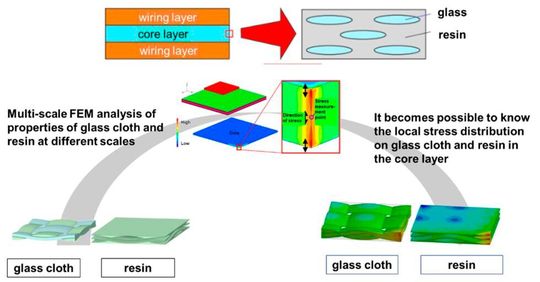
In recent years, there has been a trend towards larger package substrates for next-generation semiconductors. However, as the size increases, the impact of substrate warpage on reliability becomes more significant. Typically, to suppress warpage, it is effective to reduce the coefficient of thermal expansion2 of the copper-clad laminate, which is the core material of the substrate. However, this can lead to cracking during the cooling phase of temperature cycle tests due to differences in thermal expansion with other materials that make up the substrate. While design guidelines for reducing cracking (e.g., lowering the modulus of elasticity3) can be suggested, the copper-clad laminate is composed of multiple materials, including resin and inorganic materials (glass cloth), making it difficult to break down those design guidelines into individual material design guidelines.
To address this, Resonac’s Research Center for Computational Science and Informatics applied “multiscale FEM analysis4,” which considers the interaction of physical properties and behaviors between structures of different scales, to the core layer composed of resin and glass cloth in the copper-clad laminate. This approach enabled detailed analysis of localized stress on the resin in the core layer, which is prone to cracking. By controlling specific physical properties of the resin, Resonac developed a copper-clad laminate that reduces generated stress.
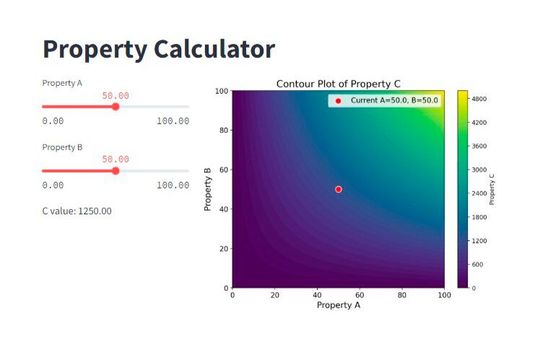
Additionally, Resonac has leveraged this technology to establish a general-purpose physical property visualization system and has begun internal deployment. This system allows users to input the physical properties of materials and visualize how target characteristics (e.g., warpage) change in response. It is applicable not only to copper-clad laminates but also to a wide range of products composed of multiple materials, including molding compounds and film materials. Resonac has started to utilize this system with a focus on products for back-end processes of semiconductor manufacturing, in which Resonac has strength.
With the acceleration of technological innovation in semiconductors, there is an increasing demand for the rapid proposal of high-performance materials. Resonac has allocated 70 % of the resources of its Research Center for Computational Science and Informatics to semiconductor material development, achieving significant results.
Resonac will continue swiftly creating the functionalities demanded by the times, thereby contributing to the sustainable development of the global society.
Notes
- 1 Analysis that couples the physical properties or behaviors of structures at different scales. By homogenizing the material properties of composite materials made from multiple heterogeneous materials, it facilitates understanding of the overall behavior of composite materials.
- 2 Objects expand in volume or length due to a rise in temperature (thermal expansion). The coefficient of thermal expansion indicates how much the volume or length expands with a 1°C rise in temperature, representing a material-specific characteristic.
- 3 A value that indicates the difficulty of deforming a material (the stiffness of the material).
- 4 The Finite Element Method (FEM) divides objects or structures into small elements, quantifying their properties for numerical calculations to analyze the overall behavior, applied to multiscale analysis.
PCIM Expo 2025: Join the industry highlight

Position your company at the forefront of the power electronics industry! Exhibit at the PCIM Expo 2025 in Nuremberg, Germany to showcase your solutions and connect with top decision-makers and innovators driving the industry forward.
Learn more
(ID:50390744)
:quality(80)/p7i.vogel.de/wcms/2a/cc/2accfd11149a6a051be33cb592c3a9f5/0128517332v2.jpeg "Semiconductor supply chains diverge in late 2025 as power and analog ICs normalize while AI-driven compute remains constrained. (Source: © piggu - stock.adobe.com)")
:quality(80)/p7i.vogel.de/wcms/d6/d8/d6d83c11788d14dc3c0b325b477d6137/0128212136v2.jpeg "Exposed GPU layout illustrating the complexity of thermal and electromagnetic management in electronics for the AI era (Source: Nvidia)")