


:quality(80)/p7i.vogel.de/wcms/2f/f3/2ff3221bf7665de2d0acf83760bfd1fa/0130031523v2.jpeg "Wolfspeed presents a 300 mm silicon carbide technology platform designed to support advanced packaging and high-efficiency power delivery for AI data center infrastructure. (Source: Wolfspeed)")
:quality(80)/p7i.vogel.de/wcms/c3/16/c316e955a97f5d72d9678297b237b9e5/0129932858v2.jpeg "Left: the single-phase version of the SENTRON ECPD with RCM, right: a model of the future three-phase version of the SENTRON ECPD. (Source: Siemens)")
:quality(80)/p7i.vogel.de/wcms/ef/0a/ef0adb0acf793fe147cc27c21f6a7a67/0129954238v2.jpeg "Empower Semiconductor introduces embedded silicon capacitors designed to improve power delivery and stability in AI and high-performance computing processors. (symbolic image) (Source: © IF.arc - stock.adobe.com)")
:quality(80)/p7i.vogel.de/wcms/53/f9/53f9301dfc9292d02960f7996c79cc6e/0129927601v2.jpeg "Wolfspeed’s new 10 kV SiC MOSFET enables high-voltage power conversion for grid and industrial applications. (symbolic image) (Source: © CREATIVE- 3.4 - stock.adobe.com)")
:quality(80)/p7i.vogel.de/wcms/6e/cd/6ecd41d095d5111cf4ed37b714844487/0129930878v2.jpeg "PCIM Asia Shenzhen provides a platform for industry experts to present new developments in power electronics and electrification technologies. (symbolic image) (Source: © killykoon - stock.adobe.com)")
:quality(80)/p7i.vogel.de/wcms/02/c0/02c0e9722f70b1134dbf96fb59a9c73d/0129655179v2.jpeg "The PCIM Conference 2026 will take place from June 9-11, featuring discussions on power electronics trends, including GaN technology and AI applications. (symbolic image) (Source: © Elmira - stock.adobe.com)")
:quality(80)/p7i.vogel.de/wcms/cc/67/cc670ea2029cd2af5c641af70e1bf734/0129816392v4.jpeg "Fraunhofer IAF coordinates the EU SUPREME project to accelerate GaN and SiC power semiconductor innovation in Europe. (Source: Fraunhofer IAF)")
:quality(80)/p7i.vogel.de/wcms/ea/e6/eae6aee30071e67a5627027974437134/0129544613v2.jpeg "GlobalFoundries and Renesas strengthen their collaboration to support U.S.-based semiconductor production and supply chain resilience. (Source: © ronstik - stock.adobe.com)")
:quality(80)/p7i.vogel.de/wcms/b1/5e/b15ee02b0ba02db70cf61e37d66ad1d3/0129349127v2.jpeg "Vehicle-to-grid (V2G) chargers enable bidirectional energy flow, allowing electric vehicles to act as mobile energy storage systems that can both draw power from and feed power back into the grid. (Source: © medienvirus - stock.adobe.com)")
:quality(80)/p7i.vogel.de/wcms/26/d5/26d591cc340077026eac56a0e7564faf/0129949603v2.jpeg "Flexible: The solid silicone-based electrolyte is elastic, thereby compensating for the voids that form in solid-state batteries during charging and discharging. (Source: Empa)")
:quality(80)/p7i.vogel.de/wcms/4d/e0/4de02f76a37cbb3df30dd231de589c8e/0128866890v2.jpeg "Both legacy and vGaN show higher carrier mobility and band gap energies compared to other power semiconductors. (Source: © phonlamaiphoto - stock.adobe.com)")
:quality(80)/p7i.vogel.de/wcms/18/0b/180b7b63afc91e523592d8a5ce161c96/0129847487v2.jpeg "InGaAs-based photodetectors enable sensitive and fast detection in the short-wave infrared spectrum for modern sensing and communication applications. (Source: © VITALII - stock.adobe.com)")
:quality(80)/p7i.vogel.de/wcms/be/c8/bec8d43fc0ee73414274be44608b2970/0129748903v2.jpeg "The Infiniium XR804KA real-time oscilloscope delivers faster response time, improved stability, and streamlined workflows for high-speed digital and compliance testing. (Source: Keysight)")
:quality(80)/p7i.vogel.de/wcms/23/ee/23ee4a97790d6009dbfd7d9577ffa723/0129220424v2.jpeg "The R&S FPL1044 with the new RTSA option makes 40 MHz real-time frequency analysis available up to 44 GHz. (Source: Rohde & Schwarz )")
:quality(80)/p7i.vogel.de/wcms/3c/d1/3cd1cacbceb792ba63727199c61ca434/0127801860v2.jpeg "Thanks to cloud technology, users can collaborate on projects from anywhere and always have access to the latest planning data. (Source: SIEMENS)")
:quality(80)/p7i.vogel.de/wcms/5a/a0/5aa0436498af618297961fd54ab36cdf/0126290792v2.jpeg "Siemens accelerates student-led semiconductor innovation across Europe’s leading technical universities through Cre8Ventures’ Open Higher Education Program developed in collaboration with Arm and University of Southampton (Source: Siemens Digital Industries Software)")
MARKET OVERVIEW Power modules are booming, but the battle has moved to packaging
Related Vendors
:fill(fff,0)/p7i.vogel.de/companies/60/7e/607ec89d5d9b5/white-frame.jpg "white frame.jpg (www.rohm.com)")
:fill(fff,0)/p7i.vogel.de/companies/68/00/6800eb0040fb9/cobalt-vertical-aligned-bold.png "cobalt-vertical-aligned-bold (CISSOID SA)")
:fill(fff,0)/p7i.vogel.de/companies/66/8b/668becd1c07eb/dowa-logo-word--1-.jpeg "dowa-logo-word--1- (DOWA)")
The global power module market is entering a high-stakes transition. While silicon IGBTs still dominate in unit terms, wide-bandgap modules are driving growth, and the performance race is shifting from die to packaging.
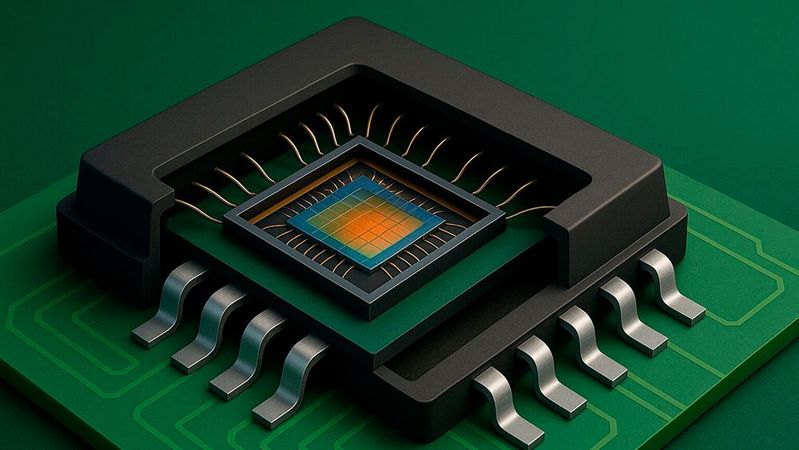
Power modules have long been the quiet workhorses of everything from factory drives to bullet trains. But in 2025, the story is being rewritten. According to new data from Yole Group, global power-module revenue will nearly double by 2029, jumping from around $8 billion in 2023 to more than $16 billion. That surge is powered less by legacy applications and more by fast-growing demand from EV traction inverters, renewable-energy conversion systems, and high-efficiency data center power supplies. Crucially, the bottlenecks in this market are no longer about transistor architecture. They're in packaging.
Yole’s packaging-specific report forecasts a $6.1 billion market for packaging materials alone by 2030, a signal that thermal interfaces, ceramic substrates, and interconnects are becoming core differentiators. Semikron Danfoss’s eMPack modules offer a telling case study. Designed for automotive traction inverters, they use double-sided cooling and wire-bond-free silver sintering for better thermal performance and lifetime reliability, exactly the features now required to meet the rigorous qualification benchmarks set by AQG 324.
In short, the engineering focus is moving up the stack. Designers are less concerned with switching frequency per se and more with how modules handle thermal impedance, bond fatigue, and power-cycling over a 15-year vehicle lifetime. It's no longer just about fitting a MOSFET into a footprint but qualifying an entire thermal system.
SiC ramps up while the supply geography shifts
Wide-bandgap semiconductors, particularly SiC, are the clear growth vector for power modules. But the real story in 2025 is where and how they’re being made. Infineon’s Kulim 3 plant in Malaysia is now in volume production of 200-millimeter SiC wafers, feeding into its latest module lines. STMicroelectronics is building an integrated “SiC Campus” in Catania, Italy, which will bring wafer, die, module, test, and packaging under one roof, a strategic move that underscores just how vertically integrated the future of this market is becoming. Volume production there begins in Q4 2025. Onsemi, meanwhile, has announced plans to start production at a new end-to-end SiC facility in the Czech Republic by 2027.
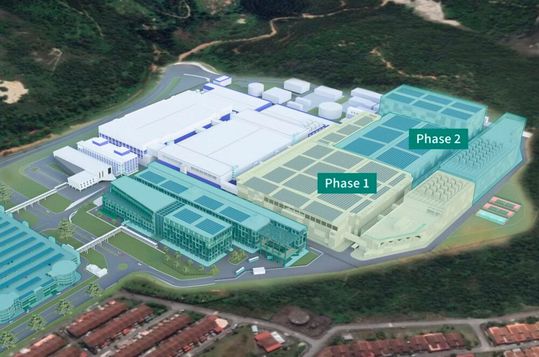
This matters because the power-module supply chain has traditionally been fragmented, with wafer foundries, packaging houses, and test facilities scattered across regions. That’s changing fast. Vertical integration in SiC means tighter control over quality, faster iteration on packaging designs, and less reliance on subcontractors. This is key for automotive customers chasing ever-lower defect rates and faster time-to-qualification.
At the same time, China is scaling domestic module production with a focus on the EV segment. H1 2025 data shows players like BYD Semiconductor, CRRC Times Semiconductor, and StarPower aggressively expanding their presence in main-drive inverters. While these modules remain largely inside China for now, their learning-curve advantages are reshaping global cost structures and accelerating innovation in materials and assembly techniques.
Qualifications and standards raise the bar
Engineers building next-gen power modules aren’t just wrestling with thermal design and materials science. They’re also contending with shifting qualification requirements that demand more rigorous lifetime modeling and stress testing. In May 2025, the ECPE working group released a major update to the AQG 324 guideline, which governs automotive-grade power modules in traction inverters.
:quality(80):fill(efefef,0)/p7i.vogel.de/wcms/5f/fe/5ffedb2e0ffa6/listing.jpg "listing")
The new revision places greater emphasis on power-cycling durability, thermal fatigue modeling, and packaging integrity over extended field use. In practical terms, this means longer validation cycles, higher costs for suppliers, and increased pressure to adopt advanced packaging solutions like sintered die attach and bond-free layouts. These changes ripple all the way down the supply chain, from materials selection to thermal modeling in early-stage design.
But the upside is real: with better modeling and qualification, system designers can build in less thermal and electrical margin, saving space and cost at the inverter level. The module, in other words, is no longer a component you qualify once and forget. It’s a linchpin in the system’s long-term reliability and efficiency.
From cars to clouds
While automotive remains the biggest driver of innovation and volume, power modules are quietly gaining traction in other sectors. GaN-based modules, once a niche for low-power fast chargers, are moving into 48-volt server PSUs and data center front ends. With hyperscale clouds adopting direct 48-volt architectures to cut conversion losses, high-frequency GaN modules offer a compelling path forward.
That means lessons learned in EV traction, like on packaging, qualification, and supply chain integration, are now bleeding into sectors far beyond the highway. The power module is becoming a strategic design choice rather than just a power-handling commodity.
And as both automotive and cloud customers converge on similar expectations for performance, cost, and reliability, the next five years may well define which packaging architectures and which suppliers own the future of high-efficiency power electronics.
(ID:50568317)
:quality(80)/p7i.vogel.de/wcms/72/fa/72fa65ac052da71dd3fcef19cd75f16b/0126978972v2.jpeg "Integrated power modules simplify motor control by combining essential components into a compact package, enhancing design efficiency and market speed for appliances and HVAC systems. (Source: Dall-E)")
:quality(80)/p7i.vogel.de/wcms/ff/de/ffde925ce91a3e34c39609e7c8344d17/0129759898v2.jpeg "Power electronics face simultaneous pressure from SiC overcapacity, rising AI-driven data center demand, and a reshaping global supply chain. (Source: © TommyNa - stock.adobe.com)")