


:quality(80)/p7i.vogel.de/wcms/7f/4b/7f4b97757cea82c0675209630577dc22/0133974130v2.jpeg "Vox Power’s EIRE600 delivers up to 600 W in a compact 5 × 3-inch package, with forced-air or conduction cooling options for industrial and medical equipment. (Source: Vox Power)")
:quality(80)/p7i.vogel.de/wcms/55/97/5597c3436e3bc92ee7ba23b6f9d289e9/0134032539v2.jpeg "Littelfuse’s TP7.0SMD-XC automotive TVS diode series uses foldback technology to provide low clamping voltage for protecting sensitive vehicle electronics. (Bild: Littelfuse)")
:quality(80)/p7i.vogel.de/wcms/51/f8/51f84448e666230bb11a02566abd1177/0133958187v3.jpeg "Microchip’s radiation-tolerant GaN point-of-load converter supplies up to 20 A for space-based processors, FPGAs, microcontrollers and ASICs. (Source: Microchip)")
:quality(80)/p7i.vogel.de/wcms/0a/7c/0a7c08f368ae1d91f758dd18d2a32e88/0133978423v2.jpeg "EPFL researchers have demonstrated a GaN transistor that withstands nearly 4 kV, using an intrinsic polarization superjunction design to distribute electric fields more evenly. (Source: EPFL)")
:quality(80)/p7i.vogel.de/wcms/5b/94/5b94232ca4183d6fcc2dccc7394d7544/0134041114v4.jpeg "Siemens and NVIDIA are testing AI applications at Siemens’ Erlangen electronics factory, using digital twins to support production planning and prepare inspection systems before physical prototypes are available. (Bild: Siemens)")
:quality(80)/p7i.vogel.de/wcms/b4/1f/b41f2731a07b608e60eca3663e280301/0133980549v2.jpeg "Multi-year agreement with Wolfspeed supports Infineon’s conversion from 150-millimeter to 200-millimeter silicon carbide (SiC) manufacturing (Source: © Ada - stock.adobe.com)")
:quality(80)/p7i.vogel.de/wcms/e3/0a/e30a8813bcf44b16f0dceb63a0747d29/0133984094v2.jpeg "The semiconductor is only one part of the design. Higher voltage, frequency and power density also increase the demands on electronic packaging materials such as die attach, substrates, top-side interconnects and module attach. (Source: Generated by AI)")
:quality(80)/p7i.vogel.de/wcms/5d/fb/5dfba5e5f38daf2b8597b05656af29c0/0133956337v2.jpeg "Wolfspeed has received a conditional commitment for a loan of up to $1.5 billion from the U.S. Department of War to support its domestic wide-bandgap semiconductor supply chain. (Source: © AspctStyle - stock.adobe.com)")
:quality(80)/p7i.vogel.de/wcms/bf/b6/bfb6ac295759be32d567df9849b6767e/0134094495v2.jpeg "Fraunhofer ISE reports that 25 Ah pouch cells with silicon-rich anodes retained more than 83% of their initial capacity after 1,000 cycles when tested under 1,000 kPa axial pressure. (Bild: Fraunhofer ISE)")
:quality(80)/p7i.vogel.de/wcms/16/dc/16dca55e6ef80e6b5da68bc628da2dcc/0133844782v2.jpeg "This article explains virtual power plants in modern renewable-heavy grids. (Source: © M@rketVisualsStudio - stock.adobe.com)")
:quality(80)/p7i.vogel.de/wcms/e8/33/e8330aae4bea3578b98ec2c1403d367a/0133980001v2.jpeg "IRENA’s 2026 World Energy Transition Outlook identifies faster electrification powered by renewables as central to meeting future global energy needs. (Source: Irena)")
:quality(80)/p7i.vogel.de/wcms/6c/b4/6cb405f47d25035e256ae90fe3a66ee6/0134032112v2.jpeg "Sungrow’s PowerTitan 3.0 energy storage platform uses onsemi EliteSiC hybrid power modules, with the companies reporting peak inverter efficiency above 99.3%. (Bild: onsemi)")
:quality(80)/p7i.vogel.de/wcms/7b/76/7b76005554b556df2a7a3794bdf69d44/0132365246v2.jpeg "Hioki’s ST5680A DC Hipot Tester combines CE/UKCA/CSA compliance, an integrated capacitance‑based contact check and time‑series waveform recording (voltage, leakage current, insulation resistance) to standardize hipot and insulation testing across EV cell, module and pack production lines. (Source: Hioki)")
:quality(80)/p7i.vogel.de/wcms/af/7f/af7f7b0fb7f29219fc991b1130f65477/0132241333v2.jpeg "Comprehensive laboratory testing regimens—combining thermal cycling, high‑current stress, EMC, and accelerated lifetime tests—are essential to validate advanced power designs and ensure reliability in real‑world applications. (Source: PRBX)")
:quality(80)/p7i.vogel.de/wcms/16/3d/163df69363f8125315a9826e13ea4b05/0131927425v2.jpeg "Solution will maximize data center and AI factory profitability while delivering engineering-grade insights to design and operations for more efficient, sustainable, and resilient infrastructure. (Source: Cadence)")
:quality(80)/p7i.vogel.de/wcms/85/b7/85b7e90733a2bd8f21515d8f7137f2fc/0131917677v2.jpeg "Renesas acquires Pictorus to integrate its embedded application software platform with Renesas’ MCU and MPU portfolio, helping developers shorten time‑to‑market and simplify system integration. (Source: © lucadp - stock.adobe.com)")
:quality(80)/p7i.vogel.de/wcms/f8/34/f834240d434a0c265a2ccafe614c8cd7/0134032109v4.jpeg "Hard- and soft-switching techniques shape voltage and current during device transitions, influencing switching losses, EMI and thermal performance in power converters. (Bild: © Mrthullab - stock.adobe.com)")
:quality(80)/p7i.vogel.de/wcms/27/07/2707280c807689b437baed3660257404/0133626052v2.jpeg "The quantum behavior of electrons shapes semiconductor devices—and the power converters that deliver electricity to modern computing systems. (Source: © Celt Studio - stock.adobe.com)")
Energy Transmission HVDC light: Europe’s bet on IGBT
Related Vendors
:fill(fff,0)/p7i.vogel.de/companies/62/a0/62a0a0de7d56a/aic-europe-logo.jpeg "aic-europe-logo (AIC Europe)")
:fill(fff,0)/p7i.vogel.de/companies/68/2c/682c3e2e9a195/logotype-rvb.jpeg "logotype-rvb (MERSEN France)")
:fill(fff,0)/p7i.vogel.de/companies/66/8b/668becd1c07eb/dowa-logo-word--1-.jpeg "dowa-logo-word--1- (DOWA)")
HVDC Light (High Voltage Direct Current Light) is a new type of power transmission technology. Some experts consider it superior to HVAC (High Voltage Alternating Current) and classical HVDC. Swedish-Swiss multinational corporation ABB introduced HVDC Light in the late 1990s. In 2018, Swiss company Hitachi Energy acquired HVDC Light, which is still growing in practical applications.
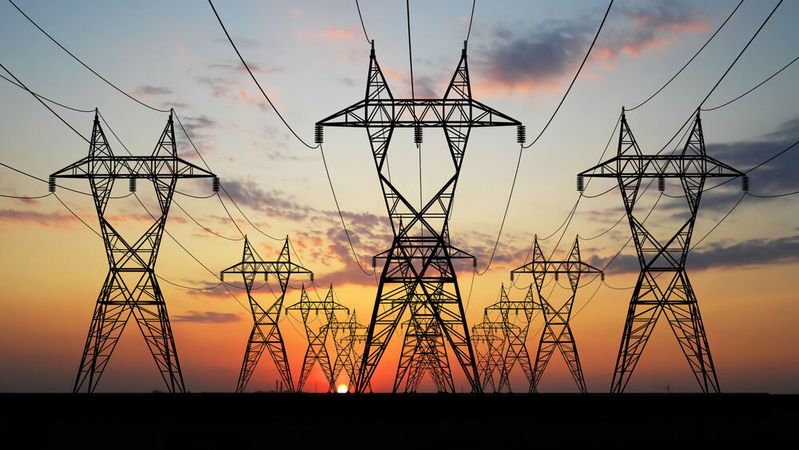
HVDC Light is revolutionizing the field of power transmission with its innovative design and improved efficiency. Unlike traditional methods, this technology utilizes advanced converter systems to enhance the control and stability of electricity flow. Its adoption signifies a shift towards more flexible and sustainable energy solutions.
HVDC Light explained
HVDC Light belongs to the family of HVDC. It is a relatively newer transmission technology, only 25 years old. The US Department of Energy (DoE) quotes “HVDC Light is an intelligent link for transmitting electrical power.”
The key difference between HVDC and HVDC Light is the type of converter technology they use. HVDC relies on converters that must be commutated or turned off by a process. HVDC Light relies on self-commutated converters, which can quickly switch between on and off states.
Classical HVDC uses LCC converters (Line Commutated Converter). LCC converters are made from thyristors. We have explained the thyristor in our article. In short, a thyristor is a current-controlled power semiconductor device used to control medium to high power in industrial applications. A control signal can easily turn on a Thyristor.
A thyristor is a latch-on device, meaning that it always remains on and cannot be turned off by control. Thyristor turn-off is a wholesome process. A strong grid is required to provide a zero-crossing current to turn it off. The power direction is reversed by changing the DC voltage polarity.
HVDC Light implements a smart converter technology, known as VSC (Voltage Source Converter), built from self-commutated devices such as IGBT (Insulated Bipolar Junction Transistor) network in series. IGBT is a voltage-controlled power semiconductor device that can be easily turned on and off by control. The power direction can be changed without even reversing the voltage polarity. As a result, HVDC Light offers better power transmission and current capabilities than classical converters used in HVDC.
IGBT-based VSCs use PWM (Pulse Width Modulation) as a control and reactive power compensation technique to result in higher current densities with lower power losses. Recent HVDC Light implementations use BIGTs (Bimodal Insulated Gate Transistors) with advanced switching algorithms to offer better results.
HVDC Light features
Active power control, reactive power change, filtering, harmonic suppression, power oscillation damping, and many more “electrical features” have scaled HVDC Light deployment globally.
Compact design: HVDC Light uses compact converter stations that deliver effective control and reduced power losses. The relative size ratio between classical HVDC and HVDC Light is 4:1, indicating that HVDC Light incorporates small converter stations and offers room for multi-terminal configuration.
Invisible connectivity: Transmitting power beneath the ground or underwater is one of the main benefits of implementing HVDC Light. Hitachi Energy refers to HVDC Light as “invisible power lines” because, in most cases, people won’t be able to catch a glimpse of them like classical transmission lines.
Environmentally sound: HVDC Light is an effort to focus on environmental safety. It offers fewer field emissions, noise, and EMI. It is an oil-free transmission technology. Other transmission technologies use oil as an insulation and cooling medium. Although oil is a good solution for dielectric strength, it is not safe in urban areas. HVDC Light uses dry XLPE (Extruded Solid Polymer) DC solid-state cables that exhibit high power density.
Grid support: The capabilities of HVDC Light can integrate into HVAC to support AC voltage, reactive power compensation, active power control, harmonic suppression, power system stabilization, and also black start a grid. HVDC light can also function as an interconnector between asynchronous grids because it can easily adapt to grid codes.
HVDC Light use cases
HVDC Light use cases include the following:
- Offshore wind generation above 100 km, from wind farms to onshore grids.
- Underwater power links between countries.
- Providing electricity to topologically differentiated areas such as islands, canal cities, and forests.
- Connecting remote areas and undeveloped areas.
- Underground power links.
- City center infeed.
- DC links in AC grids.
- Interconnections that require a small physical footprint and weight, where HVAC is impractical.
Examples of some upcoming HVDC Light projects
HVDC Light has been implemented in many parts of Europe, followed by the USA and Asian countries. The world’s first HVDC Light link was deployed in Gotland, Sweden, in 1997.
HVDC Light is marketed as a “solution” to European energy needs because multiple HVDC projects run in Europe—for example, the Viking Link between the UK and Denmark and the NordLink Interconnector between Germany and Norway.
Examples of upcoming projects are listed below:
- 1. SuedLink DC4 is one of the most upcoming energy transition projects in Germany, powered by HVDC Light. Hitachi Energy claims that the project will deliver emission-free 2000 MW of energy to 5 million German homes.
- 2. Zhangbei DC-grid project in China. Commissioned in 2020, the total power transmitted is 3000 MW.
- 3. Project Lightning is a subsea power transmission in the MENA region, outside Norwegian waters, with two links. The commissioning target is 2025.
- 4. SunZia Transmission Project in the USA, linking Arizona’s grid to New Mexico’s wind farms. The commissioning target is 2026.
HVAC vs HVDC vs HVDC Light
HVAC vs HVDC vs HVDC Light is not a debate. Each transmission technology is best suited for its use case. However, this section explains a basic difference between the three.
HVAC is the traditional method to deliver power to every home, commercial space, or factory. High-voltage AC is stepped up from the power station, sent through transmission lines, where it gets stepped down to reach the destination.
HVAC, with an optimal range between 300 and 600 km, is not suitable for long distances. While classical HVDC is suitable for very long distances, such as 600 km to 2500 km+, HVDC Light is suitable for long distances from 50 to 2000 km, slightly less than HVDC.
| Feature | HVAC | HVDC | HVDC Light |
| Current Type | AC | DC | DC |
| Converter Type | No converter Transformer performs the main function | Line Commutated Converter LCC | Voltage Source Converter VSC |
| Sub-converter Type | - | Thyristor | IGBT |
| Power Direction Control | Limited Strong dependency | DC polarity Strong grid dependency | Operates without a grid |
| Independent Power Control | No | No | Yes |
| Reactive Power Control | Complex | Compensator network | Independent control |
| Harmonics | Moderate | Moderate with filters | Low due to PWM |
| Cable Type | Overhead | Oil-filled | Lightweight and flexible, without oil-filling |
| Distance | 300 to 600 km | 600 to 2500 km+ | 600 to 2000 km |
| Power | Moderate (Mega Watts) | Very high (Giga Watts) | Moderate (3000 Mega Watts) |
| Bulk Power Transmission | Low | High | Moderate |
| Grid Interconnection | Synchronized grid interconnection | Asynchronous grid interconnection is possible | Asynchronous grid interconnection is possible |
| Implementation | Highly common | Highly common | Relatively new |
| Delivery Time | 18-30 months | 36 months | 24 months |
| Cost | Economical | Economical | Costly |
| Application | Homes and offices | Intercontinental links | Offshore links, islands, canal cities, windmill farms, weak and grids |
| Scheduled Maintenance | 2-3% | <1% | <0.5% |
| Reliability | Low | High | High |
| Maturity | 140 years | 70 years | 25 years |
(ID:50598767)
:quality(80)/p7i.vogel.de/wcms/5d/d1/5dd149a739adc01e402a30c4ad8d3c2c/0131249119v2.jpeg "Power‑over‑Fiber transmits energy via laser and optical fiber to provide true galvanic isolation for auxiliary supplies and gate drivers in SSTs and HVDC circuit breakers, eliminating parasitic coupling and withstanding extreme dv/dt.
(Source: EBV Elektronik)")
:quality(80)/p7i.vogel.de/wcms/b8/73/b8734bcedf4a6443003aacc356040cd0/0127845947v2.jpeg "The article explains power strips and their role in solving outlet problems. (Source: © Dara - stock.adobe.com)")