


:quality(80)/p7i.vogel.de/wcms/2f/f3/2ff3221bf7665de2d0acf83760bfd1fa/0130031523v2.jpeg "Wolfspeed presents a 300 mm silicon carbide technology platform designed to support advanced packaging and high-efficiency power delivery for AI data center infrastructure. (Source: Wolfspeed)")
:quality(80)/p7i.vogel.de/wcms/c3/16/c316e955a97f5d72d9678297b237b9e5/0129932858v2.jpeg "Left: the single-phase version of the SENTRON ECPD with RCM, right: a model of the future three-phase version of the SENTRON ECPD. (Source: Siemens)")
:quality(80)/p7i.vogel.de/wcms/ef/0a/ef0adb0acf793fe147cc27c21f6a7a67/0129954238v2.jpeg "Empower Semiconductor introduces embedded silicon capacitors designed to improve power delivery and stability in AI and high-performance computing processors. (symbolic image) (Source: © IF.arc - stock.adobe.com)")
:quality(80)/p7i.vogel.de/wcms/53/f9/53f9301dfc9292d02960f7996c79cc6e/0129927601v2.jpeg "Wolfspeed’s new 10 kV SiC MOSFET enables high-voltage power conversion for grid and industrial applications. (symbolic image) (Source: © CREATIVE- 3.4 - stock.adobe.com)")
:quality(80)/p7i.vogel.de/wcms/6e/cd/6ecd41d095d5111cf4ed37b714844487/0129930878v2.jpeg "PCIM Asia Shenzhen provides a platform for industry experts to present new developments in power electronics and electrification technologies. (symbolic image) (Source: © killykoon - stock.adobe.com)")
:quality(80)/p7i.vogel.de/wcms/02/c0/02c0e9722f70b1134dbf96fb59a9c73d/0129655179v2.jpeg "The PCIM Conference 2026 will take place from June 9-11, featuring discussions on power electronics trends, including GaN technology and AI applications. (symbolic image) (Source: © Elmira - stock.adobe.com)")
:quality(80)/p7i.vogel.de/wcms/cc/67/cc670ea2029cd2af5c641af70e1bf734/0129816392v4.jpeg "Fraunhofer IAF coordinates the EU SUPREME project to accelerate GaN and SiC power semiconductor innovation in Europe. (Source: Fraunhofer IAF)")
:quality(80)/p7i.vogel.de/wcms/ea/e6/eae6aee30071e67a5627027974437134/0129544613v2.jpeg "GlobalFoundries and Renesas strengthen their collaboration to support U.S.-based semiconductor production and supply chain resilience. (Source: © ronstik - stock.adobe.com)")
:quality(80)/p7i.vogel.de/wcms/b1/5e/b15ee02b0ba02db70cf61e37d66ad1d3/0129349127v2.jpeg "Vehicle-to-grid (V2G) chargers enable bidirectional energy flow, allowing electric vehicles to act as mobile energy storage systems that can both draw power from and feed power back into the grid. (Source: © medienvirus - stock.adobe.com)")
:quality(80)/p7i.vogel.de/wcms/26/d5/26d591cc340077026eac56a0e7564faf/0129949603v2.jpeg "Flexible: The solid silicone-based electrolyte is elastic, thereby compensating for the voids that form in solid-state batteries during charging and discharging. (Source: Empa)")
:quality(80)/p7i.vogel.de/wcms/4d/e0/4de02f76a37cbb3df30dd231de589c8e/0128866890v2.jpeg "Both legacy and vGaN show higher carrier mobility and band gap energies compared to other power semiconductors. (Source: © phonlamaiphoto - stock.adobe.com)")
:quality(80)/p7i.vogel.de/wcms/18/0b/180b7b63afc91e523592d8a5ce161c96/0129847487v2.jpeg "InGaAs-based photodetectors enable sensitive and fast detection in the short-wave infrared spectrum for modern sensing and communication applications. (Source: © VITALII - stock.adobe.com)")
:quality(80)/p7i.vogel.de/wcms/be/c8/bec8d43fc0ee73414274be44608b2970/0129748903v2.jpeg "The Infiniium XR804KA real-time oscilloscope delivers faster response time, improved stability, and streamlined workflows for high-speed digital and compliance testing. (Source: Keysight)")
:quality(80)/p7i.vogel.de/wcms/23/ee/23ee4a97790d6009dbfd7d9577ffa723/0129220424v2.jpeg "The R&S FPL1044 with the new RTSA option makes 40 MHz real-time frequency analysis available up to 44 GHz. (Source: Rohde & Schwarz )")
:quality(80)/p7i.vogel.de/wcms/3c/d1/3cd1cacbceb792ba63727199c61ca434/0127801860v2.jpeg "Thanks to cloud technology, users can collaborate on projects from anywhere and always have access to the latest planning data. (Source: SIEMENS)")
:quality(80)/p7i.vogel.de/wcms/5a/a0/5aa0436498af618297961fd54ab36cdf/0126290792v2.jpeg "Siemens accelerates student-led semiconductor innovation across Europe’s leading technical universities through Cre8Ventures’ Open Higher Education Program developed in collaboration with Arm and University of Southampton (Source: Siemens Digital Industries Software)")
:quality(80)/thumbor.vogel.de/gpQmCCQMcosx5Yf01xZInZ-OGvY=/500x500/p7i.vogel.de/wcms/67/36/6736040e99b33/rolf-hellinger-nd58461-klein.jpeg "Prof. Dr. Rolf Hellinger")
SUSTAINABILITY Digital transformation of power electronics
Related Vendors
:fill(fff,0)/p7i.vogel.de/companies/60/7e/607ec89d5d9b5/white-frame.jpg "white frame.jpg (www.rohm.com)")
:fill(fff,0)/p7i.vogel.de/companies/66/9a/669a2816c84be/pcim-logo.png "pcim-logo (PCIM)")
:fill(fff,0)/p7i.vogel.de/companies/68/08/6808a2b3b6595/het-logo.jpeg "het-logo (Heraeus Electronics)")
Power electronics is a fundamental enabler for transitioning to all-electric society and Digital Transformation enables sustainability and productivity along the entire lifecycle.

Currently, industry accounts for a significant 25% of global CO2 emissions, and 70% of industrial electricity consumption is for powering drives. Yet, the recycling rate for global waste remains low at only 13%. This highlights the urgent need for more sustainable and productive power electronics and electrical drive technologies to transform our power systems.
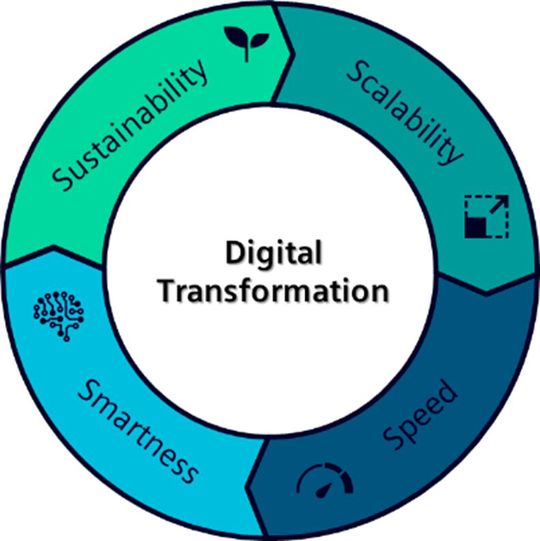
To achieve this transformation, a holistic, vertically optimized system architecture and horizontally integrated product lifecycle management approach is essential. This is where digital transformation plays a crucial role. Digital technologies like artificial intelligence, connectivity, and digital twins can drive progress across four key design pillars:
- Sustainability
- Scalability
- Speed
- Smartness
Harnessing the power of digital transformation is key to optimizing power electronics systems and processes for greater resource efficiency, productivity, affordability, and ease of use.
Sustainability
Power electronics serves as a pivotal enabler for improving the overall sustainability of industrial systems. It offers a crucial lever to drive progress on multiple fronts - from boosting energy efficiency to facilitating a comprehensive circular economy approach.
Realizing this potential, however, requires a multifaceted strategy that takes a holistic view of the entire product lifecycle and measures such as:
- Dematerialization through software-defined functionality
- Minimizing energy consumption and waste
- Adopting a cradle-to-cradle design approach that optimizes the system for repair, reuse, refurbishment, remanufacturing, and recyclability
- Leveraging simulation, digital twin technology, and smart control algorithms to enhance eco-design and sustainability
By embracing this comprehensive, lifecycle-oriented approach, power electronics can play a transformative role in reshaping the industrial landscape towards a more sustainable future.
Scalability
The increasing electrification demand across various sectors, including renewable power supply, industry, mobility, healthcare, and data centers is generating an increasing diversity, variance and complexity of power electronics solutions. A comprehensive re-evaluation of power electronics system designs is necessary to meet the evolving requirements, especially for new and fast-growing applications and to reduce overall complexity and variance at the same time.
Leveraging modular building blocks and integrated, application-specific Software-based designs, enabled by model-based development and AI, can help identify the most suitable architectures that combine both modular and integrated design concepts for optimal performance and scalability across the diverse range of applications.
Speed
Hardware, embedded software, and cloud-based digital services have its own distinct lifecycle and associated business model.
Harmonizing the development and evolution of these diverse components is crucial to streamlining the introduction of innovations and reducing time-to-market. While electronics, embedded software, and digital services require more frequent updates to keep pace with rapid technological advancements, power hardware has a relatively long lifespan.
The independency of these disparate lifespans, upgrade cycles and aligned business models are essential to delivering a cohesive, future-ready inverter system.
Smartness
As the convergence of IT (Information Technology) and OT (Operational Technology) deepens, smart data services are emerging as a powerful means to enhance the economic efficiency of power electronics components and systems.
Capabilities such as condition monitoring for preventive maintenance, lifetime extension, and seamless integration into digital factories or energy systems are becoming increasingly crucial. These data-driven functionalities can help unlock significant operational efficiencies and cost savings across the power electronics ecosystem.
To enable these smart services, modern inverter systems are offering standardized, open APIs, updateability, and interoperability features for seamless integration into broader monitoring and control systems and enabling data-driven optimization of the entire power electronics infrastructure.
:quality(80):fill(efefef,0)/p7i.vogel.de/wcms/66/c5/66c5de0fac082/pcim-2024-keynote-prof--dr.jpeg "PCIM 2024_Keynote Prof. Dr. Rolf Hellinger_Cover (stock.adobe.com - putilov_denis)")
PCIM 2024 - Keynote
The Impact of AI on the Entire Power Electronics Lifecycle
Digital Thread and Lifecycle Considerations
Efficient data management and the use of digital twins for model-based development are gaining traction across the product lifecycle. Design space exploration on simulation models helps identifying promising solutions in the initial conception phase. Multi-domain system simulations, automated code generation and even certification tests on simulation models streamline the complete development phase. Generative AI techniques hold promise for further reduction of engineering effort and identification of even more optimized design variants, potentially unlocking new possibilities beyond human-designed solutions.
Considering the digital thread beyond development and into the operational phase we find smart controls and data services, useful to reduce maintenance costs, increase product lifetimes, and minimize production downtimes.
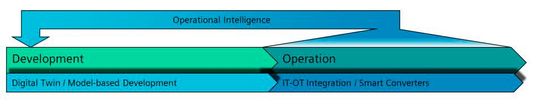
Closing the loop from operations to development, through operational intelligence, helps refining future product designs to better meet real-world requirements and optimize economic efficiency. This feedback loop helps mitigating design flaws in future products and ensures that systems are optimized to meet the actual and future operational needs of customers.
In summary, digital transformation is empowering power electronics to address the key focus areas of sustainability, scalability, smartness, and speed. By holistically leveraging digital technologies throughout the product lifecycle, power electronics can make substantial contributions to a highly efficient and environmentally friendly industrial future.
PCIM Expo 2025: Join the industry highlight
Position your company at the forefront of the power electronics industry! Exhibit at the PCIM Expo 2025 in Nuremberg, Germany to showcase your solutions and connect with top decision-makers and innovators driving the industry forward.
Learn more
(ID:50235824)
:quality(80)/p7i.vogel.de/wcms/f5/7a/f57a4f3eb14ac9721a5f22ae789c649a/0124979905v2.jpeg "Through its digital platform, WIN SOURCE continuously integrates intelligent tools spanning component selection, lifecycle management, and agile procurement strategies. (Source: WIN SOURCE)")
:quality(80)/p7i.vogel.de/wcms/63/09/6309df9835f3132935fb3e28945a8950/0128257234v6.jpeg "The Vanguard provides automated wet processing for 200 mm and 300 mm wafers. (Bild: Rena)")