


:quality(80)/p7i.vogel.de/wcms/55/5b/555bb8759d60243792dd736b86585f29/0130909253v2.jpeg "New DFN‑packaged ultrafast diodes with wettable flanks enable automated inspection and reliable high‑current performance in DC/DC converters and traction inverters. (symbolic image) (Source: © Natalia - stock.adobe.com)")
:quality(80)/p7i.vogel.de/wcms/db/75/db7507346cd4842ca5eb8838f45861ce/0130908924v2.jpeg "KYOCERA AVX launches the FFLK traction‑grade DC filtering capacitors for demanding EV and industrial power applications. (Source: KYOCERA AVX)")
:quality(80)/p7i.vogel.de/wcms/44/0f/440f92984dc6c58eec920824ef55b54c/0130740285v2.jpeg "TDK’s new high‑voltage common‑mode choke enables compact 1250 V DC converter designs with effective EMI suppression. (Source: TDK)")
:quality(80)/p7i.vogel.de/wcms/be/dc/bedc263ae2b17f59ef71bfc822b95d27/0130740269v2.jpeg "RECOM expands its portfolio with discrete isolated DC/DC building blocks — SMD transformers, driver ICs and rectifiers for custom power designs. (Source: RECOM)")
:quality(80)/p7i.vogel.de/wcms/ea/60/ea600a89db0dc673ba3b6eb1ca56093e/0130736129v2.jpeg "Infineon is expanding its semiconductor portfolio to support next-generation automotive power and control systems. (Source: Infineon)")
:quality(80)/p7i.vogel.de/wcms/8b/ae/8bae28ce8ab5e6820bc036ce49939261/0130655531v2.jpeg "Higher material prices impact global logistics. (Source: © MAGNIFIER - stock.adobe.com)")
:quality(80)/p7i.vogel.de/wcms/de/9b/de9beb17c1467fdb18301a114f31bf8e/0130651681v2.jpeg "PCIM Expo & Conference 2026 brings together 650+ exhibitors and 500+ presentations on power electronics, SiC/GaN devices, and energy management. (Source: Mesago Messe Frankfurt GmbH / Arturo Rivas Gonzalez)")
:quality(80)/p7i.vogel.de/wcms/47/47/474773560a05ff45872e5942c2702e11/0130617850v2.jpeg "Global renewable energy capacity grew by nearly 700 GW in 2025, highlighting the continued momentum of the energy transition. (Source: Irena)")
:quality(80)/p7i.vogel.de/wcms/07/89/0789a27b7dcc43dbdafd17f2b601e3a7/0130908474v2.jpeg "Empa’s H2 Districts project demonstrated hydrogen fuel cells supplying electricity and medium‑temperature heat to a district network, achieving >90% total efficiency. (Source: © dhita - stock.adobe.com)")
:quality(80)/p7i.vogel.de/wcms/9e/b0/9eb01567f828f28e7922897edc690be2/0130454119v2.jpeg "Voltage drop is a result of current flowing through a resistor. (Source: © Viktor - stock.adobe.com)")
:quality(80)/p7i.vogel.de/wcms/db/bb/dbbb1b9c429bd4fc375a7937bb083ba1/0130804041v2.jpeg "Rapid AI growth is driving demand for hyperscale data centres, increasing energy and water use and raising sustainability concerns. (Source: © Joachim - stock.adobe.com)")
:quality(80)/p7i.vogel.de/wcms/a3/30/a330337e234ac2000bb8829ce34ce001/0130871678v2.jpeg "Green transition in power electronics: Ecodesign and modular systems close the material loop. (Source: © DigiArtStudio - stock.adobe.com)")
:quality(80)/p7i.vogel.de/wcms/34/4a/344a3dc5a19429cf6726b7f8f7e2ee32/0130109719v2.jpeg "Hioki’s new measurement solutions enable precise analysis of power electronics systems and energy efficiency. (Source: Hioki)")
:quality(80)/p7i.vogel.de/wcms/be/c8/bec8d43fc0ee73414274be44608b2970/0129748903v2.jpeg "The Infiniium XR804KA real-time oscilloscope delivers faster response time, improved stability, and streamlined workflows for high-speed digital and compliance testing. (Source: Keysight)")
:quality(80)/p7i.vogel.de/wcms/23/ee/23ee4a97790d6009dbfd7d9577ffa723/0129220424v2.jpeg "The R&S FPL1044 with the new RTSA option makes 40 MHz real-time frequency analysis available up to 44 GHz. (Source: Rohde & Schwarz )")
:quality(80)/p7i.vogel.de/wcms/3c/d1/3cd1cacbceb792ba63727199c61ca434/0127801860v2.jpeg "Thanks to cloud technology, users can collaborate on projects from anywhere and always have access to the latest planning data. (Source: SIEMENS)")
SEMICONDUCTOR INDUSTRY What’s slowing the semiconductor boom? A view from the engineering front line
Related Vendors
:fill(fff,0)/p7i.vogel.de/companies/5f/71/5f71d5f92a5f6/2000px-rogers-corporation-logo-svg.png "2000px-Rogers_Corporation_Logo.svg.png (rogers germany)")
:fill(fff,0)/p7i.vogel.de/companies/60/76/607651ea5d461/logo-sq.jpg "logo sq.jpg (KOKI)")
:fill(fff,0)/p7i.vogel.de/companies/68/08/6808a2b3b6595/het-logo.jpeg "het-logo (Heraeus Electronics)")
The semiconductor industry is on track to hit $1 trillion by 2030, but growth is threatened by cost pressures, supply chain fragility, and a deepening talent shortage. This article unpacks the real-world implications for power engineers tasked with scaling systems under structural and logistical constraints.
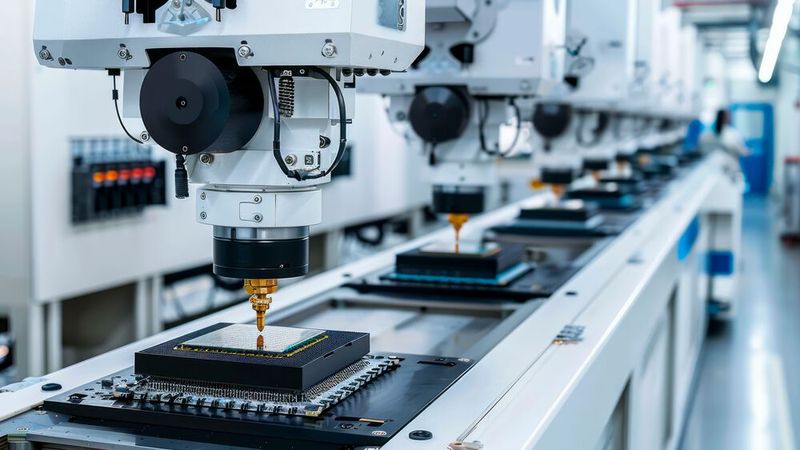
The semiconductor industry is at a pivotal inflection point. Global revenue is projected to exceed $1 trillion by the end of the decade, driven by unprecedented demand from data-hungry applications such as artificial intelligence, electric vehicles, and high-performance computing. This surge in growth has triggered a wave of investment, with companies committing close to $1 trillion in fabrication capacity expansion through 2030. On paper, the opportunity is extraordinary.
Yet despite the momentum, the path to scaling semiconductor production is far from straightforward. Beneath the headlines lies a web of technical and logistical constraints that threaten to impede progress. Power engineers, often at the heart of implementation, integration, and infrastructure buildouts, are facing the consequences of these systemic bottlenecks directly. From the rising cost of fab construction to material supply insecurity and critical workforce gaps, the industry’s forward march is being slowed by barriers that are complex, structural, and global.
Recent analyses, including the latest report from McKinsey & Company, bring clarity to these challenges by quantifying the cost disadvantages, resource dependencies, and talent shortages confronting chipmakers today. For engineers tasked with delivering reliable systems under pressure, understanding these dynamics is no longer optional. It is essential.
Cost structures: Buildings at a disadvantage
One of the most immediate and measurable challenges facing the semiconductor industry is cost. For manufacturers looking to scale in the United States and Europe, the economic reality is stark: building and operating fabrication facilities in these regions is significantly more expensive than in established hubs across Asia.
According to McKinsey’s analysis, a mature logic fab in the United States costs approximately 10 percent more to build than a comparable facility in Taiwan. The gap becomes even more pronounced once the facility is operational. U.S.-based fabs can face operating costs up to 35 percent higher, with labor accounting for nearly a third of total spend. Europe sees similar pressures, particularly around energy pricing, although these are partially offset by lower wage levels.
For those involved in the design and execution of fab infrastructure, this cost disparity has practical implications. Skilled construction labor in the U.S. is four to five times more expensive than in Asia. At the same time, decades without large-scale fab projects in North America and Europe have left a thin bench of experienced tradespeople and project managers. As a result, construction timelines are extended significantly. While an advanced fab in East Asia can be completed and enter volume production in under three years, equivalent projects in the U.S. often require more than four years to reach similar capacity.
:quality(80):fill(efefef,0)/p7i.vogel.de/wcms/5f/fe/5ffedb2e0ffa6/listing.jpg "listing")
The operating phase introduces a new set of cost pressures. Higher wages, elevated maintenance needs, and regionally variable energy prices make it difficult to achieve competitive margins. In Europe, energy costs are two to three times higher than in the U.S., and in both regions, the absence of coordinated subsidy programs exacerbates the issue.
While regional investments offer benefits such as reduced geopolitical risk and enhanced local supply chain resilience, they come with unavoidable trade-offs. Without structural cost reform or sustained public-private support, these new facilities may struggle to compete on cost per wafer. The burden of higher pricing is likely to be passed down through the value chain, ultimately reaching systems integrators, product designers, and end users.
Scaling on fragile foundations
As semiconductor technology pushes toward ever-smaller process nodes and denser packaging, the material demands per wafer have risen sharply. For power engineers, this is not just a fabrication issue—it influences thermal management, reliability, packaging integrity, and system integration downstream.
The complexity begins at the wafer level. A chip produced at the 65-nanometer node might require approximately 40 lithographic mask layers. At the 5-nanometer or 3-nanometer level, that number can climb past 100. Every additional layer translates into increased use of specialized gases, resists, photo-sensitive chemicals, and carrier wafers. According to McKinsey, the shift to advanced nodes could increase material consumption by 60 percent in the United States and by 65 percent in Europe by 2030. This rise will far outpace the expansion in wafer start capacity, stressing both suppliers and logistics networks.
Advanced packaging adds another layer of complexity. Technologies like chiplets and 2.5D/3D integration require base dies, interposers, underfill materials, and precise thermal interfaces. These components are essential for achieving the electrical performance and power densities expected in modern designs, particularly in AI accelerators and automotive applications. However, over 70 percent of global advanced packaging capacity remains concentrated in Taiwan and South Korea. The United States holds just 1 percent of global logic AP capacity.
Perhaps more concerning is the geographical concentration of raw materials. Elements such as gallium, germanium, and tungsten are often sourced from a single country or region. In some cases, over 70 percent of the global supply is controlled by one nation. This poses a fundamental risk to global supply chains, especially for power engineers working on applications where thermal performance, electrical isolation, or switching characteristics depend on those very materials.
:quality(80)/p7i.vogel.de/wcms/52/68/5268f0fd0a8708f950ea5377c256d282/0114344070.jpeg "This article mainly discusses silicon wafer production and lists some other wafer materials as well. (Source: ryanking999 - stock.adobe.com)")
PART 2: SEMICONDUCTOR MANUFACTURING
The Semiconductor “Wafers”
From an engineering perspective, the impact is twofold. First, any disruption in raw material supply can delay development timelines, reduce yield consistency, or force last-minute substitutions with unverified alternatives. Second, tight packaging requirements and higher voltages magnify the need for stable and scalable material supply chains.
Efforts to localize production in the West are underway, but progress is uneven. While the EU and the US’s respective microchips legislation allocates funding for packaging innovation, building local ecosystems for materials extraction, refinement, and transport will take years.
Ongoing talent constraints
Among all the structural barriers facing the semiconductor industry, the shortage of skilled talent may prove to be the most difficult to resolve, and the most consequential for power engineers.
Between 2018 and 2022, job postings for semiconductor technical roles in the United States and Europe grew at a compound annual rate exceeding 75 percent. Forecasts suggest that over one million additional skilled workers will be needed globally by 2030 to meet capacity and innovation goals. Yet the talent pipeline has failed to keep pace. In the U.S. alone, an estimated 70,000 semiconductor jobs could go unfilled by the end of the decade, threatening national goals to expand domestic production from 12 percent to 20 percent of global share.
The implications for engineering teams are immediate. For new fabs and back-end facilities, staffing delays directly impact ramp-up schedules. Without enough technicians, process engineers, and equipment specialists, expensive machinery sits idle, and throughput targets are missed as a result. Even in existing facilities, high attrition rates and a shrinking pool of experienced operators constrain maintenance cycles and reduce yield stability, two metrics that are especially critical for high-voltage and high-reliability systems.
The problem extends to the design side as well. There is a growing shortage of chip architects, physical verification engineers, and packaging specialists, particularly those with expertise in advanced node design or heterogeneous integration. The U.S. alone is projected to be short 23,000 chip design engineers by 2030. For power-focused applications, the gap is even more acute. Engineers with experience in wide-bandgap materials, thermal modeling, high-density power packaging, and EMI suppression are in high demand but short supply.
:quality(80):fill(efefef,0)/p7i.vogel.de/wcms/66/4e/664efb5ea2f9e/wp-dc-dc-book-of-knowledge-recom-coverbild.png "WP_DC_DC_Book of knowledge_RECOM_Coverbild")
What makes this constraint even more difficult to address is that it touches every region. Emerging semiconductor players such as India, Saudi Arabia, and the UAE are also facing shortages as they attempt to scale local ecosystems. This creates a global bidding war for talent, driving up wages and further exacerbating operating cost disparities between East and West. U.S. fabs, for example, already spend two to four times more on labor than their Asian counterparts, with direct labor accounting for roughly 30 percent of operating expenses.
Despite growing awareness, most companies still lack effective workforce strategies. Few have dedicated upskilling pipelines or long-term partnerships with academic institutions. Many struggle to compete with adjacent industries like cloud computing or AI software, which offer higher compensation, more flexible work environments, and greater perceived prestige.
Addressing the talent shortage will require more than recruitment. It will demand a rethinking of career pathways, investment in technician training, re-engagement with community colleges, and a deliberate effort to reach underrepresented talent pools. For power engineers and engineering leaders, the challenge is not just finding skilled colleagues: it is building a sustainable ecosystem of talent capable of supporting the next generation of systems.
Engineering at the edge of transformation
The semiconductor industry is entering a new phase defined by both extraordinary opportunity and systemic constraint. For engineers, particularly those in power systems, packaging, and process integration, the next decade will not be shaped solely by technology breakthroughs. It will be shaped by the industry’s ability to navigate real-world barriers: cost structures that challenge competitiveness, material and labor shortages that slow throughput, and logistics systems that lag behind global ambition.
Reports such as McKinsey’s help quantify the scale of these issues. But it is engineers who live with them every day, interpreting imperfect supply forecasts, building systems with constrained resources, and delivering performance under pressure.
The trillion-dollar projection is not fiction. It is possible. But reaching it will require more than investment. It will demand systemic coordination, structural reform, and a renewed focus on the practical challenges that define real-world scalability. The semiconductor future will be designed not just in labs or boardrooms, but in the workflows, models, and decisions made by engineers on the ground.
PCIM Expo 2025: Become an exhibitor now

Let’s elevate your company’s global presence within the power electronics industry! Showcase your solutions, connect with the international community and shape the future at the PCIM Expo from 6 – 8 May 2025 in Nuremberg, Germany.
Learn more
(ID:50403450)
:quality(80)/p7i.vogel.de/wcms/73/1b/731b2a2ed1082e7a4bc6971b76566475/0125343087v2.jpeg "In Q2 2025, the semiconductor industry saw unprecedented growth driven by AI demand, but it masked underlying structural strains and geopolitical challenges, setting the stage for a future where resilience is as vital as innovation. (Source: © Rhony - stock.adobe.com)")
:quality(80)/p7i.vogel.de/wcms/f5/7a/f57a4f3eb14ac9721a5f22ae789c649a/0124979905v2.jpeg "Through its digital platform, WIN SOURCE continuously integrates intelligent tools spanning component selection, lifecycle management, and agile procurement strategies. (Source: WIN SOURCE)")