


:quality(80)/p7i.vogel.de/wcms/e1/fc/e1fc24c34815d25f3b025993efe2291e/0131176746v2.jpeg "Exxelia’s new CM‑HVLP series delivers low‑profile, high‑voltage reconstituted mica SMD capacitors engineered for pulse and HV filtering applications, qualified to stringent MIL standards for space, defense and aviation. (Source: Exxelia)")
:quality(80)/p7i.vogel.de/wcms/b8/d3/b8d3ec2126c031b4b96aa350228ae357/0131175054v2.jpeg "Hirect showcases CTC, PICC and EPICC conductors manufactured at its new copper processing plant — engineered for transformers, traction motors and other high‑power wound components. (Source: Hirect)")
:quality(80)/p7i.vogel.de/wcms/55/5b/555bb8759d60243792dd736b86585f29/0130909253v2.jpeg "New DFN‑packaged ultrafast diodes with wettable flanks enable automated inspection and reliable high‑current performance in DC/DC converters and traction inverters. (symbolic image) (Source: © Natalia - stock.adobe.com)")
:quality(80)/p7i.vogel.de/wcms/db/75/db7507346cd4842ca5eb8838f45861ce/0130908924v2.jpeg "KYOCERA AVX launches the FFLK traction‑grade DC filtering capacitors for demanding EV and industrial power applications. (Source: KYOCERA AVX)")
:quality(80)/p7i.vogel.de/wcms/97/c0/97c0f847c457054bfb41a3388dd9fc4c/0131184610v2.jpeg "Renesas completes the acquisition of Irida Labs, integrating PerCV.ai vision software to accelerate vision AI deployment on Renesas edge platforms. (Source: © Rawpixel.com - stock.adobe.com)")
:quality(80)/p7i.vogel.de/wcms/71/74/71744e9858925f4aae140ab39723ebf4/0131064963v2.jpeg "SEMI reports a 13% year‑on‑year increase in worldwide silicon wafer shipments in Q1 2026, reflecting growing demand across the semiconductor supply chain. (symbolic image) (Source: © AlirezA - stock.adobe.com)")
:quality(80)/p7i.vogel.de/wcms/8a/2a/8a2a43ba86d8fbb6089aa249a066e1f5/0131041579v2.jpeg "Huawei’s LUNA2000 ESS provides high‑efficiency, hybrid‑cooled energy storage for Bangladesh’s commercial and industrial sites, boosting energy security and supporting renewable integration. (symbolic image) (Source: © Negro Elkha - stock.adobe.com)")
:quality(80)/p7i.vogel.de/wcms/ea/60/ea600a89db0dc673ba3b6eb1ca56093e/0130736129v2.jpeg "Infineon is expanding its semiconductor portfolio to support next-generation automotive power and control systems. (Source: Infineon)")
:quality(80)/p7i.vogel.de/wcms/39/3e/393e39fb44bf8e37b962c46453b2e0ed/0127945296v2.jpeg "Reusing and recovering power electronics subsystems to maximize material and economic value. (Source: © junet - stock.adobe.com)")
:quality(80)/p7i.vogel.de/wcms/ef/3f/ef3f0ba1427bb0be71ae9a57274d5687/0131065708v2.jpeg "BMW Group and the University of Zagreb apply AI to optimise battery cell production, improving quality control, yield and process efficiency. (Source: BMW)")
:quality(80)/p7i.vogel.de/wcms/ac/3d/ac3d3fe7d72fdf885988709ea060c4af/0131062566v2.jpeg "GlobalFoundries’ scale optical module enables co‑packaged optics integration for AI data centers, boosting bandwidth and power efficiency by placing optical I/O close to network ASICs. (Source: GlobalFoundries)")
:quality(80)/p7i.vogel.de/wcms/73/f2/73f20bf3ae2ce460cfe9ed13411613dd/0130955570v2.jpeg "A science class can be fun if mnemonics, a phrase/poem, are used to remember scientific laws or rules. Most colleges or regions have their own mnemonic for resistor color codes. (Source: © Platon - stock.adobe.com)")
:quality(80)/p7i.vogel.de/wcms/34/4a/344a3dc5a19429cf6726b7f8f7e2ee32/0130109719v2.jpeg "Hioki’s new measurement solutions enable precise analysis of power electronics systems and energy efficiency. (Source: Hioki)")
:quality(80)/p7i.vogel.de/wcms/be/c8/bec8d43fc0ee73414274be44608b2970/0129748903v2.jpeg "The Infiniium XR804KA real-time oscilloscope delivers faster response time, improved stability, and streamlined workflows for high-speed digital and compliance testing. (Source: Keysight)")
:quality(80)/p7i.vogel.de/wcms/23/ee/23ee4a97790d6009dbfd7d9577ffa723/0129220424v2.jpeg "The R&S FPL1044 with the new RTSA option makes 40 MHz real-time frequency analysis available up to 44 GHz. (Source: Rohde & Schwarz )")
:quality(80)/p7i.vogel.de/wcms/3c/d1/3cd1cacbceb792ba63727199c61ca434/0127801860v2.jpeg "Thanks to cloud technology, users can collaborate on projects from anywhere and always have access to the latest planning data. (Source: SIEMENS)")
BASIC KNOWLEDGE Varactor diode: Definition, applications and more
Related Vendors
:fill(fff,0)/p7i.vogel.de/companies/63/c7/63c7da97be945/diotec.png "diotec (Diotec Semiconductor AG)")
:fill(fff,0)/p7i.vogel.de/companies/62/a0/62a0a0de7d56a/aic-europe-logo.jpeg "aic-europe-logo (AIC Europe)")
:fill(fff,0)/p7i.vogel.de/companies/5f/71/5f71d5f92a5f6/2000px-rogers-corporation-logo-svg.png "2000px-Rogers_Corporation_Logo.svg.png (rogers germany)")
Varactor diodes, also known as varicaps, integrate diodes and capacitors. Researchers invented them six decades after the diode and two centuries after the development of the capacitor. These small components act like capacitors in high-frequency and power applications. The article explains varactor diodes and their operation, advantages, disadvantages, and applications.
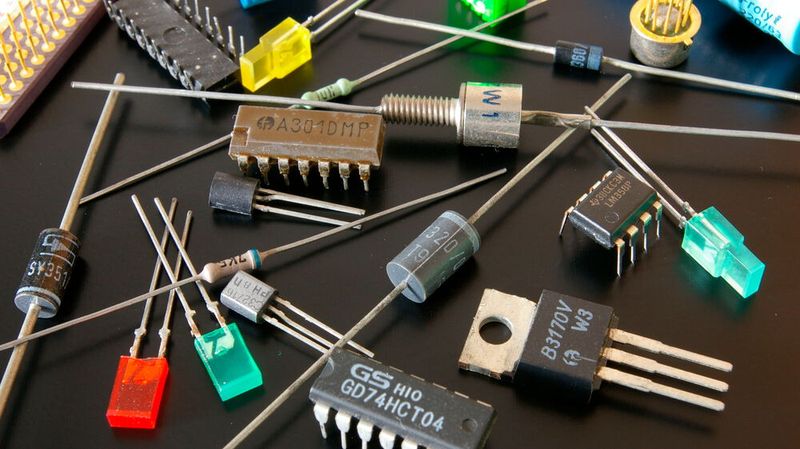
The existence of the varactor diode— a combination of a semiconductor diode and a capacitor- dates back to the sixties. Pacific Semiconductor Incorporated, a Canadian company then based in the USA, invented the varactor diode in 1961.
Definition varactor diode
A varactor diode or a varicap is a type of diode whose transition capacitance varies in accordance with the reverse voltage. The transition capacitance of a varactor diode is directly dependent on the voltage of the reverse-bias PN junction. Applying a high reverse voltage decreases the transition capacitance of the diode. The application of low reverse voltage increases the transition capacitance of the diode.
What does “varactor” mean?
Varicap is another mainstream term used instead of varactor diodes. Pacific Semiconductor Incorporated trademarked the term “vericap” in 1967. Varactor diodes are also known as VVC (voltage-variable capacitance), variable capacitance diodes, variable reactance diodes, and tuning diodes.
Varactor diode symbol
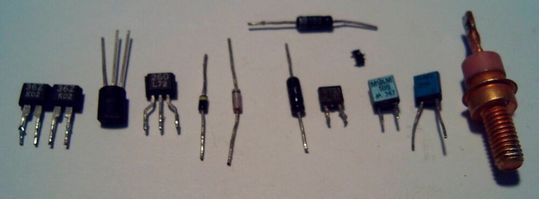
Varactor diodes use two symbols. The first symbol shows a semiconductor diode placed above a capacitor in a circle.
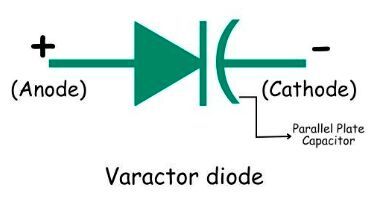
The other symbol, most commonly used in electronics, combines a semiconductor diode with a capacitor.
Varactor diode working principles
Varactor diodes are primarily used in AC applications. The term “varactor” comes from a combination of “variable reactance” and “resistor”. The name suggests that a varicap delivers changing capacitive reactance. Reactance is a form of resistance to alternating current (AC) in a circuit. It is either by a capacitor or an inductor, known as capacitive reactance or inductive reactance.
:quality(80)/p7i.vogel.de/wcms/ff/22/ff22163c256104c22639a24e8af3565b/0113258006.jpeg "Read more about different types of diodes in this article. (Source: Witold Krasowski - stock.adobe.com)")
TYPES OF DIODES - OVERVIEW
The different diode types explained
Depletion region
The depletion region in a semiconductor is a region “depleted” of mobile charge carriers. Initial diffusion of electrons and holes across the junction creates the depletion region. Fixed ionized donor atoms (positively charged) on the n-side and fixed ionized acceptor atoms (negatively charged) on the P-side form a layer called “uncovered charges”.
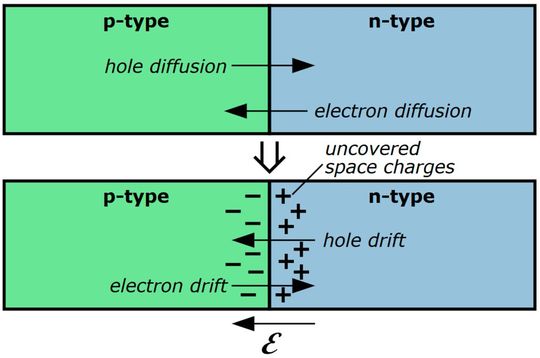
The depletion layer width is the sum of uncovered charges spread into the N and P sides separately. These uncovered charge carriers establish a capacitance known as “transition capacitance” in the varactor diode. Transition capacitance is inversely proportional to the depletion region width— it increases when the depletion region width reduces and vice versa.

Varactor diode construction
Varicaps consist of P-type and N-type semiconductors placed on the top of a mesa structure. Low-frequency varactor diodes are made from silicon, whereas high-frequency varactor diodes use gallium arsenide— a direct bandgap compound semiconductor.
A varactor diode has two terminals: anode and cathode. It is enclosed in a ceramic structure. The value of transition capacitance and its variation depend upon the doping profile. Altering the doping profile changes the value of transition capacitance and its potential variation.
Varactor diode operation
Varicap diodes operate in reverse-bias mode. They are not used in forward bias. In forward bias, the width of the depletion region decreases. Charge carriers diffuse, facilitating the current flow. When the depletion region disappears, transition capacitance holds no meaning. The function of a capacitor is to store charge. But the forward bias mode, in which current flows seamlessly, cannot store charge.
In reverse bias, the width of the depletion region increases. Charge carriers do not move from one side to another, preventing the current flow. As a result, it is quite easy to store charges. The amount of reverse bias controls the thickness of the depletion region. High reverse voltage increases the depletion width, which in turn decreases the transition capacitance.
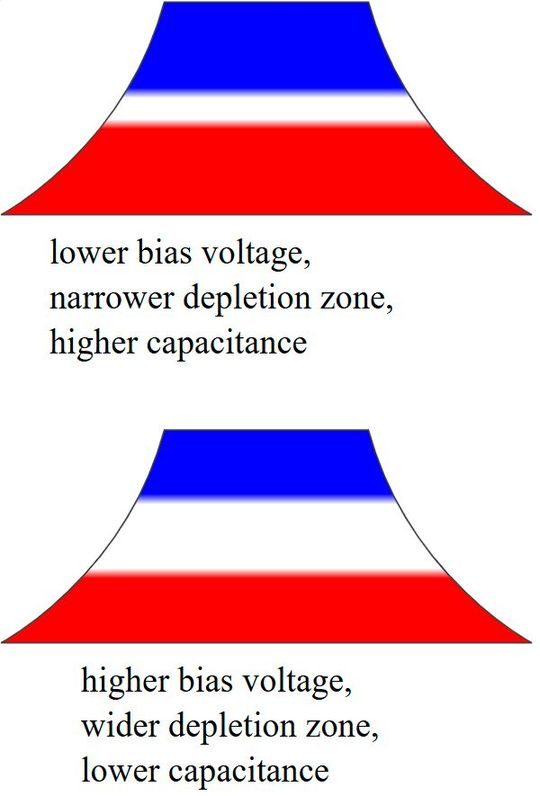
On the other hand, low reverse voltage narrows down the depletion region width, which in turn increases the transition capacitance. As a result, varicap diodes are operated in low reverse voltage to store more charge, like conventional capacitors.
All semiconductor diodes exhibit an internal parasitic capacitance. Practical varactor diodes are constructed in such a way that they provide a variation of transition capacitance with a low input reverse voltage. Varicap diodes typically offer transition capacitance from 2 to 100 pF.
Capacitance levels are recorded at two temperatures to observe variations. The ratio of those capacitances estimates how much capacitance will change during reverse bias operation. Capacitance ratio typically ranges from 5 to 6.5 for a frequency of 1 MHz and relatively small changes in reverse bias, 0-5 V or 0-12 V.
Varactor diode types
Based on junction construction— variation in the doping profile, varicap diodes are categorized into two types: Abrupt junction and hyper-abrupt junction varactor diodes.
Abrupt junction varactor diode
Abrupt junction varicap diodes are commonly used in various electronic applications. Typically made from silicon, these diodes are moderately doped— with doping concentrations kept constant. They provide a stable variation in capacitance.
As mentioned above, transition capacitance decreases when the width of the depletion region increases. This means that the transition capacitance is inversely proportional to the thickness of the depletion region.
:quality(80):fill(efefef,0)/p7i.vogel.de/wcms/5f/fe/5ffedb2e0ffa6/listing.jpg "listing")
The thickness of the depletion region is also directly proportional to the square root of the applied reverse voltage. As a result, transition capacitance is inversely proportional to the square root of the applied reverse voltage.
Transition capacitance increases when the applied reverse voltage decreases. Similarly, transition capacitance decreases when the applied reverse voltage increases. When the applied reverse voltage is changed, the transition capacitance shows small and stable variations. The characteristic curve is quite predictable.
Abrupt junction diodes are cheaper and easily available in the market. They are commercially used in various microwave and power applications. However, they exhibit a low capacitance ratio of around 2 and are less efficient than their counterparts.
Hyperabrupt junction varactor diode
Hyperabrupt junction varactor diodes are made from direct bandgap compound semiconductors. Two heavily doped N and P regions are separated by a lightly doped N region. The P region is even more doped than the N region. The lightly doped N region, placed between two heavily doped P and N junctions, is slightly more doped towards the P region.
Hyperabrupt varactor diodes are designed to show large and nonlinear variations for changes in input reverse voltage. They are designed to operate at lower voltages and showcase large capacitance variations. It means that they are efficient and exhibit a high capacitance ratio— more than 5. However, hyperabrupt junction varicap diodes are difficult and expensive to manufacture, leading to low commercial use.
Varactor diode advantages
Varactor diodes come with several benefits that make them a popular choice in various electronic applications. Here are some of the key advantages:
- Varicap diodes offer simple capacitance control; adjusting the reverse voltage enables capacitance control
- Varactor diodes are voltage-controlled devices; voltage-controlled devices are easier to handle and use simple drive circuitry compared to current-controlled devices
- Varactor diodes are easier to use compared to variable capacitors; Unlike variable capacitors, varicap diodes do not require manual assistance to change the capacitance value
- Varactor diodes produce less noise compared to other types of diodes
- Varactor diodes are small in size and less in weight
- Varactor diodes are reliable
- Varactor diodes are cheap and easily available in the market
Varactor diode disadvantages
Despite their advantages, varactor diodes also have certain limitations that one must consider before their application. Below are some of the drawbacks associated with varactor diodes:
- The transition capacitance changes with temperature; the temperature-sensitive behavior makes varicaps prone to failure
- Varactor diodes are susceptible to noise at high frequencies.
- Varactor diodes have a limited capacitance range
- Varactor diodes show capacitance changes for a limited reverse voltage range
- Varactor diodes (hyperabrupt junction) showcase an unstable, non-linear change of capacitance; It increases the chance for distortion and unnecessary harmonic generation
- Varactor diodes are not suitable for high-power microwave applications
Varactor diode applications
Historically, varicaps were used in TVs and radios. Some of the applications of varactor diodes are described below.
Power Electronics
Varactor diodes are unsuitable for high-power electronics like inverters, converters, and power supplies. However, they are applicable in snubber tuning, EMI filters, and resonant converters for low to moderate-power electronics.
:quality(80)/p7i.vogel.de/wcms/f9/29/f92903189bb36304a6bbc7ca5ba8e3fc/0117522391.jpeg "Read more about the differences between inverters and converters in this article. (Source: BORIS - stock.adobe.com)")
POWER ELECTRONICS
Inverter vs converter: What's the difference?
Microwave applications
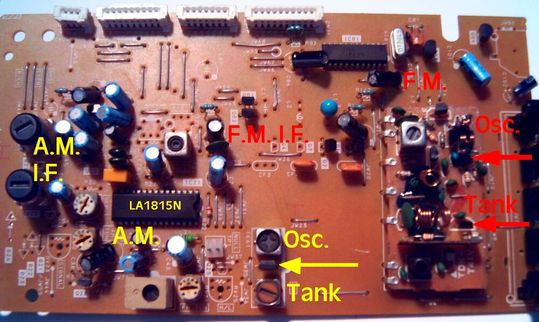
FM modulators (frequency modulation), AM broadcast receivers (amplitude modulation), television tuners, VCOs (voltage-controlled oscillators), AFC devices (automatic frequency control devices), adjustable BPFs (bandpass filters), PLLs (phase-locked loops), parametric amplifiers, frequency filters, and security tags in shopping centers.
Tuning network
Varactor diodes are used in tuning networks to isolate DC bias circuits and RF signal paths. They are connected in parallel alongside existing capacitors or inductors to vary the capacitance and reduce distortion. Varicaps allow adjusting the resonant frequency of the tuning circuit without mechanical intervention or tuning.
Frequency generation
Harmonics are high-frequency components, typically useful in power and microwave applications. Varactor diodes can generate microwave frequencies of about 1-2 GHz and sometimes 1 THz from 300-400 MHz. A large AC voltage is fed to the varicap, where its capacitance varies at the signal frequency to generate harmonic components.
References
- Boylestad, R., & Nashelesky, L. (2012). Electronic Devices and Circuits Theory (11th ed.). Pearson Education.
(ID:50416362)
:quality(80)/p7i.vogel.de/wcms/d9/64/d964e7b776e5905b69d15374f8b8990b/0115795833.jpeg "The article explains power diodes, and their structure, working principles, operation, characteristics, and many more details. (Source: urcis - stock.adobe.com)")
:quality(80)/p7i.vogel.de/wcms/bf/a2/bfa277a5c1330e67e3ba50d9da823970/0127853966v2.jpeg "Historically, capacitors were named as condensers. But the condenser was another device, not even similar to the capacitor. In the 20th century, the term \"capacitor\" replaced the term \"condenser.\" The industry took a considerable time to accept the new name. (Source: © Kuzmick - stock.adobe.com)")