


:quality(80)/p7i.vogel.de/wcms/10/fc/10fcb98e44d61826e641bc8d3f20f616/0133193677v2.jpeg "The new AEVA and AEVB Series aluminum electrolytic capacitors are engineered for harsh industrial environments, delivering high-CV, long-lifetime performance in compact, surface-mount packages that reliably withstand up to 30g acceleration and operating temperatures extending from -55° to +125°C. (Source: Kyocera)")
:quality(80)/p7i.vogel.de/wcms/f7/42/f74208db9f5f87dca384b38b71c4782e/0133196365v2.jpeg "YAGEO’s EC Flat‑Series temperature sensors combine fast, accurate measurement with resistance to vibration, shock, moisture and dust for demanding automotive and industrial applications. (Source: Yageo)")
:quality(80)/p7i.vogel.de/wcms/b2/82/b28212428745dd8a4634ad4f4912012f/0132902689v2.jpeg "New 15 V, 25 V and 40 V eGaN FETs deliver ultra-low on-resistance, high current capability, and exceptional radiation immunity for high-density space power conversion (Source: EPC Space)")
:quality(80)/p7i.vogel.de/wcms/7b/4f/7b4f433302c490cac22eee9c12499e65/0132780211v2.jpeg "Littelfuse introduces the TPSMD‑FL series of high‑power surface‑mount TVS diodes, designed to simplify ISO 7637 load‑dump protection and safeguard automotive electronics against severe voltage transients. (Source: Littlefuse)")
:quality(80)/p7i.vogel.de/wcms/78/38/783841efab284c1b4453777e7ebea26d/0133190419v2.jpeg "Diodes has completed its acquisition of Elevate Semiconductor, expanding its analog and mixed-signal portfolio and strengthening its presence in the high-growth automated test equipment market. (Source: © peopleimages.com - stock.adobe.com)")
:quality(80)/p7i.vogel.de/wcms/1f/79/1f79d69530465de26a832c742fc60319/0133117717v2.jpeg "With 30,000 sqm of exhibition space, 20,157 trade visitors, 271 exhibitors, and 131 expert presentations as part of the conference program, the event sent a strong message about the industry's innovative strength and dynamism. (Source: Mesago Messe Frankfurt GmbH)")
:quality(80)/p7i.vogel.de/wcms/43/4d/434db2291567e847e54332004942a225/0132958267v2.jpeg "GlobalWafers has joined the SEMI Taiwan Materials Alliance, with CEO Doris Hsu serving as co‑chair, to advance critical materials technologies, accelerate collaborative innovation and strengthen global semiconductor supply chain resilience. (Source: © jiwon - stock.adobe.com)")
:quality(80)/p7i.vogel.de/wcms/6f/72/6f72f93d1e4c5a248a97dd3b8f32a336/0132997898v2.jpeg "Infineon plans to acquire C2i Semiconductors to combine software‑defined multiphase control and smart power stages with its broad power‑semiconductor portfolio for intelligent, scalable AI data‑center power delivery. (Source: © Grispb - stock.adobe.com)")
:quality(80)/p7i.vogel.de/wcms/87/97/879728679e7010f81e53a86923cde74c/0133218625v2.jpeg "Conceptual illustration of polar wurtzite niobium aluminum nitride (NbAlN), a transition-metal-containing nitride semiconductor that preserves the crystal structure and polarity of GaN. (Source: Associate Professor Atsushi Kobayashi from Tokyo University of Science, Japan)")
:quality(80)/p7i.vogel.de/wcms/ac/31/ac31c9478d80894d725d02883ae7ed5d/0133176534v2.jpeg "Average models allow power designers to simulate DC‑DC converters and three‑phase PFC circuits quickly, analyse small‑signal behaviour and evaluate loop stability without modelling every switching event. (Source: © AI - stock.adobe.com)")
:quality(80)/p7i.vogel.de/wcms/96/80/9680b468d7f682c8b6c15b07300afbb0/0133177854v2.jpeg "Grid-forming inverters are also known as grid-forming resources and grid-forming IBR. This article explains grid-forming inverters in detail. (Bild: © only_kim - stock.adobe.com)")
:quality(80)/p7i.vogel.de/wcms/57/c6/57c6fa81922a9849a917bdfed82eddf7/0133052494v2.jpeg "Rising demand for high-end materials shifts production toward higher-margin products, reducing output of standard loss materials. (Source: NCAB)")
:quality(80)/p7i.vogel.de/wcms/7b/76/7b76005554b556df2a7a3794bdf69d44/0132365246v2.jpeg "Hioki’s ST5680A DC Hipot Tester combines CE/UKCA/CSA compliance, an integrated capacitance‑based contact check and time‑series waveform recording (voltage, leakage current, insulation resistance) to standardize hipot and insulation testing across EV cell, module and pack production lines. (Source: Hioki)")
:quality(80)/p7i.vogel.de/wcms/af/7f/af7f7b0fb7f29219fc991b1130f65477/0132241333v2.jpeg "Comprehensive laboratory testing regimens—combining thermal cycling, high‑current stress, EMC, and accelerated lifetime tests—are essential to validate advanced power designs and ensure reliability in real‑world applications. (Source: PRBX)")
:quality(80)/p7i.vogel.de/wcms/16/3d/163df69363f8125315a9826e13ea4b05/0131927425v2.jpeg "Solution will maximize data center and AI factory profitability while delivering engineering-grade insights to design and operations for more efficient, sustainable, and resilient infrastructure. (Source: Cadence)")
:quality(80)/p7i.vogel.de/wcms/85/b7/85b7e90733a2bd8f21515d8f7137f2fc/0131917677v2.jpeg "Renesas acquires Pictorus to integrate its embedded application software platform with Renesas’ MCU and MPU portfolio, helping developers shorten time‑to‑market and simplify system integration. (Source: © lucadp - stock.adobe.com)")
RESISTANCE Understanding electrical resistance vs. internal resistance in power systems
Related Vendors
:fill(fff,0)/p7i.vogel.de/companies/60/7e/607ec89d5d9b5/white-frame.jpg "white frame.jpg (www.rohm.com)")
:fill(fff,0)/p7i.vogel.de/companies/5f/71/5f71d5f92a5f6/2000px-rogers-corporation-logo-svg.png "2000px-Rogers_Corporation_Logo.svg.png (rogers germany)")
:fill(fff,0)/p7i.vogel.de/companies/68/2c/682c3e2e9a195/logotype-rvb.jpeg "logotype-rvb (MERSEN France)")
Electrical resistance and internal resistance both influence the functionality of electrical systems but serve different roles. Both types of resistance impact circuit behavior, energy efficiency, and performance.
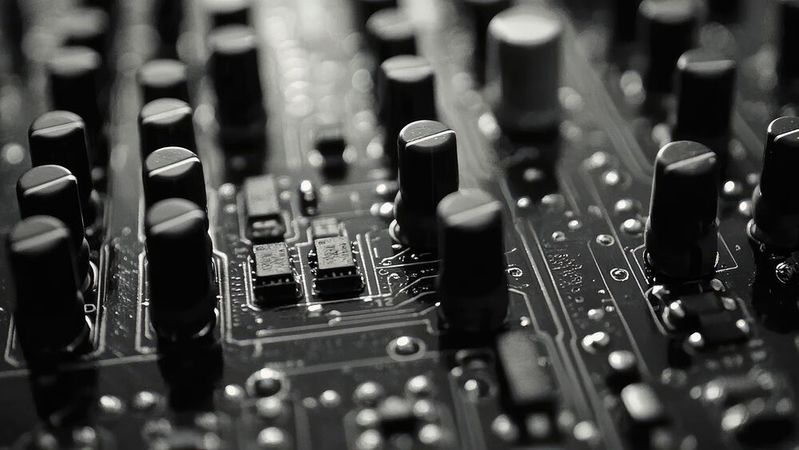
Electrical resistance and internal resistance both affect how electrical systems function, but they serve different roles. Understanding the distinction helps when designing circuits, selecting components, or troubleshooting performance issues. Resistance primarily deals with current flow in circuit elements, while internal resistance influences power source efficiency.
What is resistance?
Resistance refers to the opposition to current flow in external circuit components. It follows Ohm’s Law, where resistance (R) equals voltage (V) divided by current (I). The material, length, and cross-sectional area of a conductor determine its resistance. For example, a long, thin wire has more resistance than a short, thick one.
Resistors are designed to control current flow, divide voltage, and dissipate power as heat. They come in different types, such as fixed, variable, and thermistors, each serving specific roles in electronic circuits. Resistance also plays a role in protecting circuits by limiting excessive current, which prevents overheating and component damage.
All materials resist current flow to some degree. However, when it comes to resistance, most materials fall into one of two categories: insulators or conductors.
- Conductors: These are materials that offer little resistance by allowing electrons to move freely. Examples of conductors include copper, gold, and aluminum.
- Insulators: These are materials that have high resistance by restricting the flow of electrons. Examples of resistors include glass, wood, and rubber.
Factors that affect resistance
The resistance of a material can be affected by various factors including temperature, length, and the cross-sectional area.
- Length: Resistance is directly proportional to the length of the conductor. Longer conductors have higher resistance
- Cross-sectional area: Resistance is inversely proportional to the cross-sectional area. Thicker wires have lower resistance than thinner wires of the same material.
- Temperature: Generally, resistance increases with temperature for conductors. (However, the effect can vary for different materials, with semiconductors typically showing decreased resistance at higher temperatures.)
What is internal resistance?
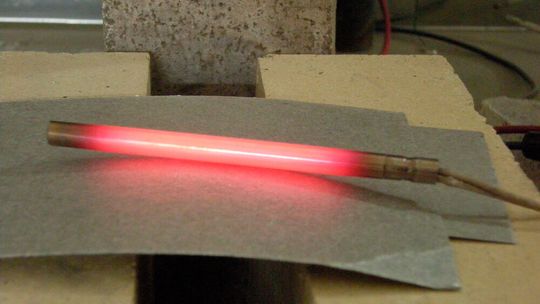
Internal resistance refers to the resistance within a power source, such as a battery or generator. In other words, it’s the name given to a property of components where their primary function is not to act as a resistor but does so anyway.
Internal resistance results from the materials used in electrodes, electrolyte resistance, and internal connections. Unlike external resistance, which is deliberately added to circuits, internal resistance is an inherent property that can’t be eliminated but can be minimized.
A lower internal resistance improves efficiency by reducing energy loss inside the power source. In batteries, internal resistance depends on factors like electrolyte composition, electrode design, and the state of charge. Over time, chemical reactions within the battery can increase internal resistance, reducing efficiency and shortening battery lifespan.
:quality(80)/p7i.vogel.de/wcms/09/4d/094dbfb66d285fe40dced5f16b39dc3e/0122621398v2.jpeg "Discover how internal resistance within batteries impacts their performance, lifespan, and efficiency, and learn about the factors that contribute to this critical parameter. (Source: top images - stock.adobe.com)")
INTERNAL RESISTANCE
How internal resistance affects battery performance
Factors that affect internal resistance
Similarly, the internal resistance of a power source can be affected by various factors. These include surface area, the distance between electrodes, and battery issues.
- Electrode surface area: The larger the electrode surface area is, the lower the internal resistance will be.
- Distance between electrodes: Greater separation between electrodes leads to higher internal resistance.
- Battery factors: Longer use leads to increased internal resistance due to factors like electrolyte loss, plate corrosion, and active material shedding. Meanwhile, the charge level of the battery and properties related to designs, materials, and manufacturing processes result in varying internal resistances.
Comparing resistance vs internal resistance
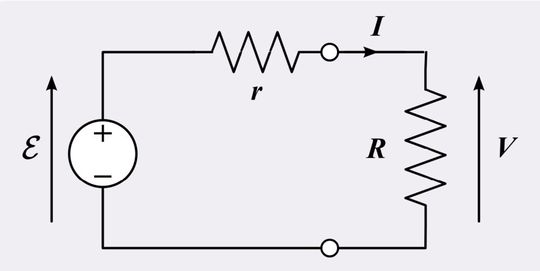
One of the main differences between the two is the location where each type of resistance occurs. Resistance is found in wires, resistors, and circuit components, while internal resistance is inside the power source itself. Measuring them also requires different methods.
Resistance is directly measurable with an ohmmeter, which applies a small voltage and measures the resulting current. Internal resistance, however, is usually determined indirectly by comparing open-circuit voltage to loaded voltage or using AC impedance techniques. Electrochemical impedance spectroscopy (EIS) is often used for precise measurement, especially in battery research and diagnostics.
Internal resistance significantly affects performance, particularly in batteries. As the current increases, the voltage at the battery terminals drops due to the internal resistance. This drop reduces the available power for the connected load.
Additionally, power loss inside the battery follows the equation P = I2r, meaning higher currents generate more internal heating. Excessive heat can degrade the battery’s lifespan and efficiency over time. In high-drain applications, such as electric vehicles, high internal resistance can cause reduced acceleration, increased charging times, and lower overall efficiency.
External resistance, on the other hand, determines how electrical energy is distributed and used. It influences circuit behavior by affecting voltage drops and current flow. In practical applications, engineers use resistance to design voltage dividers, sensors, and heating elements.
:quality(80):fill(efefef,0)/p7i.vogel.de/wcms/5f/fe/5ffedb2e0ffa6/listing.jpg "listing")
Variability of internal resistance
Unlike most external resistances, which remain relatively stable, internal resistance changes with temperature, charge level, and battery aging. Lower temperatures increase internal resistance, reducing power output. As batteries degrade, internal resistance rises, making them less efficient and more prone to voltage drops under load.
In power electronics design, minimizing internal resistance should therefore be a priority. High-performance batteries use materials and designs that reduce internal resistance, improving energy delivery. For example, lithium-ion batteries use highly conductive electrolytes and optimized electrode materials to achieve lower internal resistance.
For circuits, selecting components with appropriate resistance ensures proper current flow and voltage distribution. Power engineers should carefully choose resistor values to balance power dissipation and signal integrity. Managing both types of resistance effectively leads to more efficient and reliable electrical systems.
Understanding the difference between electrical resistance and internal resistance helps when working with circuits and power sources. Resistance controls current flow in external components, while internal resistance affects a power source’s efficiency and performance.
Internal resistance is especially important in applications like batteries and power supplies, where efficiency and energy loss matter. Proper management of resistance improves performance, reduces energy waste, and extends the lifespan of components and power sources.
Power Electronics in the Energy Transition

The parameters for energy transition and climate protection solutions span education, research, industry, and society. In the new episode of "Sound On. Power On.", Frank Osterwald of the Society for Energy and Climate Protection Schleswig‐Holstein talks about the holistic guidance his organization can provide.
Listen now!
(ID:50295136)
:quality(80)/p7i.vogel.de/wcms/bf/a2/bfa277a5c1330e67e3ba50d9da823970/0127853966v2.jpeg "Historically, capacitors were named as condensers. But the condenser was another device, not even similar to the capacitor. In the 20th century, the term \"capacitor\" replaced the term \"condenser.\" The industry took a considerable time to accept the new name. (Source: © Kuzmick - stock.adobe.com)")
:quality(80)/p7i.vogel.de/wcms/ef/1c/ef1c6a123496f3c00da6ea8b85385de9/0130926273v2.jpeg "Resistors are among the three fundamental electronic components, along with inductors and capacitors. (Source: © Kan - stock.adobe.com)")