


:quality(80)/p7i.vogel.de/wcms/53/61/53619895ee4ec91e216ceab62918f8f4/0131724438v2.jpeg "The new MX series by GES High Voltage: Handling up to 20 kV DC and supporting up to 9 poles. (Source: GES High Voltage)")
:quality(80)/p7i.vogel.de/wcms/8c/c3/8cc3f77472b8af8ca61b5bf8cb7ee8f0/0131704631v2.jpeg "ROHM launches New Top-Side Cooling Package for SiC MOSFETs, Combining High Heat Dissipation with High Voltage Support (Source: ROHM)")
:quality(80)/p7i.vogel.de/wcms/d8/ff/d8ffb208c8b62dca4424e25cf8493e00/0131667998v4.jpeg "Integrated, thermally optimized line reactor for power electronics applications. (Source: Block)")
:quality(80)/p7i.vogel.de/wcms/93/fa/93fac0d35290aa5065c18e0a132517c1/0131665788v2.jpeg "The new high performance fuses from Mersen combine the best AC/DC electrical characteristics in a single compact housing (Source: Mersen)")
:quality(80)/p7i.vogel.de/wcms/b5/58/b55874104bf128af36ab420983a1a74f/0131625728v2.jpeg "GC01 (0.5 mm pitch) delivers floating, tolerance‑compensating board‑to‑board performance for high‑speed applications; GB05 provides secure wire‑to‑board connections for automotive and industrial systems. (Source: © WrightStudio - stock.adobe.com)")
:quality(80)/p7i.vogel.de/wcms/e3/a2/e3a2c363179aa46339ba27d0a1785217/0131622335v2.jpeg "At PCIM 2026 Mersen presents new electrical protection solutions for data centers. (Source: © nerminmuminovic - stock.adobe.com)")
:quality(80)/p7i.vogel.de/wcms/df/de/dfde53ac2f23feddfb142593b89981ed/0131617862v2.jpeg "Advanced die‑attach and solder preform solutions from MacDermid Alpha enable more repeatable manufacturing and higher reliability for automotive, industrial and AI data‑center power modules. (Source: MacDermid Alpha)")
:quality(80)/p7i.vogel.de/wcms/eb/0c/eb0c8cf409c67fd4fc2d73b7c507a015/0131581571v2.jpeg "The PCIM Executive Circle brings together selected industry leaders for strategic dialogue on market trends, technological challenges and the future of power electronics. (Source: PCIM)")
:quality(80)/p7i.vogel.de/wcms/5c/f5/5cf53b6db2706b86ac6eb5c407704d27/0131699647v2.jpeg "This article explains inductors in electrical and electronics engineering. (Source: © Iurii - stock.adobe.com)")
:quality(80)/p7i.vogel.de/wcms/e8/b1/e8b1b3c2722724a07ec9835292cf568e/0131681282v2.jpeg "STMicroelectronics expands its PowerGaN portfolio with 700 V HEMTs (6–29 A, 53–270 mΩ typ.), delivering lower switching and conduction losses to increase efficiency and power density for AI servers, robotics and industrial power supplies. (Source: STMicroelectronics)")
:quality(80)/p7i.vogel.de/wcms/3f/77/3f77be835f67d66c9c7bbf179577577a/0131631955v2.jpeg "Inspector examination of photovoltaic modules using a thermal imaging camera (Source: © kanpisut - stock.adobe.com)")
:quality(80)/p7i.vogel.de/wcms/84/1f/841f6921da6203c30dac2963c7a0df81/0131601493v2.jpeg "New multi‑chemistry systems from CATL target fast charging, higher energy density and lightweight flexible applications, with sodium‑ion mass‑production plans announced for 2026. (Source: CATL)")
:quality(80)/p7i.vogel.de/wcms/34/4a/344a3dc5a19429cf6726b7f8f7e2ee32/0130109719v2.jpeg "Hioki’s new measurement solutions enable precise analysis of power electronics systems and energy efficiency. (Source: Hioki)")
:quality(80)/p7i.vogel.de/wcms/be/c8/bec8d43fc0ee73414274be44608b2970/0129748903v2.jpeg "The Infiniium XR804KA real-time oscilloscope delivers faster response time, improved stability, and streamlined workflows for high-speed digital and compliance testing. (Source: Keysight)")
:quality(80)/p7i.vogel.de/wcms/23/ee/23ee4a97790d6009dbfd7d9577ffa723/0129220424v2.jpeg "The R&S FPL1044 with the new RTSA option makes 40 MHz real-time frequency analysis available up to 44 GHz. (Source: Rohde & Schwarz )")
:quality(80)/p7i.vogel.de/wcms/3c/d1/3cd1cacbceb792ba63727199c61ca434/0127801860v2.jpeg "Thanks to cloud technology, users can collaborate on projects from anywhere and always have access to the latest planning data. (Source: SIEMENS)")
PIEZOELECTRICITY The relevance of piezoelectric materials
Related Vendors
:fill(fff,0)/p7i.vogel.de/companies/62/b9/62b980cddf5d6/ceramtec.png "ceramtec (www.ceramtec-group.com)")
:fill(fff,0)/p7i.vogel.de/companies/5f/71/5f71d5f92a5f6/2000px-rogers-corporation-logo-svg.png "2000px-Rogers_Corporation_Logo.svg.png (rogers germany)")
:fill(fff,0)/p7i.vogel.de/companies/66/8b/668becd1c07eb/dowa-logo-word--1-.jpeg "dowa-logo-word--1- (DOWA)")
Piezoelectricity is an inherent property of certain materials. Strange as it sounds, piezoelectric materials generate current when they are mechanically stressed. Inverse piezoelectricity also exists, where materials change shape upon the application of an electric field. The article explores the role of piezoelectric materials in modern times.
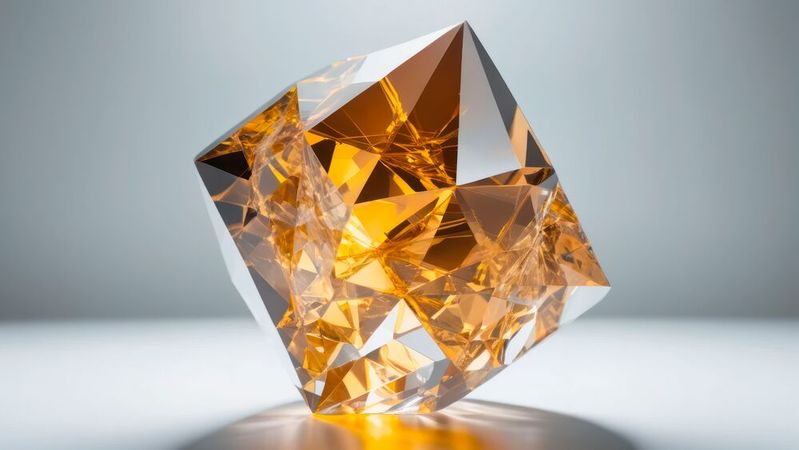
In 1880, two French brothers, Pierre and Jacques Curie, discovered piezoelectricity through some crystals of quartz, topaz, and Rochelle salt. The discovery was celebrated across Europe. The scientific community focused on piezoelectricity for years, but no practical application became a reality for 37 years.
The piezoelectric effect was discovered a year after the demonstration of piezoelectricity through crystals. Another French scientist, Gabriel Lippmann, thanks to whom colored photographs and prints came into existence, theoretically proved the piezoelectric effect. Curie brothers quickly confirmed the inverse piezoelectric effect.
In 1917, some scientists developed a transducer, achieving their high-frequency goals of “SONAR” applications (Sound Navigation And Ranging). Forward to 145 years in the future, these interesting materials are used in energy harvesting, transformers, actuators, control systems, sensor manufacturing plants, and many more.
Piezoelectricity: What is it?
The word “piezoelectric” is derived from a Greek word called “piezo”, which means ”to push”. Piezoelectricity is a phenomenon based on the piezoelectric effect.
Piezoelectric effect: The piezoelectric effect describes voltage generation through physical phenomena. Piezoelectricity is defined as the electricity induced by mechanical stress.
Inverse piezoelectric effect: The Inverse piezoelectric effect holds true. Whenever a material is subject to a voltage, it undergoes mechanical deformation, either expansion or contraction.
:quality(80):fill(efefef,0)/p7i.vogel.de/wcms/66/c3/66c3376c2a3e9/pcim-2024-best-paper-award-michael-hanf-cover.jpeg "PCIM 2024 Best Paper Award_Michael Hanf_Cover")
Types of piezoelectric materials
Some piezoelectric materials exist naturally, while others are manufactured in factories.
Natural piezoelectric materials: Some materials naturally exhibit piezoelectricity, like quartz, Rochelle salt, topaz, tourmaline, sugarcane, wood, silk, rubber, and many others. Even bones, dentin tissue, enamel, and hair exhibit piezoelectricity naturally!
Synthetic piezoelectric materials: Various crystals, ceramics, composites, and polymers such as PZT (Lead Zirconate Titanate), lead niobate, zinc oxide, and PVDF (Polyvinylidene Fluoride).
Physics behind piezoelectricity
Many materials exhibit a crystalline structure. Atoms are bonded to each other, forming a repeating structure known as a unit cell. Generally, unit cells are cubic and symmetrical, such as face-centered cubic (FCC) and body-centered cubic (BCC) arrangements. In most materials, positive and negative charges are aligned symmetrically. The net charge becomes zero.
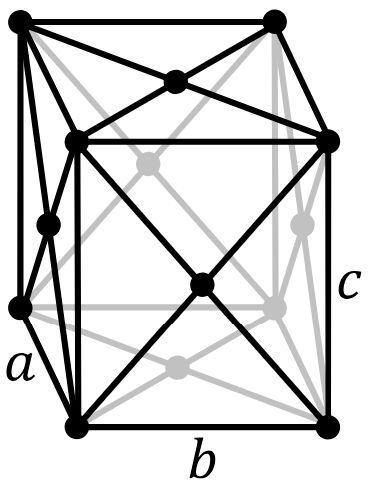
In a more technical sense, pairs of equivalent positive and negative charge carriers inside a crystalline material are called dipoles. In simple words, a dipole is a pair of two charge carriers separated at a distance, with an equivalent magnitude but opposite polarity. The dipole moment defines the distance between positive and negative charges within the material. The higher the separation, the higher the dipole moment— the higher the net charge on the material.
Certain materials exhibit less symmetric crystalline structures. One of the arrangements is called a non-centrosymmetric unit cell. In simple words, the crystalline structures inside these materials lack a center of symmetry, unlike other structures mentioned above. However, symmetrically aligned dipoles balance to cancel out each other, leading to a zero net dipole.

When pressure is applied to FCC, BCC, and other centrosymmetric structures, dipoles shift uniformly. Net dipole remains zero. In the case of non-centrosymmetric structures, when pressure is applied, dipoles move randomly. The symmetry breaks down, and there is no preservation of net charge. As a result, lack of symmetry causes random dipole movement, generating a net charge on the material.
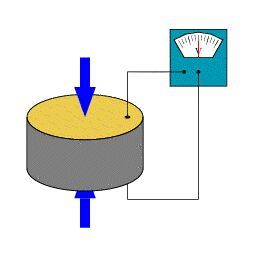
The net charge on the material means that it produces an electric field. In short, putting mechanical stress (pressure or force) on a non-centrosymmetric material makes it generate voltage. Polarization is another term that means “dipole moment per unit volume of a material”. It defines how positive and negative charge carriers align and at what distance. The amount of voltage produced depends on the magnitude of polarization.
:quality(80)/p7i.vogel.de/wcms/24/d2/24d291de6c9171095b9845a81aa2edf3/0124999171v2.jpeg "Battery-free technology harnesses ambient energy, reducing lithium reliance and e-waste, but faces environmental and industrial challenges. (Source: © KanawatTH - stock.adobe.com)")
BATTERIES
The world of battery-free technology
Applications of piezoelectricity
Piezoelectric technology has been commercial for years in military applications like sonar, radar, sensing, and many more. The first use emerged in the twentieth century and continues today.
Several properties limit its usage. For example, synthetic piezoelectric materials are toxic to the environment, as some contain lead. Piezoelectric polymers are not flexible enough and are difficult to process.
Some natural piezoelectric materials exhibit a low piezoelectric constant, meaning they do not have much piezoelectric strength. Modern applications of piezoelectric materials are listed below.
Transducers
A transducer is an electronic device that converts energy from one form at the input to another at the output. Piezoelectric transducers are applicable in monitoring systems, medical imaging, military applications, industrial facilities, semiconductor manufacturing, and many other fields.
Sensors
Piezoelectric sensors are advanced sensors used in health monitoring applications to inspect topography, materials, and structures. They measure changes in temperature, vibrations, acceleration, pressure, and other such phenomena, and convert them into electrical signals. A common example is a seismograph.
Industrial applications
Piezoelectric materials are commonly used as actuators, diesel fuel injectors, igniters, optical adjustments, ultrasonic cleaning, ultrasonic welding, motors, relays, and various other industrial applications.
Medical imaging
Piezoelectric materials are used in medical applications that involve ultrasound equipment. For example, they are used in sonography, ultrasound imaging, and many non-invasive treatments.
Portable electronics
Piezoelectricity proves to be a lightweight power source for small-scale wearables and portable electronics. One of the most common uses of piezoelectric materials is to convert electrical signals into sound and vice versa— speakers in cell phones, earbuds, watches, and many more. Other applications include piezoelectric toothbrushes, buzzers, printers, and watches.
Textile-based piezoelectric nanogenerators remain a subject of research. Such piezoelectric devices function as power sources, generating low voltages and currents for wearable electronics. A real-time example of such technology is “smart” clothing that may harvest mechanical movement like walking, stretching, or running to convert it into piezoelectricity.
MEMS applications
Piezoelectric thin films are essential for MEMS (Microscale electronic and mechanical systems) like sensors, actuators, energy harvesting in portables, and upcoming quantum technologies. Researchers have recently produced high-quality piezoelectric thin films on insulating and conductive substrates. They are suitable for low-temperature stable use.
:quality(80)/p7i.vogel.de/wcms/f8/20/f8200c20833f88f20ef5ba0f85550259/0110796538.jpeg "A transistor is a semiconductor device used to amplify or switch electronic signals and electrical power. (Source: YouraPechkin - stock.adobe.com)")
BASIC KNOWLEDGE - TRANSISTOR
Transistors: The building blocks of modern electronics
Piezoelectric FET
Piezoelectric materials can replace the gate dielectric in a field-effect transistor. The piezo-FET operation is based on both the piezoelectric and its inverse effect. The main part of an FET is the channel, whether p-type or n-type. In piezoelectric FETs, the stress of the gate material is modified to obtain the best results. The on-state involves stressing the channel and relaxing it during the off-state. However, piezoelectric FET manufacturing involves complex and thorough procedures.
Aquatic robotics
AUVs (Aerial Unmanned Vehicles) are submersible vehicles that can be operated without a human. Also known as underwater drones, AUV functions completely depend upon the promise of underwater electronics. AUVs use actuators made from piezoelectric materials like PZT. The piezoelectric actuators are MFC (macro-fiber composite), compatible with moderate stress and vibrations.
Quantum computing
Polarization is closely related to quantum computing. Each state of a qubit depicts either a polarized photon or the spin of an electron. In such a way, piezoelectric materials remain a subject of research with ferroelectric and non-ferroelectric materials for their applications in cryogenic environments like quantum and superconductivity.
References
(ID:50486765)
:quality(80)/p7i.vogel.de/wcms/e6/49/e6495c2d66253b8a488f774bed717d0b/0130452223v2.jpeg "Boron nitride has exceptional chemical and thermal properties. When voltage is applied to boron nitride, it emits light. (Source: © kaliel - stock.adobe.com)")
:quality(80)/p7i.vogel.de/wcms/0d/d0/0dd02f3d5a1c83c1be444f73910e6b30/0126472071v2.jpeg "Current transducers are essential devices in power electronics, converting high current levels into standardized signals for safe and efficient use across various electronic systems, with applications ranging from motor protection to renewable energy systems and particle accelerators. (Source: © Aimur - stock.adobe.com)")