


:quality(80)/p7i.vogel.de/wcms/2f/f3/2ff3221bf7665de2d0acf83760bfd1fa/0130031523v2.jpeg "Wolfspeed presents a 300 mm silicon carbide technology platform designed to support advanced packaging and high-efficiency power delivery for AI data center infrastructure. (Source: Wolfspeed)")
:quality(80)/p7i.vogel.de/wcms/c3/16/c316e955a97f5d72d9678297b237b9e5/0129932858v2.jpeg "Left: the single-phase version of the SENTRON ECPD with RCM, right: a model of the future three-phase version of the SENTRON ECPD. (Source: Siemens)")
:quality(80)/p7i.vogel.de/wcms/ef/0a/ef0adb0acf793fe147cc27c21f6a7a67/0129954238v2.jpeg "Empower Semiconductor introduces embedded silicon capacitors designed to improve power delivery and stability in AI and high-performance computing processors. (symbolic image) (Source: © IF.arc - stock.adobe.com)")
:quality(80)/p7i.vogel.de/wcms/53/f9/53f9301dfc9292d02960f7996c79cc6e/0129927601v2.jpeg "Wolfspeed’s new 10 kV SiC MOSFET enables high-voltage power conversion for grid and industrial applications. (symbolic image) (Source: © CREATIVE- 3.4 - stock.adobe.com)")
:quality(80)/p7i.vogel.de/wcms/6e/cd/6ecd41d095d5111cf4ed37b714844487/0129930878v2.jpeg "PCIM Asia Shenzhen provides a platform for industry experts to present new developments in power electronics and electrification technologies. (symbolic image) (Source: © killykoon - stock.adobe.com)")
:quality(80)/p7i.vogel.de/wcms/02/c0/02c0e9722f70b1134dbf96fb59a9c73d/0129655179v2.jpeg "The PCIM Conference 2026 will take place from June 9-11, featuring discussions on power electronics trends, including GaN technology and AI applications. (symbolic image) (Source: © Elmira - stock.adobe.com)")
:quality(80)/p7i.vogel.de/wcms/cc/67/cc670ea2029cd2af5c641af70e1bf734/0129816392v4.jpeg "Fraunhofer IAF coordinates the EU SUPREME project to accelerate GaN and SiC power semiconductor innovation in Europe. (Source: Fraunhofer IAF)")
:quality(80)/p7i.vogel.de/wcms/ea/e6/eae6aee30071e67a5627027974437134/0129544613v2.jpeg "GlobalFoundries and Renesas strengthen their collaboration to support U.S.-based semiconductor production and supply chain resilience. (Source: © ronstik - stock.adobe.com)")
:quality(80)/p7i.vogel.de/wcms/b1/5e/b15ee02b0ba02db70cf61e37d66ad1d3/0129349127v2.jpeg "Vehicle-to-grid (V2G) chargers enable bidirectional energy flow, allowing electric vehicles to act as mobile energy storage systems that can both draw power from and feed power back into the grid. (Source: © medienvirus - stock.adobe.com)")
:quality(80)/p7i.vogel.de/wcms/26/d5/26d591cc340077026eac56a0e7564faf/0129949603v2.jpeg "Flexible: The solid silicone-based electrolyte is elastic, thereby compensating for the voids that form in solid-state batteries during charging and discharging. (Source: Empa)")
:quality(80)/p7i.vogel.de/wcms/4d/e0/4de02f76a37cbb3df30dd231de589c8e/0128866890v2.jpeg "Both legacy and vGaN show higher carrier mobility and band gap energies compared to other power semiconductors. (Source: © phonlamaiphoto - stock.adobe.com)")
:quality(80)/p7i.vogel.de/wcms/18/0b/180b7b63afc91e523592d8a5ce161c96/0129847487v2.jpeg "InGaAs-based photodetectors enable sensitive and fast detection in the short-wave infrared spectrum for modern sensing and communication applications. (Source: © VITALII - stock.adobe.com)")
:quality(80)/p7i.vogel.de/wcms/be/c8/bec8d43fc0ee73414274be44608b2970/0129748903v2.jpeg "The Infiniium XR804KA real-time oscilloscope delivers faster response time, improved stability, and streamlined workflows for high-speed digital and compliance testing. (Source: Keysight)")
:quality(80)/p7i.vogel.de/wcms/23/ee/23ee4a97790d6009dbfd7d9577ffa723/0129220424v2.jpeg "The R&S FPL1044 with the new RTSA option makes 40 MHz real-time frequency analysis available up to 44 GHz. (Source: Rohde & Schwarz )")
:quality(80)/p7i.vogel.de/wcms/3c/d1/3cd1cacbceb792ba63727199c61ca434/0127801860v2.jpeg "Thanks to cloud technology, users can collaborate on projects from anywhere and always have access to the latest planning data. (Source: SIEMENS)")
:quality(80)/p7i.vogel.de/wcms/5a/a0/5aa0436498af618297961fd54ab36cdf/0126290792v2.jpeg "Siemens accelerates student-led semiconductor innovation across Europe’s leading technical universities through Cre8Ventures’ Open Higher Education Program developed in collaboration with Arm and University of Southampton (Source: Siemens Digital Industries Software)")
MATERIAL SCIENCE Nanocrystalline Magnetic Materials: A New Frontier in Power Electronics
Sponsored by
In recent years, nanocrystalline materials have stood out as an innovative solution in power electronics. Although they are not yet widely recognized in the field, these magnetic materials, which contain about 5 % niobium, are gaining attention especially in the manufacturing of electronic components such as filters for electromagnetic noise, transformers, and current sensors. This innovation, which leverages the unique properties of niobium, promises significant advances in the efficiency and design of power electronics systems.
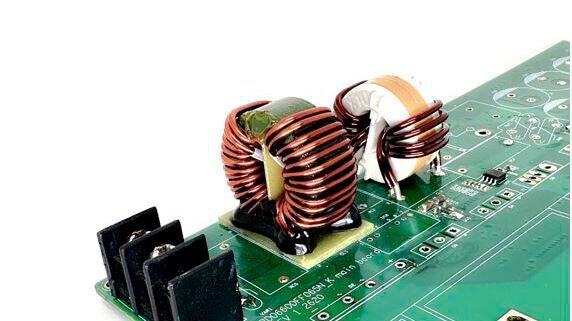
The integration of niobium into soft nanocrystalline magnetic materials takes their performance to a new level. By reducing the grain size to the nanometric scale, these materials offer higher magnetic permeability and lower energy losses compared to conventional materials, such as electrical steels or ferrites. The main advantage of these materials lies in their ability to offer safer and more compact designs, enabling the creation of smaller and more efficient devices. This becomes even more relevant when considering the trend of increasing switching frequencies in electronic equipment, driven by the use of new semiconductors based on silicon carbide (SiC) and gallium nitride (GaN), to achieve higher energy efficiency. The use of these higher frequencies requires materials that can operate optimally under these conditions, as is the case with niobium-based nanocrystalline materials.
As a result, power electronics and related industries can achieve superior performance while maintaining smaller form factors — an important advantage in the development of electronic equipment.
While ferrite has been the dominant material in power electronics until now, for use in inductors and transformers at higher frequencies, the advantages of niobium-based nanocrystalline materials are catching attention and prompting a shift in the industry. Furthermore, this new class of materials has the potential to play a significant role in the development of innovative applications, such as renewable energy, electric vehicles, and energy storage systems.
To assist electronic component designers in understanding the potential benefits of using this material, CBMM has developed a free online simulator. The tool’s objective is to generate comparisons for applications in electromagnetic noise filters for electric vehicles, between niobium-based nanocrystalline materials and ferrite, allowing the designer to understand the possible impacts on the size of these components and the use of raw materials such as copper when opting for one material over the other.
This tool is an important step in bringing the benefits of soft nanocrystalline magnetic materials to the market, providing simulations that demonstrate the advantages of their use.
With these resources, CBMM is helping to shape the future of power electronics.
If you are interested in testing CBMM’s exclusive simulator of nanocrystalline cores compared to ferrite, it is available for use at: https://niob.tech/tx2z5s
CBMM has confirmed its participation at PCIM Expo & Conference from 6-8 May, in Nuremberg. Visit the company’s booth 5-444 at Hall 5.
(ID:50355585)
:quality(80)/p7i.vogel.de/wcms/f0/d8/f0d82f06ed1b7abb3245dfc4c317cb55/0127949994v2.jpeg "Visual representation of component ageing in power electronics, highlighting thermal and material stress effects across the system (Bild: © Surya16 - stock.adobe.com)")
:quality(80)/p7i.vogel.de/wcms/b1/0a/b10a283cdf3e5f156781a7273c71a7e0/0129107484v2.jpeg "Circular design strategies are increasingly shaping how power electronics are designed, reused, and recovered across their life cycle. (Source: © Enrique - stock.adobe.com)")