


:quality(80)/p7i.vogel.de/wcms/2f/f3/2ff3221bf7665de2d0acf83760bfd1fa/0130031523v2.jpeg "Wolfspeed presents a 300 mm silicon carbide technology platform designed to support advanced packaging and high-efficiency power delivery for AI data center infrastructure. (Source: Wolfspeed)")
:quality(80)/p7i.vogel.de/wcms/c3/16/c316e955a97f5d72d9678297b237b9e5/0129932858v2.jpeg "Left: the single-phase version of the SENTRON ECPD with RCM, right: a model of the future three-phase version of the SENTRON ECPD. (Source: Siemens)")
:quality(80)/p7i.vogel.de/wcms/ef/0a/ef0adb0acf793fe147cc27c21f6a7a67/0129954238v2.jpeg "Empower Semiconductor introduces embedded silicon capacitors designed to improve power delivery and stability in AI and high-performance computing processors. (symbolic image) (Source: © IF.arc - stock.adobe.com)")
:quality(80)/p7i.vogel.de/wcms/53/f9/53f9301dfc9292d02960f7996c79cc6e/0129927601v2.jpeg "Wolfspeed’s new 10 kV SiC MOSFET enables high-voltage power conversion for grid and industrial applications. (symbolic image) (Source: © CREATIVE- 3.4 - stock.adobe.com)")
:quality(80)/p7i.vogel.de/wcms/6e/cd/6ecd41d095d5111cf4ed37b714844487/0129930878v2.jpeg "PCIM Asia Shenzhen provides a platform for industry experts to present new developments in power electronics and electrification technologies. (symbolic image) (Source: © killykoon - stock.adobe.com)")
:quality(80)/p7i.vogel.de/wcms/02/c0/02c0e9722f70b1134dbf96fb59a9c73d/0129655179v2.jpeg "The PCIM Conference 2026 will take place from June 9-11, featuring discussions on power electronics trends, including GaN technology and AI applications. (symbolic image) (Source: © Elmira - stock.adobe.com)")
:quality(80)/p7i.vogel.de/wcms/cc/67/cc670ea2029cd2af5c641af70e1bf734/0129816392v4.jpeg "Fraunhofer IAF coordinates the EU SUPREME project to accelerate GaN and SiC power semiconductor innovation in Europe. (Source: Fraunhofer IAF)")
:quality(80)/p7i.vogel.de/wcms/ea/e6/eae6aee30071e67a5627027974437134/0129544613v2.jpeg "GlobalFoundries and Renesas strengthen their collaboration to support U.S.-based semiconductor production and supply chain resilience. (Source: © ronstik - stock.adobe.com)")
:quality(80)/p7i.vogel.de/wcms/3c/4b/3c4bbc68dda65c7071b4376fb57423b0/0130030465v2.jpeg "Faraday’s laws explain the fundamental behavior of magnetic fields and electronic devices in dynamic use cases. The operation of transformers, wireless chargers, induction cookers, induction motors, magnetic levitating trains (MAGLEV Trains), electric violin, and many others depends upon Faraday’s laws. (Source: © Sheraz - stock.adobe.com)")
:quality(80)/p7i.vogel.de/wcms/b1/5e/b15ee02b0ba02db70cf61e37d66ad1d3/0129349127v2.jpeg "Vehicle-to-grid (V2G) chargers enable bidirectional energy flow, allowing electric vehicles to act as mobile energy storage systems that can both draw power from and feed power back into the grid. (Source: © medienvirus - stock.adobe.com)")
:quality(80)/p7i.vogel.de/wcms/26/d5/26d591cc340077026eac56a0e7564faf/0129949603v2.jpeg "Flexible: The solid silicone-based electrolyte is elastic, thereby compensating for the voids that form in solid-state batteries during charging and discharging. (Source: Empa)")
:quality(80)/p7i.vogel.de/wcms/4d/e0/4de02f76a37cbb3df30dd231de589c8e/0128866890v2.jpeg "Both legacy and vGaN show higher carrier mobility and band gap energies compared to other power semiconductors. (Source: © phonlamaiphoto - stock.adobe.com)")
:quality(80)/p7i.vogel.de/wcms/be/c8/bec8d43fc0ee73414274be44608b2970/0129748903v2.jpeg "The Infiniium XR804KA real-time oscilloscope delivers faster response time, improved stability, and streamlined workflows for high-speed digital and compliance testing. (Source: Keysight)")
:quality(80)/p7i.vogel.de/wcms/23/ee/23ee4a97790d6009dbfd7d9577ffa723/0129220424v2.jpeg "The R&S FPL1044 with the new RTSA option makes 40 MHz real-time frequency analysis available up to 44 GHz. (Source: Rohde & Schwarz )")
:quality(80)/p7i.vogel.de/wcms/3c/d1/3cd1cacbceb792ba63727199c61ca434/0127801860v2.jpeg "Thanks to cloud technology, users can collaborate on projects from anywhere and always have access to the latest planning data. (Source: SIEMENS)")
:quality(80)/p7i.vogel.de/wcms/5a/a0/5aa0436498af618297961fd54ab36cdf/0126290792v2.jpeg "Siemens accelerates student-led semiconductor innovation across Europe’s leading technical universities through Cre8Ventures’ Open Higher Education Program developed in collaboration with Arm and University of Southampton (Source: Siemens Digital Industries Software)")
BATTERY TECHNOLOGY Beginning of cooperation toward mass production of all-solid-state batteries for BEVs
Related Vendors
:fill(fff,0)/p7i.vogel.de/companies/60/7e/607ec89d5d9b5/white-frame.jpg "white frame.jpg (www.rohm.com)")
:fill(fff,0)/p7i.vogel.de/companies/62/a0/62a0a0de7d56a/aic-europe-logo.jpeg "aic-europe-logo (AIC Europe)")
:fill(fff,0)/p7i.vogel.de/companies/61/dc/61dc0e8c2e420/dspace-logo-1000px-220107.png "dspace-logo-1000px-220107 (dSPACE GmbH)")
Idemitsu Kosan Co.,Ltd. and Toyota Motor Corporation announce that they have entered into an agreement to work together in developing mass production technology of solid electrolytes, improving productivity and establishment a supply chain, to achieve the mass production of all-solid-state batteries for battery electric vehicles (BEVs).
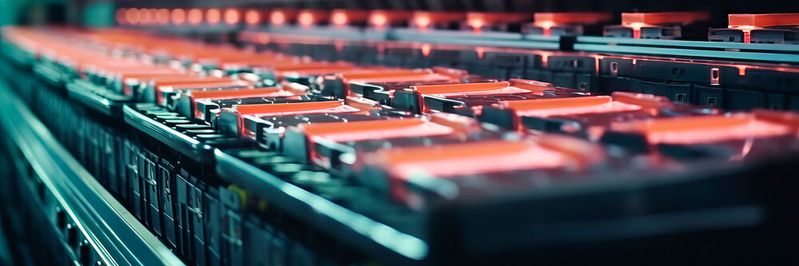
For next-generation batteries which support an evolution of BEVs, Idemitsu has been working on research & development on elemental technologies for all-solid-state batteries since 2001, while Toyota started in 2006. This collaboration focuses on sulfide solid electrolytes, which are seen as a promising material to achieve high capacity and output for BEVs. Sulfide solid electrolytes are characterized by softness and adhesiveness to other materials, which is suitable for battery mass production.
"For the next-generation batteries that will support the evolution of battery EVs, we are developing optimal solutions in line with specific applications and characteristics, including high-output and long-range batteries, as well as high-quality and affordable versions for widespread use," says Koji Sato, President and CEO, Toyota Motor Corporation.
:quality(80)/p7i.vogel.de/wcms/a7/aa/a7aa25d5f84a4cd6efc7d9121328e71e/0114673928.jpeg "Koji Sato, President and CEO, Toyota Motor Corporation / Shunichi Kito, Representative Director, President and Chief Executive Officer, Idemitsu Kosan Co.,Ltd.(Source: TOYOTA MOTOR CORPORATION)")
:quality(80)/p7i.vogel.de/wcms/e8/50/e850b31ea7eb2e140dddd84de68d0237/0114673932.jpeg "Koji Sato, President and CEO, Toyota Motor Corporation(Source: TOYOTA MOTOR CORPORATION)")
:quality(80)/p7i.vogel.de/wcms/8e/b5/8eb5f3bcc906bb71c437124f40999d9e/0114673937.jpeg "Shunichi Kito, Representative Director, President and Chief Executive Officer, Idemitsu Kosan Co.,Ltd.(Source: TOYOTA MOTOR CORPORATION)")
:quality(80)/p7i.vogel.de/wcms/06/f1/06f1713df7ab093325f25ce7a11445a4/0114674090.jpeg "Keiji Kaita, President, Carbon Neutral Advanced Engineering Development Center, Toyota Motor Corporation / Koji Sato, President and CEO, Toyota Motor Corporation / Shunichi Kito, Representative Director, President and Chief Executive Officer, Idemitsu Kosan Co.,Ltd. / Hajime Nakamoto, Senior Managing Executive Officer, Idemitsu Kosan Co.,Ltd.(Source: TOYOTA MOTOR CORPORATION)")
Details of collaboration
Phase 1: Development of sulfide solid electrolytes and preparation for a large pilot facility
Through feedback and development support from each other on each company's technical area, both Idemitsu and Toyota will work together on creating better sulfide solid electrolytes with attention to quality, cost, and lead times, which both companies believe will realize mass-production demonstration of sulfide solid electrolytes using an Idemitsu pilot facility.
Phase 2: Mass production using a large pilot facility
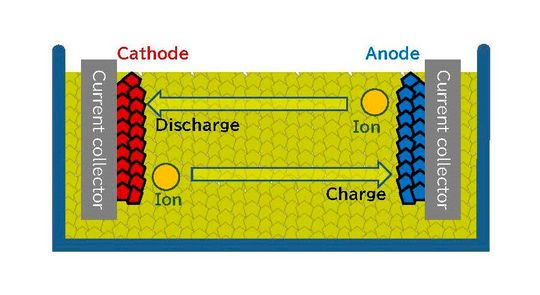
Through construction and startup of a large pilot facility, Idemitsu will promote sulfide solid electrolyte manufacture, and then will obtain mass production technology. Toyota will promote development of both all-solid-state batteries which sulfide solid electrolytes are used and BEV development in which the batteries are incorporated, and then will ensure market launch of BEVs with all-solid-state batteries in 2027-28.
Phase 3: Study of future full-scale mass production
Based on the results of Phase 2, both companies will study of future full-scale mass production and commercialization.
:quality(80):fill(efefef,0)/p7i.vogel.de/wcms/65/04/65048666bcd13/kampagnenbild-web-pb-webkon-20231017-1200x675-adobestock-50904691.jpeg "Kampagnenbild_WEB_PB_Webkon_20231017_1200x675_AdobeStock_50904691 (iuriimotov - adobe.stock.com)")
WEB CONFERENCE – MOTOR SYSTEM DESIGN
There is no time for downtime in motor control applications
Collaborative material development
Idemitsu has also been developing production technologies of lithium sulfide which is an intermediate material for solid electrolytes, using by-products which are generated in the course of petroleum refining. And through such development, it has been working on development of mass production technology on sulfide solid electrolytes, aiming to establish a stable supply system. Further, the company is steadily increasing the capacity of its small pilot facility and is proceeding construction plan of a large pilot facility, which will contribute to commercialization of all-solid-state batteries in 2027/28.
Through combination of both companies' material development technologies, Idemitsu's material manufacture technologies and Toyota's battery processing and assembly technologies which is obtained through BEV development, both companies will aim to realize mass production of both solid electrolytes and all-solid-state batteries suitable for global widespread use. "We are confident that sulfide-based solid electrolytes are the most promising solution for battery EV issues such as cruising range and charging times," says Shunichi Kito, Representative Director, President and Chief Executive Officer, Idemitsu Kosan Co.,Ltd..
(ID:49751152)
:quality(80)/p7i.vogel.de/wcms/1e/9c/1e9c45d6fcf2fb48dc47756e4cb20174/0128931043v2.jpeg "Syensqo and Axens have launched Argylium to support the development and scale-up of solid-state battery materials in Europe. (symbolic image) (Source: © Anastasiia - stock.adobe.com)")
:quality(80)/p7i.vogel.de/wcms/56/a7/56a7da743bd47707842da3ece97aa802/0124907114v2.jpeg "The BMW Group, partnering with Solid Power, is testing all-solid-state batteries in a BMW i7 in Munich to achieve higher energy density and longer vehicle ranges. (Source: Tom Kirkpatrick/BMW AG)")