


:quality(80)/p7i.vogel.de/wcms/b2/82/b28212428745dd8a4634ad4f4912012f/0132902689v2.jpeg "New 15 V, 25 V and 40 V eGaN FETs deliver ultra-low on-resistance, high current capability, and exceptional radiation immunity for high-density space power conversion (Source: EPC Space)")
:quality(80)/p7i.vogel.de/wcms/7b/4f/7b4f433302c490cac22eee9c12499e65/0132780211v2.jpeg "Littelfuse introduces the TPSMD‑FL series of high‑power surface‑mount TVS diodes, designed to simplify ISO 7637 load‑dump protection and safeguard automotive electronics against severe voltage transients. (Source: Littlefuse)")
:quality(80)/p7i.vogel.de/wcms/fa/75/fa75187cb6ad5e3fecea69feaf1fd567/0132776903v2.jpeg "Bourns introduces the CFG‑A series of wide‑terminal metal foil current‑sense resistors, offering high precision, AEC‑Q200 compliance and robust thermal performance for automotive and high‑reliability power applications. (Source: Bourns)")
:quality(80)/p7i.vogel.de/wcms/4c/17/4c17f2e521a3c2c473be88d2a48ed82b/0132775948v2.jpeg "TDK expands its aluminum electrolytic capacitor portfolio with new vibration‑resistant axial and soldering star variants rated for 125 °C, alongside performance upgrades to its 63 V series for demanding industrial and automotive applications. (symbolic image) (Source: © NorGal - stock.adobe.com)")
:quality(80)/p7i.vogel.de/wcms/1f/79/1f79d69530465de26a832c742fc60319/0133117717v2.jpeg "With 30,000 sqm of exhibition space, 20,157 trade visitors, 271 exhibitors, and 131 expert presentations as part of the conference program, the event sent a strong message about the industry's innovative strength and dynamism. (Source: Mesago Messe Frankfurt GmbH)")
:quality(80)/p7i.vogel.de/wcms/43/4d/434db2291567e847e54332004942a225/0132958267v2.jpeg "GlobalWafers has joined the SEMI Taiwan Materials Alliance, with CEO Doris Hsu serving as co‑chair, to advance critical materials technologies, accelerate collaborative innovation and strengthen global semiconductor supply chain resilience. (Source: © jiwon - stock.adobe.com)")
:quality(80)/p7i.vogel.de/wcms/6f/72/6f72f93d1e4c5a248a97dd3b8f32a336/0132997898v2.jpeg "Infineon plans to acquire C2i Semiconductors to combine software‑defined multiphase control and smart power stages with its broad power‑semiconductor portfolio for intelligent, scalable AI data‑center power delivery. (Source: © Grispb - stock.adobe.com)")
:quality(80)/p7i.vogel.de/wcms/52/a0/52a052768ef4e6e64689850614d49345/0132879749v2.jpeg "Hitachi Energy is investing $300 million in China to expand manufacturing capacity for power transformers, ultra‑high‑voltage bushings and digital tap changers, bolstering global supply chains for critical grid infrastructure. (Source: © Tech_Lab - stock.adobe.com)")
:quality(80)/p7i.vogel.de/wcms/96/80/9680b468d7f682c8b6c15b07300afbb0/0133177854v2.jpeg "Grid-forming inverters are also known as grid-forming resources and grid-forming IBR. This article explains grid-forming inverters in detail. (Bild: © only_kim - stock.adobe.com)")
:quality(80)/p7i.vogel.de/wcms/57/c6/57c6fa81922a9849a917bdfed82eddf7/0133052494v2.jpeg "Rising demand for high-end materials shifts production toward higher-margin products, reducing output of standard loss materials. (Source: NCAB)")
:quality(80)/p7i.vogel.de/wcms/94/15/9415d4ee3828078577c6a30d8e5e3bc2/0133072351v6.jpeg "Hitachi Energy is supporting SF6‑free grid modernization with new EconiQ circuit breaker orders for high‑voltage applications in North America and Europe. (Source: Hitachi Energy)")
:quality(80)/p7i.vogel.de/wcms/4e/57/4e5730064b001819cb708c209c067228/0133073733v2.jpeg "ThS article explains SiC OBC as a power electronics product: what it delivers, what it falls short of, and why it is a market choice. (Source: © Grispb - stock.adobe.com)")
:quality(80)/p7i.vogel.de/wcms/7b/76/7b76005554b556df2a7a3794bdf69d44/0132365246v2.jpeg "Hioki’s ST5680A DC Hipot Tester combines CE/UKCA/CSA compliance, an integrated capacitance‑based contact check and time‑series waveform recording (voltage, leakage current, insulation resistance) to standardize hipot and insulation testing across EV cell, module and pack production lines. (Source: Hioki)")
:quality(80)/p7i.vogel.de/wcms/af/7f/af7f7b0fb7f29219fc991b1130f65477/0132241333v2.jpeg "Comprehensive laboratory testing regimens—combining thermal cycling, high‑current stress, EMC, and accelerated lifetime tests—are essential to validate advanced power designs and ensure reliability in real‑world applications. (Source: PRBX)")
:quality(80)/p7i.vogel.de/wcms/16/3d/163df69363f8125315a9826e13ea4b05/0131927425v2.jpeg "Solution will maximize data center and AI factory profitability while delivering engineering-grade insights to design and operations for more efficient, sustainable, and resilient infrastructure. (Source: Cadence)")
:quality(80)/p7i.vogel.de/wcms/85/b7/85b7e90733a2bd8f21515d8f7137f2fc/0131917677v2.jpeg "Renesas acquires Pictorus to integrate its embedded application software platform with Renesas’ MCU and MPU portfolio, helping developers shorten time‑to‑market and simplify system integration. (Source: © lucadp - stock.adobe.com)")
BATTERIES Empa robot delivers largest open dataset for battery research
Related Vendors
:fill(fff,0)/p7i.vogel.de/companies/60/21/60214fbbcc5e0/index.png "index.png (Kundenwebsite)")
:fill(fff,0)/p7i.vogel.de/companies/66/9a/669a2816c84be/pcim-logo.png "pcim-logo (PCIM)")
Researchers at Empa, together with international partners, have published the largest open battery dataset to date in a new data format. The data from Empa's Aurora robot platform sets new standards for quality, traceability, and collaboration in international battery research – and is expected to significantly accelerate it.
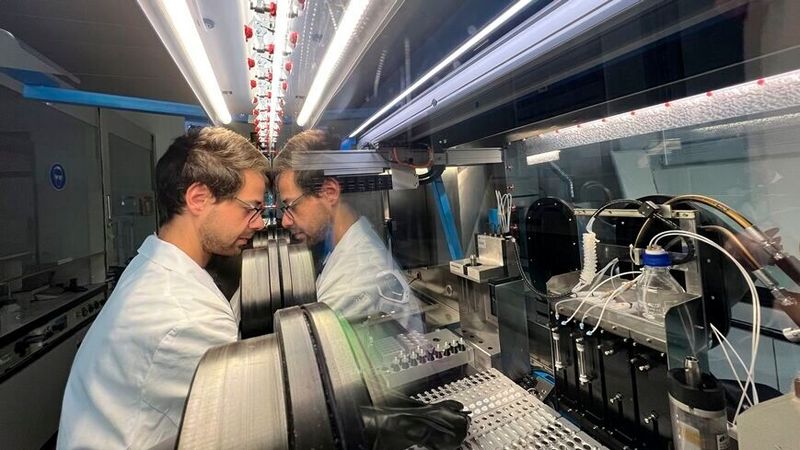
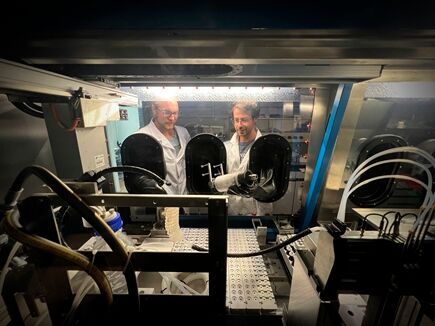
The Battery Data Alliance (BDA), together with Empa and other partners, has published the largest open dataset to date in Battery Data Format (BDF). The data comes from fully automated experiments with the autonomous robot platform Aurora, which Empa developed in collaboration with the Swiss company Chemspeed Technologies. The researchers are thus setting a new standard for high-quality, machine-readable battery data and for international research into new battery materials. The dataset contains charge and discharge cycles from 199 button cell batteries with NMC/graphite and LFP/graphite chemistry. Each battery was tested over 1000 cycles under fully automated and precisely controlled conditions. Moreover, a scientific publication appeared in the journal Batteries & Supercaps that describes the robot-assisted research platform and classifies the dataset.
A new standard for battery data
Publishing data in the Battery Data Format ensures that it remains transparent and traceable, is compatible with common analysis tools, and complies with FAIR data principles (Findable, Accessible, Interoperable, Reusable). This allows researchers worldwide to easily use and process the data.
“By combining robotics with FAIR-compliant data management, researchers are laying the foundation for faster and more reproducible battery research – and thus driving global innovation in energy storage,” explains BDA Chairman Gabe Hege. Corsin Battaglia, head of Empa's Materials for Energy Conversion laboratory and professor at ETH Zurich and EPFL, also emphasizes the importance of structured data: "When scientific data is structured according to common standards and provided with complete traceability, it can have an impact far beyond individual projects. In this form, it becomes a shared resource that promotes collaboration, accelerates discoveries, and can transform entire fields of research."
The basis for a new generation of standardized battery data was developed in close collaboration between Empa and the Norwegian research institute SINTEF as part of the European battery research initiative Battery2030+ and the ETH Board's Open Research Data initiative. The dataset is freely accessible on the Zenodo online platform and is intended to accelerate battery research worldwide.
PCIM Expo 2026: Join the leading exhibition!

Lead the future of power electronics! Exhibit your latest solutions, connect with key players, and elevate your brand visibility worldwide at the PCIM Expo from 9 – 11 June 2026 in Nuremberg, Germany. Benefit from our Early Bird discount by 30 June 2025.
Secure your spot now
(ID:50545510)
:quality(80)/p7i.vogel.de/wcms/97/c0/97c0f847c457054bfb41a3388dd9fc4c/0131184610v2.jpeg "Renesas completes the acquisition of Irida Labs, integrating PerCV.ai vision software to accelerate vision AI deployment on Renesas edge platforms. (Source: © Rawpixel.com - stock.adobe.com)")
:quality(80)/p7i.vogel.de/wcms/69/39/6939e7a75a48498ec5140988305dd2c0/0126706636v2.jpeg "CATL's Shenxing Pro battery addresses key challenges in Europe's e-mobility market by offering unmatched safety, lifespan, and superfast charging capabilities for electric vehicles. Find out more here. (Source: CATL)")