


:quality(80)/p7i.vogel.de/wcms/2f/f3/2ff3221bf7665de2d0acf83760bfd1fa/0130031523v2.jpeg "Wolfspeed presents a 300 mm silicon carbide technology platform designed to support advanced packaging and high-efficiency power delivery for AI data center infrastructure. (Source: Wolfspeed)")
:quality(80)/p7i.vogel.de/wcms/c3/16/c316e955a97f5d72d9678297b237b9e5/0129932858v2.jpeg "Left: the single-phase version of the SENTRON ECPD with RCM, right: a model of the future three-phase version of the SENTRON ECPD. (Source: Siemens)")
:quality(80)/p7i.vogel.de/wcms/ef/0a/ef0adb0acf793fe147cc27c21f6a7a67/0129954238v2.jpeg "Empower Semiconductor introduces embedded silicon capacitors designed to improve power delivery and stability in AI and high-performance computing processors. (symbolic image) (Source: © IF.arc - stock.adobe.com)")
:quality(80)/p7i.vogel.de/wcms/53/f9/53f9301dfc9292d02960f7996c79cc6e/0129927601v2.jpeg "Wolfspeed’s new 10 kV SiC MOSFET enables high-voltage power conversion for grid and industrial applications. (symbolic image) (Source: © CREATIVE- 3.4 - stock.adobe.com)")
:quality(80)/p7i.vogel.de/wcms/6e/cd/6ecd41d095d5111cf4ed37b714844487/0129930878v2.jpeg "PCIM Asia Shenzhen provides a platform for industry experts to present new developments in power electronics and electrification technologies. (symbolic image) (Source: © killykoon - stock.adobe.com)")
:quality(80)/p7i.vogel.de/wcms/02/c0/02c0e9722f70b1134dbf96fb59a9c73d/0129655179v2.jpeg "The PCIM Conference 2026 will take place from June 9-11, featuring discussions on power electronics trends, including GaN technology and AI applications. (symbolic image) (Source: © Elmira - stock.adobe.com)")
:quality(80)/p7i.vogel.de/wcms/cc/67/cc670ea2029cd2af5c641af70e1bf734/0129816392v4.jpeg "Fraunhofer IAF coordinates the EU SUPREME project to accelerate GaN and SiC power semiconductor innovation in Europe. (Source: Fraunhofer IAF)")
:quality(80)/p7i.vogel.de/wcms/ea/e6/eae6aee30071e67a5627027974437134/0129544613v2.jpeg "GlobalFoundries and Renesas strengthen their collaboration to support U.S.-based semiconductor production and supply chain resilience. (Source: © ronstik - stock.adobe.com)")
:quality(80)/p7i.vogel.de/wcms/3c/4b/3c4bbc68dda65c7071b4376fb57423b0/0130030465v2.jpeg "Faraday’s laws explain the fundamental behavior of magnetic fields and electronic devices in dynamic use cases. The operation of transformers, wireless chargers, induction cookers, induction motors, magnetic levitating trains (MAGLEV Trains), electric violin, and many others depends upon Faraday’s laws. (Source: © Sheraz - stock.adobe.com)")
:quality(80)/p7i.vogel.de/wcms/b1/5e/b15ee02b0ba02db70cf61e37d66ad1d3/0129349127v2.jpeg "Vehicle-to-grid (V2G) chargers enable bidirectional energy flow, allowing electric vehicles to act as mobile energy storage systems that can both draw power from and feed power back into the grid. (Source: © medienvirus - stock.adobe.com)")
:quality(80)/p7i.vogel.de/wcms/26/d5/26d591cc340077026eac56a0e7564faf/0129949603v2.jpeg "Flexible: The solid silicone-based electrolyte is elastic, thereby compensating for the voids that form in solid-state batteries during charging and discharging. (Source: Empa)")
:quality(80)/p7i.vogel.de/wcms/4d/e0/4de02f76a37cbb3df30dd231de589c8e/0128866890v2.jpeg "Both legacy and vGaN show higher carrier mobility and band gap energies compared to other power semiconductors. (Source: © phonlamaiphoto - stock.adobe.com)")
:quality(80)/p7i.vogel.de/wcms/be/c8/bec8d43fc0ee73414274be44608b2970/0129748903v2.jpeg "The Infiniium XR804KA real-time oscilloscope delivers faster response time, improved stability, and streamlined workflows for high-speed digital and compliance testing. (Source: Keysight)")
:quality(80)/p7i.vogel.de/wcms/23/ee/23ee4a97790d6009dbfd7d9577ffa723/0129220424v2.jpeg "The R&S FPL1044 with the new RTSA option makes 40 MHz real-time frequency analysis available up to 44 GHz. (Source: Rohde & Schwarz )")
:quality(80)/p7i.vogel.de/wcms/3c/d1/3cd1cacbceb792ba63727199c61ca434/0127801860v2.jpeg "Thanks to cloud technology, users can collaborate on projects from anywhere and always have access to the latest planning data. (Source: SIEMENS)")
:quality(80)/p7i.vogel.de/wcms/5a/a0/5aa0436498af618297961fd54ab36cdf/0126290792v2.jpeg "Siemens accelerates student-led semiconductor innovation across Europe’s leading technical universities through Cre8Ventures’ Open Higher Education Program developed in collaboration with Arm and University of Southampton (Source: Siemens Digital Industries Software)")
GREEN ENERGY eFuels: The climate-friendly alternative to fossil fuels
Related Vendors
:fill(fff,0)/p7i.vogel.de/companies/61/dc/61dc0e8c2e420/dspace-logo-1000px-220107.png "dspace-logo-1000px-220107 (dSPACE GmbH)")
:fill(fff,0)/p7i.vogel.de/companies/62/95/6295c25c8dc1a/schunk-sonosystems-300dpi.png "schunk-sonosystems-300dpi (Schunk)")
:fill(fff,0)/p7i.vogel.de/companies/68/08/6808a2b3b6595/het-logo.jpeg "het-logo (Heraeus Electronics)")
In the global effort to reduce greenhouse gas emissions and combat climate change, alternative fuels are becoming increasingly important. eFuels, also known as synthetic fuels, are at the forefront of these developments. This article comprehensively examines the various aspects of eFuels, their production, advantages, challenges, and significance for the B2B sector, particularly in power electronics.
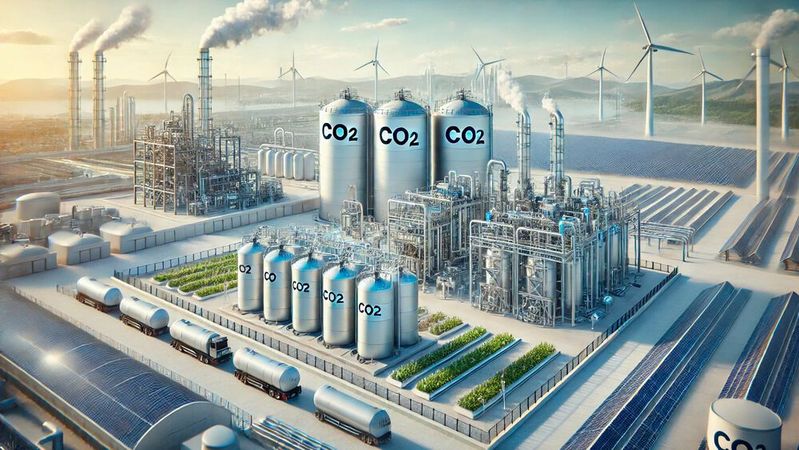
In the search for sustainable solutions, eFuels could be the answer to our energy problems. These innovative, climate-friendly fuels promise a future without fossil fuels while offering compatibility with existing infrastructures.
What are eFuels?
eFuels are artificially produced fuels made from hydrogen and CO2 using renewable electricity. They offer a climate-friendly alternative to fossil fuels, being carbon-neutral when the electricity used for their production comes from renewable sources. eFuels can be both liquid and gaseous, including types such as e-gasoline, e-diesel, and e-methanol.
The eFuel production process
The production of eFuels involves several steps:
- 1. Electrolysis: Water is split into hydrogen and oxygen through electrolysis. This process requires significant amounts of electricity, ideally from renewable sources like wind or solar energy.
- 2. CO2 Capture:The required CO2 can be captured from the atmosphere or industrial emissions. Technologies such as Direct Air Capture (DAC) play a key role here.
- 3. Synthesis: The produced hydrogen is combined with CO2 in chemical reactors to create various hydrocarbons. Known methods for this include Fischer-Tropsch synthesis and methanation.
Advantages of eFuels:
- Carbon Neutrality: Since eFuels use CO2 from the atmosphere and release the same amount when burned, they are practically carbon-neutral.
- Compatibility: eFuels can be used in existing combustion engines and infrastructure, making them an attractive transitional solution.
- Storability: Unlike pure hydrogen, eFuels can be easily stored and transported.
Challenges of eFuels
- High Costs: Currently, the production of eFuels is very expensive, mainly due to the high energy demands of electrolysis.
- Energy Efficiency: The efficiency of eFuel production is relatively low, as a significant portion of the input energy is lost.
- Scalability: Technologies for CO2 capture and electrolysis need further development and scaling to meet global demand.
:quality(80):fill(efefef,0)/p7i.vogel.de/wcms/65/cb/65cb9c3a03849/webinar-efficient-electrolysis-through-comprehensive-power-conversion-solutions-coverbild.jpeg "Webinar_Efficient Electrolysis through Comprehensive Power Conversion Solutions_Coverbild (Infineon)")
GREEN HYDROGEN
Efficient Electrolysis through Comprehensive Power Conversion Solutions
Importance for power electronics
Power electronics play a crucial role in the efficient utilization of energy required for eFuel production. High-performance converters, inverters, and other power electronic devices are necessary to handle the high currents and voltages involved in electrolysis and synthesis processes. With these components it becomes possible to streamline the production process, making it more cost-effective and scalable. As the demand for eFuels increases, the need for robust and efficient power electronics will become even more critical, bridging the gap to their widespread application.
Applications of eFuels
eFuels offer a versatile and sustainable solution for various sectors that are challenging to electrify. By utilizing renewable energy sources, eFuels can significantly reduce carbon emissions in these critical industries.
- Transport and Logistics: Heavy-duty transport, shipping, and aviation, which are hard to electrify, can benefit from eFuels.
- Industry: eFuels can replace fossil fuels in industrial processes to reduce CO2 emissions.
- Power Generation: During periods of low renewable energy generation, eFuels can be used as a storable energy carrier for power generation.
Future Perspectives
Research and development in eFuels are progressing rapidly. Collaborations between technology companies, energy providers, and the automotive industry are essential to scale eFuel production and reduce costs. Political support through subsidies and regulations can also stimulate the eFuel market.
Conclusion
eFuels offer a promising solution for reducing CO2 emissions and decarbonizing sectors that are difficult to electrify. Despite current challenges in terms of costs and efficiency, technological advancements and political support could enable the breakthrough of eFuels. For the B2B sector, especially in power electronics, there are numerous opportunities to participate in this pioneering development. Companies that invest early in the technology and engage in innovative projects may benefit from long-term advantages and market opportunities.
(ID:50108032)
:quality(80)/p7i.vogel.de/wcms/de/a5/dea59989dd528b35b1803445d600ef88/0124760917v2.jpeg "Situated in Western Australia, the Mid West Hydrogen Hub at Oakajee is a key strategic area for renewable industry growth, with significant potential for large-scale solar and wind energy production, supporting substantial hydrogen and ammonia exports to meet European demand by 2050. (Source: © AA+W - stock.adobe.com)")
:quality(80)/p7i.vogel.de/wcms/af/f2/aff2fcbebdde7822fc2ec9a43f06eccc/0125713659v2.jpeg "At PCIM 2025, Professor Kolar showcased the underestimated challenges in the transition to net-zero, highlighting the complexity and costliness due to storage, land, and material needs. Find out more about this here. (Source: © Thanadon88 - stock.adobe.com)")