


:quality(80)/p7i.vogel.de/wcms/10/fc/10fcb98e44d61826e641bc8d3f20f616/0133193677v2.jpeg "The new AEVA and AEVB Series aluminum electrolytic capacitors are engineered for harsh industrial environments, delivering high-CV, long-lifetime performance in compact, surface-mount packages that reliably withstand up to 30g acceleration and operating temperatures extending from -55° to +125°C. (Source: Kyocera)")
:quality(80)/p7i.vogel.de/wcms/f7/42/f74208db9f5f87dca384b38b71c4782e/0133196365v2.jpeg "YAGEO’s EC Flat‑Series temperature sensors combine fast, accurate measurement with resistance to vibration, shock, moisture and dust for demanding automotive and industrial applications. (Source: Yageo)")
:quality(80)/p7i.vogel.de/wcms/b2/82/b28212428745dd8a4634ad4f4912012f/0132902689v2.jpeg "New 15 V, 25 V and 40 V eGaN FETs deliver ultra-low on-resistance, high current capability, and exceptional radiation immunity for high-density space power conversion (Source: EPC Space)")
:quality(80)/p7i.vogel.de/wcms/7b/4f/7b4f433302c490cac22eee9c12499e65/0132780211v2.jpeg "Littelfuse introduces the TPSMD‑FL series of high‑power surface‑mount TVS diodes, designed to simplify ISO 7637 load‑dump protection and safeguard automotive electronics against severe voltage transients. (Source: Littlefuse)")
:quality(80)/p7i.vogel.de/wcms/78/38/783841efab284c1b4453777e7ebea26d/0133190419v2.jpeg "Diodes has completed its acquisition of Elevate Semiconductor, expanding its analog and mixed-signal portfolio and strengthening its presence in the high-growth automated test equipment market. (Source: © peopleimages.com - stock.adobe.com)")
:quality(80)/p7i.vogel.de/wcms/1f/79/1f79d69530465de26a832c742fc60319/0133117717v2.jpeg "With 30,000 sqm of exhibition space, 20,157 trade visitors, 271 exhibitors, and 131 expert presentations as part of the conference program, the event sent a strong message about the industry's innovative strength and dynamism. (Source: Mesago Messe Frankfurt GmbH)")
:quality(80)/p7i.vogel.de/wcms/43/4d/434db2291567e847e54332004942a225/0132958267v2.jpeg "GlobalWafers has joined the SEMI Taiwan Materials Alliance, with CEO Doris Hsu serving as co‑chair, to advance critical materials technologies, accelerate collaborative innovation and strengthen global semiconductor supply chain resilience. (Source: © jiwon - stock.adobe.com)")
:quality(80)/p7i.vogel.de/wcms/6f/72/6f72f93d1e4c5a248a97dd3b8f32a336/0132997898v2.jpeg "Infineon plans to acquire C2i Semiconductors to combine software‑defined multiphase control and smart power stages with its broad power‑semiconductor portfolio for intelligent, scalable AI data‑center power delivery. (Source: © Grispb - stock.adobe.com)")
:quality(80)/p7i.vogel.de/wcms/87/97/879728679e7010f81e53a86923cde74c/0133218625v2.jpeg "Conceptual illustration of polar wurtzite niobium aluminum nitride (NbAlN), a transition-metal-containing nitride semiconductor that preserves the crystal structure and polarity of GaN. (Source: Associate Professor Atsushi Kobayashi from Tokyo University of Science, Japan)")
:quality(80)/p7i.vogel.de/wcms/ac/31/ac31c9478d80894d725d02883ae7ed5d/0133176534v2.jpeg "Average models allow power designers to simulate DC‑DC converters and three‑phase PFC circuits quickly, analyse small‑signal behaviour and evaluate loop stability without modelling every switching event. (Source: © AI - stock.adobe.com)")
:quality(80)/p7i.vogel.de/wcms/96/80/9680b468d7f682c8b6c15b07300afbb0/0133177854v2.jpeg "Grid-forming inverters are also known as grid-forming resources and grid-forming IBR. This article explains grid-forming inverters in detail. (Bild: © only_kim - stock.adobe.com)")
:quality(80)/p7i.vogel.de/wcms/57/c6/57c6fa81922a9849a917bdfed82eddf7/0133052494v2.jpeg "Rising demand for high-end materials shifts production toward higher-margin products, reducing output of standard loss materials. (Source: NCAB)")
:quality(80)/p7i.vogel.de/wcms/7b/76/7b76005554b556df2a7a3794bdf69d44/0132365246v2.jpeg "Hioki’s ST5680A DC Hipot Tester combines CE/UKCA/CSA compliance, an integrated capacitance‑based contact check and time‑series waveform recording (voltage, leakage current, insulation resistance) to standardize hipot and insulation testing across EV cell, module and pack production lines. (Source: Hioki)")
:quality(80)/p7i.vogel.de/wcms/af/7f/af7f7b0fb7f29219fc991b1130f65477/0132241333v2.jpeg "Comprehensive laboratory testing regimens—combining thermal cycling, high‑current stress, EMC, and accelerated lifetime tests—are essential to validate advanced power designs and ensure reliability in real‑world applications. (Source: PRBX)")
:quality(80)/p7i.vogel.de/wcms/16/3d/163df69363f8125315a9826e13ea4b05/0131927425v2.jpeg "Solution will maximize data center and AI factory profitability while delivering engineering-grade insights to design and operations for more efficient, sustainable, and resilient infrastructure. (Source: Cadence)")
:quality(80)/p7i.vogel.de/wcms/85/b7/85b7e90733a2bd8f21515d8f7137f2fc/0131917677v2.jpeg "Renesas acquires Pictorus to integrate its embedded application software platform with Renesas’ MCU and MPU portfolio, helping developers shorten time‑to‑market and simplify system integration. (Source: © lucadp - stock.adobe.com)")
SEMICONDUCTOR MATERIALS Diamonds: The future of high-power semiconductor materials?
Related Vendors
:fill(fff,0)/p7i.vogel.de/companies/5f/71/5f71d5f92a5f6/2000px-rogers-corporation-logo-svg.png "2000px-Rogers_Corporation_Logo.svg.png (rogers germany)")
:fill(fff,0)/p7i.vogel.de/companies/68/2c/682c3e2e9a195/logotype-rvb.jpeg "logotype-rvb (MERSEN France)")
:fill(fff,0)/p7i.vogel.de/companies/66/8b/668becd1c07eb/dowa-logo-word--1-.jpeg "dowa-logo-word--1- (DOWA)")
Did you know that Diamonds, symbols of wealth and admiration, can function as semiconductor devices? When anybody hears the word “diamonds”— the most expensive jewels come to mind. But Diamonds can handle 50,000 times more electricity than traditional silicon semiconductors. Could diamonds fit or fail the bill? The article explores the potential of diamonds as semiconductors.
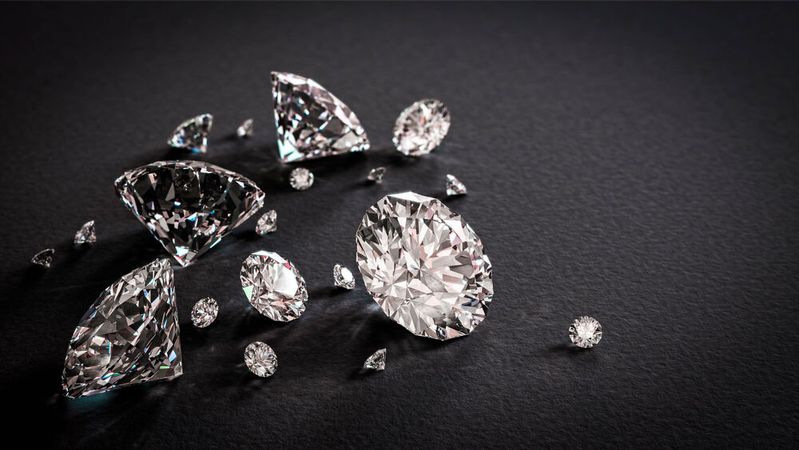
Traditionally cherished as the epitome of luxury in jewelry, diamonds are now poised to revolutionize the semiconductor industry. With their exceptional electrical and thermal properties, could diamonds be the key to advancing next-generation power electronics?
Wasn’t diamond a form of carbon?
Diamond is an allotrope of carbon (Z = 6). An allotrope is a structurally different form of the same element. Simply put, a diamond is a solid form of carbon! Diamond has the largest number of atoms per unit volume, making it one of the hardest and strongest materials with a Mohs scale rating of 10.
The beautiful part about diamonds is their fine-cut shape and sparkling appearance, which are due to their high refractive index, mirror-like luster, and light dispersion capabilities. These properties make diamonds costlier. However, from a chemical perspective, diamonds are superior due to their exceptional thermal conductivity and many other properties.
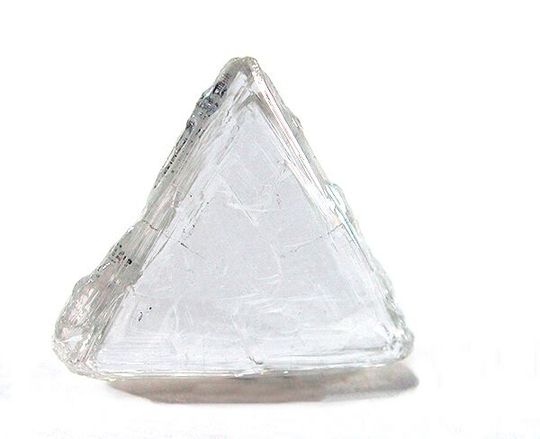
How can diamonds be semiconductors, they are so expensive
Due to their widespread popularity as expensive jewelry, many people are unaware of the role of diamonds in industrial applications. In addition to jewel use, diamonds are mined for their industrial applications. This is nothing new— it has been happening for 70 years.
Diamonds are used in industrial applications such as abrasives, and machinery for cutting, drilling, grinding, and polishing. They are applicable in laboratories for high-pressure experiments. Industrial diamonds are not expensive like the diamonds you see in jewelry stores. They do not even look like such dazzling diamonds.
Researchers have produced lab-grown diamond semiconductors at a lower cost. The resulting devices are said to have a long lifespan compared to existing technologies. Hence, material and implementation costs are not problematic for diamond semiconductors.
Weren’t diamonds poor conductors of electricity?
Diamonds, in their natural form, indeed exhibit poor electrical conductivity. They have a high dielectric strength, a property critical for insulators. Dielectric strength tells about a device’s ability to withstand high voltage before breakdown– until it becomes conductive. High dielectric strength makes diamonds withstand high voltages.
Initially, around the 1980s, diamonds were considered to be pure insulators. Years later, diamonds were doped — altering their electrical conductivity. Diamonds can be doped in both n and p-type semiconductors. In n-type, diamonds can be doped with phosphorus or nitrogen. P-type diamonds can be doped with boron.
As a result, low electrical conductivity and high dielectric strength do not stop them from becoming semiconductors, making them a good candidate for high-power applications.
:quality(80):fill(efefef,0)/p7i.vogel.de/wcms/5f/fe/5ffedb2e0ffa6/listing.jpg "listing")
What transforms diamonds into semiconductors?
Due to their top-notch properties and role in industrial electronics, researchers considered diamonds suitable for high-power semiconductors. The following section describes the properties of diamonds as semiconductors.
Unique bandgap
Diamond has an indirect ultra-wide band gap energy of 5.47 eV, higher than that of GaN (3.4 eV) and SiC (3.2 eV) but lower than Aluminum nitride (6.5 eV) — another contender for being the next “powerful power semiconductor”.
When the bandgap energy is higher, electrons require more energy to leave the valence band and enter the conduction band. Once an electron enters a conduction band, it can move freely under the application of an electric field. Our article on intrinsic-extrinsic semiconductors details these concepts.
The higher the bandgap in a semiconductor, the more likely it performs better in high-power applications. The UWBG capability of diamond allows it to exhibit higher breakdown voltages in the range of million volts per centimeter, which is applicable for enhanced high-temperature performance.
Heat combat
Diamonds exhibit high thermal conductivity due to carbon’s low atomic mass, covalent bonds, and structure. The internal structure of a diamond is derived from a face-centered cubic lattice (FCC structure). Each carbon atom forms a strong sp3 covalent bond at 109 degrees 28 minutes to the neighboring four atoms.
These strong bonds give rise to high phonon velocity and minimal phonon scattering— atomic vibrations. Diamonds have a low defect density. Simply put, strong bonds in diamond structure enable phonons to travel effortlessly throughout the crystal lattice. As a result, diamonds exhibit a very high thermal conductivity of around 20 W/CmK — one of the highest in the world.
A high thermal conductivity leads to efficient heat dissipation without safety compromises. Diamonds improve efficiency and reduce the risk of overheating and damage, a common challenge in the power electronics industry. In addition, diamonds can distribute heat evenly across different components in power electronics and RF applications.
Impressive breakdown
Due to a wide bandgap and strong covalent bonds, diamonds have a very high breakdown electric field. The theoretical breakdown electric field is 20 MV/cm and practical values range from 5-10 MV/cm. It is much higher than SiC and GaN. A higher breakdown electric field enables diamonds to use less material and withstand high voltages without failure.
Superior mobility
Diamonds possess high hole and electron mobilities— a high carrier mobility because of strong covalent bonds and low phonon scattering. Electrons and holes can travel faster through the diamond crystal lattice. As a result, diamonds exhibit faster signal transmission capabilities in high-power applications.
:quality(80)/p7i.vogel.de/wcms/f9/29/f92903189bb36304a6bbc7ca5ba8e3fc/0117522391.jpeg "Read more about the differences between inverters and converters in this article. (Source: BORIS - stock.adobe.com)")
POWER ELECTRONICS
Inverter vs converter: What's the difference?
Lesser losses
UWBG reduces intrinsic carrier concentration in diamonds. A high breakdown electric field enables superior voltage handling with minimal leakage. As a result, diamond semiconductors exhibit the lowest leakage current among semiconductors. A lower leakage current contributes to lower joule effect losses in on-state conditions and overall efficiency.
Environment-friendly
Although diamonds are allotropes of carbon, they are environmentally safe for use in semiconductor applications. The carbon emissions of diamond semiconductors are claimed to be 100 times less than the existing technology.
Challenges to commercialization
Diamond semiconductors have not been commercialized yet. Various companies and research entities are actively researching and manufacturing high-quality diamond semiconductor products. However, the commercialization of diamond semiconductors faces several challenges. Some of them are listed below.
Doping limitations
Ion implantation does not give the desired results in the fabrication of diamond semiconductors. As a result, diamonds are doped during synthesis or deposition. Two deposition techniques are used: HPHT (High Pressure High Temperature) and MPCVD (Microwave Plasma Chemical Vapor Deposition).
Lack of practicality
Diamonds are suitable in bipolar devices but modern researchers have invented unipolar devices such as n-channel MOSFETs and Schottky diodes. The results of actual experiments differ from theories about the high-temperature operation of diamond semiconductors. It facilitates risk of failure, poor thermal management, and packaging challenges.
Cost vs size
As diamond is the hardest semiconductor in the world, it is difficult to be processed. Available wafer sizes are smaller. It means that diamond semiconductors are costlier— as expected, but for other reasons rather than being a jewel. Properties like low defect density and purity trade off for cheaper and larger options.
:quality(80)/p7i.vogel.de/wcms/ce/20/ce204c68df780095d12fb791ed481503/90347247.jpeg "Reduced graphene oxide (rGO) can help prevent cracks from running through ceramic materials (Source: Brian Sheldon, Brown University)")
lithium-ion batteries
Graphene used to double toughness in solid electrolytes
Diamond vs Graphene: Which one is a better semiconductor?
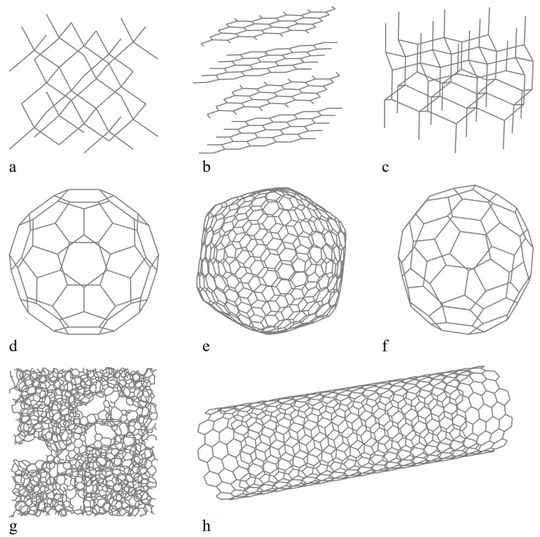
Just like diamonds, graphene — another allotrope of carbon, is also explored in the semiconductor industry. Graphene exhibits superior thermal conductivity and carrier mobilities compared to diamond.
Graphene is cheaper and more abundant than diamonds. Both are in the research and development stages. The following table lists the properties of various semiconductors for a detailed comparison to diamond semiconductors.
| Property | Si | 4H-SiC | GaN | GaAs | AlN | Diamond | Graphene |
| Bandgap energy (eV) | 1.12 | 3.26 | 3.39 | 1.43 | 6.5 | 5.47 | 1-2 |
| Thermal conductivity (W/cmK) | 1.5 | 4.9 | 2 | 0.5 | 3.21 | 20 | |
| Electrical breakdown (V/cm) | 3 x 10⁵ | 2.8 x 10⁶ | 3.3 x 10⁶ | 4 x 10⁵ | 1.2 x 10⁶ | 1 x 10⁷ | |
| Dielectric constant (Dimensionless) | 11.8 | 10.2 | 9 | 12.8 | 9 | 5.5 | 6.9 |
| Electron mobility (cm2/Vs) | 1400 | 1200 | 900 | 8500 | 300 | 2200 | 8000 (50 Hall Bar Structures) |
| Hole mobility (cm2/Vs) | 600 | 120 | 150 | 400 | 14 | 1600 | 9000 (50 Hall Bar Structures) |
| Commercialization status | Yes | Yes | Yes | Yes | No | No | No |
Applications of diamond semiconductors
The chip industry is already looking for cheaper and more reliable alternatives to silicon. Owing to their remarkable properties, diamond semiconductors are considered for the following applications.
Power electronics
Diamonds are currently used in heat sinks and heat spreaders in the power industry. The high thermal conductivity of diamonds makes them an optimal solution for effective thermal management. Researchers bet on diamonds for high-power semiconductors, power supplies, converters, inverters, and many more power devices.
Radio frequency
Researchers consider integrating diamond semiconductors in RF and microwave applications due to their exceptional carrier mobility and other properties. Diamonds can be used in RF transistors, amplifiers, filters, and heat spreaders for mmWave and THz applications.
Superconductors
Diamonds have shown their superconductive behavior at low temperatures like -269 degrees Celsius. Heavily doped diamond semiconductors are suitable for superconducting applications like quantum computing and supercomputers.
Quantum computing
Surprisingly, diamonds have demonstrated quantum entanglement. In 2011, a pair of diamond crystals were successfully linked by quantum entanglement. This can also open doors for diamonds in quantum applications like quantum sensing, computing, and networking.
Optics
Diamond semiconductors have high refractive index and transparency across a wide range of wavelengths. Such properties make them suitable for optoelectronic applications like sensors, laser windows, photodetectors, and high-performance lenses.
Radioactive environments
Countries like Japan and the US are actively involved in researching and producing diamond semiconductors. Recently, the government of Japan released news about manufacturing synthetic diamond semiconductors for their use in nuclear reactors at extremely high temperatures.
References
PCIM Expo 2025: Join the industry highlight

Position your company at the forefront of the power electronics industry! Exhibit at the PCIM Expo 2025 in Nuremberg, Germany to showcase your solutions and connect with top decision-makers and innovators driving the industry forward.
Learn more
(ID:50363950)
:quality(80)/p7i.vogel.de/wcms/e6/49/e6495c2d66253b8a488f774bed717d0b/0130452223v2.jpeg "Boron nitride has exceptional chemical and thermal properties. When voltage is applied to boron nitride, it emits light. (Source: © kaliel - stock.adobe.com)")
:quality(80)/p7i.vogel.de/wcms/3d/d0/3dd068b74bc92e76f00a3051fc28558b/0131309601v2.jpeg "This article differentiates between direct and indirect bandgap semiconductors. (Source: © cgrtart - stock.adobe.com)")