


:quality(80)/p7i.vogel.de/wcms/2f/f3/2ff3221bf7665de2d0acf83760bfd1fa/0130031523v2.jpeg "Wolfspeed presents a 300 mm silicon carbide technology platform designed to support advanced packaging and high-efficiency power delivery for AI data center infrastructure. (Source: Wolfspeed)")
:quality(80)/p7i.vogel.de/wcms/c3/16/c316e955a97f5d72d9678297b237b9e5/0129932858v2.jpeg "Left: the single-phase version of the SENTRON ECPD with RCM, right: a model of the future three-phase version of the SENTRON ECPD. (Source: Siemens)")
:quality(80)/p7i.vogel.de/wcms/ef/0a/ef0adb0acf793fe147cc27c21f6a7a67/0129954238v2.jpeg "Empower Semiconductor introduces embedded silicon capacitors designed to improve power delivery and stability in AI and high-performance computing processors. (symbolic image) (Source: © IF.arc - stock.adobe.com)")
:quality(80)/p7i.vogel.de/wcms/53/f9/53f9301dfc9292d02960f7996c79cc6e/0129927601v2.jpeg "Wolfspeed’s new 10 kV SiC MOSFET enables high-voltage power conversion for grid and industrial applications. (symbolic image) (Source: © CREATIVE- 3.4 - stock.adobe.com)")
:quality(80)/p7i.vogel.de/wcms/6e/cd/6ecd41d095d5111cf4ed37b714844487/0129930878v2.jpeg "PCIM Asia Shenzhen provides a platform for industry experts to present new developments in power electronics and electrification technologies. (symbolic image) (Source: © killykoon - stock.adobe.com)")
:quality(80)/p7i.vogel.de/wcms/02/c0/02c0e9722f70b1134dbf96fb59a9c73d/0129655179v2.jpeg "The PCIM Conference 2026 will take place from June 9-11, featuring discussions on power electronics trends, including GaN technology and AI applications. (symbolic image) (Source: © Elmira - stock.adobe.com)")
:quality(80)/p7i.vogel.de/wcms/cc/67/cc670ea2029cd2af5c641af70e1bf734/0129816392v4.jpeg "Fraunhofer IAF coordinates the EU SUPREME project to accelerate GaN and SiC power semiconductor innovation in Europe. (Source: Fraunhofer IAF)")
:quality(80)/p7i.vogel.de/wcms/ea/e6/eae6aee30071e67a5627027974437134/0129544613v2.jpeg "GlobalFoundries and Renesas strengthen their collaboration to support U.S.-based semiconductor production and supply chain resilience. (Source: © ronstik - stock.adobe.com)")
:quality(80)/p7i.vogel.de/wcms/b1/5e/b15ee02b0ba02db70cf61e37d66ad1d3/0129349127v2.jpeg "Vehicle-to-grid (V2G) chargers enable bidirectional energy flow, allowing electric vehicles to act as mobile energy storage systems that can both draw power from and feed power back into the grid. (Source: © medienvirus - stock.adobe.com)")
:quality(80)/p7i.vogel.de/wcms/26/d5/26d591cc340077026eac56a0e7564faf/0129949603v2.jpeg "Flexible: The solid silicone-based electrolyte is elastic, thereby compensating for the voids that form in solid-state batteries during charging and discharging. (Source: Empa)")
:quality(80)/p7i.vogel.de/wcms/4d/e0/4de02f76a37cbb3df30dd231de589c8e/0128866890v2.jpeg "Both legacy and vGaN show higher carrier mobility and band gap energies compared to other power semiconductors. (Source: © phonlamaiphoto - stock.adobe.com)")
:quality(80)/p7i.vogel.de/wcms/18/0b/180b7b63afc91e523592d8a5ce161c96/0129847487v2.jpeg "InGaAs-based photodetectors enable sensitive and fast detection in the short-wave infrared spectrum for modern sensing and communication applications. (Source: © VITALII - stock.adobe.com)")
:quality(80)/p7i.vogel.de/wcms/be/c8/bec8d43fc0ee73414274be44608b2970/0129748903v2.jpeg "The Infiniium XR804KA real-time oscilloscope delivers faster response time, improved stability, and streamlined workflows for high-speed digital and compliance testing. (Source: Keysight)")
:quality(80)/p7i.vogel.de/wcms/23/ee/23ee4a97790d6009dbfd7d9577ffa723/0129220424v2.jpeg "The R&S FPL1044 with the new RTSA option makes 40 MHz real-time frequency analysis available up to 44 GHz. (Source: Rohde & Schwarz )")
:quality(80)/p7i.vogel.de/wcms/3c/d1/3cd1cacbceb792ba63727199c61ca434/0127801860v2.jpeg "Thanks to cloud technology, users can collaborate on projects from anywhere and always have access to the latest planning data. (Source: SIEMENS)")
:quality(80)/p7i.vogel.de/wcms/5a/a0/5aa0436498af618297961fd54ab36cdf/0126290792v2.jpeg "Siemens accelerates student-led semiconductor innovation across Europe’s leading technical universities through Cre8Ventures’ Open Higher Education Program developed in collaboration with Arm and University of Southampton (Source: Siemens Digital Industries Software)")
:quality(80)/thumbor.vogel.de/WdvxZ-fifc7PUi6GumY-je3ivo4=/500x500/p7i.vogel.de/wcms/5f/d9/5fd9c20e33a8f/ppm.jpeg "Dr. Paweł Piotr Michałowski")
ARTIFICIAL INTELLIGENCE AI-powered depth profiling: Revolutionizing SiC MOSFET analysis
Related Vendors
:fill(fff,0)/p7i.vogel.de/companies/60/76/607651ea5d461/logo-sq.jpg "logo sq.jpg (KOKI)")
:fill(fff,0)/p7i.vogel.de/companies/66/9a/669a2816c84be/pcim-logo.png "pcim-logo (PCIM)")
:fill(fff,0)/p7i.vogel.de/companies/66/8b/668becd1c07eb/dowa-logo-word--1-.jpeg "dowa-logo-word--1- (DOWA)")
While exploring the benefits of 3D SIMS imaging for SiC MOSFET analysis, the discussion acknowledges its time-consuming nature and introduces a machine learning approach that achieves 95 % accuracy in defect identification. This innovation reduces analysis time from thousands of hours to just days, highlighting AI's transformative potential in power electronics research.

In my previous article I talked about the need for 3D SIMS imaging. This is not always the case, as simple, fast-depth profiling can provide sufficiently good results. Nonetheless three-dimensional SIMS imaging will always provide the most detailed and accurate results, revealing fine structural and compositional details. However, it has one undeniable drawback: it is time-consuming and requires significant preparation. Time is money and often we just need an answer fast.
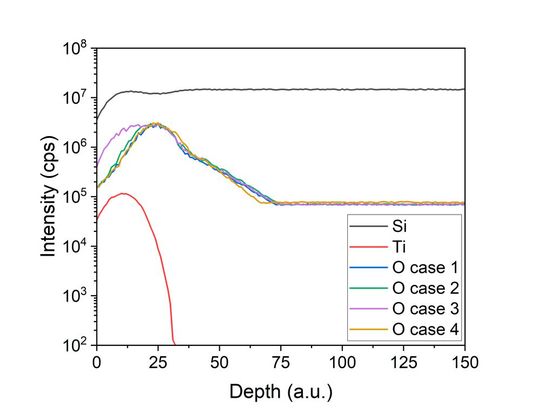
Let's have a look at Figure 1, which shows a depth profile of a simple SiC MOSFET transistor. Although this is a planar structure, the metallic contacts and gate oxide protrude above the semiconductor surface, causing slight signal broadening in the final depth profile.
There are overlaid oxygen measurements for four different structures in the figure. It is difficult to differentiate which example represents the functioning device and which suffers from oxygen contamination.
Aside from the good case, there is one in which oxygen has infiltrated the metal-semiconductor interface, another where a high oxygen content is found in the metallization, and yet another where oxygen is present in the semiconductor itself. Note that the differences are very subtle. The most apparent case is the third one, where oxygen contamination in the metal is evident. It becomes difficult when multiple areas are affected, there would be no way to differentiate these situations using only simple depth profiles.
:quality(80)/p7i.vogel.de/wcms/20/71/207153e4519e1794b37888a955982422/88807673.jpeg "According to a report titled ‘Accenture Semiconductor Technology Vision 2019’, 77 percent of semiconductor executives surveyed said they have adopted AI in their business or are piloting the technology. (Bild: Adobe Stock)")
AI
The impact of artificial intelligence on the semiconductor industry
We can leverage machine learning to solve this problem. By training a system on dozens, or better yet, hundreds of depth profiles corresponding to different cases, it can learn to recognize real-world profiles and provide accurate assessments. John J. Hopfield and Geoffrey Hinton were awarded the Nobel Prize in Physics 2024 “for foundational discoveries and inventions that enable machine learning with artificial neural networks."
Look at the confusion matrix below:
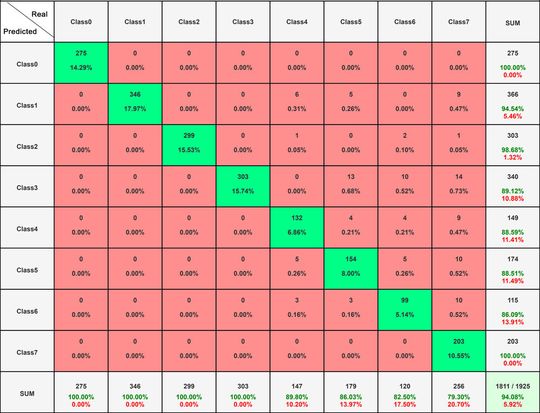
Not once was a good structure classified as defective or vice versa. The only minor shortcomings arise when the system occasionally indicates more defects than actually exist in a given device. However, this is a relatively small limitation. Moreover, for nearly 2,000 depth profiles, the prediction accuracy was close to 95 %.
But what makes this even more interesting is that it only took 4 days to perform 2,000 depth profiles. The same amount of 3D SIMS images would take almost 10,000 hours, which is over a year.
It is just one example of how AI can revolutionize power electronics research. Machine learning can be applied not only to depth profiling analysis but also to failure detection, process optimization, material characterization, and predictive maintenance.
PCIM Expo 2025: Join the industry highlight

Position your company at the forefront of the power electronics industry! Exhibit at the PCIM Expo 2025 in Nuremberg, Germany to showcase your solutions and connect with top decision-makers and innovators driving the industry forward.
Learn more
(ID:50358249)
:quality(80)/p7i.vogel.de/wcms/77/8a/778aa2874d910b701c3e9aab160aec35/0123969290v2.jpeg "Schematic illustration of the novel memristive device: Researchers from Jülich have introduced components that solve \"catastrophic forgetting\" in neural networks by maintaining information stability during new data training. (Source: Chen, S., Yang, Z., Hartmann, H. et al., Nat. Commun., https://doi.org/10.1038/s41467-025-57543-w)")
:quality(80)/p7i.vogel.de/wcms/c2/f1/c2f1acbcc59fdf2cf17b6fe0a7bf7a1d/0125393004v2.jpeg "The semiconductor industry has all eyes on a newly invented transistor. The inventors proudly address the newest transistor as the fastest, most efficient, and sustainable. If it’s all a YES, the fastest transistor is expected to overthrow the critics of Moore’s law and make chips smaller and smaller, ahead in the wheel of time. (Source: © PTD - stock.adobe.com)")