


:quality(80)/p7i.vogel.de/wcms/2f/f3/2ff3221bf7665de2d0acf83760bfd1fa/0130031523v2.jpeg "Wolfspeed presents a 300 mm silicon carbide technology platform designed to support advanced packaging and high-efficiency power delivery for AI data center infrastructure. (Source: Wolfspeed)")
:quality(80)/p7i.vogel.de/wcms/c3/16/c316e955a97f5d72d9678297b237b9e5/0129932858v2.jpeg "Left: the single-phase version of the SENTRON ECPD with RCM, right: a model of the future three-phase version of the SENTRON ECPD. (Source: Siemens)")
:quality(80)/p7i.vogel.de/wcms/ef/0a/ef0adb0acf793fe147cc27c21f6a7a67/0129954238v2.jpeg "Empower Semiconductor introduces embedded silicon capacitors designed to improve power delivery and stability in AI and high-performance computing processors. (symbolic image) (Source: © IF.arc - stock.adobe.com)")
:quality(80)/p7i.vogel.de/wcms/53/f9/53f9301dfc9292d02960f7996c79cc6e/0129927601v2.jpeg "Wolfspeed’s new 10 kV SiC MOSFET enables high-voltage power conversion for grid and industrial applications. (symbolic image) (Source: © CREATIVE- 3.4 - stock.adobe.com)")
:quality(80)/p7i.vogel.de/wcms/6e/cd/6ecd41d095d5111cf4ed37b714844487/0129930878v2.jpeg "PCIM Asia Shenzhen provides a platform for industry experts to present new developments in power electronics and electrification technologies. (symbolic image) (Source: © killykoon - stock.adobe.com)")
:quality(80)/p7i.vogel.de/wcms/02/c0/02c0e9722f70b1134dbf96fb59a9c73d/0129655179v2.jpeg "The PCIM Conference 2026 will take place from June 9-11, featuring discussions on power electronics trends, including GaN technology and AI applications. (symbolic image) (Source: © Elmira - stock.adobe.com)")
:quality(80)/p7i.vogel.de/wcms/cc/67/cc670ea2029cd2af5c641af70e1bf734/0129816392v4.jpeg "Fraunhofer IAF coordinates the EU SUPREME project to accelerate GaN and SiC power semiconductor innovation in Europe. (Source: Fraunhofer IAF)")
:quality(80)/p7i.vogel.de/wcms/ea/e6/eae6aee30071e67a5627027974437134/0129544613v2.jpeg "GlobalFoundries and Renesas strengthen their collaboration to support U.S.-based semiconductor production and supply chain resilience. (Source: © ronstik - stock.adobe.com)")
:quality(80)/p7i.vogel.de/wcms/b1/5e/b15ee02b0ba02db70cf61e37d66ad1d3/0129349127v2.jpeg "Vehicle-to-grid (V2G) chargers enable bidirectional energy flow, allowing electric vehicles to act as mobile energy storage systems that can both draw power from and feed power back into the grid. (Source: © medienvirus - stock.adobe.com)")
:quality(80)/p7i.vogel.de/wcms/26/d5/26d591cc340077026eac56a0e7564faf/0129949603v2.jpeg "Flexible: The solid silicone-based electrolyte is elastic, thereby compensating for the voids that form in solid-state batteries during charging and discharging. (Source: Empa)")
:quality(80)/p7i.vogel.de/wcms/4d/e0/4de02f76a37cbb3df30dd231de589c8e/0128866890v2.jpeg "Both legacy and vGaN show higher carrier mobility and band gap energies compared to other power semiconductors. (Source: © phonlamaiphoto - stock.adobe.com)")
:quality(80)/p7i.vogel.de/wcms/18/0b/180b7b63afc91e523592d8a5ce161c96/0129847487v2.jpeg "InGaAs-based photodetectors enable sensitive and fast detection in the short-wave infrared spectrum for modern sensing and communication applications. (Source: © VITALII - stock.adobe.com)")
:quality(80)/p7i.vogel.de/wcms/be/c8/bec8d43fc0ee73414274be44608b2970/0129748903v2.jpeg "The Infiniium XR804KA real-time oscilloscope delivers faster response time, improved stability, and streamlined workflows for high-speed digital and compliance testing. (Source: Keysight)")
:quality(80)/p7i.vogel.de/wcms/23/ee/23ee4a97790d6009dbfd7d9577ffa723/0129220424v2.jpeg "The R&S FPL1044 with the new RTSA option makes 40 MHz real-time frequency analysis available up to 44 GHz. (Source: Rohde & Schwarz )")
:quality(80)/p7i.vogel.de/wcms/3c/d1/3cd1cacbceb792ba63727199c61ca434/0127801860v2.jpeg "Thanks to cloud technology, users can collaborate on projects from anywhere and always have access to the latest planning data. (Source: SIEMENS)")
:quality(80)/p7i.vogel.de/wcms/5a/a0/5aa0436498af618297961fd54ab36cdf/0126290792v2.jpeg "Siemens accelerates student-led semiconductor innovation across Europe’s leading technical universities through Cre8Ventures’ Open Higher Education Program developed in collaboration with Arm and University of Southampton (Source: Siemens Digital Industries Software)")
RENEWABLE ENERGY 10 surprising wind energy facts
Related Vendors
:fill(fff,0)/p7i.vogel.de/companies/63/c7/63c7da97be945/diotec.png "diotec (Diotec Semiconductor AG)")
:fill(fff,0)/p7i.vogel.de/companies/5f/71/5f71d5f92a5f6/2000px-rogers-corporation-logo-svg.png "2000px-Rogers_Corporation_Logo.svg.png (rogers germany)")
:fill(fff,0)/p7i.vogel.de/companies/61/dc/61dc0e8c2e420/dspace-logo-1000px-220107.png "dspace-logo-1000px-220107 (dSPACE GmbH)")
Wind farms are an incredibly efficient and effective means of gathering renewable energy. Wind turbines now provide up to 7.8% of the world’s electricity. It’s clear that the power of the wind will help us move to a net zero future. But how much do you really know about wind power? We’ve put together 10 surprising facts about wind energy!
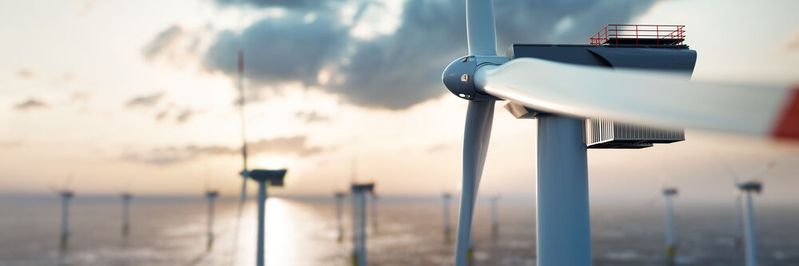
The world has an insatiable need for electricity. Global electricity demand is now at the highest level ever and will increase by an estimated 3.4% within the next three years. Meeting the immense global electricity demand while concentrating on the decarbonization of our energy supply is a pressing problem. Reaching net zero goals will require an increased uptake of renewable energy.
Renewables are on track to take overtake coal to make up one-third of global energy generation by 2025. As more countries strive to develop renewable sources of energy, the pace of onshore and offshore wind farm construction has accelerated.
Energy experts like the International Energy Agency estimate that by 2025 wind energy production could surpass the amount of electricity generated by nuclear power plants. The power of the wind is set to become one of the most important sources of energy that we have.
But how much does the average person really know about wind power? Maybe not as much as we’d like to think. We’ve put together 10 facts about wind energy that might surprise you!
1. China is leading the world in wind energy
China is the global leader in wind energy. China has made the biggest investments in wind energy and produces the most energy from the wind. As well as being home to the largest wind turbine on Earth (more on that later), China has almost half of the world’s offshore wind energy capacity. At the time of writing, there are 129 wind farms in operation across China that generate more than 442,000 megawatts of energy.
2. Global wind farm capacity has strongly increased
There was a 50% increase in the amount of wind energy produced between 2022 and 2023, according to the Global Wind Energy Council’s (GWEC) most recent report. During this time, 54 countries constructed new wind farm installations with a capacity of 117 gigawatts in total. While this is promising, the GWEC stresses that the industry will need to triple its output to 320 gigawatts by 2030 to achieve COP28 targets.
3. The global wind energy industry will employ over 3.3 million people
Currently, there are an estimated 1.4 million people worldwide who work in jobs related to the wind energy industry. The GWEC estimates this figure will reach 3.3 million within the next five years due to the massive amounts of investment being made in offshore and onshore wind farms. If you’re looking for a growth industry, it’s wind.
:quality(80)/p7i.vogel.de/wcms/bb/22/bb22a5a4e996092e29f00c46d0b0d573/0102838784v2.jpeg "As the need and demand for clean, sustainable energy continues to increase and renewable technologies become more advanced, more renewable energy projects are being developed. (Source: gopixa - stock.adobe.com)")
RENEWABLE ENERGY
Ten of the world’s largest renewable energy projects
4. Wind turbines can last for decades
It’s complicated to accurately determine the lifespan of a wind turbine. A wide range of environmental factors come into play in terms of how long the turbine will last. The industry standard, however, is that the foundation and the tower of a wind turbine are expected to have a lifespan of between 20 to 30 years. However, blades, hardware, generators, and gearboxes may need to be replaced during this time. In general, though, the overall durability of wind turbines decreases their overall environmental footprint.
5. Wind turbines aren’t that loud
A common complaint levelled at wind farms is that they are overly loud. While it is true that wind turbines have a variety of components that create some noise, it’s not as much as you might believe. Large onshore wind turbines produce about 35 to 45 dB of sound within 300 metres. That’s less than a residential refrigerator (50 dB) and considerably less than the average city traffic noise (75 dB).
Due to their immense size, offshore wind turbines are usually, louder than their onshore counterparts. However, the noise from offshore wind turbines has been estimated to be between 10–20 dB lower than ship noise. Sound carries across water and marine ecosystems are particularly vulnerable to noise pollution. So, many offshore wind farms are fitted with measures such as sound dampeners and acoustic deterrents to mitigate the impact of noise on the surrounding ecosystems.
6. Companies are developing bladeless wind turbines
The massive blades of wind turbines are almost iconic, but is it possible to have a wind turbine without blades? One Spanish company thinks it is. The Spanish firm Vortex Bladeless has developed a wind turbine that has no blades. The innovative device is made up of a cylinder that oscillates when the wind passes over it. As the cylinder moves with the wind, it generates energy. Since the bladeless turbines are basically just large poles, they require less land, have a lower weight and centre of gravity, and emit less noise. The future of wind very well could be bladeless turbines.
:quality(80):fill(efefef,0)/p7i.vogel.de/wcms/65/cb/65cb9c3a03849/webinar-efficient-electrolysis-through-comprehensive-power-conversion-solutions-coverbild.jpeg "Webinar_Efficient Electrolysis through Comprehensive Power Conversion Solutions_Coverbild (Infineon)")
GREEN HYDROGEN
Efficient Electrolysis through Comprehensive Power Conversion Solutions
7. Wind farms can have a positive impact on local ecosystems
Another common criticism of wind farms is that they have an overall negative impact on the local environment. Many people point to the impact that wind farms have on fish, small mammals, birds, and bats for example. And there’s no denying that the land use and noise caused by wind farms can negatively impact ecosystems.
However, there are also surprising benefits to wind farms for local ecosystems. Installing an onshore wind farm can actually help to preserve habitats and cause the population growth of small mammals to increase. With the right measures, bird and bat deaths due to turbines can be lowered or even eliminated. Studies have shown that offshore wind farms have a much lower impact on marine ecosystems than was expected. Care still needs to be taken to manage the environmental impact of both offshore and onshore wind farms.
8. A typhoon helped the world’s biggest wind turbine smash world records
The biggest wind turbine on the planet is located in China’s Fujian Province. The Goldwind GWH252-16MW offshore wind turbine is a true giant that stands 146 metres tall with 252-metre diameter blades that can reach speeds of more than two-thirds the speed of sound. When Typhoon Haikui hit China in September of 2023, Goldwind was the only turbine big enough to withstand its force. In doing so, Goldwind smashed all records for wind turbine energy generation producing 384.1 megawatt hours (MWh) of power in a 24-hour period. That’s enough energy to power 170,000 homes!
9. Wind farms perform well when compared with solar
Unlike solar power, wind farms operate 24 hours a day. Wind turbines release less CO2 into the atmosphere than solar panels. A solar panel will release an average of 70 grams of CO2 per kilowatt hour while a wind turbine produces only 4.64 grams. In comparison with solar energy, wind farms consume less energy and produce more. The upfront costs of installing wind farms are much lower than solar panels and they have a longer lifespan. It should be noted, however, that wind farms have more expensive maintenance and upkeep costs in comparison to solar.
10. Effective energy transmission is a major challenge
Despite what many people believe, energy generation is not the main problem. In a recent article, Microsoft founder Bill Gates wrote that ‘Transmission is key to our clean energy future.’
Due to their sheer size and the need to gather as much wind as possible, both onshore and offshore wind projects are located considerable distances from the towns and cities that need their power. Reliably transmitting the energy that wind farms can produce is a major challenge. Existing onshore grid infrastructure is outdated and installing offshore subsea transmission cables is costly.
To truly harness the massive energy-producing power of renewable sources like wind, we need a global restructuring of our transmission systems. BloombergNEF has estimated that the amount of transmission lines needs to be tripled by 2050 to overcome the problem.
Moving to a truly renewable energy grid requires tackling the challenge of increasing transmission capacity dramatically. If we can manage this, then humankind may well find a way past the most pressing dangers of climate change.
Sources
- https://www.statista.com/statistics/280704/world-power-consumption/
- https://www.iea.org/energy-system/renewables/wind
- https://www.iea.org/news/clean-sources-of-generation-are-set-to-cover-all-of-the-world-s-additional-electricity-demand-over-the-next-three-years
- https://www.statista.com/statistics/264257/number-of-offshore-wind-farms-worldwide-by-country/
- https://www.euronews.com/green/2023/09/07/world-record-wind-turbine-generates-enough-energy-in-a-day-to-power-170000-homes
- https://gwec.net/global-wind-report-2024/
- https://www.irena.org/-/media/Files/IRENA/Agency/Publication/2019/Oct/IRENA_Future_of_wind_2019_summ_EN.pdf?la=en&hash=D07089441987EBABC7F4BED63B62C83820C18724
- https://windexchange.energy.gov/projects/sound
- https://gwec.net/global-wind-report-2024/
- https://windexchange.energy.gov/end-of-service-guide
- https://eepower.com/events/eepday-2024/vortex-bladeless/videos/
- https://www.nature.com/articles/s44183-022-00003-5
- https://windexchange.energy.gov/projects/wildlife
- https://www.sciencedirect.com/science/article/pii/S0964569123002971
- https://www.ucsusa.org/resources/environmental-impacts-wind-power
- https://www.euronews.com/green/2023/09/07/world-record-wind-turbine-generates-enough-energy-in-a-day-to-power-170000-homes
- https://windexchange.energy.gov/projects/economics
- https://www.energy.gov/eere/wind/advantages-and-challenges-wind-energy
- https://www.stantec.com/en/ideas/topic/energy-resources/4-challenges-to-overcome-when-transmitting-offshore-wind-power
- https://www.gatesnotes.com/Transmission
- https://www.weforum.org/agenda/2023/09/why-embracing-power-transmission-is-key-to-tackling-climate-change/
(ID:50139956)
:quality(80)/p7i.vogel.de/wcms/d6/0f/d60f24f3aa73867f3ea1ef414f744b79/0129662401v2.jpeg "In 2025, battery storage costs hit a record low of $78/MWh, the lowest level since tracking began in 2009. (Source: © Mike Mareen - stock.adobe.com)")
:quality(80)/p7i.vogel.de/wcms/f0/43/f04364d49fac1eb1ffd699a48cbaebfe/0126468158v2.jpeg "Solar power is rapidly transforming the energy landscape by offering a clean, abundant, and increasingly affordable alternative to fossil fuels, while presenting unique historical insights and environmental benefits, despite some production challenges. (Source: © peterschreiber.media - stock.adobe.com)")