


:quality(80)/p7i.vogel.de/wcms/40/62/4062c2d596e53b038e0f05f6c3182509/0133843963v2.jpeg "Littelfuse introduces ultra-low-capacitance TVS diode arrays with a 6.5 V clamping voltage for transient protection in automotive and consumer electronics. (Source: Littelfuse)")
:quality(80)/p7i.vogel.de/wcms/e5/9e/e59ecc43d3c278aece316be4209113c9/0133732079v2.jpeg "Renesas introduces its first low-voltage GaN FET family, with 100 V devices for power conversion in AI data centers, robotics and industrial systems. (Source: Renesas)")
:quality(80)/p7i.vogel.de/wcms/c4/a7/c4a7243caa7c26af5fe5108f7894050a/0133626683v2.jpeg "Wolfspeed’s new premium 200 mm SiC substrates are designed to provide more consistent starting material for power semiconductor manufacturing. (Source: © Marina - stock.adobe.com)")
:quality(80)/p7i.vogel.de/wcms/91/8b/918b533161e7327075370338d7af97af/0133589801v2.jpeg "Acbel will present scalable DC charging power modules and an 11kW passively cooled 2-in-1 on-board power solution at New Mobility Congress 2026 in Katowice, covering both charging infrastructure and vehicle applications. (Source: Acbel)")
:quality(80)/p7i.vogel.de/wcms/4f/47/4f473b006be95fb33ec3d8e3fd727b06/0133732443v2.jpeg "SEMI Europe joins the European Commission’s STEAM Executive Panel, bringing the semiconductor industry’s skills needs into discussions on education, training and workforce development. (Source: © phonlamaiphoto - stock.adobe.com)")
:quality(80)/p7i.vogel.de/wcms/c4/59/c459b75bff747399a7a7fd58381f3983/0133731182v2.jpeg "Infineon has completed its acquisition of C2i Semiconductors, adding expertise in software-defined power management and multiphase control for AI data-center power systems. (Source: © InfiniteFlow - stock.adobe.com)")
:quality(80)/p7i.vogel.de/wcms/fd/2c/fd2c2388e7985cd4c75cff39f07f6361/0133676222v2.jpeg "Greenconn expands its connector portfolio with the compact WF28 wire-to-board series and new 25 mm and 30 mm stacking-height options for its GC01 floating connectors. (Source: © Greenconn)")
:quality(80)/p7i.vogel.de/wcms/69/06/6906b5f22bfbb3f8b874ba9e459c7d26/0133675448v2.jpeg "New backend manufacturing hub strengthens and further diversifies Infineon's global production network. (Source: © Apriew - stock.adobe.com)")
:quality(80)/p7i.vogel.de/wcms/b4/93/b493d5ce620cf7eb558ca6bcd9852a1e/0133811655v2.jpeg "The massive integration of utility-scale solar photovoltaics demands BESS platforms equipped with high-power-density inverters to mitigate generation intermittency. (Source: Pixabay)")
:quality(80)/p7i.vogel.de/wcms/f8/cb/f8cbf79cc21d48d7cad08e2b620218f7/0133738515v2.jpeg "Microchip and Navitas are demonstrating a 20 kW reference design that converts an 800 VDC data-center bus to a 6 V server rail, combining GaN power devices with digital control. (Source: © Formoney - stock.adobe.com)")
:quality(80)/p7i.vogel.de/wcms/ee/de/eedef7055c094757eb208a9d181e85dc/0133371000v2.jpeg "Resonac has developed 300 mm SiC single-crystal substrates, advancing larger-diameter wafer technology for next-generation power electronics and other high-performance semiconductor applications. (Source: © Resonac)")
:quality(80)/p7i.vogel.de/wcms/7b/76/7b76005554b556df2a7a3794bdf69d44/0132365246v2.jpeg "Hioki’s ST5680A DC Hipot Tester combines CE/UKCA/CSA compliance, an integrated capacitance‑based contact check and time‑series waveform recording (voltage, leakage current, insulation resistance) to standardize hipot and insulation testing across EV cell, module and pack production lines. (Source: Hioki)")
:quality(80)/p7i.vogel.de/wcms/af/7f/af7f7b0fb7f29219fc991b1130f65477/0132241333v2.jpeg "Comprehensive laboratory testing regimens—combining thermal cycling, high‑current stress, EMC, and accelerated lifetime tests—are essential to validate advanced power designs and ensure reliability in real‑world applications. (Source: PRBX)")
:quality(80)/p7i.vogel.de/wcms/16/3d/163df69363f8125315a9826e13ea4b05/0131927425v2.jpeg "Solution will maximize data center and AI factory profitability while delivering engineering-grade insights to design and operations for more efficient, sustainable, and resilient infrastructure. (Source: Cadence)")
:quality(80)/p7i.vogel.de/wcms/85/b7/85b7e90733a2bd8f21515d8f7137f2fc/0131917677v2.jpeg "Renesas acquires Pictorus to integrate its embedded application software platform with Renesas’ MCU and MPU portfolio, helping developers shorten time‑to‑market and simplify system integration. (Source: © lucadp - stock.adobe.com)")
:quality(80)/p7i.vogel.de/wcms/27/07/2707280c807689b437baed3660257404/0133626052v2.jpeg "The quantum behavior of electrons shapes semiconductor devices—and the power converters that deliver electricity to modern computing systems. (Source: © Celt Studio - stock.adobe.com)")
Charging Solutions Power strips with surge protection in our homes
Related Vendors
:fill(fff,0)/p7i.vogel.de/companies/6a/20/6a202a4f89a62/mrs-white-on-blue-bg.png "mrs-white-on-blue-bg ()")
:fill(fff,0)/p7i.vogel.de/companies/63/c7/63c7da97be945/diotec.png "diotec (Diotec Semiconductor AG)")
:fill(fff,0)/p7i.vogel.de/companies/62/a0/62a0a0de7d56a/aic-europe-logo.jpeg "aic-europe-logo (AIC Europe)")
The word “power strip” may sound like a tech term for a fancy gadget. Power strips are a typical multi-socket extension that enables you to charge your laptop, smartphone, and various devices together. That rectangular-shaped socket board, can you relate? This article explains how a power strip long cord makes our lives easier in homes and enterprises.
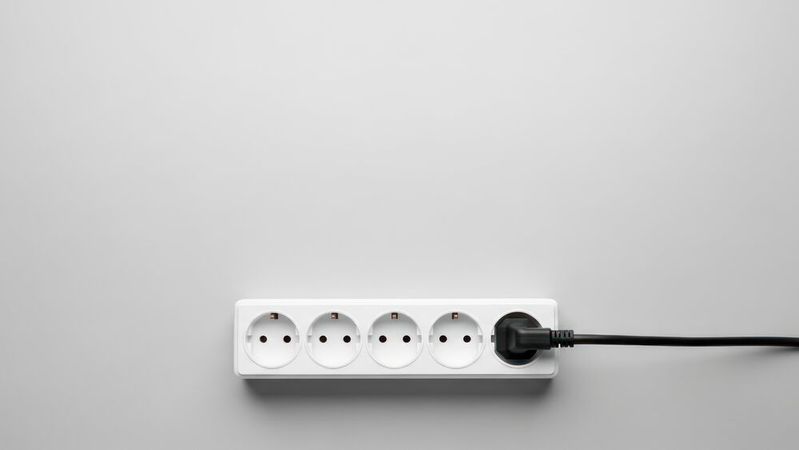
Power strips have become essential tools in our increasingly connected lives. They allow multiple devices to be powered safely and efficiently from a single source.
What is power strip?
A power strip is a block that consists of a group of two or more electrical sockets to charge multiple electronic devices at the same time. Examples of charging devices include computers, laptops, smartphones, TVs, home appliances, lightning, and various tools. All of these devices must be present in the same room, in close proximity.
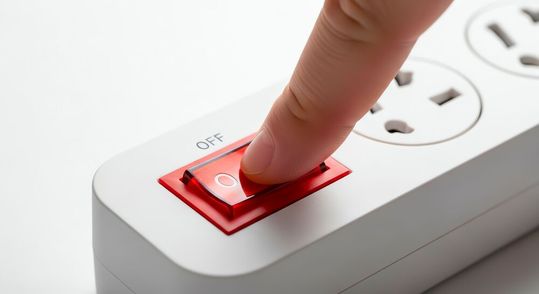
A power strip has a long cord that must be connected to a charging outlet or mains plug. Once the power strip long cord is connected, it becomes capable of charging electronic devices. In each socket, you can connect your adapter to charge your device. A main switch, placed on its block, helps to turn it on and off. Simply put, a power strip enables users to charge multiple electronic devices through a single outlet.
In most power strip designs, a single switch is present to turn on the entire power strip. However, advanced power strip designs may offer separate mini-switches for each socket.
Power strip features
Technologies based on power strips, such as extension devices, have been on the market since around the 1920s. An Australian electrical engineer invented one of the most suitable designs known as the “power board” in 1972, which was not patented. Also known as a multi-socket or power board, power strips are more than a multi-charger. The latest designs offer innovations. The benefits of using a power strip are listed below.
- 1. Affordable outlet multiplication If a room has fewer charging outlets, power strips are the optimal solution. Also known as outlet multipliers, power strips eliminate the need to spend money on hiring relevant professionals to drill and create new charging outlets.
- 2. No need to sit close: When a room has multiple charging outlets, the user needs to sit close to them. Power strips have long cords that enable the user to sit in a desired comfortable place, instead of an outlet-driven position. However, most power strips aren’t long enough for the user to move out of the room.
- 3. 360-degree cover: The cover of power strips deals with accidental touching, rigorous unplugging, tampering, or exposure to liquid and dust particles. As a result, power strips ensure 24/7 safety for regular users, small children, or even pets. The cover of the power strips can be lockable, waterproof, and weatherproof. They are made from plastic in white or black colors, but can be decorative.
- 4. Smart power strips: Legacy power strips with surge protection, used in homes and offices, have LED-based indicators. Most electronic devices have become smarter with the help of internet connectivity. Modern IoT-powered power strips are available in the market for remote management. App-based alerts enable proper functioning and operation within required ratings.
- 5. Energy saviours: Power strips are known for their energy-saving capabilities. They automatically turn off if powered appliances enter standby mode. In addition, some power strips estimate when a device is fully charged. They automatically turn off that particular socket. In certain industries, such use cases are important. A power strip can be based on a motion sensor model, in which a PIR (Passive Infrared Sensor) detects human presence within a small range. If no human is detected, the power strip shuts down charging. For example, no more charging post office hours.
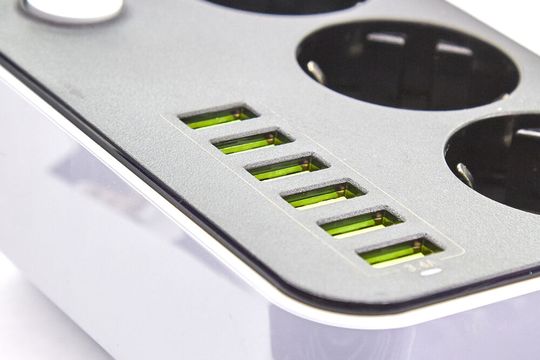
- 6. Power strip USB: Power strips with switches are not just limited to charging similar types of cables. Modern designs include power strip USB ports to charge consumer electronic devices directly. For example, if you want to charge your smartphone or laptop, you do not need an intermediary charger or AC DC adapter. You can simply plug in the power strip USB for faster charging solutions. Such designs are small and travel-friendly.
- 7. Master-slave behavior: In electronics, master-slave is a type of configuration in which a device follows the other for operation. Just like a slave follows its master in the real world, the slave device “blindly” follows the master device. The master-slave power strip is based on the control outlet model. The slave starts or shuts down in accordance with the master socket. Such a configuration is helpful in energy-saving situations.
:quality(80)/p7i.vogel.de/wcms/e1/03/e1037c01bbe9722bf96e292e0010bbbe/0125512618v2.jpeg "A GaN charger, made with gallium nitride, is a compact and efficient alternative to conventional chargers, offering cooler operation, faster power delivery, and extended lifespan. (Source: © Duki - stock.adobe.com)")
GALLIUM NITRIDE
What is a GaN charger and is it safe for use?
Are all power strips surge-protected?
Power strips with surge protection are common in the world of charging solutions. They incorporate surge protective gear, such as circuit breakers, fuses, and EMI filters, for stable and safe operation. In simple words, power strips with surge protection shield devices from voltage spikes and electrical noise.
Power strips with surge protection rely on MOVs (Metal Oxide Varistors). MOVs are a type of varistor, a voltage-dependent resistor. A varistor is a surge protector component used in various electrical and electronics applications. When voltage levels cross the normal ratings, varistors absorb excess voltage.
Power strips with surge protection functionalities use one varistor. In modern designs, 3 varistors are inbuilt into power strips with surge protection. Some smart power strip with switches use inductor-capacitor networks to overcome varistor limitations. A group of power strips with surge protection must be connected in a series chain, known as a daisy chain.
Power strip without surge protector
Not all power strips with surge protection are available in the market. They may or may not contain surge protection gear. A power strip without surge protector type is also available in the market to support low-power charging. However, industries and data centres do not rely on a power strip without surge protector types.
Power strips with surge protection vs power strip without surge protector
It is important to note that power strips with surge protection offer limited protection due to low energy capacity. Manufacturers price power strips with surge protection more than a power strip without surge protector. In a basic sense, a small socket block cannot offer complete protection. Proper protection needs proper grounding and connections with the main switch. Power strips with surge protection do not undergo grounding. Hence, it is a marketing gimmick to name them safe.
:quality(80)/p7i.vogel.de/wcms/c3/22/c32241fb290427b75b7811e2f1cd4f77/0126810564v2.jpeg "NREL’s Ultra-Low Inductance Smart (ULIS) power module can help “squeeze” more usable power out of the world’s electricity supply, making it a promising solution to rising energy demands to power data centers and vehicles. (Source: Brooke Buchan, NREL)")
RESEARCH
NREL researchers build world’s fastest, low-cost, ultraefficient SiC power module
Power strips vs extension cord
Most people think that power strips vs extension cords are the same. Power strips vs extension cord is a different game. The table below suggests similarities and differences in the power strips vs extension cord battle!
| Feature | Power Strip | Extension Cord |
| Main function | Multiple sockets in a block to charge various devices | Flexible cable to extend the reach of the electrical outlet (Increase the distance between the client device and outlet) |
| Outlets served | Moderate to high 2-12 | Low 1-3 |
| Usage | Homes, offices, and commercial spaces | One-time use in temporary or short-term projects |
| Load | Heavy | Low to moderate |
| Mobility | Limited | Moderate to high |
| Safety features | Advanced | Minimal |
| Certification | Needed Must be certified | Needed Must be certified |
What should you keep in mind?
Power strips are a billion-dollar business valued at around USD12.3 billion. It is expected to grow at a CAGR of 5% to hit USD17.5 billion in 2030.
- 1. The smaller the size, the easier it becomes: All power strips are sold under certificates of safety. You can use power strips with surge protection to charge your smartphone, laptop, router, and small, low-power devices. Even power strip outdoor usage is beneficial in such cases. Only a few manufacturers design power strip outdoor devices.
- 2. Ignore kitchen: Heaters, refrigerators, frying pans, microwave ovens, toasters, and various kitchen appliances require more power and tend to heat up very easily. They’re better off connected to the outlet directly. Hence, you should try to avoid charging them through power strips or remain extra attentive. In addition, the kitchen and washrooms stay wet in most cases. Avoid using even power strips with surge protection in such wet places. The combo of electronics and water is deadly!
- 3. Do not connect one power strip to another: A power strip connected to its own socket cannot turn it on. It is an immature act because every electronic device needs a source of electricity to function. Connecting a power strip to itself won’t make it functional. Connecting one power strip to another, even of the same type or by the same manufacturer, can lead to overvoltage and failure.
(ID:50622709)
:quality(80)/p7i.vogel.de/wcms/22/40/224013bf325f1141738bff2310fb453f/0127480067v5.jpeg "Illustrating the advancements in power transmission, HVDC Light technology showcases its potential for efficient and sustainable energy delivery. This innovative approach promises enhanced stability and control in modern electrical grids.
(Source: © TebNad - stock.adobe.com)")
:quality(80)/p7i.vogel.de/wcms/0d/d0/0dd02f3d5a1c83c1be444f73910e6b30/0126472071v2.jpeg "Current transducers are essential devices in power electronics, converting high current levels into standardized signals for safe and efficient use across various electronic systems, with applications ranging from motor protection to renewable energy systems and particle accelerators. (Source: © Aimur - stock.adobe.com)")