


:quality(80)/p7i.vogel.de/wcms/99/dd/99dd64ae87c0855129bd405f61d81f81/0133290217v2.jpeg "Microchip’s new 1.2 V SY757xx clock buffers connect modern low-voltage SoCs, FPGAs and AI accelerators with higher-voltage clock components, supporting frequencies up to 250 MHz and additive jitter as low as 26 fs. (Source: Microchip)")
:quality(80)/p7i.vogel.de/wcms/83/d0/83d0b8ea52378c77f98358e29ceccfc0/0133339307v2.jpeg "Capacitors are a critical yet often overlooked component in AI data center power supplies, buffering energy and stabilizing voltage as racks scale toward the megawatt range. (Source: © Parilov - stock.adobe.com)")
:quality(80)/p7i.vogel.de/wcms/10/fc/10fcb98e44d61826e641bc8d3f20f616/0133193677v2.jpeg "The new AEVA and AEVB Series aluminum electrolytic capacitors are engineered for harsh industrial environments, delivering high-CV, long-lifetime performance in compact, surface-mount packages that reliably withstand up to 30g acceleration and operating temperatures extending from -55° to +125°C. (Source: Kyocera)")
:quality(80)/p7i.vogel.de/wcms/f7/42/f74208db9f5f87dca384b38b71c4782e/0133196365v2.jpeg "YAGEO’s EC Flat‑Series temperature sensors combine fast, accurate measurement with resistance to vibration, shock, moisture and dust for demanding automotive and industrial applications. (Source: Yageo)")
:quality(80)/p7i.vogel.de/wcms/57/b6/57b6d33cb929fa4408ad56803ed5f0bc/0133311998v2.jpeg "Elmos and SK keyfoundry are expanding their collaboration on 130 nm technology and have agreed on long-term wafer capacity through 2037 to support reliable automotive semiconductor production. (Source: © remake - stock.adobe.com)")
:quality(80)/p7i.vogel.de/wcms/b4/0a/b40a1de3c8fa631b2aff74ec436c43db/0133314066v2.jpeg "ZF Aftermarket expands its EV service portfolio with new repair kits and solutions for e‑motors, inverters, hybrid modules, mechatronics and electric drive units. (Source: ZF Aftermarket)")
:quality(80)/p7i.vogel.de/wcms/48/e1/48e107b92f976652532facf5ca1e0855/0133290826v2.jpeg "Infineon and SolarEdge are extending their collaboration to develop solid-state protection solutions for 800 VDC AI data centers, aiming to improve fault response, system reliability and power density. (Source: © Grispb - stock.adobe.com)")
:quality(80)/p7i.vogel.de/wcms/99/84/9984f5888ecc71c249f65cea3f0658d1/0133069650v2.jpeg "Yokogawa’s integrated measurement setup helps Vertiv analyse AI-driven pulsed loads, combining power, waveform and thermal data to validate UPS performance and input power smoothing. (Source: YOKOGAWA)")
:quality(80)/p7i.vogel.de/wcms/a4/29/a429b944eb0a69e268015f8300ba8940/0133311989v2.jpeg "Hitachi Energy and Daikin are establishing a German supply of C4‑FN, a specialty insulating gas used in SF₆‑free high‑voltage equipment for more sustainable power grids. (Source: © Ahmed - stock.adobe.com)")
:quality(80)/p7i.vogel.de/wcms/d5/32/d5326e4b05d5cd759e88062f1c0b097a/0133344193v2.jpeg "Co-packaged optics is the latest innovation in data centers where optical modules on silicon chips can assist in scaling megawatt AI infrastructure. (Source: © Rachakrit - stock.adobe.com)")
:quality(80)/p7i.vogel.de/wcms/76/a9/76a9333bc7c6abbf7e29d1b910edb5e2/0133335959v2.jpeg "This article explains PMBus in data center power supplies. (Source: © Gibster - stock.adobe.com)")
:quality(80)/p7i.vogel.de/wcms/35/9c/359cfb6c855204e4d114f88cf5b98b5f/0133078984v2.jpeg "Photonic integrated circuits are next-level chips that will dominate data centers in the upcoming years. (Source: © pier - stock.adobe.com)")
:quality(80)/p7i.vogel.de/wcms/7b/76/7b76005554b556df2a7a3794bdf69d44/0132365246v2.jpeg "Hioki’s ST5680A DC Hipot Tester combines CE/UKCA/CSA compliance, an integrated capacitance‑based contact check and time‑series waveform recording (voltage, leakage current, insulation resistance) to standardize hipot and insulation testing across EV cell, module and pack production lines. (Source: Hioki)")
:quality(80)/p7i.vogel.de/wcms/af/7f/af7f7b0fb7f29219fc991b1130f65477/0132241333v2.jpeg "Comprehensive laboratory testing regimens—combining thermal cycling, high‑current stress, EMC, and accelerated lifetime tests—are essential to validate advanced power designs and ensure reliability in real‑world applications. (Source: PRBX)")
:quality(80)/p7i.vogel.de/wcms/16/3d/163df69363f8125315a9826e13ea4b05/0131927425v2.jpeg "Solution will maximize data center and AI factory profitability while delivering engineering-grade insights to design and operations for more efficient, sustainable, and resilient infrastructure. (Source: Cadence)")
:quality(80)/p7i.vogel.de/wcms/85/b7/85b7e90733a2bd8f21515d8f7137f2fc/0131917677v2.jpeg "Renesas acquires Pictorus to integrate its embedded application software platform with Renesas’ MCU and MPU portfolio, helping developers shorten time‑to‑market and simplify system integration. (Source: © lucadp - stock.adobe.com)")
SEMICONDUCTOR MATERIALS Germanium: The “lost” semiconductor
Related Vendors
:fill(fff,0)/p7i.vogel.de/companies/62/b9/62b980cddf5d6/ceramtec.png "ceramtec (www.ceramtec-group.com)")
:fill(fff,0)/p7i.vogel.de/companies/5f/71/5f71d5f92a5f6/2000px-rogers-corporation-logo-svg.png "2000px-Rogers_Corporation_Logo.svg.png (rogers germany)")
Inventions from the 1940s to the 1970s focused heavily on Germanium semiconductors. Germanium was once considered superior to silicon in the race to develop efficient semiconductors. Today, people do not know that germanium is a semiconductor. The article explains various reasons that led to the failure of germanium as a semiconductor, despite its promising future.
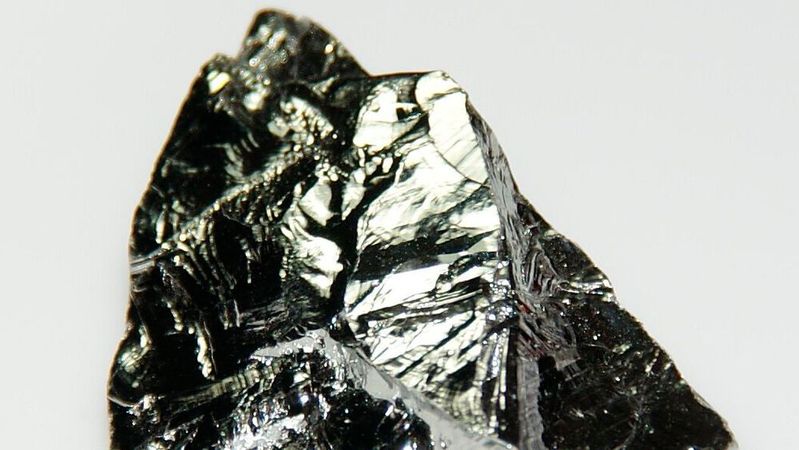
Clemens Winkler, a German scientist, discovered and named “Germanium” in 1886. Germanium (Z = 32) is a semiconductor material, exhibiting a bandgap energy of 0.7 eV— lower than 1.1 eV of Silicon. It all began in the 1940s when researchers at Bell Labs verified germanium for its semiconductive properties.
Germanium-based Schottky diodes were used during the wars for radar pulse detection. Germanium transistors were invented in 1948. In 1955, silicon-germanium alloys would help manufacture electronic devices. Rock musicians used germanium transistors in guitar effects pedals. The germanium market extensively grew from the 1950s to the 1970s. However, the market went down after the 1970s.
Why did germanium fail?
The rise of Fairchild Semiconductor and companies focusing on silicon-driven technology hit the germanium market. However, silicon is not the only reason for its failure. The section lists various reasons that led to the ultimate failure of germanium as a semiconductor.
Difficult fabrication
Challenging fabrication is one of the main reasons for the failure of germanium transistors. Under thermal oxidation, silicon forms a perfect oxide layer. The oxide layer is critical for gate insulation and transistor behavior. Germanium is water-soluble, flaky, and incapable of stable oxide generation. It does not offer insulation, making it incapable of serving as the gate dielectric. Hence, germanium cannot create efficient FETs.
:quality(80):fill(efefef,0)/p7i.vogel.de/wcms/5f/fe/5ffedb2e0ffa6/listing.jpg "listing")
Thermal instability
Despite having a better band gap energy and electrical conductivity than silicon, germanium is thermally unstable. As soon as the operating temperature rises above the room temperature, germanium starts to leak too much current. Excessive leakage current made it unreliable. Germanium also has a lower thermal conductivity, making heat dissipation challenging. As a result, germanium is a big no for high-power applications.
Whisker problem
Pure germanium crystals are mechanically soft. Weather conditions, temperature changes, external stresses, and continuous electric fields over time facilitate atom misalignment that leads to the growth of crystals on the germanium surface. These thin and long crystal-based wires are known as “whiskers”. They indicate spiral behavior and can grow several millimeters long. Once a whisker touches other metals, it can lead to a short circuit— device failure!
Questionable impact
Structurally, germanium is a silvery-white, brittle, semiconducting material. It poses no threat to human, animal, or plant health. Germanium can be harmful in excessive amounts, but the industry historically used only tiny amounts. While pure germanium presents a low risk, some germanium compounds can cause toxicity, irritation, and risk to human lives. Hence, the majority of germanium-based compounds are subject to research and development.
Cost
While millions of tonnes of silicon are produced every year, a few hundred tonnes of germanium are produced yearly. Countries like China, Russia, and the USA are responsible for germanium production. Silicon is far more abundant and cheap, obtained from sand (silicon dioxide). Germanium is rarer and more expensive to process for semiconductor usage. The cost of solid silicon metal is USD2, whereas germanium metal costs USD4,200.
Germanium: Where does it stand now?
Germanium exhibits exceptional optical properties such as a high refractive index and low optical dispersion. Silicon-Germanium semiconducting materials, known as Si-Ge, are extensively used in optics and RF industries. Germanium wafers are also available on the market, even though they are very expensive. Applications include:
- Fiber optics
- Infrared optical components manufacturing
- Thermal imaging cameras
- Mobile night vision devices
- Infrared astronomy and space electronics
- RF components
- GoI applications (Germanium-on-Insulator)
- RF
Germanium showcased its superconductive behavior under a set of conditions. It exhibits unique properties like the highest hole mobility and small effective mass, making it suitable for futuristic quantum computing applications.
:quality(80)/p7i.vogel.de/wcms/53/ec/53ec9ba51567ab4d8e8043a0ecfe6db5/0117280666.jpeg "Smaller. Faster. More powerful. Wide-bandgap semiconductor materials deliver on all three points. (Source: CROCOTHERY - stock.adobe.com)")
WBG SEMICONDUCTORS
How wide bandgap semiconductor materials are changing power electronics
Market size
The global germanium market stands at USD263.8 million. However, it is the germanium market— not the semiconductor germanium market. The Si-Ge market is a billion-dollar industry divided into Si-Ge chips and discrete devices used in optics, RF, and 5G technologies. The Si-Ge market is all set to hit USD8.2 billion in 2026.
Conclusion
At present, “solo” germanium semiconductors do not exist in our phones, laptops, and appliances like the silicon ones. But the truth is, germanium is a historic semiconductor— an active character in the history of diodes and transistors!
References
(ID:50413241)
:quality(80)/p7i.vogel.de/wcms/7d/40/7d406bd959b3a9127c33a66157f9030a/0128339184v4.jpeg "The global digital infrastructure depends on the production of advanced semiconductor materials (Source: © uflypro - stock.adobe.com)")
:quality(80)/p7i.vogel.de/wcms/e6/49/e6495c2d66253b8a488f774bed717d0b/0130452223v2.jpeg "Boron nitride has exceptional chemical and thermal properties. When voltage is applied to boron nitride, it emits light. (Source: © kaliel - stock.adobe.com)")