


:quality(80)/p7i.vogel.de/wcms/f5/d2/f5d2bce7c01775fe62d4c6ecebc8c5ba/0129188745v2.jpeg "A gate driver designed for bridge circuits enables reliable control of high-current brushed DC motors in automotive applications. (Source: © javu - stock.adobe.com)")
:quality(80)/p7i.vogel.de/wcms/cb/38/cb38bf951c0af8a8de423fedce2489d8/0129352475v2.jpeg "Honeywell’s hybrid electrification solution combines electrical and thermal energy sources with real-time control to optimize industrial heat processes. (Source: © PRI - stock.adobe.com)")
:quality(80)/p7i.vogel.de/wcms/b8/13/b8139abf82c98aa04248a4a119d28c13/0129194616v2.jpeg "A 600V super junction MOSFET platform supports efficient switching and reduced losses in high-voltage power conversion designs. (Source: Aplha & Omega Semiconductor)")
:quality(80)/p7i.vogel.de/wcms/62/80/6280da00d591873bf8f0b2a70e5986e0/0129064771v4.jpeg "High-efficiency IGBTs support power conversion in solar inverters and energy storage systems by reducing losses and improving system performance. (Source: Magnachip)")
:quality(80)/p7i.vogel.de/wcms/60/40/6040b2e00aef20b4f9d92e8ac9f79c32/0129349725v2.jpeg "The acquisition integrates Micromax’s conductive pastes and inks into MacDermid Alpha’s electronics materials portfolio, expanding capabilities for advanced and high-reliability electronics manufacturing. (Source: © PixaMint - stock.adobe.com)")
:quality(80)/p7i.vogel.de/wcms/b3/13/b313941dbf7adc57c6d144966106d82b/0129219607v2.jpeg "CFIUS approval allows Wolfspeed to complete an equity issuance to Renesas as part of its court-approved restructuring process. (Source: © tippapatt - stock.adobe.com)")
:quality(80)/p7i.vogel.de/wcms/56/a4/56a4d9b6ee131a7a00b8b89dabf108f9/0128979281v2.jpeg "Thsi acquisition expands access to processor IP solutions and strengthens the foundry’s platform for building advanced chips. (symbolic image) (Source: © Shoaib - stock.adobe.com)")
:quality(80)/p7i.vogel.de/wcms/67/62/676279913d77e1db48eb5cbe9be4c767/0128937895v2.jpeg "(Bild: © WrightStudio - stock.adobe.com)")
:quality(80)/p7i.vogel.de/wcms/f0/d8/f0d82f06ed1b7abb3245dfc4c317cb55/0127949994v2.jpeg "Visual representation of component ageing in power electronics, highlighting thermal and material stress effects across the system (Bild: © Surya16 - stock.adobe.com)")
:quality(80)/p7i.vogel.de/wcms/6e/e5/6ee5ad1dc45fd69a5a5718147605850a/0129347492v2.jpeg "This article introduces the concept of megawatt-hour battery storage systems.
(Source: © malp - stock.adobe.com)")
:quality(80)/p7i.vogel.de/wcms/7d/40/7d406bd959b3a9127c33a66157f9030a/0128339184v4.jpeg "The global digital infrastructure depends on the production of advanced semiconductor materials (Source: © uflypro - stock.adobe.com)")
:quality(80)/p7i.vogel.de/wcms/65/22/65223bc58811ced76adbfa7b5615d532/0129061536v2.jpeg "This article explains topological insulators and explores whether they can optimize electronic systems. (Source: © Rick - stock.adobe.com)")
:quality(80)/p7i.vogel.de/wcms/23/ee/23ee4a97790d6009dbfd7d9577ffa723/0129220424v2.jpeg "The R&S FPL1044 with the new RTSA option makes 40 MHz real-time frequency analysis available up to 44 GHz. (Source: Rohde & Schwarz )")
:quality(80)/p7i.vogel.de/wcms/3c/d1/3cd1cacbceb792ba63727199c61ca434/0127801860v2.jpeg "Thanks to cloud technology, users can collaborate on projects from anywhere and always have access to the latest planning data. (Source: SIEMENS)")
:quality(80)/p7i.vogel.de/wcms/5a/a0/5aa0436498af618297961fd54ab36cdf/0126290792v2.jpeg "Siemens accelerates student-led semiconductor innovation across Europe’s leading technical universities through Cre8Ventures’ Open Higher Education Program developed in collaboration with Arm and University of Southampton (Source: Siemens Digital Industries Software)")
:quality(80)/p7i.vogel.de/wcms/cb/30/cb30ebdca7fcaea281749cb396654eb3/0124716339v2.jpeg "Rolls-Royce unveils Battery Analytics for its mtu EnergyPack, offering real-time insights, predictive maintenance, and enhanced cybersecurity to boost performance and longevity. (Source: Rolls-Royce plc)")
TRANSISTORS Extreme enhancement-mode Diamond FETs push high-power electronics forward
Related Vendors
:fill(fff,0)/p7i.vogel.de/companies/5f/71/5f71d5f92a5f6/2000px-rogers-corporation-logo-svg.png "2000px-Rogers_Corporation_Logo.svg.png (rogers germany)")
:fill(fff,0)/p7i.vogel.de/companies/68/2c/682c3e2e9a195/logotype-rvb.jpeg "logotype-rvb (https://www.mersen.com/en)")
:fill(fff,0)/p7i.vogel.de/companies/66/8b/668becd1c07eb/dowa-logo-word--1-.jpeg "dowa-logo-word--1- (DOWA)")
Researchers have achieved a record +8.3 V threshold voltage in hydrogen-terminated diamond accumulation-channel FETs, marking a breakthrough for normally-off, high-power device design.
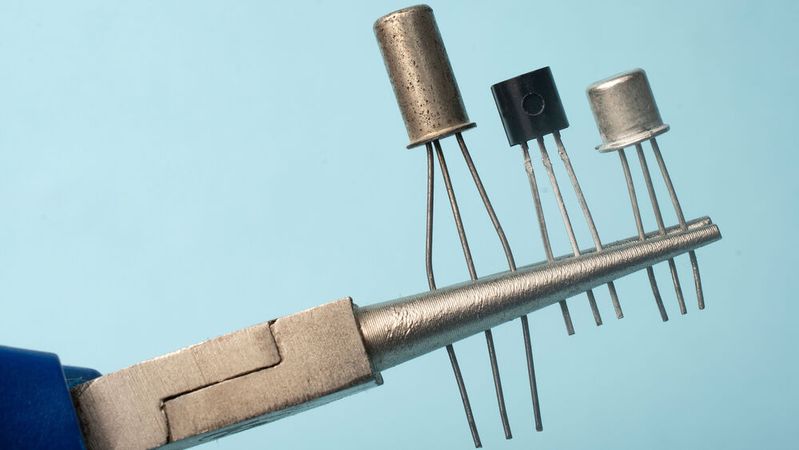
Hydrogen-terminated diamond field-effect transistors (FETs) have long been recognized as promising devices for extreme power and high-frequency applications, thanks to diamond’s exceptional thermal conductivity, wide bandgap, and breakdown field. Until now, however, achieving enhancement-mode operation with high threshold voltages in accumulation-channel designs has remained elusive, limiting the devices’ voltage-handling and safety margins.
A study from researchers at the RMIT University, Melbourne, and the University of Glasgow demonstrates an extreme enhancement-mode hydrogen-terminated diamond FET with a threshold voltage exceeding +8 V, a record-high for this device class, and capable of high-performance operation under demanding electrical stress conditions. This advance not only overcomes a major design challenge but also positions diamond FETs for deployment in next-generation high-power, high-temperature electronics.
:quality(80)/p7i.vogel.de/wcms/f8/20/f8200c20833f88f20ef5ba0f85550259/0110796538.jpeg "A transistor is a semiconductor device used to amplify or switch electronic signals and electrical power. (Source: YouraPechkin - stock.adobe.com)")
BASIC KNOWLEDGE - TRANSISTOR
Transistors: The building blocks of modern electronics
Pushing threshold voltages beyond limits
Traditional hydrogen-terminated diamond FETs operate in depletion mode or at modest enhancement-mode thresholds, typically under +3 V, leaving little margin for safe gate biasing in high-voltage circuits. The research team engineered their devices with a re-optimized gate dielectric stack, integrating high-quality aluminum oxide (Al2O3) grown by atomic layer deposition on top of the hydrogenated diamond surface. Careful interface engineering minimized charge trapping and leakage pathways, enabling the accumulation channel to remain stable at significantly higher positive gate voltages.
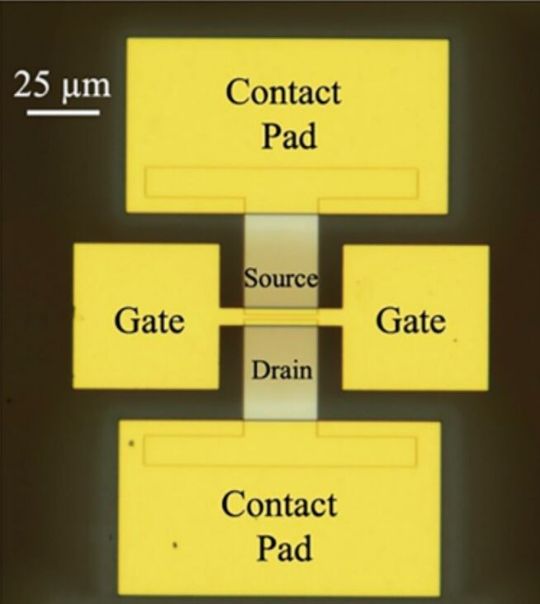
Electrical characterization revealed a threshold voltage of +8.3 V, far exceeding prior records for hydrogen-terminated diamond accumulation-channel FETs. This allows the device to operate safely in circuits with higher supply voltages, expanding its application range from radio-frequency power amplifiers to pulsed-power switching in harsh environments. Importantly, this threshold shift was achieved without sacrificing channel mobility, preserving high transconductance and maintaining competitive on-state current densities.
Stable operation in extreme conditions
One of the hallmarks of diamond electronics is resilience in extreme thermal and electrical environments, and the demonstrated FETs continued this tradition. The devices maintained stable transfer characteristics at elevated temperatures, with negligible hysteresis and minimal drift even under prolonged high-field stress. The hydrogen-terminated surface, when combined with the optimized dielectric interface, suppressed the formation of interface states that typically degrade performance during temperature cycling.
Reliability testing under continuous bias stress confirmed long-term stability, with no significant threshold voltage shift or transconductance degradation after extended operation. These results underscore the viability of enhancement-mode hydrogen-terminated diamond FETs for mission-critical systems where failure is not an option, such as aerospace power conversion, radar transmitters, and high-voltage electric vehicleinverters.
:quality(80):fill(efefef,0)/p7i.vogel.de/wcms/62/a0/62a08b6a6fb27/keynote-pcim-2022-hydrogen---key-element-to-achieve-net-zero-co2.jpeg "Keynote PCIM 2022_Hydrogen - Key Element to Achieve Net Zero CO2 (Hyeyoon - stock.adobe.com)")
KEYNOTE PCIM EUROPE 2022
Hydrogen - Key element to achieve net zero CO²
Toward practical high-power diamond electronics
By pushing threshold voltages to unprecedented levels while maintaining high mobility and stability, this work addresses one of the key roadblocks to mainstream adoption of hydrogen-terminated diamond FETs. Enhancement-mode operation is particularly valued in power electronics because it offers fail-safe “normally-off” behavior, reducing standby losses and enhancing system safety. The combination of high breakdown field, wide bandgap, and extreme thermal tolerance means that these devices could outperform both silicon carbide (SiC) and gallium nitride (GaN) transistors in the most demanding high-power roles.
The fabrication process, which relies on atomic layer deposition and surface treatment steps compatible with existing semiconductor manufacturing, also suggests a feasible path toward scaling production. As research continues to refine gate dielectrics, contact resistance, and thermal management, hydrogen-terminated diamond FETs could move from research labs to power modules in advanced industrial, defense, and renewable energy systems.
(ID:50515854)
:quality(80)/p7i.vogel.de/wcms/ce/75/ce7577df9910b5affc25edd24cb853e5/0126456656v2.jpeg "Designing and calculating a basic enhancement-mode MOSFET amplifier requires a clear understanding of the device's operating region, biasing requirements, and key electrical parameters. This article provides a step-by-step guide. (Source: © Dzmitry - stock.adobe.com)")
:quality(80)/p7i.vogel.de/wcms/b9/18/b918d8d0e447a18f7b9e983c25b96330/0125855402v2.jpeg "LDMOS amplifiers have proved their reliability and safety. They are known to perform well, even in impedance mismatches. GaN devices have now become the backbone of the power and radio frequency industries. The article explains LDMOS technologies and compares them with GaN-based devices. (Source: © Johannes - stock.adobe.com)")