


:quality(80)/p7i.vogel.de/wcms/2f/f3/2ff3221bf7665de2d0acf83760bfd1fa/0130031523v2.jpeg "Wolfspeed presents a 300 mm silicon carbide technology platform designed to support advanced packaging and high-efficiency power delivery for AI data center infrastructure. (Source: Wolfspeed)")
:quality(80)/p7i.vogel.de/wcms/c3/16/c316e955a97f5d72d9678297b237b9e5/0129932858v2.jpeg "Left: the single-phase version of the SENTRON ECPD with RCM, right: a model of the future three-phase version of the SENTRON ECPD. (Source: Siemens)")
:quality(80)/p7i.vogel.de/wcms/ef/0a/ef0adb0acf793fe147cc27c21f6a7a67/0129954238v2.jpeg "Empower Semiconductor introduces embedded silicon capacitors designed to improve power delivery and stability in AI and high-performance computing processors. (symbolic image) (Source: © IF.arc - stock.adobe.com)")
:quality(80)/p7i.vogel.de/wcms/53/f9/53f9301dfc9292d02960f7996c79cc6e/0129927601v2.jpeg "Wolfspeed’s new 10 kV SiC MOSFET enables high-voltage power conversion for grid and industrial applications. (symbolic image) (Source: © CREATIVE- 3.4 - stock.adobe.com)")
:quality(80)/p7i.vogel.de/wcms/6e/cd/6ecd41d095d5111cf4ed37b714844487/0129930878v2.jpeg "PCIM Asia Shenzhen provides a platform for industry experts to present new developments in power electronics and electrification technologies. (symbolic image) (Source: © killykoon - stock.adobe.com)")
:quality(80)/p7i.vogel.de/wcms/02/c0/02c0e9722f70b1134dbf96fb59a9c73d/0129655179v2.jpeg "The PCIM Conference 2026 will take place from June 9-11, featuring discussions on power electronics trends, including GaN technology and AI applications. (symbolic image) (Source: © Elmira - stock.adobe.com)")
:quality(80)/p7i.vogel.de/wcms/cc/67/cc670ea2029cd2af5c641af70e1bf734/0129816392v4.jpeg "Fraunhofer IAF coordinates the EU SUPREME project to accelerate GaN and SiC power semiconductor innovation in Europe. (Source: Fraunhofer IAF)")
:quality(80)/p7i.vogel.de/wcms/ea/e6/eae6aee30071e67a5627027974437134/0129544613v2.jpeg "GlobalFoundries and Renesas strengthen their collaboration to support U.S.-based semiconductor production and supply chain resilience. (Source: © ronstik - stock.adobe.com)")
:quality(80)/p7i.vogel.de/wcms/b1/5e/b15ee02b0ba02db70cf61e37d66ad1d3/0129349127v2.jpeg "Vehicle-to-grid (V2G) chargers enable bidirectional energy flow, allowing electric vehicles to act as mobile energy storage systems that can both draw power from and feed power back into the grid. (Source: © medienvirus - stock.adobe.com)")
:quality(80)/p7i.vogel.de/wcms/26/d5/26d591cc340077026eac56a0e7564faf/0129949603v2.jpeg "Flexible: The solid silicone-based electrolyte is elastic, thereby compensating for the voids that form in solid-state batteries during charging and discharging. (Source: Empa)")
:quality(80)/p7i.vogel.de/wcms/4d/e0/4de02f76a37cbb3df30dd231de589c8e/0128866890v2.jpeg "Both legacy and vGaN show higher carrier mobility and band gap energies compared to other power semiconductors. (Source: © phonlamaiphoto - stock.adobe.com)")
:quality(80)/p7i.vogel.de/wcms/18/0b/180b7b63afc91e523592d8a5ce161c96/0129847487v2.jpeg "InGaAs-based photodetectors enable sensitive and fast detection in the short-wave infrared spectrum for modern sensing and communication applications. (Source: © VITALII - stock.adobe.com)")
:quality(80)/p7i.vogel.de/wcms/be/c8/bec8d43fc0ee73414274be44608b2970/0129748903v2.jpeg "The Infiniium XR804KA real-time oscilloscope delivers faster response time, improved stability, and streamlined workflows for high-speed digital and compliance testing. (Source: Keysight)")
:quality(80)/p7i.vogel.de/wcms/23/ee/23ee4a97790d6009dbfd7d9577ffa723/0129220424v2.jpeg "The R&S FPL1044 with the new RTSA option makes 40 MHz real-time frequency analysis available up to 44 GHz. (Source: Rohde & Schwarz )")
:quality(80)/p7i.vogel.de/wcms/3c/d1/3cd1cacbceb792ba63727199c61ca434/0127801860v2.jpeg "Thanks to cloud technology, users can collaborate on projects from anywhere and always have access to the latest planning data. (Source: SIEMENS)")
:quality(80)/p7i.vogel.de/wcms/5a/a0/5aa0436498af618297961fd54ab36cdf/0126290792v2.jpeg "Siemens accelerates student-led semiconductor innovation across Europe’s leading technical universities through Cre8Ventures’ Open Higher Education Program developed in collaboration with Arm and University of Southampton (Source: Siemens Digital Industries Software)")
CHIP SHORTAGE European chip ambitions face serious setbacks following unexpected Intel delays
Related Vendors
:fill(fff,0)/p7i.vogel.de/companies/63/c7/63c7da97be945/diotec.png "diotec (Diotec Semiconductor AG)")
:fill(fff,0)/p7i.vogel.de/companies/68/ba/68baa33f71e37/logo-pcim.png "logo-pcim (Self-Upload)")
:fill(fff,0)/p7i.vogel.de/companies/68/08/6808a2b3b6595/het-logo.jpeg "het-logo (Heraeus Electronics)")
The European Union's semiconductor strategy has faced major setbacks after Intel delayed two key chip plant projects in Poland and Germany by two years due to cost-cutting efforts and reduced demand.
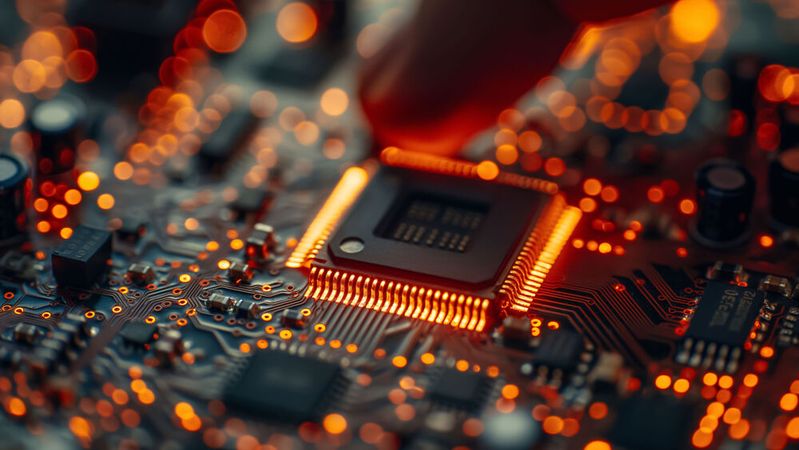
The European Union’s semiconductor strategy has been hit with significant delays as U.S. tech giant Intel announced the postponement of two major chip plant projects in Europe. These delays come at a time when Europe is trying to boost its global standing in the semiconductor market and secure supply chains for critical industries like automotive manufacturing.
Intel had planned to build a new chip assembly and testing plant near Wroclaw, Poland, as part of a US$4.6 billion investment, alongside a larger €30 billion facility in Magdeburg, Germany. Both projects were crucial to the EU's broader plan to increase its share of the global chip market to 20 % by 2030, up from just 9 % in 2022, as outlined in the European Chips Act, a €43 billion initiative aimed at boosting the continent's semiconductor capabilities.
:quality(80)/p7i.vogel.de/wcms/1c/c7/1cc792c0829ddf59dbc8dafeb7a5eb7b/0120797265v2.jpeg "Learn more about the current situation of the global chip shortage in this article. (Source: Slowlifetrader - stock.adobe.com)")
CHIP SHORTAGE NEWS
The global semiconductor crisis: A review of Q3 2024
However, Intel CEO Pat Gelsinger announced last week that both projects would be delayed by approximately two years due to the company’s ongoing cost-cutting efforts and lower-than-expected global demand for semiconductors. This pause is part of Intel's larger drive to save US$10 billion in costs, after reporting a US$7 billion loss in its manufacturing unit and a 31 % revenue decline in 2023.
An unexpected U-turn
The announcement followed just days after Poland’s government celebrated receiving European Commission approval to provide more than 7.4 billion zloty (€1.7 billion) in state aid for Intel’s Polish plant. Despite the green light from the EU, Intel's decision casts uncertainty over the future of the project.
Polish Deputy Prime Minister Krzysztof Gawkowski had expressed optimism about the investment, calling it the largest in decades and a boost to the country's technological and economic development. "Semiconductors in Poland will guarantee both better economic development and greater security," he said, underscoring the strategic importance of the project.
The delays in both Poland and Germany, however, represent a significant blow to Europe’s semiconductor ambitions. Germany’s €30 billion project, heavily reliant on public subsidies, was expected to play a pivotal role in Europe’s chip production capabilities. German Chancellor Olaf Scholz remains supportive of the project, stating that the government still believes it is "worthwhile and worth supporting," despite ongoing financial challenges in securing the necessary funding.
:quality(80):fill(efefef,0)/p7i.vogel.de/wcms/5f/fe/5ffedb2e0ffa6/listing.jpg "listing")
Could Europe fall further behind?
The delays could have serious repercussions for Europe’s ability to compete in the global semiconductor race. Other regions, such as the U.S., China, and South Korea, have rolled out extensive public support schemes to attract chip manufacturers. The U.S. in particular has seen significant progress with Intel's projects, which are advancing more quickly compared to their European counterparts. Taiwan's TSMC, the world's leading chipmaker, has also prioritized its U.S. investments over Europe, limiting its European plans to less advanced projects, such as the new €10 billion factory in Dresden, Germany.
The problem is that the European Chips Act, which aimed to mobilize €115 billion in private and public investments, has struggled to gain traction. A July 2023 report admitted that the EU was far from its 2030 target, projecting only an 11.7 % share of the global chip market by then. Despite these challenges, von der Leyen continues to promote the act as a success, calling it a "true investment revolution" during a recent ceremony for TSMC's Dresden plant.
For now, Europe’s chip ambitions seem uncertain, with Intel’s delays, combined with the broader economic and geopolitical pressures facing the global chip industry, presenting serious obstacles. The next steps for the EU will likely focus on finding alternative investments and accelerating smaller projects to compensate for the loss of momentum.
(ID:50178014)
:quality(80)/p7i.vogel.de/wcms/9d/f9/9df94d7219dac0a35ed41d740d2a96c3/0127678251v2.jpeg "Symbolic Image: GlobalFoundries invests big in expanding chip manufacturing. (Source: © Paradox-D - stock.adobe.com)")
:quality(80)/p7i.vogel.de/wcms/73/1b/731b2a2ed1082e7a4bc6971b76566475/0125343087v2.jpeg "In Q2 2025, the semiconductor industry saw unprecedented growth driven by AI demand, but it masked underlying structural strains and geopolitical challenges, setting the stage for a future where resilience is as vital as innovation. (Source: © Rhony - stock.adobe.com)")