


:quality(80)/p7i.vogel.de/wcms/55/5b/555bb8759d60243792dd736b86585f29/0130909253v2.jpeg "New DFN‑packaged ultrafast diodes with wettable flanks enable automated inspection and reliable high‑current performance in DC/DC converters and traction inverters. (symbolic image) (Source: © Natalia - stock.adobe.com)")
:quality(80)/p7i.vogel.de/wcms/db/75/db7507346cd4842ca5eb8838f45861ce/0130908924v2.jpeg "KYOCERA AVX launches the FFLK traction‑grade DC filtering capacitors for demanding EV and industrial power applications. (Source: KYOCERA AVX)")
:quality(80)/p7i.vogel.de/wcms/44/0f/440f92984dc6c58eec920824ef55b54c/0130740285v2.jpeg "TDK’s new high‑voltage common‑mode choke enables compact 1250 V DC converter designs with effective EMI suppression. (Source: TDK)")
:quality(80)/p7i.vogel.de/wcms/be/dc/bedc263ae2b17f59ef71bfc822b95d27/0130740269v2.jpeg "RECOM expands its portfolio with discrete isolated DC/DC building blocks — SMD transformers, driver ICs and rectifiers for custom power designs. (Source: RECOM)")
:quality(80)/p7i.vogel.de/wcms/ea/60/ea600a89db0dc673ba3b6eb1ca56093e/0130736129v2.jpeg "Infineon is expanding its semiconductor portfolio to support next-generation automotive power and control systems. (Source: Infineon)")
:quality(80)/p7i.vogel.de/wcms/8b/ae/8bae28ce8ab5e6820bc036ce49939261/0130655531v2.jpeg "Higher material prices impact global logistics. (Source: © MAGNIFIER - stock.adobe.com)")
:quality(80)/p7i.vogel.de/wcms/de/9b/de9beb17c1467fdb18301a114f31bf8e/0130651681v2.jpeg "PCIM Expo & Conference 2026 brings together 650+ exhibitors and 500+ presentations on power electronics, SiC/GaN devices, and energy management. (Source: Mesago Messe Frankfurt GmbH / Arturo Rivas Gonzalez)")
:quality(80)/p7i.vogel.de/wcms/47/47/474773560a05ff45872e5942c2702e11/0130617850v2.jpeg "Global renewable energy capacity grew by nearly 700 GW in 2025, highlighting the continued momentum of the energy transition. (Source: Irena)")
:quality(80)/p7i.vogel.de/wcms/07/89/0789a27b7dcc43dbdafd17f2b601e3a7/0130908474v2.jpeg "Empa’s H2 Districts project demonstrated hydrogen fuel cells supplying electricity and medium‑temperature heat to a district network, achieving >90% total efficiency. (Source: © dhita - stock.adobe.com)")
:quality(80)/p7i.vogel.de/wcms/9e/b0/9eb01567f828f28e7922897edc690be2/0130454119v2.jpeg "Voltage drop is a result of current flowing through a resistor. (Source: © Viktor - stock.adobe.com)")
:quality(80)/p7i.vogel.de/wcms/db/bb/dbbb1b9c429bd4fc375a7937bb083ba1/0130804041v2.jpeg "Rapid AI growth is driving demand for hyperscale data centres, increasing energy and water use and raising sustainability concerns. (Source: © Joachim - stock.adobe.com)")
:quality(80)/p7i.vogel.de/wcms/a3/30/a330337e234ac2000bb8829ce34ce001/0130871678v2.jpeg "Green transition in power electronics: Ecodesign and modular systems close the material loop. (Source: © DigiArtStudio - stock.adobe.com)")
:quality(80)/p7i.vogel.de/wcms/34/4a/344a3dc5a19429cf6726b7f8f7e2ee32/0130109719v2.jpeg "Hioki’s new measurement solutions enable precise analysis of power electronics systems and energy efficiency. (Source: Hioki)")
:quality(80)/p7i.vogel.de/wcms/be/c8/bec8d43fc0ee73414274be44608b2970/0129748903v2.jpeg "The Infiniium XR804KA real-time oscilloscope delivers faster response time, improved stability, and streamlined workflows for high-speed digital and compliance testing. (Source: Keysight)")
:quality(80)/p7i.vogel.de/wcms/23/ee/23ee4a97790d6009dbfd7d9577ffa723/0129220424v2.jpeg "The R&S FPL1044 with the new RTSA option makes 40 MHz real-time frequency analysis available up to 44 GHz. (Source: Rohde & Schwarz )")
:quality(80)/p7i.vogel.de/wcms/3c/d1/3cd1cacbceb792ba63727199c61ca434/0127801860v2.jpeg "Thanks to cloud technology, users can collaborate on projects from anywhere and always have access to the latest planning data. (Source: SIEMENS)")
:quality(80)/thumbor.vogel.de/945pzb0o80T2RjQQYBgLdszhUts=/500x500/p7i.vogel.de/wcms/67/50/67503e4ee8acf/headshot-schulz.jpeg "Dr.-Ing. Martin Schulz")
POWER OUTAGE IN EUROPE Can we prevent the "big blackout"?
Related Vendors
:fill(fff,0)/p7i.vogel.de/companies/68/ba/68baa33f71e37/logo-pcim.png "logo-pcim (Self-Upload)")
:fill(fff,0)/p7i.vogel.de/companies/61/dc/61dc0e8c2e420/dspace-logo-1000px-220107.png "dspace-logo-1000px-220107 (dSPACE GmbH)")
:fill(fff,0)/p7i.vogel.de/companies/66/43/66433a241a49d/aurubis-logo-wc-p-rgb-300px.jpeg "aurubis-logo-wc-p-rgb-300px (Aurubis AG)")
At the recently concluded PCIM Expo & Conference in Nuremberg, the blackout in Spain and Portugal was a recurring topic. What was going on and what can we learn from this incident? This article provides some technical details and looks at future scenarios.
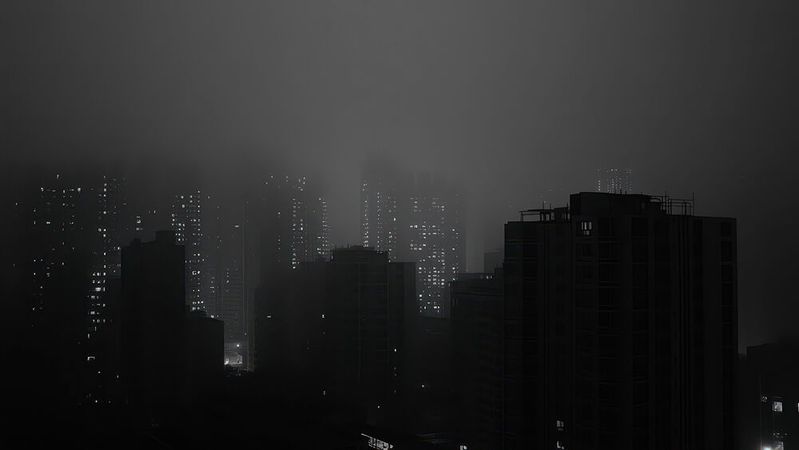
No internet, no functioning infrastructure. The power outage in Spain and Portugal at the end of April was an unpleasant event which cause has not yet been clarified. Even France was temporarily hit. Investigations are underway to analyze the process, although the authorities have so far ruled out a cyber attack. In the end, the question of cause and effect arises and certainly one must take a critical and objective look at the current situation in the European interconnected grid.
A look at technical details
Part of the outage was the shutdown of generators when the grid frequency left the permitted range. This protection mechanism is part of all energy generators, regardless of whether generators contain rotating masses or whether the electricity comes from solar cells. The problem that can occur is that if a large producer fails, other producers actually have to step in. If this does not happen – or not quickly enough – the grid frequency moves to values outside the permitted range and instead of contributing to stabilization, more generators drop out and the error effect thus amplifies itself. Domino effect.
Owners of solar systems are also familiar with this effect: If the grid fails, no yield can be expected from their own photovoltaics despite the sun shining brightly. The background is that most inverters need the grid and its voltage to synchronize with it. This is referred to as grid-following generators that can only feed energy into an existing grid.
:quality(80)/p7i.vogel.de/wcms/91/cb/91cbbd33dce7b9c1a53f4f65b79cc28d/0121952678v2.jpeg "Modern PID control technology plays a key role in optimizing smart grids by ensuring stability and efficiency. (Source: Nisit - stock.adobe.com)")
PID REGULATION
How PID controllers contribute to smart grid functionality
In contrast, there is the group of grid-forming or island-compatible converters. In the event of a failure of the supply network, these generate their own, so-called island grid. To protect the public grid and the people working on it, one's own system is separated from the public grid and forms a self-sustained island – hence the term island grid. When the public network is switched on again, synchronization takes place, and the island is reconnected to the network.
It depends on the local conditions which type of inverter is used at a wind or solar farm, but even for plants in the power range of several MW or even GW, grid-following systems are usually used today.
The outage in Spain and Portugal will certainly stimulate the discussion as to whether large solar and wind farms must not only be equipped to serve the grid, but even to shape the grid. On the part of the converter technology and the power electronics, this is not a problem – it would actually have to be changed using software. In most cases, even retrospectively and as an upgrade. The challenge here lies in the communication between the decentralised producers. The case of so-called Zombie-nets, which are larger islands that supply themselves but do not inform the grid operator, must be prevented. Among other things, they pose a danger to maintenance personnel because they keep lines and networks active that the operator assumes are shut down.
The "virtual power plant", which has already been discussed more often, could be a solution here. In it, a large number of decentralized, small generators represent a single, centrally controlled system that is available to the grid operator like a large power plant.
The rapidly growing expansion of energy storage systems, which can provide balancing power for grid stabilization at high speed, is also helpful.
:quality(80):fill(efefef,0)/p7i.vogel.de/wcms/66/4e/664efb5ea2f9e/wp-dc-dc-book-of-knowledge-recom-coverbild.png "WP_DC_DC_Book of knowledge_RECOM_Coverbild")
Is a power outage also possible in Germany?
In Europe, people are indeed in the fortunate position of participating in one of the most stable grids in the world, and the outages in Spain and Portugal do not change that. Nevertheless, the energy transition, grid expansion and the growing demand for electrical energy pose challenges to this grid, as do cyber- or physical attacks. So, it cannot be ruled out that a large-scale power outage could also take place in Germany, which would then have more far-reaching consequences than the one in Spain and Portugal.
Unlike the Iberian Peninsula, Germany is a transit country not only for goods, but also for electrical energy. If the grid in Germany were to fail, there would also be a lack of transmission capacity to and from all our neighbours and it would be feared that this would result in a Europe-wide scenario. It is difficult to estimate how likely this is - but you should not fall into fear and panic and buy an emergency power generator at the hardware store. It is in the interest of Europe as a whole that the lights remain on in Germany.
(ID:50419365)
:quality(80)/p7i.vogel.de/wcms/ad/c7/adc71cf063c94f7e7ab0370cf89a2ef1/0124921887v4.jpeg "Europe's interconnected grid faces stability challenges with more renewable energy, demanding enhanced monitoring, digital infrastructure, and cooperation for reliable operation. (Source: © Srinard - stock.adobe.com)")
:quality(80)/p7i.vogel.de/wcms/6e/e5/6ee5ad1dc45fd69a5a5718147605850a/0129347492v2.jpeg "This article introduces the concept of megawatt-hour battery storage systems.
(Source: © malp - stock.adobe.com)")